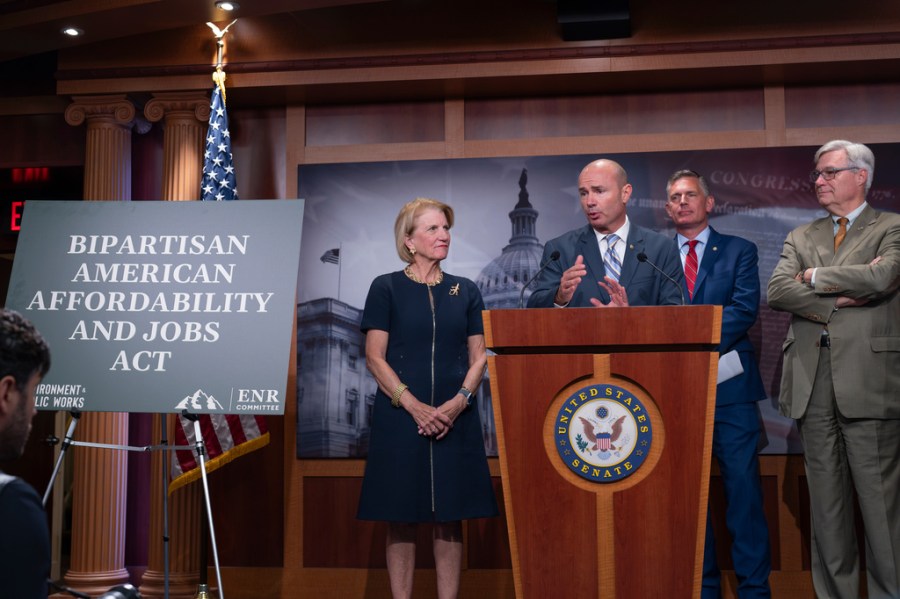
11月9日,参议院将审议《两党美国可负担与就业法案》,这项范围广泛的法案可能成为美国最有力的气候政策之一。令人震惊的是,环保团体却纷纷站出来反对。
On Nov. 9, the Senate will take up the Bipartisan American Affordability and Jobs Act, a sweeping bill that could become one of America’s most powerful climate policies. Stunningly, environmental groups are lining up in opposition.
美国的清洁能源转型正在进行,但缓慢的许可审批、老化的输电线路、长达数年的诉讼以及白宫的干预,阻碍了太阳能和风能项目像应对气候危机所要求的那样快速建设并并网。这项法案可能改变这一局面。它将简化项目审批和并网流程,限制拖延建设的诉讼,并限制总统的干预。它有助于美国加速清洁能源建设,从而降低电费并应对气候变化。
America’s clean energy transition is underway, but slow permitting, aging power lines, yearslong lawsuits, and White House interference have prevented solar and wind projects from being built and connected as quickly as the climate crisis demands. This bill could change that. It would streamline project approvals and grid connections, limit lawsuits that stall construction, and restrict presidential intrusion. It could help America accelerate the clean energy buildout necessary to lower electric bills and fight climate change.
然而,包括绿色和平美国分部、气候正义联盟和生物多样性中心在内的222个环保组织签署了一封信,敦促国会否决该法案,理由是其环境代价将“超过其可能带来的潜在减排效益”。这种算法危险地低估了现状的气候成本。环保人士拒绝限制拖延或阻挠开发的能力,冒着牺牲数十年来推动可持续未来最大机遇的风险。
Yet 222 environmental organizations, including Greenpeace USA, the Climate Justice Alliance, and the Center for Biological Diversity, signed a letter urging Congress to reject the bill, arguing its environmental cost would “outweigh the potential emissions reductions” it could deliver. That calculation dangerously undervalues the status quo’s climate cost. By rejecting limits on the ability to delay or derail development, environmentalists risk sacrificing the biggest opportunity in decades to advance a sustainable future.
能源经济学已发生根本性变化。全球范围内,2024年投入运营的可再生能源项目中,91%的成本低于化石燃料替代方案。过去十年间,太阳能电池板价格下跌了90%,陆上风电下跌了70%,电池下跌了90%以上。遗憾的是,开发商在安装第一块电池板或风力涡轮机之前,要花费数年时间购买土地、争取批准、应对环境评估和公众意见、升级电网以及应对诉讼。今天的挑战不再是负担得起太阳能和风能,而是我们错综复杂的程序是否允许它们建成。
Energy economics has fundamentally changed. Globally, 91 percent of renewables commissioned in 2024 were cheaper than fossil fuel alternatives. Over the past decade, solar panel prices fell by 90 percent, onshore wind by 70 percent, and batteries by more than 90 percent. Unfortunately, developers spend years purchasing land, securing approvals, navigating environmental reviews and public comments, upgrading the grid, and fighting lawsuits before installing a single panel or turbine. Today’s challenge is no longer affording solar and wind, but whether our convoluted procedures allow them to be built.
积压规模惊人:截至12月,美国电网互联排队中有773吉瓦的太阳能装机容量,超过全国已安装太阳能容量的两倍半。2016年至2020年间的提案中,红州的太阳能容量有11.3%实现运营,而蓝州仅为5.4%。政策并非全部原因——各地都有太多项目失败——但官僚障碍较少的州获得的太阳能提案许可和建设数量,超过了那些气候目标雄心勃勃却监管严格的州。
The backlog is staggering: 773 gigawatts of solar capacity sat in America’s grid interconnection queues as of December, over two and a half times the solar capacity installed nationwide. Of proposals between 2016 and 2020, 11.3 percent of solar capacity in red states became operational, compared with 5.4 percent in blue states. Policy doesn’t tell the whole story — too many projects fail everywhere — but states with fewer bureaucratic hurdles get more proposed solar permitted and built than their climate-ambitious but high-regulation counterparts.
在开发商获得许可和输电升级后,对可再生能源项目的上诉可能需要两年多才能解决。许多上诉源于特朗普总统对离岸风电的打击,但环保组织却出人意料地自行提起了大量诉讼。不确定性迫使开发商在没有收入的情况下持有土地,使有前景的可再生能源项目变得经济上不可行,而美国人则燃烧更糟糕的化石燃料。
After developers secure permits and transmission upgrades, appeals challenging renewable projects can take over two years to resolve. Many stem from President Trump’s crusade against offshore wind, but environmental groups counterintuitively bring a substantial share of lawsuits themselves. Uncertainty forces developers to maintain land without revenue, making promising renewable projects uneconomical while Americans burn far worse fossil fuels instead.
该法案可能会显著改善这种状况。联邦层面,它将设定许可期限,协调电网升级,并赋予监管机构更大的权力批准跨州输电线路。对联邦环境审查的诉讼通常将面临150天的提交期限,法院推翻批准的指南也将更为严格。关键是,该法案将阻止总统因政治原因撤销许可或针对能源来源,正如特朗普多次尝试对风电进行打压。
The bill could dramatically improve this. Federally, it would impose permitting deadlines, coordinate grid upgrades, and give regulators greater authority to approve interstate power lines. Lawsuits challenging federal environmental reviews would generally face a 150-day filing deadline, with stricter guidelines for courts overturning approvals. Crucially, the bill would prevent presidents from revoking permits or targeting energy sources for political reasons, as Trump has repeatedly attempted with wind.
了解这一点后,人们可能会预期环保组织会成为该立法最强烈的拥护者。相反,许多环保组织却是其最强烈的反对者。
Knowing this, one might expect environmental organizations to be the legislation’s fiercest champions. Instead, many are its fiercest opponents.
许多环保人士反对该法案,认为它会放宽化石燃料的许可审批,而这是他们眼中不可接受的让步。但如今的基础设施壁垒并不会取代化石燃料,反而会将其固化为唯一选项。改革本身无法解决这一问题,但鉴于太阳能、陆上风电和电池储能合计占美国2026年计划新增发电量的93%,清洁能源更有条件利用放松监管的政策。
Many environmentalists object that the bill would ease fossil fuel permitting, a concession they consider untenable. But today’s infrastructure barriers don’t displace fossil fuels; they entrench them as the only option. Reform won’t fix that alone, but with solar, onshore wind, and battery storage comprising 93 percent of planned 2026 U.S. electricity additions, clean energy is better positioned to capitalize on deregulatory policy.
美国清洁能源协会预测,该法案每年可避免2.9亿公吨的碳排放,相当于减排6%。我们建设清洁能源的速度越快,就越能满足美国不断增长的电力需求,从而让我们在不损害民众能源账单和生活水平的前提下淘汰化石燃料。
American Clean Power projects the bill could avert 290 million metric tons of carbon emissions annually, a 6 percent reduction. The faster we build clean energy, the more it can meet America’s growing electricity demand, letting us retire fossil fuels without harming people’s energy bills and lifestyles.
这封信还主张,改革环境法所造成的损害将超过这些减排收益。就具体条款而言,这或许站得住脚,立法者也应当寻求修正,尤其是在部落主权和司法救济方面。但以现状为参照,化石燃料开采和不断恶化的气候变化对我们空气、水源和生态系统的威胁,远远大于一次加速但仍属合法的清洁能源建设。在气候减缓中,速度至关重要。相互竞争的环境关切不能继续耗费数年才被提出和评估。
The letter also argues reforming environmental laws would cause damage outweighing these emissions cuts. That may be defensible for specific provisions, and legislators should seek amendments, particularly on tribal sovereignty and judicial remedies. But measured against the status quo, fossil fuel extraction and worsening climate change threaten our air, water, and ecosystems far more than an accelerated-but-still-lawful clean energy buildout. Speed matters in climate mitigation. Competing environmental concerns cannot keep taking years to raise and evaluate.
这些团体还声称,“现在不是”妥协的“合适时机”,而未来的民主党国会可能会带来一份更理想的方案。这是一场可怕的赌博。这个两极分化的国会没有通过任何规模相当的两党 discretionary 改革。其最接近的两党合作成果——《21世纪住房道路法》——未获总统签署。尽管如此,难以预测的白宫似乎对许可改革持开放态度。
The groups also claim “now is not the right moment” for compromise and a future Democratic Congress could deliver a preferable package. That’s a terrifying gamble. This polarized Congress has passed no discretionary bipartisan reforms of comparable scope. Its closest bipartisan success, the 21st Century ROAD to Housing Act, went unsigned by the president. Nevertheless, the unpredictable White House seems open to permitting reform.
如果民主党退出,他们就有可能把未来的改革政治化,而届时一位愿意否决受欢迎的两党立法来惩罚民主党的总统将主导局面。《通胀削减法案》的后续影响表明,等待一党独大、单独立法并不会产生稳定的气候政策。这项立法或许无法满足每一位环保人士的愿望清单,但仅仅因为“时机不对”就扼杀这一难得的两党合作机会——改革已有50年历史的法律,以应对本世纪最紧迫的环境挑战——是极其错误的。
If Democrats bail, they risk politicizing future reform under a president willing to reject popular bipartisan legislation to punish Democrats. The Inflation Reduction Act fallout revealed waiting for one-party trifectas and legislating alone won’t produce stable climate policy. This legislation may not satisfy every environmentalist’s wish list, but squashing a rare bipartisan chance to reform 50-year-old laws for the century’s most urgent environmental challenge because it’s “not the right moment” is incredibly misguided.
几十年来,环保人士在阻止破坏性开发和保护自然空间方面屡获胜利。但这些努力从来都不是目的本身。他们设想了一个更美好的未来:更清洁的空气和水、繁荣的社区,以及在不牺牲地球的前提下实现繁荣。如今,要实现这一未来,需要绿色基础设施来替代化石燃料、减缓气候变化并降低电费。这项法案为建设这一未来提供了历史性机遇。通过反对它,环保组织有可能危及他们数十年来构想的愿景。我希望他们重新考虑。
For decades, environmentalists have notched victories blocking destructive development and protecting natural spaces. But those efforts were never ends in themselves. They envisioned a better future: cleaner air and water, thriving communities, and prosperity without sacrificing the planet. Today, realizing that future requires green infrastructure to replace fossil fuels, mitigate climate change, and lower electric bills. This bill offers a historic opportunity to build that. By fighting it, environmental organizations risk jeopardizing the vision they’ve spent decades imagining. I hope they reconsider.
伊桑·布朗是罗德岛大学梅特卡夫研究所的项目经理。他是一位屡获殊荣的气候作家和评论员,拥有波士顿大学环境分析与政策学士学位。他的观点仅代表个人。点击此处关注他的作品。
Ethan Brown is Program Manager at the University of Rhode Island’s Metcalf Institute. He is an award-winning climate writer and commentator with a B.A. in Environmental Analysis & Policy from Boston University. His opinions are his own. Click here to follow his work.