东京讯 —— 作为全球汽车灯具领域的领军企业,小糸制作所正寻求通过产品进化来捍卫其市场地位,将产品从单纯照亮道路的装置转变为向行人和其他驾驶员传递信息的工具。
TOKYO -- Koito Manufacturing, a world leader in automotive lamps, looks to defend its market position by evolving its products from devices that simply illuminate the road into tools that communicate information to pedestrians and other drivers.
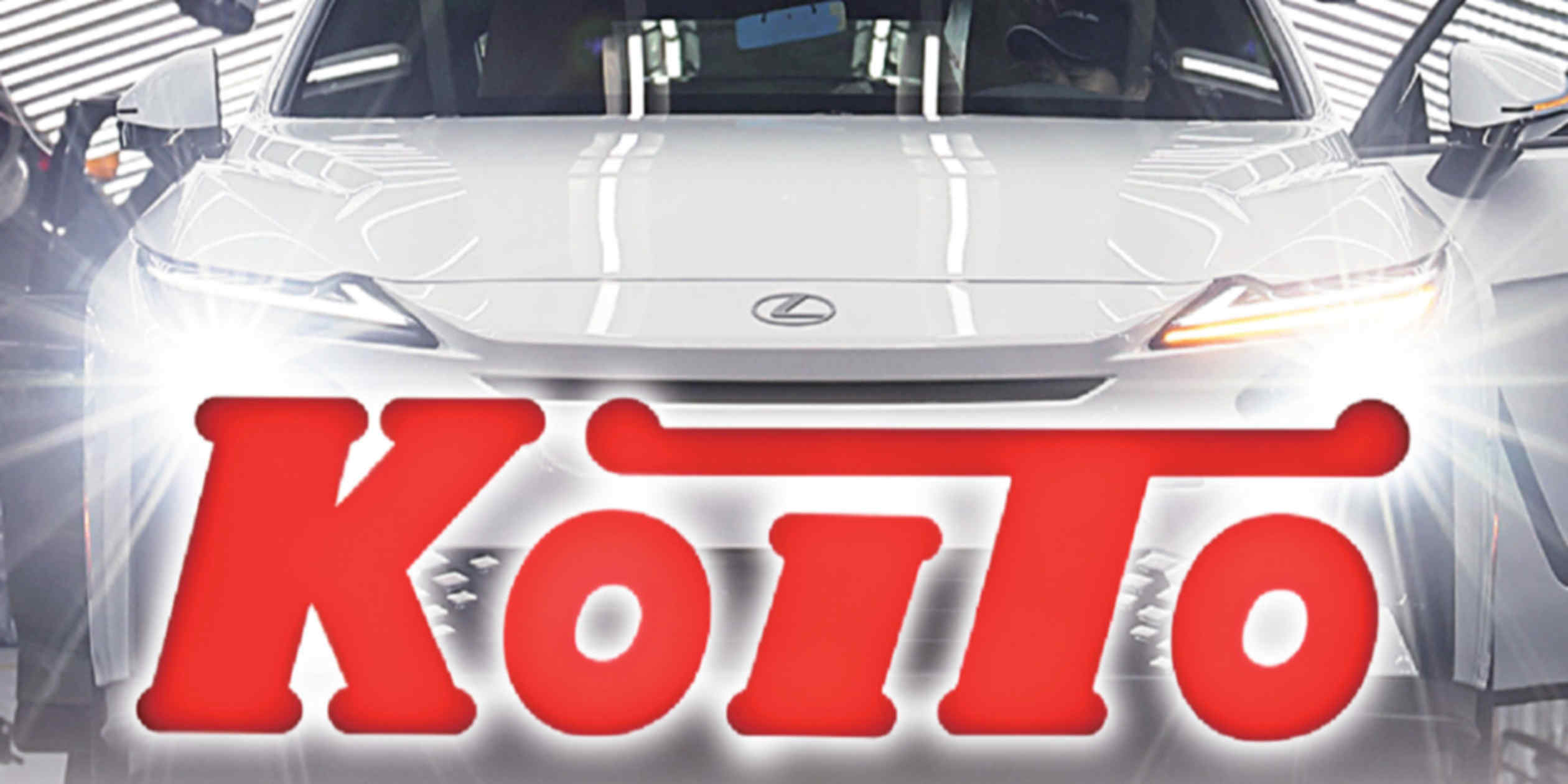
丰田汽车于今年6月推出的改款雷克萨斯ES轿车,搭载了一款日本首创的前大灯系统。该系统采用16,000颗可单独控制的微型LED,通过逐个开关二极管精准调配配光分布。
The redesigned Lexus ES sedan, launched by Toyota Motor this June, features a headlight system that is the first of its kind in Japan. Using 16,000 individually controlled micro-LEDs, the system precisely adjusts light distribution by switching each diode on and off.
这项被称为“自适应远光灯”的技术,在开启远光灯照亮前方道路的同时,配合传感器和车载电脑,在检测到迎面而来的车辆和行人时自动调暗部分光束。小糸制作所是日本首家实现ADB大灯量产的企业。
This technology, known as adaptive driving beam, illuminates the road ahead with high beams while working in conjunction with sensors and onboard computers to automatically dim some light when oncoming vehicles and pedestrians are detected. Koito was the first company in Japan to mass-produce ADB lamps.
自1915年成立以来,小糸制作所始终专注于开发日本乃至世界首创的技术。凭借走在技术潮流前沿,该公司目前拥有约20%的全球汽车前大灯市场份额,以及约60%的日本市场份额。
Since its establishment in 1915, Koito has focused on producing technologies that are firsts for Japan or the world. By staying at the forefront of technological trends, it now boasts roughly 20% of the global automotive headlight market and about 60% of the Japanese market.
1984年,在圆形和矩形大灯主导行业之际,小糸制作所开发出世界首款全塑料非标准形状大灯,使独特造型设计更易实现。2007年,该公司实现了世界首款发光二极管前大灯的商业化量产。
In 1984, when round and rectangular lamps dominated the industry, Koito developed the world's first all-plastic, non-standard-shaped lamp, making it easier to achieve distinctive designs. In 2007, it commercialized the world's first light-emitting diode headlight.
但小糸制作所近期业绩表现低迷,在2023财年销售额创下9502亿日元(按当前汇率约合60亿美元)的纪录后,销售增长陷入停滞。
But Koito's recent business performance has been sluggish, with sales growth stalling after reaching a record 950.2 billion yen (about $6 billion at current rates) in fiscal 2023.
该公司2025财年的营业利润率为5.4%,远低于2018财年向LED大灯转型带来收益提振时达到的12.3%。其股价仍较2018年触及的峰值低约40%。
The company's operating profit margin came to 5.4% for fiscal 2025 -- well below the 12.3% achieved in fiscal 2018, when the shift toward LED lamps boosted earnings. Its stock price remains about 40% below the peak marked in 2018.
小糸制作所(Koito)将自适应远光灯(ADB)系统视为利润复苏的关键驱动力——ADB系统售价比传统LED大灯高出约60%至70%,利润率也更高。通过将高附加值产品与制造及设计成本降低相结合,公司目标是到2030财年将营业利润率提回至10%。
Koito sees ADB units -- which sell for roughly 60% to 70% more than conventional LED lamps and carry higher margins -- as a key driver of its profit recovery. By combining higher-value products with manufacturing and design cost reductions, the company aims to bring its operating margin back up to 10% by fiscal 2030.
“盈利复苏的迹象开始显现,”SBI证券高级分析师岩井彻(Toru Iwai)谈及小糸制作所的盈利能力时表示。但他补充说,“市场尚未完全消化”10%营业利润率这一目标。“实现两位数营业利润率并非易事,许多人仍持怀疑态度。”小糸制作所需要兑现其战略以赢得投资者信任。公司计划到2030财年将ADB系统年销量增至350万套,约为2025财年水平的三倍,并将ADB系统在LED大灯销量中的占比提高至30%。
"Signs of a recovery are beginning to emerge," SBI Securities senior analyst Toru Iwai said of Koito's profitability. But "the market has not yet fully priced in" the 10% operating margin target, he said. "Achieving a double-digit operating margin will not be easy, and many remain skeptical." Koito will need to deliver on its strategy to win over investors. The company plans to increase annual ADB sales to 3.5 million units by fiscal 2030, roughly triple the fiscal 2025 level, and raise the share of ADB units in LED headlight sales to 30%.
“作为日本首家实现ADB系统量产的企业,我们希望推动其更广泛的普及,”小糸制作所常务董事大竹隆人(Takahito Otake)表示。公司计划提供性能和价格各异的三种ADB系统,将应用范围从雷克萨斯等豪华车型扩展至微型车。
"As the first company in Japan to mass-produce ADB systems, we want to promote their wider adoption," said Takahito Otake, a senior managing director at Koito. The company plans to offer three types of ADB systems at different performance and price levels, expanding applications from such luxury models as Lexuses to minicars.
小糸制作所也在着眼于ADB系统之外的下一代技术:将大灯转变为显示装置。
Koito is also looking beyond ADB systems to a next-generation technology: turning headlights into display devices.
2025年5月,小糸制作所成为日本首家开始量产配备信号路面投影技术大灯的企业,该技术已应用于丰田卡罗拉Cross(Corolla Cross)。
In May 2025, Koito became the first company in Japan to begin mass production of headlights equipped with signal road projection technology, which was used in Toyota's Corolla Cross.
该技术与车辆转向灯联动,将V形标识投射到路面上,以提醒行人和周围车辆注意车辆的存在及转向方向。该系统采用由一个LED和两个透镜组成的简单结构,易于集成到现有大灯单元中。
Linked with a vehicle's turn signals, the technology projects V-shaped markings onto the road to alert pedestrians and nearby motorists to the vehicle's presence and turn direction. The system uses a simple structure consisting of one LED and two lenses, making it easy to integrate into existing units.
日本将于2027年1月修订法规,允许此类车灯以高达12,000坎德拉的亮度运行——为现行上限的10倍。预期自动驾驶汽车将带来更广泛需求,小糸制作所计划扩展可投射的信息种类与功能。
A Japanese legal revision in January 2027 will allow such headlights to operate at brightness levels of up to 12,000 candela -- 10 times the current limit. Anticipating broader demand from autonomous vehicles, Koito plans to expand the range of messages and functions available.
该公司还在深化车灯与驾驶员的互动,开发利用车内摄像头追踪驾驶员视线、并将额外光线导向其注视方向的技术。
The company is also moving deeper into interaction between headlights and drivers, developing technology that uses an in-cabin camera to track the driver's gaze and direct additional light toward wherever they are looking.
该技术旨在帮助驾驶员更容易发现行人与障碍物。小糸制作所力争最早于2030财年实用化,并正向车企推介。
The technology is intended to help drivers spot pedestrians and obstacles more easily. Koito aims to commercialize it as early as fiscal 2030 and is pitching it to automakers.
与此同时,小糸制作所在激光雷达业务上调整方向,该高性能传感器技术原本是为自动驾驶开发的。
At the same time, Koito is changing course on lidar, the high-performance sensor technology it had developed with autonomous driving in mind.
公司2018年起与美国Cepton公司合作开发激光雷达,并于2025年收购该初创企业。但此后因普及速度慢于预期,已冻结乘用车领域的开发,转而专注于核心车灯业务。
The company began collaborating with U.S.-based Cepton on lidar in 2018 and acquired the startup in 2025. But it has since frozen development for passenger vehicles, citing slower-than-expected adoption, and will instead focus on its core headlight business.
竞争正在加剧。日本的斯坦利电气等竞争对手正加快ADB(自适应远光灯)与路面投影技术的开发,而曾是边缘参与者的中国厂商正逐步崛起。
Competition is intensifying. Such rivals as Japan's Stanley Electric are accelerating development of ADB and road projection technologies, while Chinese manufacturers, once minor players, are gaining ground.