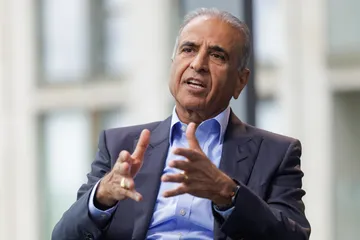
印度亿万富翁孙尼尔·巴蒂·米塔尔押注,他能建立一个独立于美国和中国的全球卫星互联网网络,因为各国政府越来越多地寻求关键通信基础设施的战略替代方案。
Indian billionaire Sunil Bharti Mittal is betting he can build a global satellite-internet network independent of both the US and China, as governments increasingly seek strategic alternatives for critical communication infrastructure.
“国家不能依赖另一个国家,”米塔尔在接受彭博电视台《与弗朗西娜·拉夸对话》节目采访时表示。“欧洲需要自己的,印度需要自己的。中国正在发展自己的。所以所有国家都将需要一些替代方案。”这一雄心使得由米塔尔支持的Eutelsat Communications旗下OneWeb,与世界上一些最大的科技公司展开竞争,最著名的是埃隆·马斯克的SpaceX。
“Countries can’t rely on another country,” Mittal said in an interview on Bloomberg TV’s Leaders With Francine Lacqua. “Europe needs its own, India needs its own. China’s developing their own. So all countries will need some alternatives.”The ambition puts Eutelsat Communications’ OneWeb, backed by Mittal, in competition with some of the world’s largest technology companies, most notably Elon Musk’s SpaceX.
Starlink已运营超过10,000颗卫星,而OneWeb约为650颗,使马斯克的网络拥有显著领先优势。Amazon.com Inc.也在建设自己的网络,计划部署数千颗卫星。
Starlink already operates more than 10,000 satellites, compared with about 650 for OneWeb, giving Musk’s network a significant lead. Amazon.com Inc. is also building its own network, with plans for thousands of satellites.
米塔尔旗下的Bharti Airtel Ltd.是印度第二大电信运营商,2015年早期投资OneWeb,并于2020年加深承诺,联同英国政府实施救助方案,将这家卫星运营商从破产边缘拉回。投资者承诺注资10亿美元新股权,Bharti后来又追加投资5亿美元。
Mittal’s Bharti Airtel Ltd., India’s second-largest telecommunications operator, was an early investor in OneWeb in 2015 and deepened its commitment in 2020, joining the UK government in a rescue package that pulled the satellite operator out of bankruptcy. The investors committed $1 billion in fresh equity, with Bharti later investing another $500 million.
商业规模差距依然巨大。Starlink在全球服务至少1,360万客户,截至9月底的三个月内,连接业务收入超过50亿美元。同期,Eutelsat的低地轨道业务(含OneWeb)营收为7,090万欧元(约合8,150万美元)。然而对米塔尔而言,这场竞争关乎的不仅仅是宽带。
The gap in commercial scale remains large. Starlink serves at least 13.6 million customers worldwide and generated more than $5 billion in connectivity revenue in the three months ended September. During the same period, Eutelsat’s low-Earth-orbit business, which includes OneWeb, generated 70.9 million euros ($81.5 million). For Mittal, however, the contest is about more than broadband.
卫星网络正日益成为关键基础设施,支撑通信、军事行动及偏远地区联网。随着各国对空基网络的依赖加深,对这些系统的控制权正成为战略自主的问题。
Satellite networks are increasingly becoming critical infrastructure, supporting communications, military operations and connectivity in remote regions. As countries grow more reliant on space-based networks, control over those systems is becoming a question of strategic autonomy.
关于对私人控制的卫星基础设施依赖的争论近几个月也日益凸显,这发生在围绕星链在地缘政治冲突中的角色以及马斯克关于包括印度在内的多国有影响力商业利益的言论引发争议之际。
Debate over dependence on privately controlled satellite infrastructure has also gained prominence in recent months, amid controversies surrounding Starlink’s role in geopolitical conflicts and Musk’s remarks about influential business interests in countries including India.
对米塔尔而言,与一个规模更大、资金更雄厚的对手竞争的挑战并不新鲜。早在他开始押注卫星互联互通之前,他已花费数年时间应对印度电信行业最惨烈的洗牌之一。
For Mittal, the challenge of competing against a larger and better-capitalized rival is hardly new. Long before he began betting on satellite connectivity, he spent years navigating one of the most brutal shakeouts in India’s telecom industry.
2016年,穆克什·安巴尼旗下的信实Jio信息通信有限公司入场,提供免费语音服务和大幅打折的数据套餐,引发了一场重塑印度电信行业的价格战。多家运营商退出市场,其他运营商则合并或整合。
The arrival of Mukesh Ambani’s Reliance Jio Infocomm Ltd. in 2016, offering free voice services and sharply discounted data plans, triggered a price war that reshaped India’s telecom sector. Several operators disappeared, while others merged or consolidated.
巴蒂艾特尔通过扩大频谱持有量和筹集资金以抵御冲击而幸存下来。
Bharti Airtel survived by expanding its spectrum holdings and raising capital to withstand the disruption.
米塔尔说:“如果你能成为这座城里最后站着的人,我们将成为一家非常有价值的公司。”
“If you can be the last man standing in this town, we will become a very valuable company,” Mittal said.
米塔尔表示,在行业动荡的34个月里,巴蒂筹集了180亿美元,而他将个人持股比例从51%降至25%。
Mittal said Bharti raised $18 billion over 34 months during the industry’s upheaval while he reduced his personal stake from 51% to 25%.
这一战略最终使巴蒂和Jio成为印度无线市场的两大主导私营企业,巴蒂的每用户平均收入更高,而Jio在用户数量上保持领先。
The strategy ultimately left Bharti and Jio as the dominant private players in India’s wireless market, with Bharti generated more revenue per customer while Jio maintains a lead in subscriber numbers.
竞争现在正从地面转向太空。OneWeb、星链和Jio已获得在印度提供卫星通信服务的许可,而亚马逊Leo也在寻求监管批准。不过,商业发射仍取决于政府许可和频谱相关要求。
The contest is now shifting from the ground to space. OneWeb, Starlink and Jio have secured licenses to provide satellite communications services in India, while Amazon Leo is also seeking regulatory approval. Commercial launches, however, remain subject to government clearances and spectrum-related requirements.
米塔尔表示,OneWeb五年前已申请审批,地面基础设施三年前已就绪,过去五年一直有卫星飞越印度上空。
Mittal said OneWeb applied for approvals five years ago, has had ground infrastructure ready for three years and has operated satellites over India for the past five years.
他说:“我认为我在马斯克前面的队列中领先得多。”他上个月在新德里举行的彭博新经济论坛上如此表示。
“I think I am significantly ahead in the queue” of Musk, he said last month at the Bloomberg New Economy Forum in New Delhi.
此次竞争发生之际,印度正寻求扩大偏远和服务不足地区的连通性,同时保持对关键通信基础设施的监管。卫星宽带可以覆盖铺设光纤或建设传统移动网络在经济上划不来的地区。
The contest comes as India seeks to expand connectivity across remote and underserved regions while retaining oversight of critical communications infrastructure. Satellite broadband can reach areas where laying fibre-optic cables or building conventional mobile networks is uneconomical.
但米塔尔不认为该行业的经济模式能够支撑大量相互竞争的全球卫星星座。
But Mittal doesn’t expect the economics of the industry to support a large number of competing global satellite constellations.
“卫星每五六年就需要更换,”他说。“建设一个星座大约需要100亿美元,部署一个星座需要七到八年时间。”
“Satellites need replacement every five or six years,” he said. It takes about $10 billion to build a constellation and need seven to eight years to deploy one.