玛丽亚·特蕾萨·埃尔南德斯 马来西亚吉隆坡报道 —— 努尔·萨德克曾走在成为一名伊斯兰学者的道路上。他的母亲梦想着抚养一个儿子,在他们缅甸西部的村庄里担任宗教领袖。
MARÍA TERESA HERNÁNDEZ KUALA LUMPUR, Malaysia — Nur Sadek was once on track to become an Islamic scholar. His mother dreamed of raising a son who would serve as a faith leader in their western Myanmar village.
萨德克的一家属于罗兴亚少数族裔。这个以穆斯林为主的群体与佛教徒以及一个较小的印度教群体,共同生活在缅甸若开邦的一个地区。长期以来,族裔和宗教分歧一直塑造着该地区的历史。
Sadek’s family belongs to the Rohingya ethnic minority. The predominantly Muslim group shares an area in Myanmar’s Rakhine State with Buddhists and a smaller Hindu population. Ethnic and religious divisions have long shaped the region’s history.
2017年,在士兵向他的社区开枪、子弹击中他家的铁皮屋顶后,他和亲人们一起逃离。他逃跑时身无长物,只穿着身上的衣服,且再也没有回去。
He fled alongside loved ones in 2017 after soldiers opened fire on his community and bullets struck the tin roof of his home. He ran with nothing but the clothes on his back and never returned.
根据联合国难民署(简称难民署)的数据,当年约有7万名罗兴亚人逃离了一场军事镇压,越境进入邻国孟加拉国。还有更多人到亚洲其他国家寻求庇护,包括印度、印度尼西亚和泰国。
Around 700,000 Rohingya escaped a military crackdown that year and crossed into neighboring Bangladesh , according to the U.N. refugee agency, known as UNHCR. More have sought refuge in other countries across Asia, including India, Indonesia and Thailand.
截至2026年2月,约有12.6万名罗兴亚人在马来西亚在联合国难民署进行了难民登记。马来西亚是一个穆斯林占多数的国家,萨德克目前在那里学习法律并为罗兴亚人争取权利。
As of February 2026, about 126,000 Rohingya were registered with UNHCR in Malaysia , a Muslim-majority country where Sadek now studies law and advocates for Rohingya rights. The Southeast Asian nation does not legally recognize refugees, leaving them vulnerable to detention.
这个东南亚国家在法律上不承认难民,这使他们容易遭到拘留。但挑战不仅限于移民身份。许多罗兴亚人难以践行他们的信仰并找到归属感。
But the challenges extend beyond immigration status. Many Rohingya struggle to practice their faith and find a sense of belonging. CSW, a religious freedom advocacy group, said in a statement to The Associated Press that Rohingya refugees in Malaysia cannot officially their own places of worship.
宗教自由倡导组织CSW在给美联社的一份声明中表示,马来西亚的罗兴亚难民无法正式建立他们自己的礼拜场所。大多数人在当地清真寺做礼拜,但有些人面临歧视,或者出于担心被移民拘留而避开这些清真寺。
Most pray at local mosques, but some face discrimination or avoid them for fear of immigration detention. “Religious solidarity is often overtaken by social and cultural differences between the two groups,” CSW said.
“宗教团结往往被两群人之间的社会和文化差异所取代,”CSW表示。
Nurul Hakim was the first of 10 siblings to flee Myanmar, leaving in 2010.
努鲁尔·哈基姆是家中10个兄弟姐妹中第一个逃离缅甸的人,他于2010年离开。经过多日步行、乘车和坐船并通过泰国后,他抵达了吉隆坡。
He arrived in Kuala Lumpur after days of traveling on foot, by car and by boat, passing through Thailand. His family was not directly attacked.
他的家人没有直接遭到袭击。然而,多年的暴力和歧视使他所在社群的生活日益艰难。
Yet years of violence and discrimination had made life increasingly difficult for his community. Rohingya Muslims in Rakhine faced restrictions on religious gatherings, access to mosques and Islamic education for years.
据联合国和国际特赦组织报告,若开邦的罗兴亚穆斯林多年来一直面临宗教集会、进入清真寺以及接受伊斯兰教教育的限制。当局关闭了清真寺并对集体祈祷施加限制。
Authorities have closed mosques and imposed limits on communal prayer, according to reports by the United Nations and Amnesty International. Hakim can now pray freely and feels welcomed by local Muslim faith leaders.
哈基姆现在可以自由祈祷,并感到受到当地穆斯林宗教领袖的欢迎。但他听说马来西亚其他地方的罗兴亚人被禁止这样做。
But he has heard from Rohingya elsewhere in Malaysia who have been barred from doing so. Rohingya Rights Response, an organization co-founded by Sadek that monitors issues affecting refugees in Malaysia, has also documented restrictions on religious practices.
由萨代克联合创立、旨在监督马来西亚难民相关问题的“罗兴亚人权利应对”组织也记录了对宗教实践的限制。
Banners declaring that Rohingya are unwelcome have been displayed outside mosques in some neighborhoods.
一些社区的清真寺外挂出了宣称不欢迎罗兴亚人的横幅。而且,即便在他们能够自由祈祷的地方,其宗教生活的某些方面在远离家乡的地方也难以重现。
And even where they can pray freely, some aspects of their religious life remain difficult to recreate far from home. “Most of the Rohingya don’t have their own imam leading the prayers because the mosques are run by Malay imams,” Sadek said.
萨代克说:“大多数罗兴亚人没有自己的伊玛目来带领祈祷,因为清真寺是由马来人伊玛目管理的。”
There is much Hakim misses about home: his days pulling a rickshaw, trading goods with his neighbors, learning about Islam alongside fellow Rohingya.
哈基姆对家乡有着许多怀念:他过去拉人力车度过的日子、与邻居做生意、与罗兴亚同胞一起学习伊斯兰教。
“There is no difference in praying at a different mosque, but there are differences with who you are praying with,” Hakim said.
哈基姆说:“在不同的清真寺祈祷没有什么不同,但和你一起祈祷的人是不同的。当我还在缅甸时,我去祈祷可以和我的邻居、我的同村人一起,而我在这里没有这个。”其他人则面临着行使信仰权利的更直接障碍:因缺乏合法身份而害怕被拘留。
“When I was back in Myanmar and I went to pray, I could pray with my neighbors, with my villagers, and I don’t have that here.”Others face a more immediate obstacle to practicing their faith: fear of detention over their lack of legal status.
穆罕默德·拉菲克说,他现在主要在家祈祷,很少去清真寺,因为他担心遇到移民当局。
Mohammed Rafique said he now prays mostly at home and rarely visits a mosque because he worries about encountering immigration authorities.
他在2009年带着妻子和五个孩子逃离缅甸,但他们留在了孟加拉国,而他继续前往马来西亚。自那以后,他就再也没有见过他们。
He fled Myanmar in 2009 with his wife and five children, but they stayed in Bangladesh while he continued to Malaysia. He has not seen them since.
拉菲克(Rafique)说,在一个异国他乡独自生活一直很艰难。他靠收集废品每天仅赚30林吉特(合7.50美元),这勉强够买他需要的药物。然而,他面临过最艰难的时刻是得知妻子已经去世,而他却无法见她最后一面。
Living alone in a foreign land has been tough, Rafique said. He earns just 30 ringgit ($7.50) a day collecting scrap materials, barely enough to pay for needed medication. Yet the hardest moment he has faced was learning that his wife had died and he’d been unable to say goodbye.
萨德克(Sadek)也懂这种痛苦。他在孟加拉国失去了母亲,至今还没能去她的坟前拜祭。
Sadek knows that pain, too. He lost his mother in Bangladesh and has yet to visit her grave.
“我曾经总是想做很多事情,但现在我只想去她的墓地,这对我来说已经变成了一种奢望,”他说。萨德克的组织倡导进行改革,以改善他在马来西亚的同胞的生活。
“I always wanted to do a lot of stuff, but now I just want to visit her cemetery and that has become like a dream for me,” he said. Sadek’s organization advocates for changes that would improve the lives of his community in Malaysia.
他的主要关注点是安全。除了面临被移民拘留的风险之外,他的团队还记录了社交媒体内容创制者对罗兴亚难民进行嘲笑和贬低的骚扰行为。他还争取公平的工资、获得医疗保健和教育的机会。
His main focus is safety. Beyond the risk of immigration detention, his team has documented harassment by social media content creators who mock and demean Rohingya refugees. He also pushes for fair wages, access to healthcare and education.
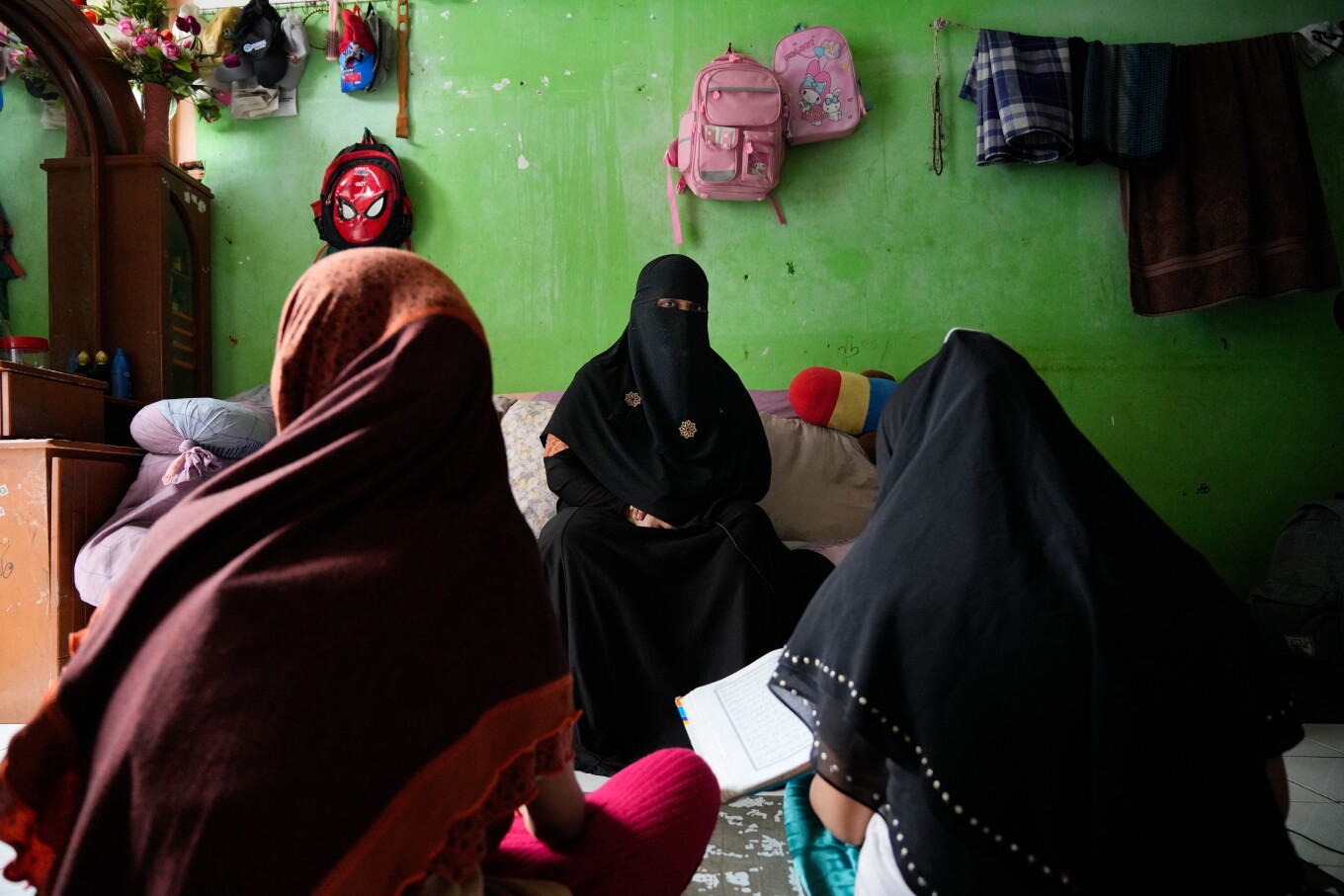
对扎希达·贝古姆(Zahidah Begum)来说,这些挑战是日常生活的一部分。她的丈夫因健康问题工作困难。她到学龄的孩子无法上正规课程。“我不知道我们的未来会怎样,”贝古姆说。她于2013年逃离缅甸,带着她自己关于宗教迫害的记忆。
For Zahidah Begum, those challenges are part of everyday life. Her husband struggles to work because of health problems. Her school-age children cannot attend formal classes. “I don’t know what the future holds for us,” Begum said. She fled Myanmar in 2013, carrying her own memories of religious persecution.
她的父亲是一名伊玛目,是他们村里备受尊敬的宗教领袖。他每天从早上8点到下午4点教授伊斯兰教研究。
Her father, an imam, was a respected religious leader in their village. He taught Islamic studies every day from 8 a.m. to 4 p.m.
“我爱我的父亲,因为他所做的一切,”她说。“是他把我养大,教给我一切,包括伊斯兰教义。”正是她的父亲将她引向了《古兰经》。是他教她阅读和理解经文。教她区分信仰中允许的事情和禁止的事情。
“I love my father because of what he did,” she said. “He is the one who raised me, who taught me everything, including the Islamic teachings.”It was her father who introduced her to the Quran. Who taught her to read and understand its verses. To distinguish between what her faith permitted and forbade.
在她村里的一次搜捕行动中,士兵试图逮捕他。他在试图逃跑时摔倒并骨折了腿。他最终逃到了孟加拉国,但未能接受治疗。他的伤口感染并最终去世。“我想念关于父亲的每一个时刻,”贝古姆说。
During a raid on her village, soldiers tried to arrest him. He fell and broke his leg as he tried to escape. He eventually fled to Bangladesh, but was unable to receive medical treatment. His injury became infected and he died. “I miss every moment of my father,” Begum said.
她通过传授给两个女儿的功课,让他的部分精神得以延续。贝古姆教导她们祈祷、背诵《古兰经》经文以及做祈求(即向真主进行个人祈祷),就像她的父亲过去教导她一样。
She keeps a part of him alive through lessons she passes on to her two daughters. Begum teaches them to pray, to recite verses from the Quran and to make duas, or personal supplications to God, just as her father taught her.
贝古姆说:“我对信仰的这种联系依然和在老家时感觉一样。即使在这里,我也与我的宗教保持着联系。”美联社的宗教报道得到了美联社与美国《对话》杂志合作的支持,并获得了莉莉捐赠基金公司的资助。美联社对该内容承担全部责任。
“I still feel the same connection to my faith that I felt back home,” Begum said. “Even here, I remain connected to my religion.”Associated Press religion coverage receives support through the AP’s collaboration with The Conversation US, with funding from Lilly Endowment Inc. The AP is solely responsible for this content.