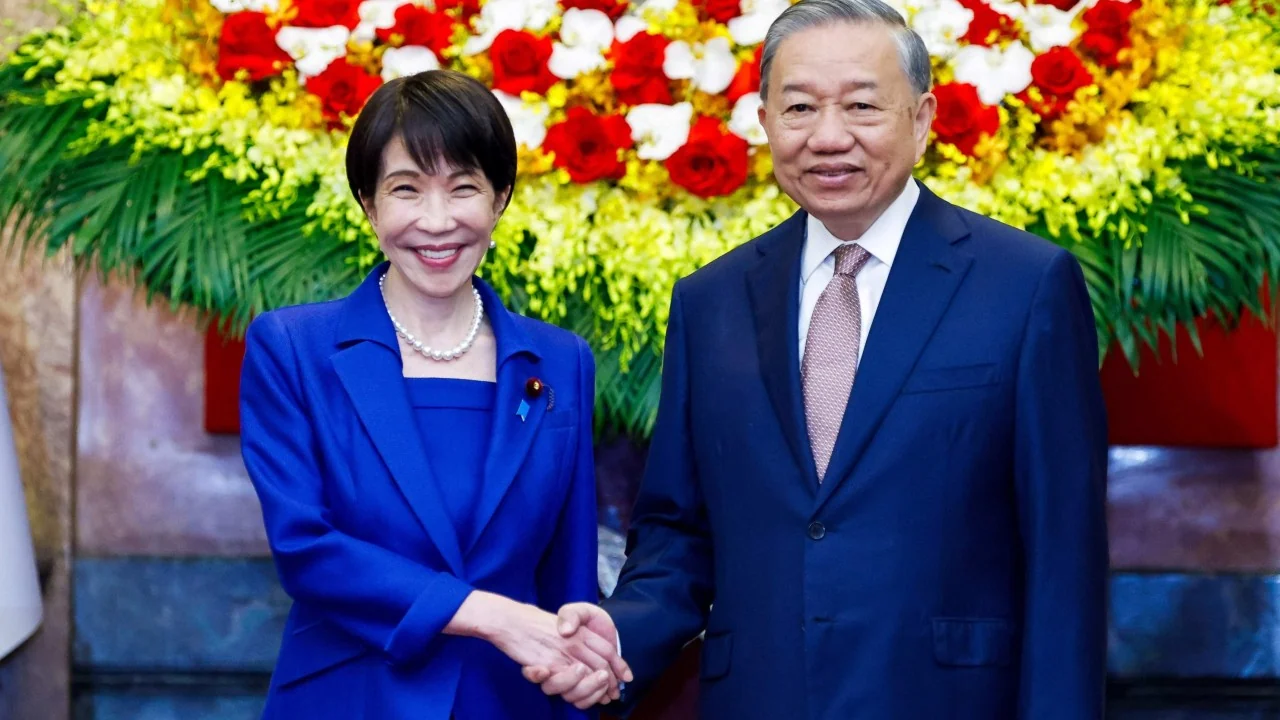
日本与越南日益紧密的战略伙伴关系,正使东京对基于规则的地区秩序的承诺接受考验,因为日本首相高市早苗面临要求,敦促她在越南未兑现劳工权利承诺一事上向河内施压。
Japan’s growing strategic partnership with Vietnam is putting Tokyo’s commitment to a rules-based regional order under scrutiny, as Prime Minister Sanae Takaichi faces calls to press Hanoi over its failure to honour labour rights commitments.
这一问题预计将在越南国家主席苏林从周日起对东京进行为期四天的访问期间浮出水面,引发疑问:当经济和安全利益受到威胁时,日本准备在多大程度上捍卫一项重要太平洋贸易协定所依据的原则。
The issue is expected to surface during Vietnamese President To Lam’s four-day visit to Tokyo from Sunday, raising questions about how far Japan is prepared to defend the principles underpinning a major Pacific trade agreement when its economic and security interests are at stake.
人权观察(HRW)东京办事处已敦促高市早苗就越南未兑现承诺的劳工改革问题与苏林交涉,但分析人士表示,东京不太可能因劳工问题而危及与越南日益增长的伙伴关系,因为该国与日本共同关切中国日益强势的海上活动。
The Tokyo office of Human Rights Watch (HRW) has urged Takaichi to confront Lam over Vietnam’s failure to deliver promised labour reforms, but analysts say Tokyo is unlikely to jeopardise a growing partnership with a country that shares its concerns about China’s increasingly assertive maritime activities.
苏林此访建立在高市早苗5月访问河内的基础之上,当时两国领导人同意在若干战略领域加强合作。
Lam’s visit builds on Takaichi’s trip to Hanoi in May, when the two leaders agreed to strengthen cooperation in several strategic sectors.
根据日本外务省的一份声明,重点讨论领域将包括能源安全、关键矿产和稀土、日本投资及伙伴关系以强化越南在全球科技供应链中的地位,以及半导体制造、人工智能和数字基础设施领域的合作。
According to a statement from Japan’s foreign ministry, key discussion areas will include energy security, critical minerals and rare earths, Japanese investment and partnerships to strengthen Vietnam’s position in global technology supply chains, and cooperation in semiconductor manufacturing, AI and digital infrastructure.
防务与海上安全也预计将突出呈现,因东京与河内均关切中国在地区水域的活动,特别是南海有争议岛屿和环礁周边的活动。
Defence and maritime security are also expected to feature prominently, with both Tokyo and Hanoi concerned about China’s activities in regional waters, particularly around disputed islands and atolls in the South China Sea.
“近年来,日本与越南的关系有了巨大发展,”东京外国语大学(Temple University’s Tokyo campus)国际关系学教授詹姆斯·布朗说。
“This relationship between Japan and Vietnam has developed enormously in recent years,” said James Brown, a professor of international relations at Temple University’s Tokyo campus.
“过去,这主要是一种经济关系,也是日本企业的机遇。最近,共同的安全问题在双边关系中变得更加突出,在许多方面,越南是日本的天然伙伴,”他表示,并指出河内与北京存在领土争端,以及日本为加强越南海军和其他能力所做的贡献。
“In the past, it was primarily an economic relationship and an opportunity for Japanese businesses. More recently, shared security issues have become more prominent in the relationship and in many ways, Vietnam is a natural partner for Japan,” he said, pointing to Hanoi’s territorial disputes with Beijing, and Japan’s contributions to strengthening the Vietnamese navy and other capabilities.
日本海上自卫队“音奈见”号驱逐舰3月访问了头顿港,这是18年来日本军舰首次停靠该港口城市。
The Japanese Maritime Self-Defence Force destroyer Onami paid a port call to Vung Tau in March, the first time a Japanese warship had docked in the city in 18 years.
4月,“朝日”号驱逐舰在岘港的仙沙港停靠访问四天,而“出云”号——官方定位为搭载飞机的多用途巡洋舰——分别于2023年和2019年访问了金兰湾。
In April, the JS Asahi destroyer docked at Tien Sa port in Da Nang for a four-day visit, while the Izumo – officially classified as an aircraft-carrying multi-role cruiser – visited Cam Ranh in 2023 and 2019.
但这种日益紧密的伙伴关系引发了一个问题:日本是否愿意敦促一个战略要地的邻国履行东京曾大力推动的一项贸易协定下的承诺。
But the growing partnership raises questions about Japan’s willingness to press a strategically important neighbour to honour commitments under a trade agreement Tokyo has helped champion.
人权观察东京办事室已直接致函高市早苗,敦促她提出越南未能履行《全面与进步跨太平洋伙伴关系协定》(CPTPP)下工人权利义务的问题,该协定包含结社自由和集体谈判的条款。
HRW’s Tokyo office has written directly to Takaichi to urge her to raise Vietnam’s failure to uphold workers’ rights under the 2018 Comprehensive and Progressive Agreement for Trans-Pacific Partnership (CPTPP), which includes provisions on freedom of association and collective bargaining.
美国于2017年1月退出前身协定后,日本在该协定中发挥了主导作用,帮助维持了一个旨在促进成员国间自由公平贸易的框架。
Japan assumed a leading role in the pact after the United States withdrew from its predecessor in January 2017, helping sustain a framework intended to promote free and fair trade among its members.
人权观察认为,如果日本不敦促河内履行义务,特别是在日本寻求增强其在东南亚影响力之际,东京作为基于规则贸易倡导者的地位可能会受到损害。
HRW argues that Tokyo’s standing as a champion of rules-based trade could be undermined if it fails to press Hanoi to fulfil its obligations, particularly as Japan seeks to strengthen its influence in Southeast Asia.
“人权观察”日本事务主任土井香苗表示:“越南政府违背了其改革承诺,继续打压基本自由。高市首相应明确且公开地向苏林主席传达日本对侵犯人权和劳工权利的严重关切。”
“The Vietnamese government has broken its pledges for reform and continues to crack down on basic freedoms,” said Kanae Doi, director of Japan operations for the organisation. “Prime Minister Takaichi should communicate clearly and publicly to President To Lam Japan’s serious concerns about human rights and labour rights violations.”In a statement, Doi said the Vietnamese government had intensified its repression of basic freedoms over the last decade, initiating a “far-reaching crackdown that decimated the country’s civil society, stepped up transnational repression and expanded the scope and use of draconian laws that criminalise the exercise of freedom of expression, in contravention of international human rights law”.
土井香苗在一份声明中表示,过去十年来,越南政府加强了对基本自由的镇压,发动了一场“影响深远的打压行动,摧毁了该国的公民社会,升级了跨国镇压,并扩大了严苛法律的适用范围和使用,将行使言论自由的行为定罪,这违反了国际人权法”。
With more than 160 political prisoners serving sentences, Hanoi had failed to introduce the legal reforms it promised under the CPTPP, including provisions on the “freedom of association and the effective recognition of the right to collective bargaining”, Doi added.
土井香苗补充道,目前有160多名政治犯正在服刑,河内未能兑现其在《全面与进步跨太平洋伙伴关系协定》(CPTPP)下承诺的法律改革,其中包括关于“结社自由和有效承认集体谈判权”的条款。
HRW also criticised Vietnam for failing to fulfil a commitment to ratify International Labour Organization Convention No 87 on freedom of association by January 2024, a measure intended to strengthen workers’ ability to organise independently.
人权观察还批评越南未能履行承诺,在2024年1月前批准《国际劳工组织第87号公约》(关于结社自由),该公约旨在增强工人独立组织的能力。
Hanoi has also failed to pass legislation permitting independent trade unions, according to HRW, which argues this contradicts Japan’s own description of the CPTPP as an agreement rooted in shared principles.
据人权观察称,河内也未能通过允许独立工会存在的立法,该组织认为这与日本自身对CPTPP的定性相矛盾——日本称该协定“是一项建立在共同原则基础上的协定,具有重大战略意义,因为它将与共享自由、民主、基本人权和法治等基本价值观和原则的国家一道,建立自由公平的经济秩序”。
Tokyo has said the pact “has great strategic significance in that it will establish a free and fair economic order with countries sharing fundamental values and principles, including freedom, democracy, fundamental human rights and the rule of law”.
对日本而言,这一争端引发了一个更广泛的问题,即其地区外交方式的一致性,特别是其对基于规则的贸易的承诺,能否经受住战略合作这一相互竞争需求的考验。
For Japan, the dispute raises a broader question about the consistency of its approach to regional diplomacy, particularly whether its commitment to rules-based trade can withstand the competing demands of strategic cooperation.
人权观察东京办事处高级项目官员葛西哲平表示,高市早苗对越南施压的可能性似乎不大。
Teppei Kasai, senior programmes officer in HRW’s Tokyo office, said the possibility of Takaichi exerting pressure on Vietnam seemed unlikely.
“考虑到日本对越南的侵犯人权行为一直保持沉默,部分原因是日本在争夺地区影响力时要与中国竞争,因此很难对东京会在人权相关改革问题上向河内施压抱乐观态度,”他说。
“Considering that Japan has been quiet about Vietnam’s rights abuses, partly as it competes against China for regional influence, it’s difficult to be optimistic” that Tokyo would press Hanoi on rights-related reforms, he said.
“话虽如此,日本应坚守其对人权外交的承诺,公开敦促越南进行必要的改革。”布朗同样不认为高市会因越南的人权记录而危及与河内日益深化的安全关系。
“That being said, Japan should uphold its commitment to human rights diplomacy by publicly urging Vietnam to undertake the necessary reforms.”Brown was similarly unconvinced that Takaichi would jeopardise the deepening security relationship with Hanoi over its human rights record.
“如果高市将越南的人权记录置于经济和安全之上,我会感到非常惊讶,”布朗说。
“I would be astonished if Takaichi prioritised Vietnam’s rights record over economics and security,” Brown said.
“领导该协定当然伴随着责任,我相信日本希望所有成员都遵守所有规则,但我认为其他成员国批评日本未能发挥领导作用的风险非常低。”
“Leadership of the pact comes with a burden, of course, and I’m sure Japan would want all the members to uphold all the rules, but I see the risk of another member nation criticising Japan for failing to lead as very low.”