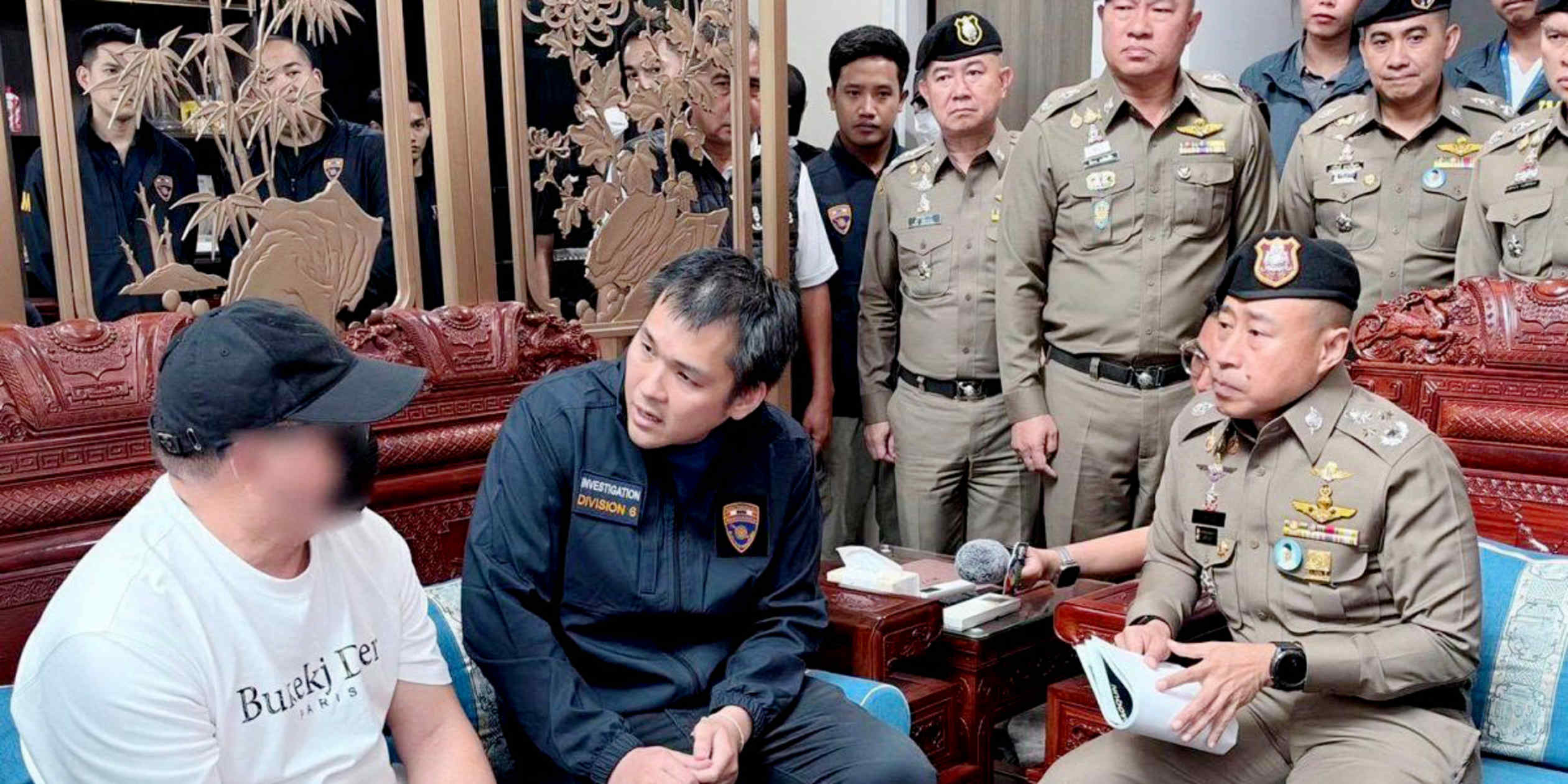
曼谷——今年7月,时任泰国警察副总长的三兰·努阿尔玛将军在芭堤雅班杜斯特牵头开展了一次高调行动,逮捕了一名仅被称为伊戈尔(Igor)的男子以及一个拉脱维亚家庭的四名成员,这些人全都持有俄罗斯护照,涉嫌通过当地代持人拥有多处房产。
BANGKOK -- In July, Gen. Samran Nualma, Thailand's then deputy police chief, led a high-profile operation at Baan Dusit Pattaya that resulted in the arrest of a man identified only as Igor and three members of a Latvian family, all with Russian passports, for allegedly owning numerous properties through local nominees.
俄罗斯新闻社俄新社在报道这次突袭行动时称:“在现场初步审讯中,这名俄罗斯人承认,他本人并不认识被列为他的公司51%股份持有人的那名泰国公民——而这家公司又持有该庄园内的房屋和地块。”此次行动发生在当地被称为“俄罗斯村”的地区,位于曼谷东南方向160公里处。
"During an initial interrogation at the scene, the Russian admitted that he did not personally know the Thai national listed as the owner of the 51% stake in his company -- the entity that, in turn, holds the houses and land plots in the estate," Russian news agency RIA Novosti reported of the raid on an area known locally as the "Russian Village," 160 kilometers southeast of Bangkok.
这些逮捕行动是总理阿努廷·查恩维拉库尔自2月大选以来政策剧变的一部分,已在泰国的外国投资界引发震动。他正在严格执行长期被公然违反的法律,数以万计的外国人通过这些法律漏洞,非法利用当地代持人控制公司,而这些公司拥有价值数百亿美元的土地。
The arrests are part of a policy sea change by Prime Minister Anutin Charnvirakul since a general election in February that has sent shock waves through Thailand's foreign investment community. He is enforcing long-flouted laws through which tens of thousands of foreigners have illegally used local nominees to control companies that own land worth tens of billions of dollars.
数十年来,泰国律师和会计师一直帮助外国人规避将外资持股上限设为49%的公司法,做法是设立由当地代持人持有51%股份、但对公司没有控制权的公司。外国人往往甚至从未见过他们的当地代持人。
Thai lawyers and accountants have for decades helped foreigners circumvent corporate laws that cap foreign ownership at 49% by setting up companies with local nominees owning 51% of the shares but with no control of the entities. The foreigners often never even meet their local nominees.
即使泰国股东确实按所述出资、发挥管理作用并领取薪水和分红,这类公司也可能不得拥有土地——少数例外包括享有投资促进委员会优惠待遇的重大外国直接投资项目。不过,这类公司可以按配额制度拥有公寓,该制度仍要求任何开发项目中51%的单元归泰国人所有。
Even if Thai shareholders have actually invested the capital as stated, play a managerial role and receive salaries and dividends, such companies may not own land -- with a few exceptions including major foreign direct investment projects with Board of Investment privileges. They may however own condominiums under a quota system that still requires 51% of units in any development to be Thai owned.
此前未执行的处罚包括最高三年监禁、最高100万泰铢(29,840美元)罚款、没收资产以及关闭公司。
Previously unenforced penalties include imprisonment for up to three years, fines of up to 1 million baht ($29,840), asset forfeiture and company closure.
“提名人在泰国并不新鲜,”法政大学商学院国际商务教授帕维达·帕纳农德对《日经亚洲》表示。“泰国政客长期以来一直利用司机和女佣代持股份。今年改变的是国内外因素叠加形成的完美风暴。外国人通过泰国提名人持有土地引发了当地的不满。隐名外国所有者激怒了本已在增长乏力中挣扎的泰国中小企业。”她补充说:“而泰国正寻求加入经济合作与发展组织(OECD)之际,却因成为诈骗资金枢纽和疑似转运路线而登上国际头条。”
"Nominees are nothing new in Thailand," Pavida Pananond, professor of international business at Thammasat Business School, told Nikkei Asia. "Thai politicians have long used drivers and maids to hold shares. What changed this year is a perfect storm at home and abroad. Foreign land ownership through Thai nominees stirred local resentment. Hidden foreign owners angered Thai small and medium-size enterprises already struggling with weak growth."
她指的是这家总部位于巴黎的预测机构。泰国第二季度实际国内生产总值同比仅增长1.9%,落后于东南亚其他大型经济体。
"And Thailand made international headlines as a hub for scam money and a suspected transshipment route, just as it seeks to join the Organisation for Economic Cooperation and Development (OECD)," she added, referring to the Paris-based forecasting agency Thailand's real gross domestic product grew just 1.9% on the year in the April-June quarter, lagging behind other big Southeast Asian economies.
10月19日,泰国总理阿努廷·查恩维拉库尔(右三)在曼谷主持一场多部门新闻发布会。主题是“打击提名人、强制出售并调查高风险群体土地所有权以保护国家利益的行动”。(总理府)与此同时,该国声势浩大的极端民族主义者认为,主权和经济安全正受到外国“灰色资本”海啸的威胁,尤其是来自中国的资本,以及数以千计的欺诈性提名人公司。
Thai Prime Minister Anutin Charnvirakul, third from right, presides over a multiagency news conference in Bangkok on Oct. 19. The theme is "Operation crackdown on nominees, forcibly selling and investigating land ownership of high-risk groups to protect national interests." (Office of the Prime Minister) The country's vocal ultranationalists meanwhile, believe sovereignty and economic security are threatened by the tsunami of foreign "gray capital," particularly Chinese, and thousands of fraudulent nominee companies.
一位知名外国分析师对《日经亚洲》表示:“我的理论是,‘阿努廷2.0’接受了这样一种想法,即可以从反外国人立场中获取政治资本,其逻辑是‘我们要夺回我们的国家’。我们一直有这些中国人掠夺经济、各种滥用行为——还有德国人、俄罗斯人干的各种事情。”
"My theory is that 'Anutin 2.0' cottoned on to the idea that there's political capital to be made out of being anti-foreigner, in the sense that 'we are taking our country back,'" a leading foreign analyst told Nikkei Asia. "We've had these Chinese raping the economy, all sorts of abusive practices -- and Germans, Russians doing all sorts of things."
泰国参议院外交事务委员会无党派副秘书长蓬猜·维塔亚勒德潘对《日经亚洲》表示,他认为政府正试图解决“一个严重的形象问题”。
Pornchai Witayalerdphan, the unaffiliated deputy secretary of the Senate Foreign Affairs Committee, told Nikkei Asia he thinks the government is trying to address "a serious image problem."
“人们普遍认为它无法拿出成果。它需要一场快速、重大的胜利来恢复公众信心,而加入经合组织可能正是这样一场胜利。但要实现这一点将极其困难。”阿努廷设定了9月的期限,要求对所有拥有外国股东的法律实体进行审查,并设定12月的期限,要求完成对利用泰国代持股东的不法分子采取法律行动,包括那些并不拥有土地的公司。
"It is widely seen as unable to deliver results. It needs a quick, major win to restore public confidence, and OECD accession could be just that. But achieving it will be extremely difficult." Anutin set a September deadline for a review of all legal entities with foreign shareholders, and December to complete legal action against malefactors using Thai nominee shareholders, including companies that do not own land.
根据商务部商业发展厅(DBD)的数据,从1998年到今年8月19日,外国持股比例最高为49%的部分外资实体数量为115,167家。几十年来,每年新设立的总数都在数千家左右,但2018年超过5,000家,2024年达到14,315家的峰值。去年总数降至11,746家,而今年截至8月19日仅为3,942家。
According to data from the Ministry of Commerce's Department of Business Development (DBD), the number of entities with a maximum of 49% partial foreign ownership created from 1998 until Aug. 19 of this year was 115,167. The total established each year was in the low thousands for decades but crossed 5,000 in 2018 and peaked at 14,315 in 2024. Last year the total dropped to 11,746, and this year it was only 3,942 until Aug 19.
此次打击行动对整体投资的影响难以评估,因为这些公司大多是小型投资者。
The impact of the crackdown on overall investment is hard to assess because most of these companies are small investors.
泰国政府10月制作的一张AI生成图片显示,总理阿努廷·查恩维拉库尔(左)与内政部副部长波拉皮·苏万奇维共同宣布,从外国人手中收回5,467莱(874公顷)土地,价值140亿泰铢(4.17亿美元)。(内政部副部长波拉皮·苏万奇维的Facebook页面)9月初,商业发展厅将36,277个存在外资持股并持有土地和房产的实体的详细信息送交相关机构调查,并识别出约2,200起尤为恶劣的入股行为。这36,277个实体共持有305,838块土地,总面积106万莱(1,702平方公里),以及76,840套公寓单元。
An AI-generated depiction made by the Thai government in October shows Prime Minister Anutin Charnvirakul, left, and Deputy Interior Minister Polapee Suwunchwee hailing the seizure of 5,467 rai (874 hectares) of land from foreigners worth 14 billion baht ($417 million). (Facebook page of Deputy Interior Minister Polapee Suwunchwee) In early September, the DBD sent details of 36,277 entities with foreign ownership holding land and property to relevant agencies for investigation, and identified some 2,200 particularly egregious incorporations. The 36,277 entities together owned 305,838 plots of land totaling 1.06 million rai (1,702 square kilometers) and 76,840 condominium units.
房地产事务机构(AREA)总裁索蓬·蓬乔猜表示,所有存在一定外资持股的土地总价值将达1.8万亿泰铢,而由外资持股最高达49%的实体所持有的土地——这是法律上争议最大的部分——价值近1.1万亿泰铢(326亿美元)。
Sopon Pornchokchai, president of the Agency of Real Estate Affairs (AREA), said all land with some foreign ownership would be worth 1.8 trillion baht while that owned by entities with up to 49% foreign ownership -- the most legally contentious -- almost 1.1 trillion baht ($32.6 billion).
政府官员的表态似乎印证了这一点。10月24日,内政部副部长波拉皮·苏万奇维在社交媒体上发布了关于“将泰国土地归还泰国人民”任务的消息。他说,政府正在从10个府的1,397名代持人手中收回土地,总面积5,467莱,价值140.10亿泰铢。他写道:“土地厅和内政部行政司将按照总理兼内政部长的指示,加快在2026年底前完成土地处置的执法工作。我们的成就是各部门齐心协力、共同努力的结果。”在这36,277个实体中,有4,761个的外资持股超过49%。这需要获得政府的特别许可。
Government officials' statements appear to corroborate this. On Oct. 24, Deputy Interior Minister Polapee Suwunchwee posted on social media about the "Mission 'Returning Thai land to Thai people." He said the government was reclaiming land from 1,397 nominees across 10 provinces spanning a total 5,467 rai worth 14,010 million baht. "The Land Department and Administrative Department, Ministry of Interior per the directive of the Prime Minister and Interior Minister, will expedite enforcement of land disposal by the end of 2026," he wrote. "Our accomplishment is from all sectors working together as one." Of the 36,277 entities, 4,761 have more than 49% foreign ownership. This requires special government permission.
据商业发展厅(DBD)的另一组数据,在由外资持股最高达49%的实体所控制的泰国土地中,主要的外国所有者是中国人,共8431家实体;其次是英国人,3014家;法国人,2378家。商业发展厅未说明其中有多少家拥有特殊的政府所有权。
According to separate DBD data, the leading foreign owners of Thai land controlled by entities with up to 49% foreign ownership are the Chinese, with 8,431 entities, followed by the British with 3,014 entities and French with 2,378 entities. The DBD did not say how many of these have special government ownership rights.
10月22日,特别案件调查厅特别案件调查委员会主席拉差普鲁·楚丹(中)在曼谷北部辉煌区搜查15套公寓时,与一个技术和网络犯罪小组交谈。这些公寓据信为一家非法的中国代持公司所有。(照片由泰国特别案件调查厅提供)“我们的职责是准备深入的信息,并提供给负责执法的相关部门,”自10月起担任商业发展厅厅长的吉提瓦·帕奇姆南对《日经亚洲》表示。“我们的实地调查大多覆盖了16个府,包括曼谷及其周边地区,以及普吉、素叻他尼等拥有旅游景点的府。”
Ratchapruk Choodam, center, chief of the Special Case Inquiry Committee of the Department of Special Investigation, speaks with a technology and cyber crime team during an Oct. 22 search of 15 condominium units in Huai Khwang, northern Bangkok, thought to be owned by an illegal Chinese nominee company. (Photo supplied by the Thai Department of Special Investigation) "Our role is to prepare in-depth information and provide it to the relevant agencies responsible for law enforcement," Kittiwat Patchimnan, the DBD director general since October, told Nikkei Asia. "Most of our field investigations have covered 16 provinces, including Bangkok and its environs, as well as provinces with touristic attractions such as Phuket and Surat Thani.
“目前,我们正在审视哪些商业领域可能被认定为风险群体,但我们也需要明白,我们的人手有限,”他说,并指出目前的分析使用的是三年前的系统,同时正在开发更快的软件。
"At the moment, we're examining which business sectors may be identified as risk groups, but we also need to understand that our manpower is limited," he said, noting the current analysis is being done using a three-year-old system while faster software is developed.
泰国国民长期以来一直利用代持结构隐瞒所有权。其中最著名的是1997年时任副总理的他信·西那瓦。2001年他首次当选总理后,宪法法院以8比7的投票结果裁定其利用家中员工和其他代持人隐瞒24亿泰铢资产的指控不成立,他勉强脱身。
Thai nationals have long used nominee structures to conceal ownership. Among the most prominent was Thaksin Shinawatra in 1997 when he was deputy prime minister. After he was elected prime minister for the first time in 2001, he was narrowly cleared in an 8-7 vote by the constitutional court of concealing 2.4 billion baht in assets using members of his domestic staff and other nominees.
根据1946年的《友好条约》,只有美国公民可以在泰国完全拥有企业,但通信、银行、农业产业和土地所有权等七个领域除外。所有其他国籍均被限制在49%。
Only U.S. citizens may own businesses outright in Thailand under the 1946 Treaty of Amity, except in seven sectors that include communications, banking, agroindustry and land ownership. All other nationalities are restricted to 49%.
代持公司在旅游和酒店行业尤为常见,代理人、导游以及餐厅和酒店都有。中国拥有的代持公司数量在十年前激增。到2019年,近1000万中国游客到访泰国,当时出现了“零元团”旅游现象,中国旅行团游客在大多数方面的消费收入都被输送给了中国拥有的公司——酒店、餐厅、零售店、娱乐场所、赌场和运输企业。
Nominee companies are particularly common in travel and hospitality, with agents and guides as well as restaurants and hotels. The number of Chinese-owned nominee companies exploded a decade ago. By 2019, nearly 10 million Chinese tourists visited Thailand amid the "zero-dollar" tourism phenomenon that saw revenue from most aspects of their visits in tour groups channeled to Chinese-owned companies -- hotels, restaurants, retail outlets, entertainment establishments, casinos and transport businesses.
有人担心这些不当做法正在为俄罗斯和印度游客重新上演,但中国的“灰色资金”可能已渗入其他行业。
There is concern that these malpractices are being revived for Russian and Indian tourists, but Chinese "gray money" might have crept into other sectors.
民主党副党魁、前财政部长科恩·查提卡瓦尼告诉《日经亚洲》:“政府正在打击非法中国公司,这些公司通过代持结构控制了整个农产品供应链,包括椰子、芒果、榴莲之类的东西。”“这不是那种典型的服务公司或大型企业。我不认为他们的目标是把所有外国人都打击一遍。”萨姆兰在芭堤雅上演的那次电视直播的直升机突降,是对春武里府外资房产调查的一部分。
"The government is going after illegal Chinese companies that through nominee structures have taken control of entire agricultural supply chains, including coconuts, mangos, durians -- that kind of thing," Korn Chatikavanij, deputy leader of the Democrat Party and a former finance minister, told Nikkei Asia. "It's not your typical service companies or large corporates. I don't think they are aiming to go after all the foreigners." Samran's dramatic televised helicopter swoop in Pattaya was part of an investigation into foreign-owned property in Chonburi province.
据泰国媒体报道,该房产价值超过50亿泰铢(1.48亿美元),涉及41个地点的33家公司。伊戈尔和另外三人被拘留至10月中旬,随后获保释。
The property was valued at over 5 billion baht ($148 million) and involved 33 companies in 41 locations, according to Thai media. Igor and the three others were detained until mid-October, then released on bail.
安努廷·查恩维拉库尔总理对外籍提名公司数十年来违反泰国法律的愤慨,已被传统媒体和社交媒体广泛报道——包括“Paco Sandoval Global News Thailand”在 Facebook 上的这篇 AI 文章。(Paco Sandoval)伊戈尔在芭堤雅的俄罗斯人社区已存在超过 20 年,那里有泰国 11 座俄罗斯东正教教堂之一的圣母圣像护佑教堂。该教堂建于 2014 年,是六个封闭社区的中心,每个社区约有 140 套住宅,当地人称其中约 90% 为俄罗斯业主居住。
Prime Minister Anutin Charnvirakul’s outrage at foreign nominee companies flouting Thai law for decades has been well covered by the legacy press and on social media -- including this AI take on Facebook by "Paco Sandoval Global News Thailand." (Paco Sandoval) Igor's Russian-dominated community in Pattaya has existed for over 20 years, and is home to one of 11 Russian Orthodox churches in Thailand, the Church of the Intercession of the Most Holy Theotokos. Built in 2014, it is the focal point of six gated communities with as many as 140 houses each that locals say are 90% occupied by Russian home owners.
上个月晋升为国家警察局长的萨姆兰,还于八月率领 300 名警察和官员在苏梅岛进行第七次突袭,目标是该旅游热点。《曼谷邮报》报道,在当地登记的近 13,000 家公司中,约有 8,254 家拥有外籍股东,另有 875 家“具备可能使用泰国提名人的特征”。已有中国、英国、意大利、法国、荷兰、奥地利、菲律宾和美国公民被逮捕。
Samran, who last month was promoted to national police chief, also descended on Koh Samui in August with 300 police and officials in the seventh raid on a tourism hub. The Bangkok Post reported that among almost 13,000 companies registered there, some 8,254 had foreign shareholders and 875 "had characteristics potentially indicating the use of Thai nominees." Arrests had already been made of Chinese, British, Italian, French, Dutch, Austrian, Filipino and U.S. nationals.
除移民局和旅游警察外,商业发展局、特别调查局、反洗钱办公室以及土地和税务部门等 23 个平时相对独立的政府机构也参与了此次行动。
Apart from immigration and tourist police, the DBD, the Department of Special Investigation, the Anti-Money Laundering Office, and the land and revenue departments are among 23 normally relatively siloed government agencies involved.
“记住,泰国所有部门现在都已联网,”Better Than Freehold公司的首席执行官兼联合创始人斯宾塞·罗伯茨对《日经亚洲》表示。该公司为外国人设计基于房产租赁的交易结构,而不使用代持人。“几十年来,终于第一次使用同一套计算机系统——共享同样的信息,这大概是我们所有人在这里以来的第一次。”阿努廷主导了这场打击行动。
"Remember, all of the Thai departments are now connected," Spencer Roberts, the CEO and co-founder of Better Than Freehold, a company that structures property lease-based deals for foreigners without using nominees, told Nikkei Asia. "Finally, after decades and decades, using the same computer system -- sharing the same information for the first time, probably since we've all been here."
5月10日,他访问了普吉岛。普吉岛深受土地侵占和无证房地产开发之苦,旅游区和住宅区均受影响,其中许多涉及非法的中国和俄罗斯企业。几天后,他访问了满月派对举办地帕岸岛,泰国商业发展厅在那里发现,超过三分之二的注册实体有外国投资者。
Anutin has spearheaded the crackdown. On May 10, he visited Phuket, which has suffered badly from land encroachment and unlicensed property development affecting tourist and residential areas, much of it involving illegal Chinese and Russian businesses. A few days later, he visited Koh Phangan, the full moon-party island, where the DBD found that over two-thirds of registered entities had foreign investors.
8月下旬,他的办公室收紧了驱逐出境的相关规定,以加快驱逐速度,包括针对违反商业法的行为。兼任内政部长的阿努廷还特意亲自签署驱逐令。
In late August, his office tightened up the regulation on deportation to speed up expulsions, including for business law violations. Anutin, who also holds the interior portfolio, has made a point of personallyg deportation orders.
与此同时,泰国律师事务所也在政府打击行动之后提供建议。其中一家律所表示:“外国投资者及其泰国合资伙伴应依据《外国商业法》对其持股结构完成合规审查……以确保每位泰国股东都能证明其投资是真实、自筹资金的,并就整改任何不再反映企业实际所有权和控制方式的结构寻求建议。”然而,这说起来容易做起来难。一位外国律师表示,最有可能违反持股和所有权要求的是小企业,它们将无法通过这样的审查——更不用说找到拥有足够投资资金的泰国投资者了。
Thai law firms have meanwhile been offering advice in the wake of the government crackdown. One said, "Foreign investors and their Thai joint-venture partners should complete a compliance review of their shareholding structures against the Foreign Business Act ... to ensure every Thai shareholder can evidence genuine, self-funded investment, and take advice on remedying any structure that no longer reflects how the business is actually owned and controlled." That is much easier said than done, however. One foreign lawyer said it is small businesses that are most likely to have violated shareholding and ownership requirements, and will be unable to pass such a review -- never mind find Thai investors with adequate investment funds.
代祷圣母教堂。这座俄罗斯东正教建筑建于2014年,是六个封闭式社区的核心,每个社区最多有140栋房屋。当地人说,这些房屋90%的业主是俄罗斯人。
The Church of the Intercession of the Most Holy Theotokos. Built in 2014, the Russian Orthodox building is the focal point of six gated communities with as many as 140 houses in each that locals say are 90% occupied by Russian homeowners.
“他们最容易暴露,因为他们在设立时没有预算聘请深入的法律咨询,”他说。“泰国律师和会计师基本上愿意协助设立代持公司——我认为对他们来说,最大的问题可能是他们是否使用同一家会计或律师事务所。”
"They are the most exposed because they haven't had a budget for deep-dive legal advice when they set up," he said. "Thai lawyers and accountants are basically willing to give assistance setting up the nominee company -- and I think the single biggest issue for them will probably be whether they're using the same accounting or legal firm."
“顶级律师事务所不会参与这种变通做法,”曼谷一位拥有丰富国际经验的知名泰国商人告诉《日经亚洲》。“股东——也就是外国人——很难说他们不知道这是一个灰色地带。”在外国人面临重大经济损失和可能因这次打击而被刑事起诉之际,他们的当地协助者——包括代持人——似乎受到的处罚很轻。
"Top-tier law firms would not have got involved in this kind of workaround," a prominent Thai businessman in Bangkok with extensive international experience told Nikkei Asia. "It would be very difficult for the shareholders -- the foreigners -- to say they didn't realize it was a gray area." As foreigners contemplate serious financial losses and possible criminal charges in the clampdown, their local facilitators -- including the nominees -- appear to be getting off lightly.
“现在的情况是,一家中小型泰国专业服务公司在帮助外国公司违法,”这位律师说。“他们应该被追究责任,但我认为存在政治上的不愿。”
"You've got a situation where a small-to-medium Thai professional services company is helping foreign companies break the law," the lawyer said. "They should be held accountable, but I think there's a political reluctance to do that."