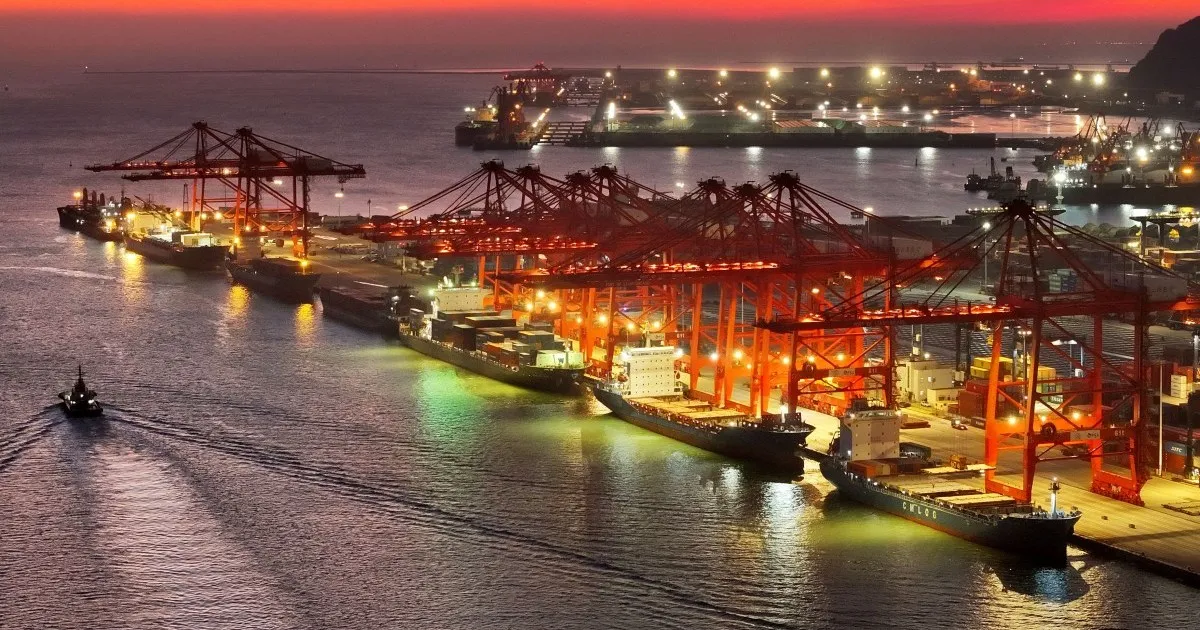
中国今年前10个月达1.04万亿美元的贸易顺差,证明了其强大的出口引擎。
China’s $1.04 trillion trade surplus in the first 10 months of the year is a testament to its mighty export engine.
这也是结构性弱点的迹象,如果不加遏制,这些弱点有可能破坏中国跻身最富裕国家行列的努力。
It is also a sign of structural weaknesses that, left unchecked, threaten to derail China’s bid to join the ranks of the wealthiest nations.
尽管其世界工厂的地位帮助它从20世纪70年代末开始实现了生活水平的急剧提高,但中国的出口主导型经济模式正面临收益递减。
While its status as the world’s factory helped it achieve a dramatic rise in living standards beginning in the late 1970s, China’s export-led economic model is facing diminishing returns.
尽管人工智能热潮推动其出口创下历史新高,但这个世界第二大经济体正遭受着长期疲软的国内需求的困扰。
Even as the AI boom drives its exports to record highs, the world’s second-largest economy suffers from chronically weak domestic demand.
中国消费者的储蓄率远高于其他国家的同类人群,家庭通常将三分之一或更多的收入存起来。
Chinese consumers save far more than their peers elsewhere, with households typically putting away one-third or more of earnings.
这种动态部分可以用中国相对薄弱的社会安全网以及文化态度、被低估的货币和陷入困境的房地产市场来解释。中国在社会保障方面的支出远低于大多数发达经济体。
The dynamic can be partly explained by China’s relatively weak social safety net, as well as cultural attitudes, an undervalued currency and a flailing real estate market. China spends far less on social protection than most advanced economies.
政府在医疗、养老金和福利支付方面的支出仅占该国国内生产总值(GDP)的10%左右,远低于经济合作与发展组织(OECD)约23%的平均水平。由于存了更多的钱以备不时之需,中国家庭的消费也随之减少。
Government spending on healthcare, pensions and welfare payments accounts for only about 10 percent of the country’s gross domestic product (GDP), far below the OECD average of about 23 percent. With more money stowed away for a rainy day, Chinese households also spend less.
总部位于新加坡、旨在促进贸易的慈善组织欣里希基金会(Hinrich Foundation)的数据显示,中国家庭消费约占GDP的39%,而美国的这一比例为68%。
Chinese household consumption sits at about 39 percent of GDP, versus 68 percent of GDP in the United States, according to the Hinrich Foundation, a Singapore-based philanthropic organisation that promotes trade.
布鲁塞尔智库布鲁格(Bruegel)高级研究员埃雷罗(Alicia García Herrero)对半岛电视台表示:“依赖出口的模式本质上意味着中国家庭在补贴全球消费者。”
“An export-dependent model essentially means Chinese households are subsidising global consumers,” Alicia García Herrero, a senior fellow at Bruegel, a Brussels-based think tank, told Al Jazeera.
埃雷罗说:“由于房地产财富缩水和薄弱的社会安全网,高额的预防性储蓄导致家庭面临更弱的工资增长、国内的通缩压力以及更少的国家经济收益份额。”
“High precautionary savings – driven by falling property wealth and thin social safety nets – leave families with weaker wage growth, deflationary pressures at home, and a smaller share of the country’s economic gains,” García Herrero said.
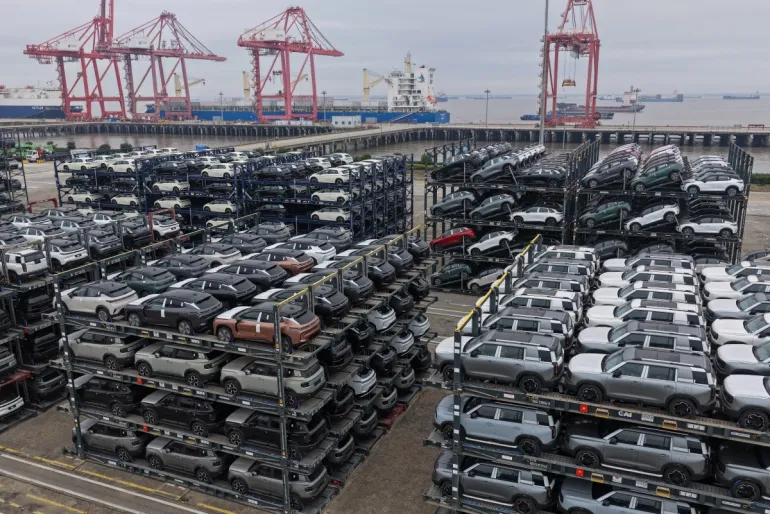
2026年10月12日,中国江苏省苏州港太仓港区,中国制造的汽车停放在专用车辆架上,准备装船出口 [CN-STR/AFP] 对中国而言,贸易对于缓解经济中的薄弱环节至关重要。
Chinese-made cars stand in specialised vehicle racks in preparation for loading onto ships for export, at the Taicang Port area of Suzhou Port, Jiangsu province, China, on October 12, 2026 [CN-STR/AFP] For China, trade has been critical in mitigating areas of weakness in the economy.
周二公布的官方数据显示,在半导体和自动数据处理机极高需求的提振下,10月出口额按年大增35.2%。
Exports surged 35.2 percent in October on a yearly basis, according to official figures released on Tuesday, buoyed by red-hot demand for semiconductors and automatic data processing machines.
最新的贸易数据表明,中国有望超过其在2025年创下的1.2万亿美元的全年贸易顺差纪录。
The latest trade figures put China on track to exceed its record full-year surplus of $1.2 trillion in 2025.
但对贸易的依赖也让中国经济容易受到海外日益增加的不满情绪的影响。批评人士称,中国的国家补贴出口模式破坏了公平贸易准则。
But the reliance on trade has also left its economy vulnerable to growing discontent overseas. Critics say China’s state-subsidised export model abuses the norms of fair trade.
本月早些时候,欧盟宣布将中国混合动力汽车的年进口量限制在35万辆以内,作为其应对中国“产能过剩”努力的一部分。
Earlier this month, the European Union announced it would cap imports of Chinese hybrid electric vehicles at 350,000 units annually as part of its efforts to counter China’s “overcapacity”.
香港科技大学经济学教授卡斯滕·霍尔茨(Carsten Holz)表示,对出口以维持增长的日益依赖“不太可能具有可持续性”。
The growing reliance on exports to maintain growth is “unlikely to be sustainable”, said Carsten Holz, a professor of economics at the Hong Kong University of Science and Technology.
霍尔茨对半岛电视台表示:“世界太小,无法消化中国所有的过剩制造业产能,最终其他国家会设置壁垒,类似于中国过去曾在一些经济领域使用、并且现在仍在使用的壁垒。”他使用了中国的正式名称“中华人民共和国”的英文缩写。他说:“房地产热潮已经结束。出口热潮也将结束。”过去十年里,中国经济模式的局限性变得越来越明显。
“The world is too small to absorb all of the PRC’s excess manufacturing capacity and eventually, other countries will put up barriers similar to those the PRC has used in the past and is still using across some sectors of its economy,” Holz told Al Jazeera, using the acronym of China’s official name, the People’s Republic of China. “The property boom has run its course. The export boom, too, will run its course,” he said. The limits of China’s economic model have become increasingly visible over the past decade.
3月份,北京宣布经济增长目标为4.5%至5%,这是自1991年以来的最低目标。
In March, Beijing announced an economic growth target of 4.5-5 percent, its lowest since 1991.
尽管这样的增长会让大多数发达经济体艳羡,但这标志着较之20世纪90年代和21世纪头十年常见的两位数增长已大幅放缓。
While such growth would be the envy of most advanced economies, it represents a marked slowdown from the double-digit increases that were common during the 1990s and 2000s.
尽管经历了20世纪70年代和80年代改革开放之后的数十年快速增长,中国经济在追赶发达经济体方面仍有相当长的路要走。
Despite decades of rapid growth after reforms undertaken in the 1970s and 1980s, the Chinese economy still has considerable ground to cover to catch up with its developed counterparts.
按人均计算,中国的国内生产总值(GDP)约为美国经济规模的六分之一,相当于日本的40%。
On a per capita basis, China’s GDP is about one-sixth the size of the US economy and 40 percent as large as Japan’s.
中国国家主席习近平已表达了在2035年将经济规模翻一番的宏伟目标,一些经济学家认为,以未来几年的预期增长率来看,这一目标将难以实现。
President Xi Jinping has expressed his ambition to double the size of the economy by 2035, a goal that some economists believe will be difficult to reach at expected growth rates in the coming years.
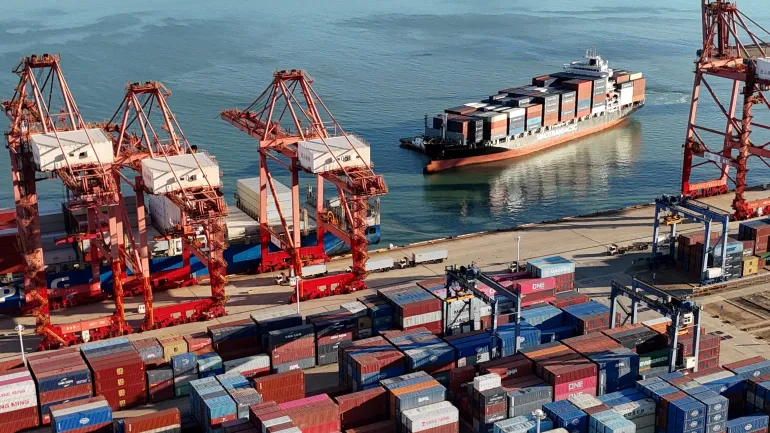
2026年10月14日,一艘货轮驶近中国江苏省连云港港的一个集装箱码头(中国日报社通过路透社提供)法国外贸银行(Natixis Corporate & Investment Banking)驻香港亚太区高级经济学家吴卓殷(Gary Ng)表示:“作为一个大国,中国最终需要更好的消费来支撑其长期增长。”
A cargo ship approaches a container terminal at Lianyungang Port, Jiangsu province, China, on October 14, 2026 [China Daily via Reuters]“As a large country, China will eventually need better consumption to support its long-term growth,” said Gary Ng, a senior economist for the Asia Pacific at Natixis Corporate & Investment Banking in Hong Kong.
吴卓殷对半岛电视台说:“它不是一个可以依靠一两个行业的微型经济体。”决策者已经认识到提振国内需求的必要性。
“It is not a small economy that can rely on one or two sectors,” Ng told Al Jazeera. Policymakers have acknowledged the need to boost domestic demand.
今年7月,北京公布了首个专门旨在促进消费的五年规划,目标是到2030年实现消费品零售额60万亿元(合9万亿美元),高于去年的创纪录水平50.12万亿元(合7.5万亿美元)。收效甚微。到目前为止,此类努力的收效甚微。
In July, Beijing announced its first five-year plan aimed specifically at boosting consumption, targeting 60 trillion yuan ($9 trillion) in sales of consumer goods by 2030, up from a record 50.12 trillion yuan ($7.5 trillion) last year. So far, such efforts have produced meagre results.
2026年的零售额接近停滞,9月份同比增长仅为1.1%,高于8月份0.6%的增速。
Retail sales have been close to stagnant in 2026, growing just 1.1 percent year-on-year in September, up from 0.6 percent growth in August.
荷兰国际集团(ING)大中华区首席经济学家宋林(Lynn Song)表示:“预计会有更多的政策支持,但我认为就目前而言,重点可能更多地倾向于发展科技自主和产业升级。”
“More policy support is expected, but I think for now, the focus may be more oriented toward developing tech self-reliance and industrial upgrading,” said Lynn Song, chief economist for Greater China at ING.
宋林表示:“从长期来看,随着更多家庭进入中产阶级,中国的消费自然会在经济增长中发挥更大作用——这个过程需要一些时间。”他并补充说,大多数观察人士都会认同“多年来生活质量和消费已经有所改善”。
“Longer term, China’s consumption will naturally play a larger role in economic growth as more households enter the middle class – this process takes some time,” Song said, adding that most observers would agree that “quality of life and consumption has improved over the years”.
布鲁盖尔研究所的加西亚-埃雷罗表示,中国不断扩大的贸易顺差既反映了其在科技领域的竞争力,也指向了一个“鲜明的双速经济”。
While China’s growing trade surplus reflects its competitiveness in tech, it also points to a “stark two-speed economy”, said Bruegel’s García Herrero.
她表示:“公开场合,北京坚称希望实现更平衡的贸易,但其产业政策持续将资金引导至制造业和自力更生,而非居民需求。”
“Publicly, Beijing insists it wants more balanced trade, yet its industrial policies continue to channel capital into manufacturing and self-reliance rather than household demand,” she said.
她说:“若无实质性的结构性改革来提振居民收入和社会福利,这种对出口的依赖不可持续——尤其是在美国和欧盟等贸易伙伴以关税和贸易限制作为回击之际。”
“Without meaningful structural reforms to boost household income and social welfare, this reliance on exports is unsustainable – especially as trading partners like the US and EU push back with tariffs and trade curbs.”