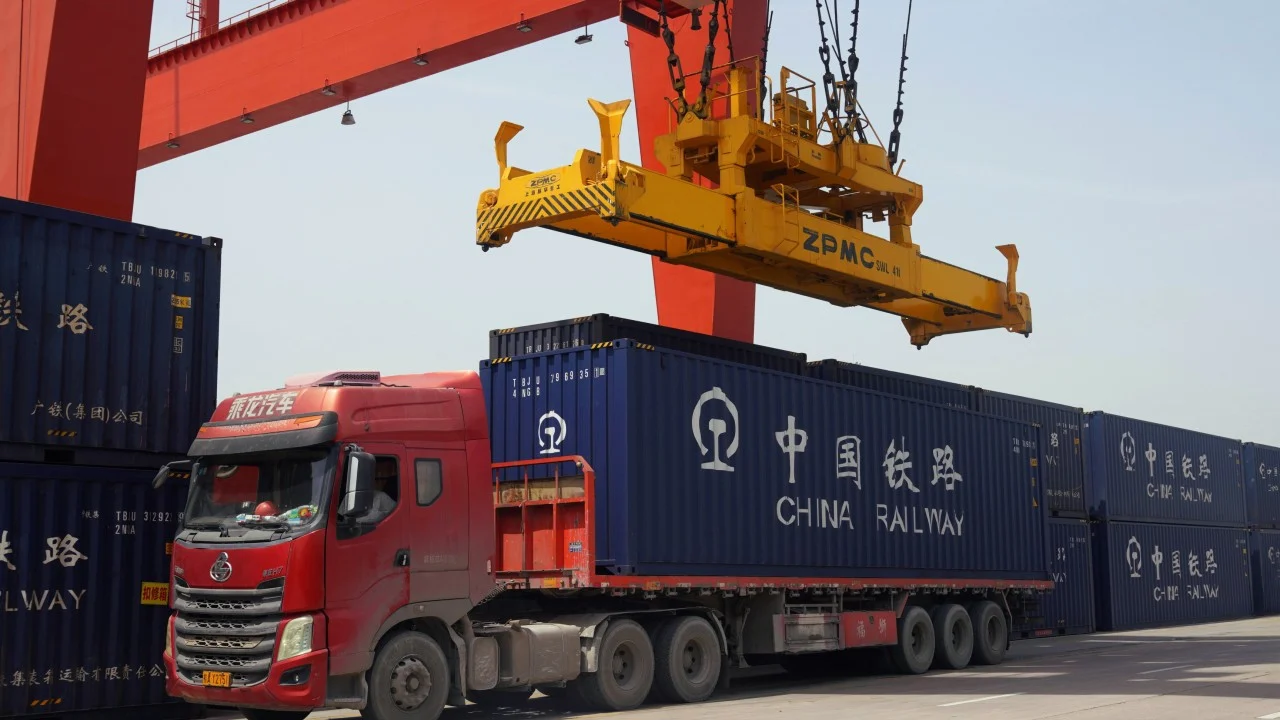
随着国内经济持续承压,中国的出口机器正在加速运转。在此之际,贸易摩擦不断加剧,中国的合作伙伴们开始质疑,持续的贸易顺差是否能够与平衡且具有韧性的区域增长并存。
China’s export machine is accelerating as its domestic economy remains under strain. This comes amid growing trade friction as China’s partners question whether persistent surpluses can coexist with balanced and resilient regional growth.
上个月,中国出口额同比增长36.3%,对东南亚的出货量更是飙升52.3%。贸易顺差达到1335亿美元,前九个月的总顺差额达到了9381亿美元。
Last month, China’s exports rose 36.3 per cent year on year, while shipments to Southeast Asia jumped 52.3 per cent. The trade surplus reached US$133.5 billion, taking the nine-month total to US$938.1 billion.
相比之下,最新官方数据显示,8月份零售额仅增长0.4%。在前八个月中,固定资产投资下降7.2%,房地产投资骤降19.9%。然而,8月份工业生产却增长了5.2%。
In contrast, retail sales grew just 0.4 per cent in August, according to the latest official figures. For the first eight months, fixed-asset investment dropped 7.2 per cent while property investment plunged 19.9 per cent. Yet industrial production for August rose 5.2 per cent.
这些数据并不能证明仅靠出口就能解释中国的韧性,也不能证明每家工厂都在过度生产。但它们揭示了外部需求如何在内需依然参差不齐的情况下维持生产。
These figures do not prove that exports alone explain China’s resilience or that every factory is overproducing. But they reveal how external demand sustains production while domestic demand remains uneven.
对于亚洲邻国而言,这带来了一个艰难的抉择。中国的机械、电子产品、电池和太阳能电池板可以降低成本并提高竞争力。但同一波出口激增也可能加剧区域生产商的价格压力,尤其是那些尚未发展出自身强大技术、供应商网络或品牌的生产商。
For Asian neighbours, that creates a difficult bargain. Chinese machinery, electronics, batteries and solar panels can lower costs and improve competitiveness. But the same export surge can also intensify price pressures on regional producers, especially those yet to develop their own strong technology, supplier networks or brands.
问题不在于亚洲其他地区是否应该与中国进行贸易,而在于该地区是通过这种贸易变得更有能力,还是仅仅成为中国产出的更大倾销地。出口激增可以使双方受益,但并非均衡受益。
The issue is not whether the rest of Asia should trade with China. It is whether the region is becoming more capable through that trade or simply a larger outlet for China’s production. An export boom can benefit both sides, but not evenly.
中国出口的强劲势头反映出真正的优势:密集的供应商网络、先进的制造能力、规模化物流以及日益成熟的技术。上个月的激增在一定程度上是由半导体、计算设备和绿色技术推动的。芯片出口额按年计算增长108.1%,汽车出货量增长超过一半,这反映了中国企业有能力供应的产品的真实需求。
China’s export strength reflects genuine advantages: dense supplier networks, advanced manufacturing capacity, logistics at scale and increasingly sophisticated technology. Last month’s surge was driven partly by semiconductors, computing equipment and green technology. Chip exports rose 108.1 per cent year on year in value, while vehicle shipments increased more than half, reflecting real demand for products that Chinese firms are well placed to supply.
这种成功缓冲了国内疲弱对经济的影响。当家庭支出谨慎且房地产投资收缩时,海外销售可以帮助保持生产线运转、维持规模经济并支持企业营收。
This success cushions the economy against domestic weakness. When households spend cautiously and property investment shrinks, overseas sales can help keep production lines busy, preserve economies of scale and support corporate revenues.
在本地消纳滞后的情况下,出口商更有动力在海外寻找买家,即使由此产生的竞争令其他国家的产业雄心变得复杂。这种压力通过价格、市场份额和投资决策跨越了国界。
Where domestic absorption lags, exporters have stronger incentives to seek buyers abroad, even when the resulting competition complicates other countries’ industrial ambitions. That pressure crosses borders through prices, market share and investment decisions.
东南亚消费者和制造商可能会从更便宜的投入品中受益,而与同类产品竞争的本地企业则面临更薄的利润率。各国政府可以欢迎中国的工厂和资本,但依然会担心本地供应商将被限制在较低价值的活动中。
Southeast Asian consumers and manufacturers might gain from cheaper inputs, while local companies competing in the same product categories face thinner margins. Governments can welcome Chinese factories and capital yet still worry that domestic suppliers will remain confined to lower-value activities.
该地区与这一体系深度相连。去年中国与东南亚的贸易额突破1万亿美元,并继续保持强劲增长。该地区的需求有助于维持中国的销售,而其工厂则交织在中国企业日益塑造的生产网络之中。
The region is deeply connected to this system. China-Southeast Asia trade surpassed US$1 trillion last year and continues to grow strongly. The region’s demand helps sustain Chinese sales, while its factories are woven into production networks that Chinese companies increasingly shape.
这股激增不应被解读为两者之间的竞争。一些出口是工厂使用的中间产品,而另一些则与成品竞争。这种区别至关重要,因为前者可以提高生产率,而后者则会削弱无法在规模或价格上匹敌的企业。
The surge should not be read as a contest between the two. Some exports are intermediate goods used by factories, while others compete with finished products. The distinction matters as the first can raise productivity, whereas the second can weaken companies unable to match in scale or price.
这种双重角色非常重要。越南、马来西亚和泰国等国受益于人工智能(AI)领域的繁荣,而区域企业则依赖中国的零部件、机械和中间产品。与人工智能相关的出口支持了这些经济体,但技能和数字连接方面的差距限制了收益。一体化提供通向先进生产的阶梯,但本地企业仍必须攀登它。
This dual role matters. The likes of Vietnam, Malaysia and Thailand benefit from the boom in artificial intelligence (AI), while regional firms rely on Chinese components, machinery and intermediate goods. AI-related exports support these economies, but skills and digital connectivity gaps limit the gains. Integration offers a ladder to advanced production, but local companies must still climb it.
风险不仅仅是廉价商品的涌入,而是贸易扩张的速度快于国内能力。一个经济体可能会出口电子产品,同时却在进口使这些电子产品具有价值的零部件、设计和技术诀窍。仅靠组装厂无法创建深厚的供应商网络,总出口额可能会夸大本地收益。
The risk is not merely an influx of cheap goods but trade expanding faster than domestic capabilities. An economy may export electronics while importing the components, designs and know-how that make them valuable. Assembly plants alone do not create deep supplier networks, and gross exports can exaggerate local gains.
这种区别应当指引各政府如何评估其与中国的关系。各项举措应包括国内附加值、生产率、本地采购、研发、熟练工作岗位,以及企业是否转向更复杂的任务。这些能够揭示一体化究竟是建立能力,还是仅仅扩大了吞吐量。
That distinction should shape how governments judge their relationship with China. Measures should include domestic value added, productivity, local procurement, research and development, skilled jobs and whether companies move into more complex tasks. These reveal whether integration builds capability or merely expands throughput.
所有这些并不意味着贸易保护主义是一个充分的答案。中国的投入品可以削减成本、支持更清洁的技术,并将企业连接到全球供应链中。一刀切的限制可能会推高价格,同时保护效率低下的生产商。
None of this makes protectionism an adequate answer. Chinese inputs can cut costs, support cleaner technologies and connect companies to global supply chains. Blanket restrictions could raise prices while protecting inefficient producers.
更好的应对方式是让开放发挥更大作用:投资于技术教育、可靠的电力和物流、研究伙伴关系、供应商发展以及为本地企业提供融资渠道。
The better response is to make openness work harder: invest in technical education, reliable power and logistics, research partnerships, supplier development and access to finance for domestic firms.
这意味着设定可衡量的目标,定期审查支持措施,并在企业未能升级时予以撤回。竞争政策和透明采购也很重要,因为缺乏问责制的补贴只能巩固现有企业,而无法建立能力。
That means setting measurable targets, reviewing support regularly and withdrawing it when firms fail to upgrade. Competition policy and transparent procurement also matter, because subsidies without accountability can entrench incumbents rather than build capability.
各国的优先事项有所不同。马来西亚可以深化半导体设计专长;越南可以建立电子产品供应商体系;泰国可以开发电动汽车的工程技术和零部件。印度尼西亚必须确保矿产加工和电池投资能够产生技术、熟练工作岗位和具有竞争力的下游企业,而不仅仅是更多的项目。
Priorities differ. Malaysia can deepen semiconductor design expertise; Vietnam can build electronics suppliers; Thailand can develop engineering and components for electric vehicles. Indonesia must ensure mineral processing and battery investment generate technology, skilled jobs and competitive downstream firms, not merely more projects.
中国的出口激增或许有助于稳定其增长,但亚洲不应将成为一个可靠的出口地误认为是成为产业赢家。目标不是切断与中国的经济联系,而是将这些联系转化为国内的学习、生产率和更高价值的生产。衡量一体化的标准应该是亚洲通过与中国的贸易能够制造、设计和改进多少产品。
China’s export boom may help stabilise its growth, but Asia should not mistake being a reliable outlet for being an industrial winner. The objective is not to sever economic ties with China. It is to turn those ties into learning, productivity and higher-value production at home. Integration should be judged by how much more Asia can make, design and improve through trade with China.