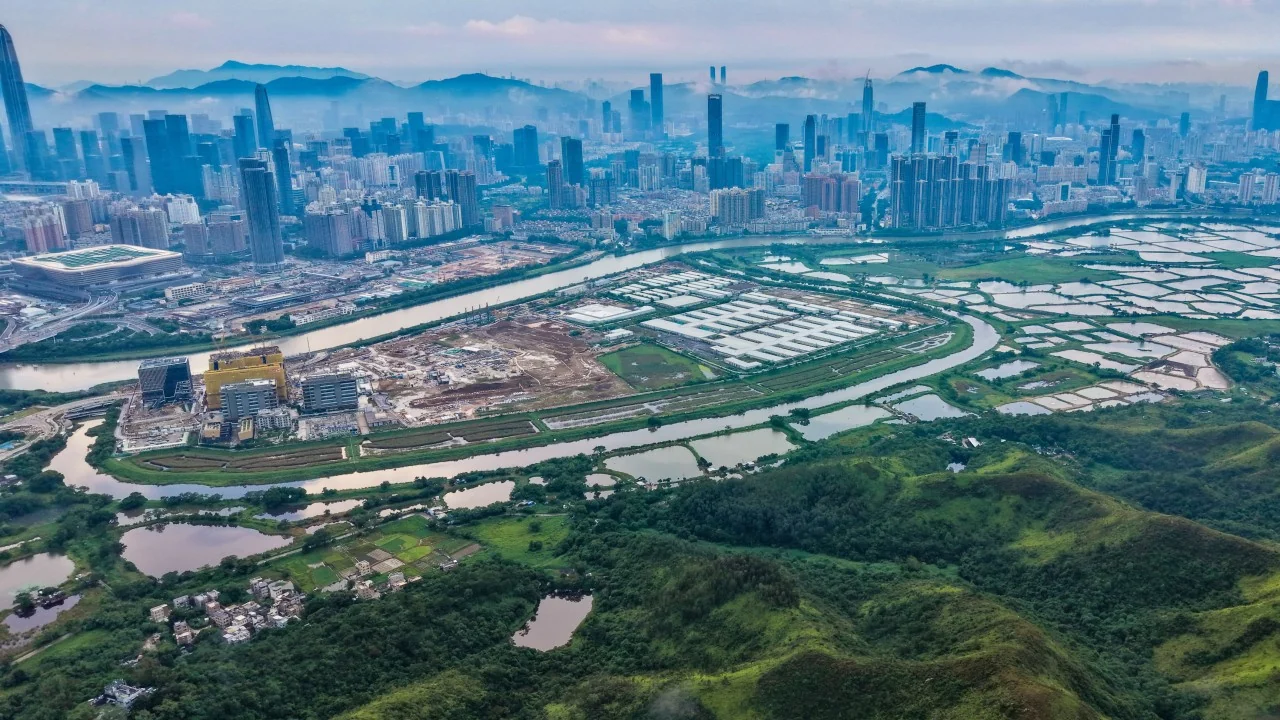
北部都会区是香港未来二十年最具雄心的发展项目。自从北部都会区发展策略公布以来,落马洲河套地区的港深创新及科技园、新田科技城以及洪水桥/厦村新发展区等重大项目已逐渐形成发展势头。政府也在加速大学城和工业邨的发展。
The Northern Metropolis is Hong Kong’s most ambitious development project for the next two decades. Since the Northern Metropolis development strategy was unveiled, major projects including the Hong Kong-Shenzhen Innovation and Technology Park in the Lok Ma Chau Loop, the San Tin Technopole and the Hung Shui Kiu/Ha Tsuen new development area have gathered momentum. The government is also accelerating the development of university towns and industrial estates.
北部都会区涵盖元朗区和北区,占地约3万公顷(约7.41万英亩),预计将提供超过3000公顷的新发展土地。它旨在成为香港更深程度融入国家发展的平台,以及未来人口、产业和投资增长的主要来源。
Encompassing Yuen Long and North districts, the Northern Metropolis covers about 30,000 hectares (74,100 acres) and is expected to provide more than 3,000 hectares of new development land. It is intended to become both a platform for Hong Kong’s deeper integration into national development and a major source of future population, industrial and investment growth.
然而,随着发展推进,香港应当重新思考一个根本问题:北部都会区的真正中心应该在哪里?
As development advances, though, Hong Kong should reconsider a fundamental question: where should the Northern Metropolis’ true centre be?
从功能上讲,北部都会区应当成为一种新型的教育和创新城市,围绕两大核心引擎构建:一个创新科技园区和一个大学城。交通、商业、住房和公共服务应当在它们周围形成一个完整的城市生态系统。
Functionally, the Northern Metropolis should become a new type of education and innovation city, built around two principal engines: an innovation and technology park and a university town. Transport, commerce, housing and public services should form a complete urban ecosystem around them.
问题在于,这些引擎当前的空间安排可能并非最优。新田科技城的主发展区坐落于约150公顷的鱼塘和湿地上,且按当前规划无法享有港铁的直接覆盖。
The problem is that the current spatial arrangement of these engines might be less than optimal. The main development area of the San Tin Technopole sits on about 150 hectares of fish ponds and wetlands and and does not enjoy direct MTR coverage under the current plan.
北环线支线计划连接新田科技城、河套地区和新皇岗口岸,但预计要到2034年才能投入运营。对于科技企业而言,通达性并非“锦上添花”,而是可以具有决定性意义。
The Northern Link Spur Line is planned to connect the San Tin Technopole, the Loop and the new Huanggang Port, but it is not expected to come into operation until 2034. For technology enterprises, accessibility is not a “nice to have”. It can be decisive.
问题不在于北部都会区是否应该推进。相反,问题在于其核心布局是否仍能在发展处于早期阶段时得以改进。
The question is not whether the Northern Metropolis should proceed. Rather, it is whether its core layout can still be improved while development remains at an early stage.
有一片重要土地被忽视了。落马洲河套地区东南面的狄坑占地约160公顷政府土地。它临近河套地区和古洞北,加上其规模、交通潜力和适应性,具备了许多都会区核心所需的属性。
An important piece of land has been overlooked. Tit Hang, southeast of the Loop, covers about 160 hectares of government land. Its proximity to the Loop and Kwu Tung North, together with its scale, transport potential and adaptability, gives it many of the attributes required of a metropolitan core.
在2024年新田科技城的规划过程中,笔者领导的智库曾提议将狄坑山作为替代或补充的发展选项。该建议未被采纳,但值得重新考虑。
During the planning process for the San Tin Technopole in 2024, the think tank I lead proposed studying Tit Hang Shan as an alternative or complementary development option. That suggestion was not accepted, but it deserves reconsideration.
狄坑山可以容纳大学城和北部都会区核心区,将大学校园、研究设施、金融服务、北部都会区行政中心、商业活动和文化机构汇聚在一起。两条发展带也可以沿着深圳河南岸延伸,在两侧夹击河套地区。
Tit Hang Shan could accommodate the university town and the Northern Metropolis’ core district, bringing together university campuses, research facilities, financial services, a Northern Metropolis administrative centre, commercial activities and cultural institutions. Two development belts could also extend along the southern bank of the Shenzhen River, flanking the Loop on both sides.
这些区域加在一起,可以形成一个独特的港深制度创新和跨境合作专区。这一安排将使北部都会区超越单一科技园的概念。它将打造一个融合创新、教育、金融、行政、商业和文化的综合都会中心。
Together, these areas could form a distinctive Hong Kong-Shenzhen special zone for institutional innovation and cross-boundary collaboration. This arrangement would elevate the Northern Metropolis beyond the concept of a stand-alone technology park. It would create an integrated metropolitan centre combining innovation, education, finance, administration, commerce and culture.
全球领先的创新区之所以成功,靠的是集中大学、研究机构、企业总部、风险资本和配套城市便利设施。当人才、知识和资本之间的距离缩短时,创新就会蓬勃发展。
The world’s leading innovation districts succeed by concentrating universities, research institutions, corporate headquarters, venture capital and supporting urban amenities. Innovation flourishes when the distance between talent, knowledge and capital is reduced.
物理上的临近鼓励了伙伴关系、非正式交流和思想流通。因此,香港需要超越仅仅建造研究设施的做法,创造一个企业、学者、投资者和居民能够持续互动的环境。
Physical proximity encourages partnerships, informal exchanges and the circulation of ideas. Hong Kong therefore needs to go beyond merely building research facilities and create an environment where enterprises, academics, investors and residents can interact continuously.
交通规划必须支持这种集中。政府没有完全依赖北环线支线,而是可以利用古洞站作为枢纽,建立连接皇岗口岸、狄坑山和河套地区的架空绿色捷运系统。
Transport planning must support this concentration. Instead of relying entirely on the Northern Link Spur Line, the government could use Kwu Tung station as a hub for an elevated green transit system connecting the Huanggang Port, Tit Hang Shan and the Loop.
与重铁相比,这样一个系统可以更快、更灵活地建造,同时连接多个发展区。初步估算显示,狄坑和两侧区域可以提供大约380公顷的额外发展土地以及约1000万平方米的楼面面积。
Compared with heavy rail, such a system could be built more quickly and flexibly while connecting multiple development areas. Preliminary estimates suggest that Tit Hang and the two flanking areas could provide around 380 hectares of additional development land and about 10 million square metres of floor area.
这不仅仅是一项释放更多土地的提议。这是一个创造能够支撑香港未来半个世纪发展的全新城市中心的机会。
This is not simply a proposal to release more land. It is an opportunity to create a new urban centre capable of supporting Hong Kong’s development for the next half-century.
当行政、技术、教育、商业和文化功能汇聚并通过河套地区与深圳的创新资源连接时,北部都会区就能获得在国际上竞争所需的集聚规模。
When administrative, technological, educational, commercial and cultural functions converge and connect with Shenzhen’s innovation resources through the Loop, the Northern Metropolis can acquire the critical mass needed to compete internationally.
因此,香港应当将狄坑山和河套地区两侧的土地转变为全球创新的核心。作为大湾区内的战略连接点、亚洲枢纽和国际交汇点,这个新核心可以吸引来自世界各地的大学、企业、投资者和人才。
Hong Kong should therefore transform Tit Hang Shan and the land flanking the Loop into the heart of global innovation. As a strategic connection point within the Greater Bay Area, an Asian hub and an international meeting place, this new core could attract universities, enterprises, investors and talent from around the world.
城市规划从来不是建立在单一、不可逆转的决策之上的。这是一个不断修正和改进的过程。一个项目对香港的未来越重要,我们就越应该乐于比较替代方案。
City planning is never built on a single, irreversible decision. It is a continuous process of correction and improvement. The greater a project’s importance to Hong Kong’s future, the more willing we should be to compare alternatives.
北部都会区仍在成形之中。今天进行严肃的辩论,就能避免明天长达十年的弯路。为香港提供另一个具竞争力的发展选项,并非北部都会区的阻碍。这是我们赋予其更强心脏的方式。实现这一愿景,需要决策者具备更强大的决心。
The Northern Metropolis is still taking shape. A serious debate today can prevent a decade-long detour tomorrow. Giving Hong Kong another competitive development option is not an obstacle to the Northern Metropolis. It is how we can give it a stronger heart. Realising that vision requires an even stronger heart on the part of decision makers.