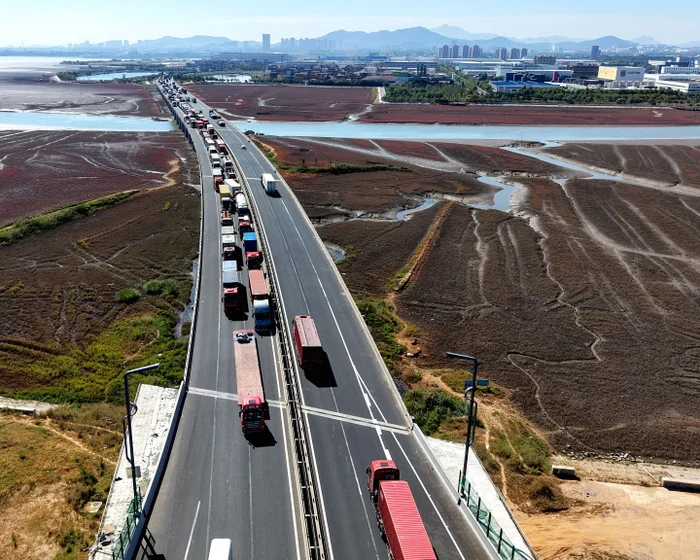
王冰每天驾驶一辆大型电动卡车,在中国南方热带岛屿海南岛的海口市与东方市之间运送约五吨货物。往返一趟约500公里(310英里)。但补能并非王冰担心的事。
Every day, Wang Bing drives his big electric lorry to send about five tonnes of goods between the cities of Haikou and Dongfang on Hainan, a tropical island in southern China. A round trip covers about 500 kilometres (310 miles). But refuelling is not something Wang worries about.
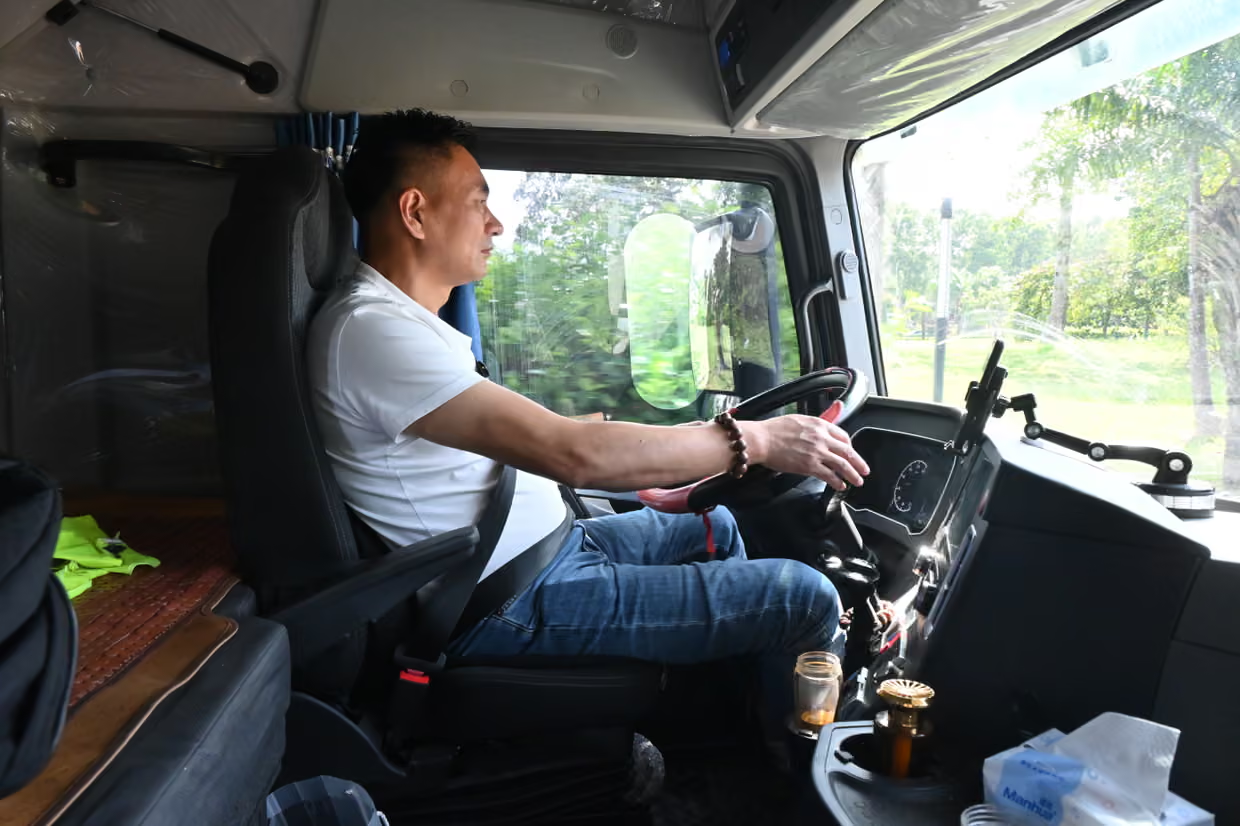
“电量不足时,我只需开进换电站换一块满电电池,”这位53岁的司机说,他与一名同事轮班,每班八小时。
“When my battery runs low, I just drive my truck into a battery-swapping station to get a fully charged one,” says the 53-year-old, who shares the journey with a colleague in eight-hour shifts.
王冰当卡车司机已近三十年。前二十年,他开的是烧柴油的常规卡车。约五年前,他所在的物流公司更新车队,他开始驾驶电动车型。今年7月,他原本采用常规插枪充电的旧款电动卡车,被一辆配备可换电池的新车取代。
Wang has been a lorry driver for nearly three decades. In the first two of those, he drove conventional lorries fuelled by diesel. About five years ago, he began driving an electric model after the logistics company he worked for upgraded its fleet. In July this year, his old e-truck, which used conventional plug-in charging, was replaced by one with a swappable battery.
过去,王冰每次充电要花一个半小时,而换上新车后,将耗尽的电池拆下、换上满电电池只需五分钟左右。“我非常开心,”他说。
In the past, Wang had to spend an hour and half charging his battery each time, but with his new truck, it takes just five minutes or so to have a drained battery removed and a fresh one replaced. “I am very happy,” he says.
换电技术在中国并不新鲜,去年中国售出的电动卡车超过40万辆(占全球总量90%以上)。中国车企蔚来近十年前就在小型电动汽车(EV)上实现了该技术的商业化。但2023年,中国电池巨头宁德时代通过子品牌骑记能源,推出了面向电动卡车的换电系统。
Battery swapping is not new in China, where more than 400,000 e-trucks (or over 90% of the global total) were sold last year. The Chinese carmaker Nio commercialised the technology nearly a decade ago for smaller electric vehicles (EVs). But in 2023, the Chinese battery behemoth CATL launched a battery-swapping system for electric lorries through a subsidiary brand called Qiji Energy.
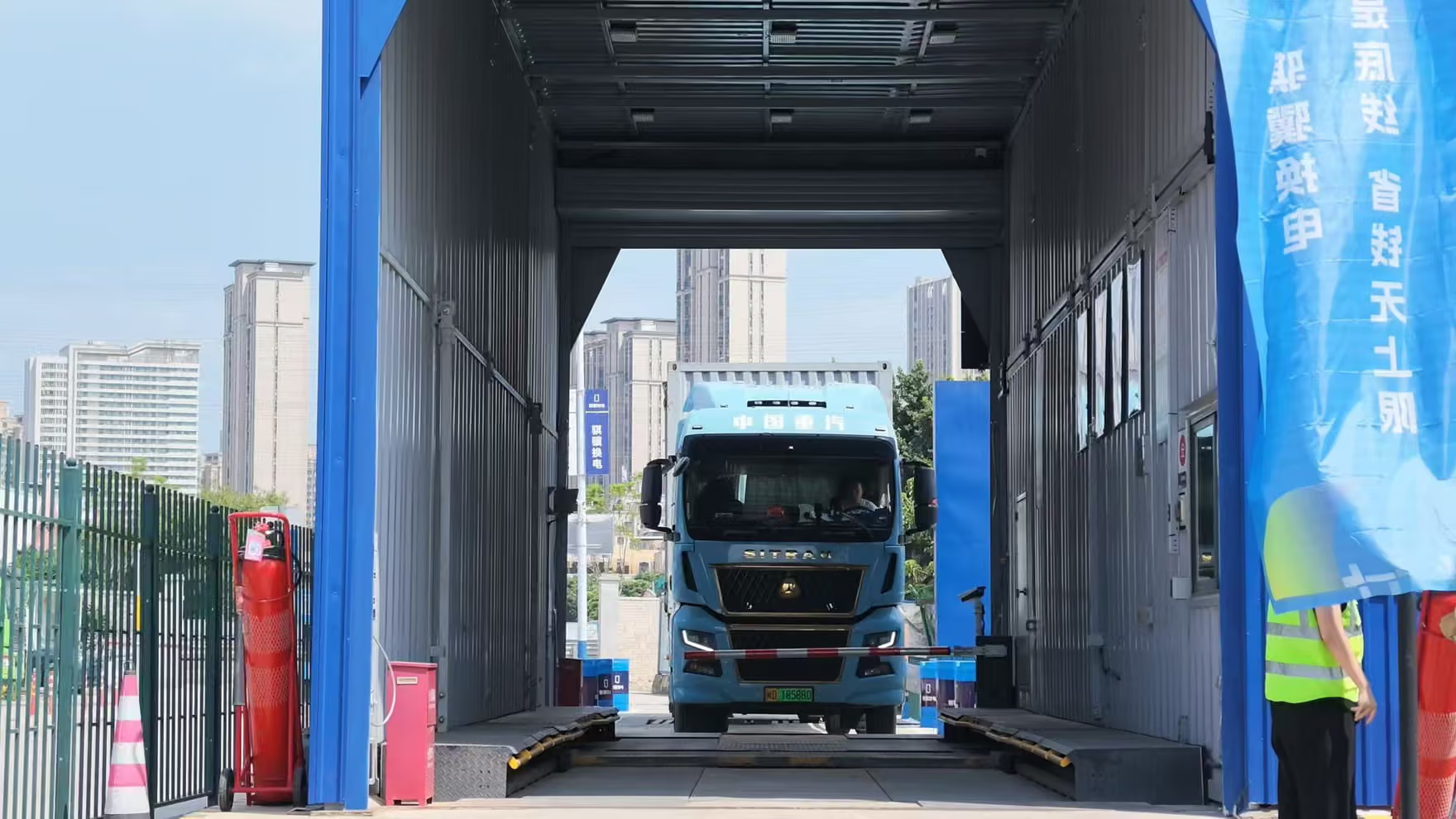
对王冰而言,这项技术最大的优势在于节省时间。“快太多了,”他说,“换电时我甚至不需要下车。”这种迅捷,建立在电动卡车在补能成本上已较燃油同类车型具备优势的基础之上。
To Wang, the biggest advantage of the technology is the time it saves. “It is much, much faster,” he says. “I don’t even need to leave my truck when the battery is being swapped.”This swiftness builds on the cost advantage e-trucks already have over their fossil-fuelled peers when it comes to refuelling.
“电力比石油便宜,”王某说。他表示,在海南,电动重卡的每公里能源成本约为1.1元(约合12便士),远低于柴油重卡,后者每公里超过2元(约合22便士)。“这意味着我的电动重卡每月能节省2万多元(约合2200英镑),”王某说。
“Electricity is cheaper than oil,” Wang says. The per-kilometre fuelling cost for an e-truck works out about 1.1 yuan (12p) in Hainan, he says, significantly lower than that for a diesel truck, which exceeds 2 yuan (22p) a kilometre. “That means my e-truck can save more than 20,000 yuan (£2,200) per month,” Wang says.
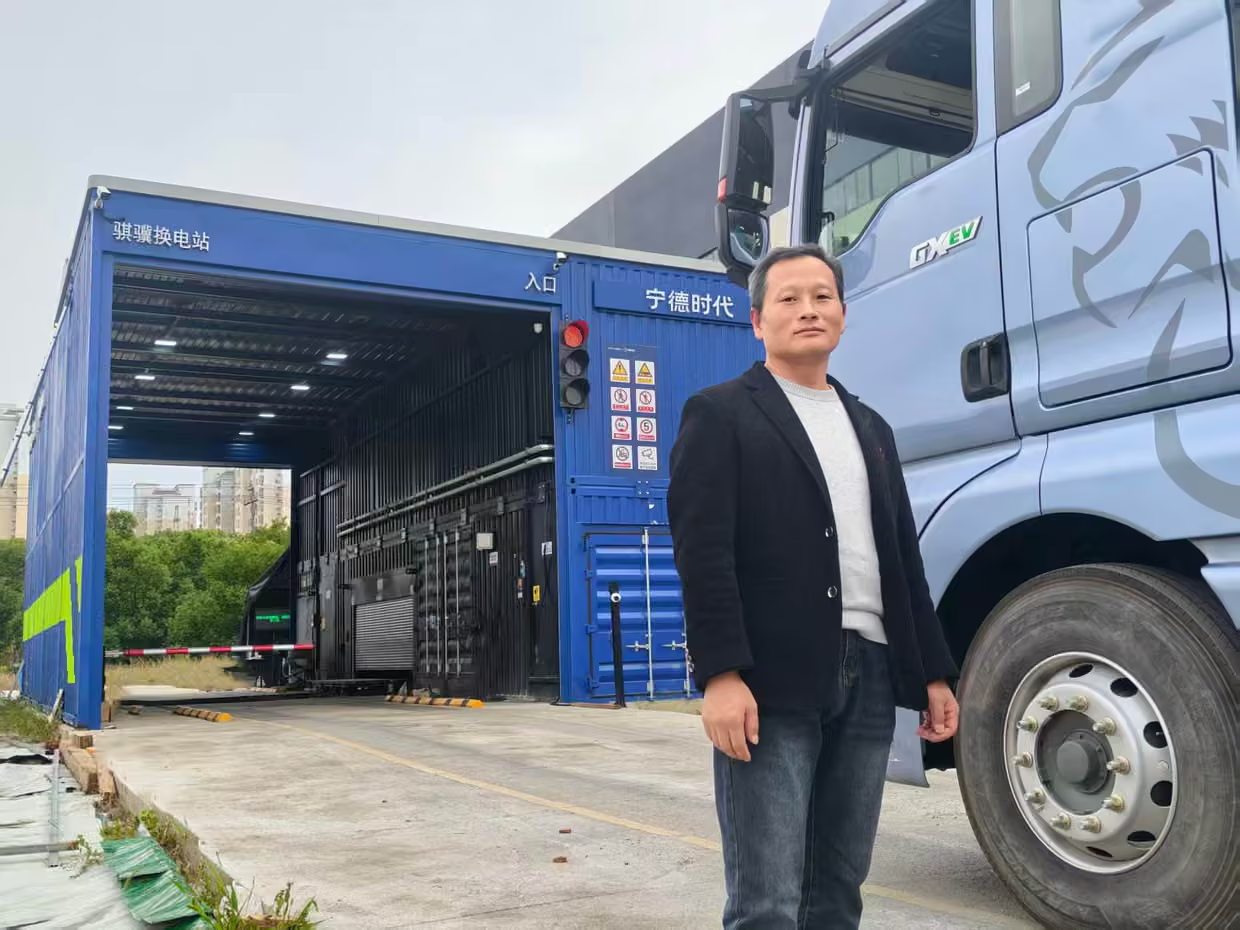
当一辆卡车驶近换电站时,站内摄像头会通过识别车牌自动判断其使用的电池类型。“司机只需将卡车开入指定区域,电池就会完全自动完成更换,”46岁的魏久春说,他是位于华东苏州的一座启吉能源换电站的测试司机。魏的工作是协助车站针对不同车型的重卡及不同天气条件测试其系统。
When a truck approaches a battery-swapping station, the station’s cameras automatically identify the type of battery it uses by checking its number plate. “All the driver needs to do is to drive the truck into a designated area, and the battery will be swapped completely automatically,” says Wei Jiuchun, 46, a test driver at a Qiji Energy battery-swapping station in Suzhou, east China. Wei’s job is to help the station test its system for different models of heavy trucks and under different weather conditions.
北京国际清洁交通委员会(ICCT)研究员毛世玥表示,在中国,这项技术节省的不仅是时间和燃料成本,还有买家购买电动重卡需一次性支付的首付款。
It is not just time and fuel costs the technology saves but, in China, the initial lump sum a buyer has to put down to get an e-truck, says Mao Shiyue, a Beijing-based researcher at the International Council on Clean Transportation (ICCT).
电动重卡的前期购买价格远高于同级别柴油车型,这是阻碍此类车辆在世界许多地区更广泛普及的主要障碍。在中国,选择换电模式的客户通常购买不带电池的电动重卡,再从服务商处租赁电池。由于电池成本约占电动重卡价格的40%,这种商业模式能让电动重卡的门槛大幅降低,毛世玥说。
The upfront purchase price for an e-truck is significantly higher than for a comparable diesel model, a major obstacle for those vehicles’ wider adoption in many parts of the world. In China, a customer opting for battery swapping typically buys an e-truck without a battery, and then rents the battery from a service provider. As the cost of a battery is about 40% of an e-truck’s price, the business model can make e-trucks a lot more affordable, Mao says.
据毛世玥介绍,该技术还有助于缓解电动汽车充电给电网带来的压力,因为换电站在为耗尽电量的电池充电时,拥有更大的灵活性来错峰安排充电时段。
The technology can also help minimise the pressure EV charging brings to the power grid, according to Mao, because swapping stations have more flexibility to spread out the charging time for the depleted batteries.
“如果电网在高峰时段出现用电需求激增,这些换电站甚至可以作为储能站,将电池中储存的电力回馈给电网,以缓解压力,”他说。
“If the grid sees a spike in electricity demand during peak hours, those stations can even act as an energy-storage station by returning the electricity stored in their batteries back to the grid to ease the strain,” he says.
作为全球最大的电池制造商,宁德时代是中国推广重卡换电技术的关键参与者。专注于电动汽车领域的上海媒体《电动汽车资讯》(CnEVPost)创始人张斐(Phate Zhang)表示,该公司对这项技术的支持对其实现大规模推广至关重要。
CATL, the world’s biggest battery manufacturer, is a key player in promoting battery swapping for heavy trucks in China. The company’s support for the technology is critical for its large-scale rollout, says Phate Zhang, the founder of CnEVPost, a Shanghai-based outlet focusing on EVs.
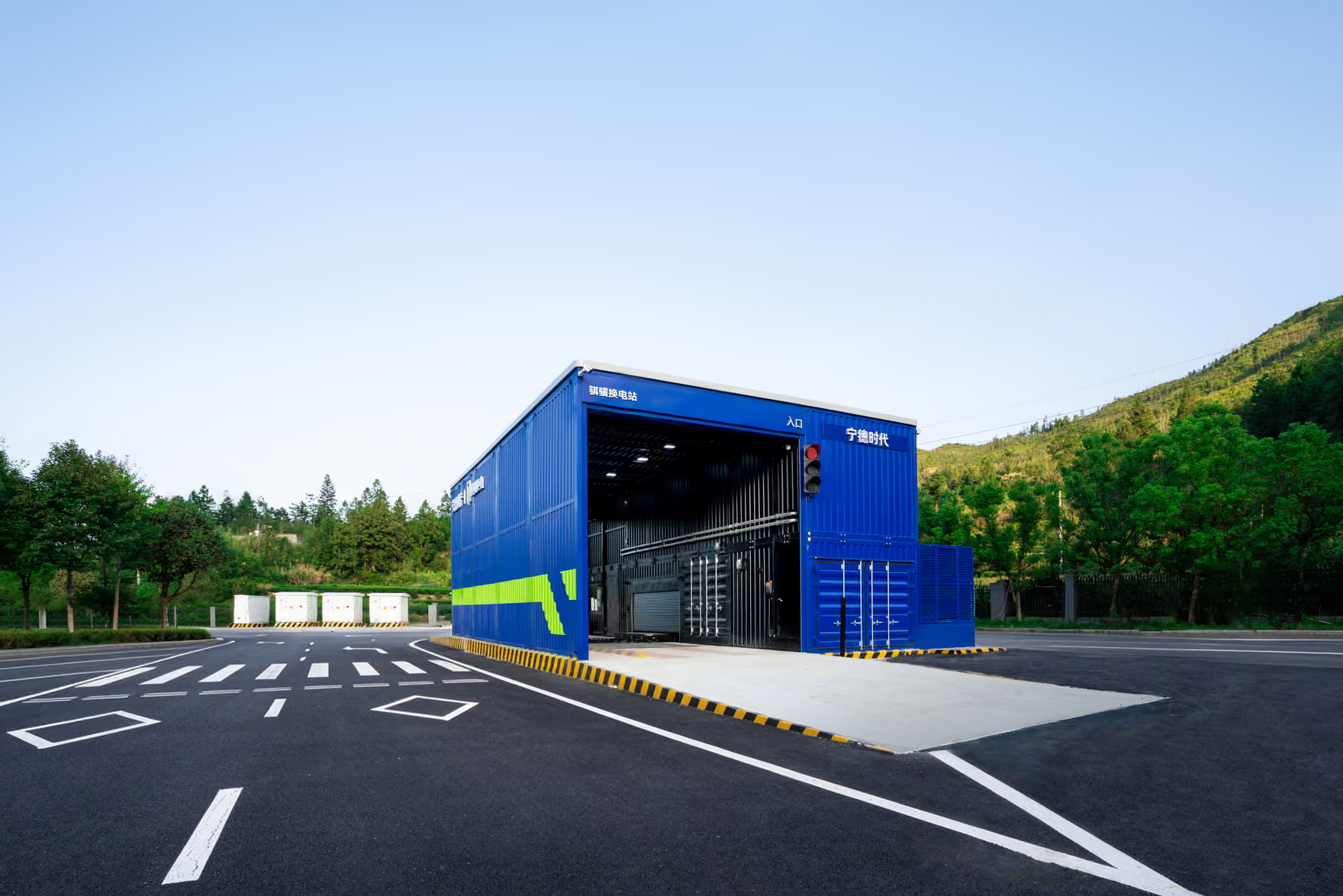
宁德时代计划到今年底在中国投入运营900座换电站,将其现有网络规模再扩大两倍。到2027年底,该公司希望这一数字达到2000座。
CATL plans to put 900 battery-swapping stations into operation across China by the end of this year, expanding its current network twice more. By the end of 2027, it wants the number to reach 2,000.
该公司还与总部位于伦敦的可再生能源供应商Octopus Energy合作,将该技术引入欧洲。它打算明年在英国开设首批换电“超级枢纽”,并计划到2035年在欧洲建成超过30座枢纽网络。
The company has also teamed up with the London-based renewable energy supplier Octopus to bring the technology to Europe. It intends to open its first group of battery-swapping “mega hubs” in the UK next year, and a network of more than 30 hubs in Europe by 2035.
在中国,换电仍是快速增长的电动卡车车队中的少数派充电方式。根据最新可获数据,2024年,中国约三分之一的零排放卡车采用了这项技术,其余车辆主要使用传统的插枪充电。
In China, battery-swapping is still a minority charging method for its rapidly growing e-truck fleet. In 2024, about one-third of the zero-emission trucks in the country featured this technology, while the rest largely had conventional plug-in charging, according to the latest available figures.
一个缺点是,司机往往不得不依赖特定的服务商,因为其电动卡车使用的换电电池类型具有专用性。
One downside is that drivers often need to stick to a particular service provider that caters to the specific type of swappable batteries their e-trucks use.
“例如,有的电池是从底盘更换,有的则是从车顶更换,”世界资源研究所中国高级研究员薛璐璐表示,“即便采用同一技术路线,不同公司生产的电池规格往往也各不相同。”她指出,这意味着司机无法随意驶入任意一座换电站为车辆补能,从而可能限制其可行驶的路线。
“For example, some batteries are swapped from the chassis, while others are swapped from the top of the truck,” says Xue Lulu, a senior associate at World Resources Institute China. “Even under the same technological route, batteries made by different companies often have different specifications.”This means drivers cannot drop into any random swapping station to get their trucks replenished, which could restrict the journeys they can make, she says.
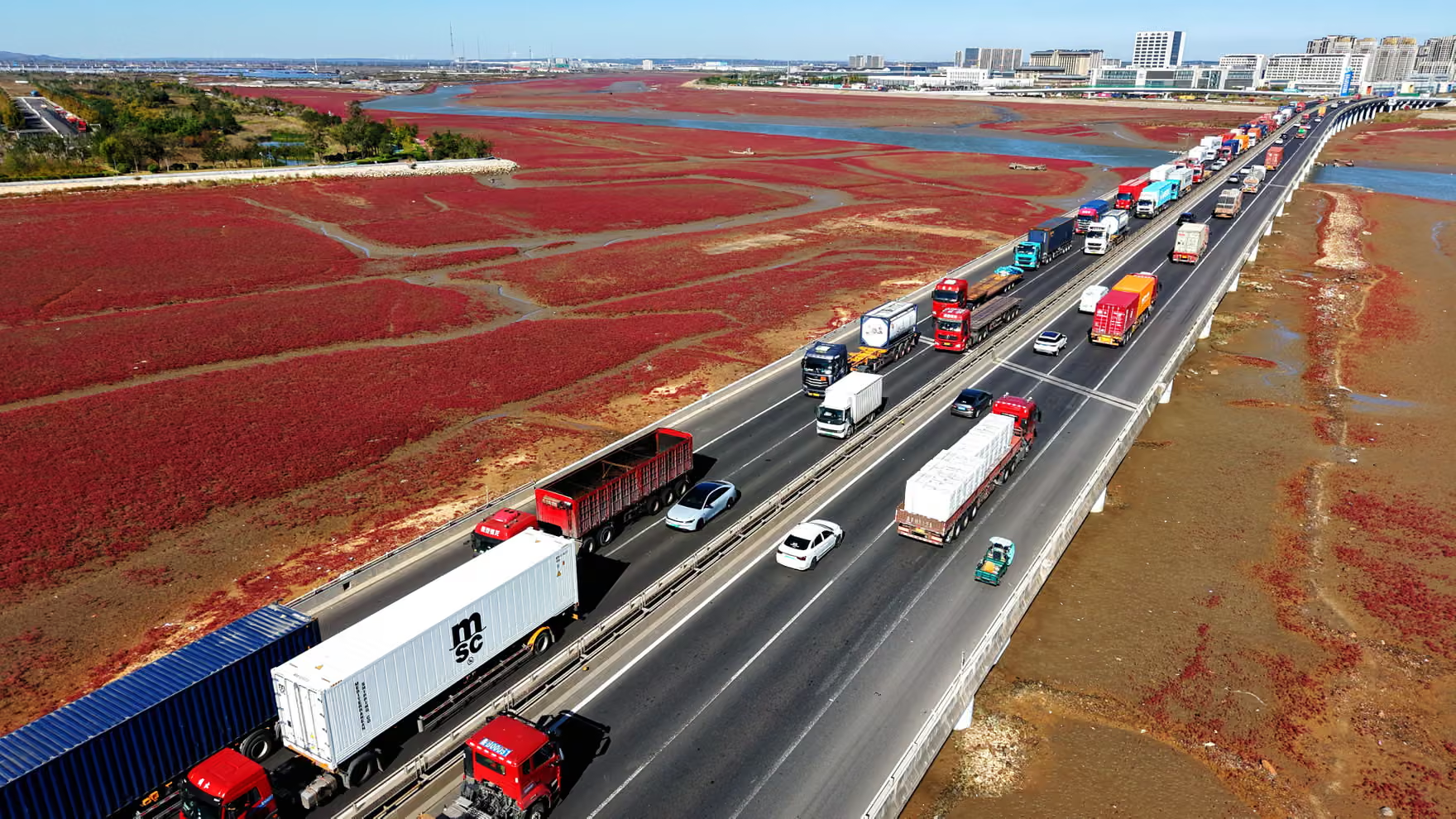
此外,薛某指出,换电并不一定意味着司机能节省时间。在她在中国的实地调研中,她发现一些货车司机会在换电站外等待一到两个小时才进站,因为他们想避开高峰时段使用服务,以省钱。“物流企业对成本极其敏感,”她说。
Plus, battery swapping doesn’t necessarily mean drivers will save time, Xue says. During her field research in China, she found some lorry drivers would wait outside battery-swapping stations for one to two hours before going in because they wanted to avoid using the service during peak hours, to save money. “Logistics firms are extremely sensitive to costs,” she says.
最适合的用户可能是像王某这样、在有换电站服务的固定路线上工作的司机。毛某表示,这种充电方式在使用重卡的特定场景企业中推广最为成功,例如在港口、工厂运送货物,以及在城市内部或两个相邻城市之间运输的企业。“对于不可预测和长途的路线,大规模推广仍面临挑战,”他说。
The most suitable users are probably drivers who, like Wang, work on fixed routes served by battery-swapping stations. Mao says the charging method has been rolled out most successfully among companies that use heavy trucks in specific settings, such as those carrying goods in ports and factories, as well as within a city or between two nearby cities. “For unpredicted and long-haul routes, there are still challenges for rolling it out on a large scale,” he says.