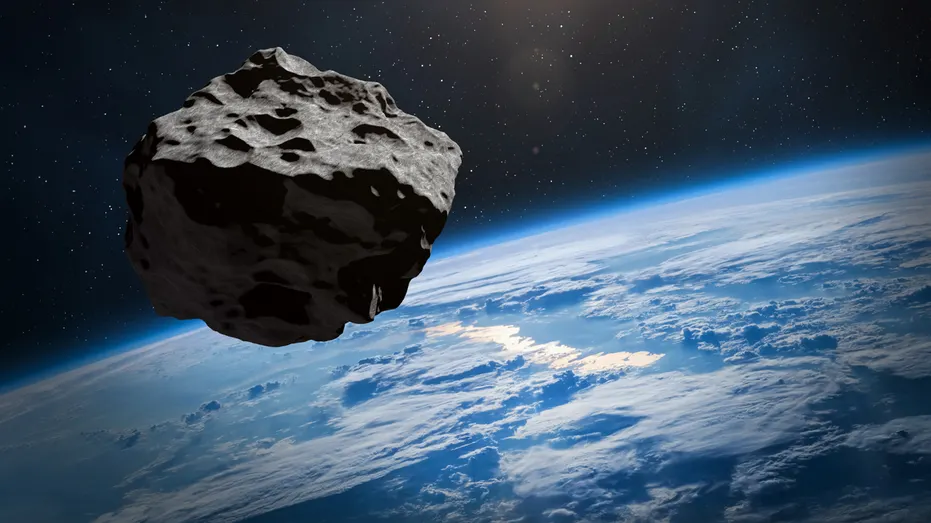
一个神秘物体正以极高速度穿越太阳系,其加速方式无法仅用引力解释,这助长了一种理论:它可能是一艘近四十年前失踪的苏联航天器。
A mysterious object speeding through the solar system is accelerating in a way gravity alone cannot explain, fueling a theory that it could be a Soviet spacecraft lost nearly four decades ago.
该物体被称为1998 KY26,宽约36英尺(约11米),被认为是一颗近地小行星,但似乎有除引力以外的因素在影响其轨道。最新研究对解释其在太空中受到推力的一种说法提出了质疑。
Known as 1998 KY26, the roughly 36-foot-wide object is believed to be a near-Earth asteroid, but something other than gravity appears to be affecting its path. New research has now cast doubt on one explanation for what is pushing it through space.
美国国家航空航天局(NASA)局长贾里德·艾萨克曼周四上午在“福克斯与朋友”节目中就日益增多的猜测发表了看法,称不明异常现象(UAP)社区的一些人认为该物体在做异常运动,但他未见到任何证据表明KY26不是小行星。
NASA Administrator Jared Isaacman weighed in on the growing speculation Thursday morning on "Fox & Friends," saying some in the UAP community believe the object is making unusual movements, but he has seen no evidence KY26 is anything other than an asteroid.
“首先,没有任何东西即将撞击我们,这一点必须非常清楚,”艾萨克曼说。“我没有看到任何证据表明这对我们的星球构成威胁,或是除小行星以外的任何东西。”科学家将KY26的异常运动称为“非引力加速度”,意指除太阳和行星的引力外,还有其他因素在影响其轨道。
"First of all, nothing is about to hit us, to be very clear on this," Isaacman said. "I've not seen any evidence to suggest this is a threat to our planet or anything other than an asteroid." Scientists refer to KY26's unusual movement as "nongravitational acceleration," meaning something besides the pull of the sun and planets is affecting its path.
一种理论认为,KY26是一颗“暗彗星”,内部埋藏的水冰升华成气体,为物体在太空中提供推力,尽管天文学家未探测到彗星通常具有的彗发或彗尾。
One theory has been that KY26 is a "dark comet" containing buried water that turns to gas and gives the object a push through space, even though astronomers have not detected the cloud or tail normally associated with a comet.

但佐治亚理工学院研究人员科宾·汉森和平林正利发表的一项新同行评审研究对这一解释提出了质疑。
But a new peer-reviewed study by Georgia Institute of Technology researchers Korbin Hansen and Masatoshi Hirabayashi casts doubt on that explanation.
他们的研究发表在《伊卡洛斯》期刊上,发现KY26的温度可能过高,埋藏的水冰无法存活足够长的时间来解释这种异常运动。
Their study, published in the journal Icarus, found KY26 is likely too warm for buried water ice to survive long enough to account for the unusual movement.
研究人员得出结论,计算出的水损失率“排除了1998 KY26目前是暗彗星的可能性”。还有其他可能的解释。先前的研究发现,阳光照射KY26及其表面热量散发产生的反冲力,无需埋藏水冰也能产生额外的推力。然而,另一组研究人员探索了一种更为不同寻常的可能性。
The researchers concluded that calculated water-loss rates "preclude 1998 KY26 being a dark comet at present." There are other possible explanations. Previous research found that sunlight hitting KY26 and heat escaping from its surface could produce the extra push without buried water. Another group of researchers, however, has explored a far more unusual possibility.
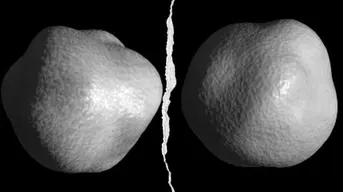
哈佛大学天体物理学家阿维·洛布(Avi Loeb)以及研究人员亚当·希伯德(Adam Hibberd)和亚当·克劳尔(Adam Crowl)研究了KY26是否可能是“福波斯1号”(Phobos 1),后者是一艘无人苏联航天器,于1988年前往火星途中失联。
Harvard astrophysicist Avi Loeb and researchers Adam Hibberd and Adam Crowl have examined whether KY26 could actually be Phobos 1, an unmanned Soviet spacecraft that stopped communicating while traveling to Mars in 1988.
距地球150亿英里 KY26直径约36英尺(约11米),反射率约为52%,自转周期为5.35分钟。
NASA SHUTS OFF VOYAGER 1 INSTRUMENT TO SAVE POWER 15B MILES FROM EARTH KY26 is about 36 feet across, reflects roughly 52% of the sunlight that hits it and completes a full rotation every 5.35 minutes.
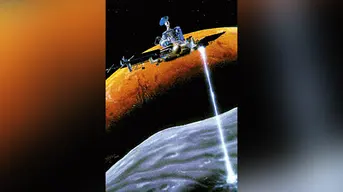
研究人员建立了“福波斯1号”的简化模型,将其自转时反射阳光的方式与对KY26的观测数据进行了比较。他们发现,该航天器模型与该天体的八组观测数据高度吻合。
The researchers built a simplified model of Phobos 1 and compared the way it would reflect sunlight as it spun with observations of KY26. They found the spacecraft model closely matched eight sets of observations of the object.
他们还测试了阳光对圆柱体或太阳能电池板的推力是否有助于解释KY26的运动,发现该模型与数百次望远镜和雷达观测的吻合度更高。
They also tested whether sunlight pushing against a cylinder or solar panels could help explain KY26's movement and found the model better matched hundreds of telescope and radar observations.
研究人员写道:“尽管此类调查无法得出定论,”但这些发现“为‘福波斯1号’假说增加了有力的分量。”
"Although an investigation of this kind cannot be conclusive," the researchers wrote, the findings "add strong weight to the Phobos 1 hypothesis."
不过,研究人员强调,他们的模型并不能证明KY26就是那艘失踪的航天器,称该理论“极具说服力但目前尚未得到证实。”其他研究指向一个更传统的答案。
The researchers stressed, though, that their model does not prove KY26 is the missing spacecraft, describing the theory as "strongly plausible but presently unproven." Other research points to a more conventional answer.
今年发表在《天文学与天体物理学》(Astronomy & Astrophysics)上的一项独立研究分析了KY26反射的光,发现其成分似乎与一种岩石小行星一致。研究人员得出结论,它很可能来自小行星带内部。
A separate study published this year in Astronomy & Astrophysics examined the light reflected by KY26 and found its makeup appears consistent with a type of rocky asteroid. Researchers concluded it likely came from the inner part of the asteroid belt.
艾萨克曼(Isaacman)表示,美国宇航局继续监测KY26,但认为没有理由恐慌。
Isaacman said NASA continues to monitor KY26 but sees no reason for alarm.
“我没有理由相信这在任何方面对我们的星球构成丝毫威胁,它无非就是一颗小行星,”他说。科学家最终可能会得到确切答案。
"I have no reason to believe this is in any way remotely a threat to our planet or anything other than just an asteroid," he said. Scientists may eventually get a definitive answer.
根据2025年发表在《自然·通讯》(Nature Communications)上的一项研究,日本宇宙航空研究开发机构(JAXA)“隼鸟2号”(Hayabusa2)探测器计划于2031年7月与KY26会合。对洛布而言,那次会合可能为“福波斯1号”理论提供终极检验。
The Japan Aerospace Exploration Agency's Hayabusa2 spacecraft is scheduled to rendezvous with KY26 in July 2031, according to a 2025 study published in Nature Communications. For Loeb, that encounter could provide the ultimate test of the Phobos 1 theory.
洛布写道:“我们的预测是,隼鸟2号的相机将不会看到冰山,而是会看到‘苏联制造’的标签。”
"Our prediction is that instead of an iceberg, Hayabusa 2’s cameras will reveal the label 'Made in the U.S.S.R.,'" Loeb wrote.