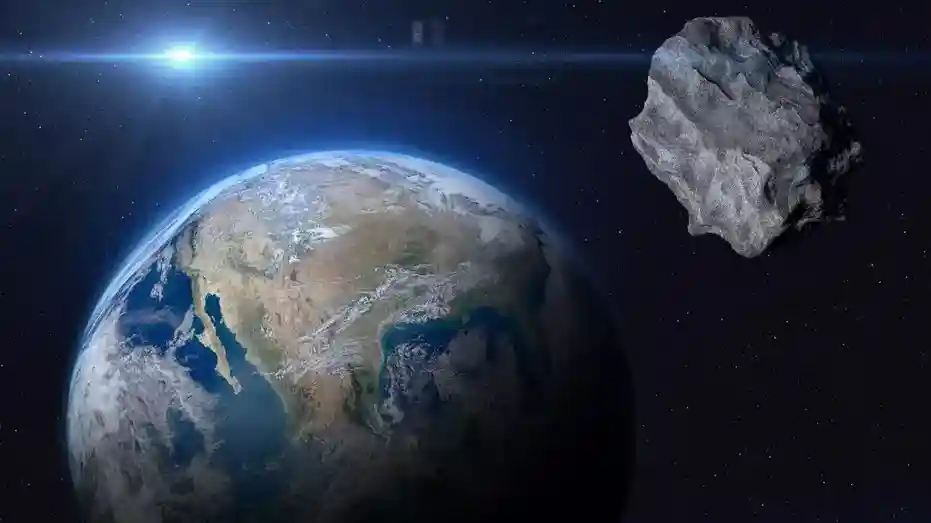
提出穿梭于太阳系的神秘物体实际上可能是失联的苏联航天器这一理论的哈佛大学天体物理学家,正在反驳美国宇航局的最高官员,称该物体“不是小行星”。这个被称为1998 KY26的物体宽度约为36英尺,被认为是近地小行星,但其加速方式是纯粹的重力无法解释的。哈佛大学天体物理学家阿维·勒布及其同事一直在研究它是否可能是“福布斯1号”——一个在1988年前往火星途中停止通信的苏联航天器。
A Harvard astrophysicist behind the theory that a mysterious object speeding through the solar system could actually be a lost Soviet spacecraft is pushing back on NASA's top official, saying the object is "not an asteroid." Known as 1998 KY26, the roughly 36-foot-wide object is believed to be a near-Earth asteroid but is accelerating in a way gravity alone cannot explain. Harvard astrophysicist Avi Loeb and his colleagues have examined whether it could instead be Phobos 1, a Soviet spacecraft that stopped communicating while traveling to Mars in 1988.
美国宇航局局长贾里德·艾萨克曼周四在做客《福克斯与朋友们》节目时,对这个神秘物体发表了看法。美国宇航局称,埃菲尔铁塔大小的小行星阿波菲斯将于2029年比许多卫星更近地掠过地球。
艾萨克曼说:“我没有看到任何证据表明这是……除了小行星之外的任何东西。”
NASA Administrator Jared Isaacman weighed in on the mysterious object Thursday during an appearance on "Fox & Friends." EIFFEL TOWER-SIZED ASTEROID APOPHIS TO PASS CLOSER TO EARTH THAN MANY SATELLITES IN 2029, NASA SAYS "I've not seen any evidence to suggest this is...anything other than an asteroid," Isaacman said.
勒布周五在接受福克斯新闻数字频道采访时对这一评估提出了质疑。
Loeb challenged that assessment during an interview with Fox News Digital on Friday.
勒布说:“好吧,首先,它不是小行星,因为1998 KY26似乎具有非引力加速度,这意味着它正被引力以外的某种力量推动,而小行星只是一块石头。”科学家们一直在试图解释是什么导致了这种额外的加速度。
"Well, first of all, it's not an asteroid because 1998 KY26 appears to have non-gravitational acceleration, meaning it's being pushed by some force other than gravity, and asteroids are just rocks," Loeb said. Scientists have been trying to explain what is causing the additional acceleration.
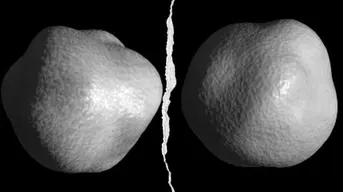
其中一种理论认为,KY26是一颗“暗彗星”,这是一种像彗星一样行事但没有产生可见云层或尾巴的岩石物体。
One theory has been that KY26 is a "dark comet," a rocky object behaving like a comet without producing a visible cloud or tail.
佐治亚理工学院的新研究对KY26是否能保留足够的冰来产生这种效果提出了质疑,而其他研究则表明来自太阳光的压力和表面辐射的热量可能是产生加速度的原因。
New research from Georgia Tech has cast doubt on whether KY26 could retain enough ice to produce that effect, while other research has suggested pressure from sunlight and heat radiating from its surface could account for the acceleration.
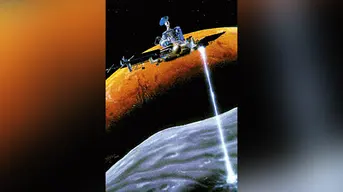
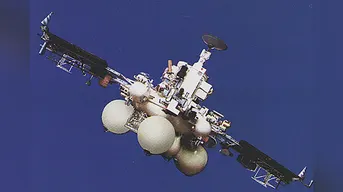
勒布对福克斯新闻数字频道表示,他的团队发现KY26的轨迹与失败的苏联任务的轨迹高度相似,并计算出反射自“福布斯1号”的太阳光可以产生与在KY26上观测到的非引力加速度相符的推力。
Loeb told Fox News Digital that his team found KY26's trajectory closely resembles that of the failed Soviet mission and calculated that sunlight reflecting off Phobos 1 could produce a push consistent with the nongravitational acceleration observed in KY26.
他还指出,最近的观测表明该物体具有高反射率,且每五分钟自转一次左右。
He also pointed to recent observations indicating the object is highly reflective and rotates about once every five minutes.
没有可见的彗星尾巴或物体表面物质逃逸的证据,是勒布对暗彗星解释持怀疑态度的核心所在。
The lack of a visible cometary tail or evidence of material escaping the object is central to Loeb's skepticism of the dark-comet explanation.
勒布说:“它可能是一颗向后抛射气体从而推动其向前的彗星,但在那种情况下,我们本应看到气体。我们本应看到尘埃,因为对于彗星来说,我们会看到尾巴,并且尘埃粒子正被太阳辐射推离太阳。”他补充说:“我们没有看到彗星尾巴。我们没有看到该物体周围有任何排气证据。这就是谜团所在。”
"It could be a comet shedding some gas backward that is pushing it forward, but in that case we should have seen the gas," Loeb said. "We should have seen the dust because for comets we see a tail and the dust particles are being pushed away from the sun by the solar radiation." "We don't see a cometary tail. We don't see any evidence for outgassing around this object. That's the puzzle," he added.
勒布将关于如何对KY26进行分类的争论比作在动物园里遇到一种不熟悉的动物。勒布说:“如果你是斑马专家,而你看到了一头大象,你可能会说大象是没有条纹的斑马。但这是一个矛盾修饰法,因为它完全是另一种动物。”他还辩称,当观测结果无法完美契合小行星和彗星这两者时,科学家应该愿意考虑熟悉类别之外的解释。
Loeb compared the debate over how to classify KY26 to encountering an unfamiliar animal at a zoo." If you are an expert on zebras and you see an elephant, you would say the elephant is a zebra without stripes," Loeb said. "But that's an oxymoron because it's a completely different animal." He also argued that scientists should be willing to consider explanations outside the familiar categories of asteroids and comets when observations do not neatly fit either one.

勒布说:“科学创新需要一些想象力。它需要你允许我们的知识是不完整的可能性。”福克斯新闻数字频道已联系美国宇航局,请其对勒布的言论作出回应,并询问艾萨克曼是否坚持他对KY26的评估。
"Innovation in science requires some imagination," Loeb said. "It requires you to allow for the possibility that our knowledge is incomplete." Fox News Digital reached out to NASA for a response to Loeb's comments and asked whether Isaacman stands by his assessment of KY26.

勒布承认,他团队的理论仍未得到证实,但他表示,确切答案可能会在2031年揭晓,届时日本宇宙航空研究开发机构的“隼鸟2号”航天器预计将与KY26会合。
Loeb acknowledged that his team's theory remains unproven, but said a definitive answer could come in 2031, when the Japan Aerospace Exploration Agency's Hayabusa2 spacecraft is expected to rendezvous with KY26.
勒布预测,这次相遇可能会表明,科学家们一直在关注苏联太空历史的一个片段,而不是一个不同寻常的自然物体。
Loeb predicts the encounter could show that scientists have been looking at a piece of Soviet space history rather than an unusual natural object.
勒布说:“我们预测,当他们降落在它上面时,他们不会看到冰山,而是会发现‘苏联制造’的标签。”勒布也承认,2031年的相遇可能会一劳永逸地解决这个问题。
"We predict that when they land on it, instead of seeing an iceberg, they will find the label ‘Made in the USSR,’" Loeb said. Loeb also acknowledged that the 2031 encounter could settle the question once and for all.
当被问及如果“隼鸟2号”抵达KY26并发现一块岩石或冰块,关于“福布斯1号”的理论是否会彻底破产时,勒布没有丝毫犹豫。他说:“是的。”
Asked whether the Phobos 1 theory would be completely over if Hayabusa2 reaches KY26 and finds a rock or piece of ice, Loeb didn't hesitate. "Yes," he said.