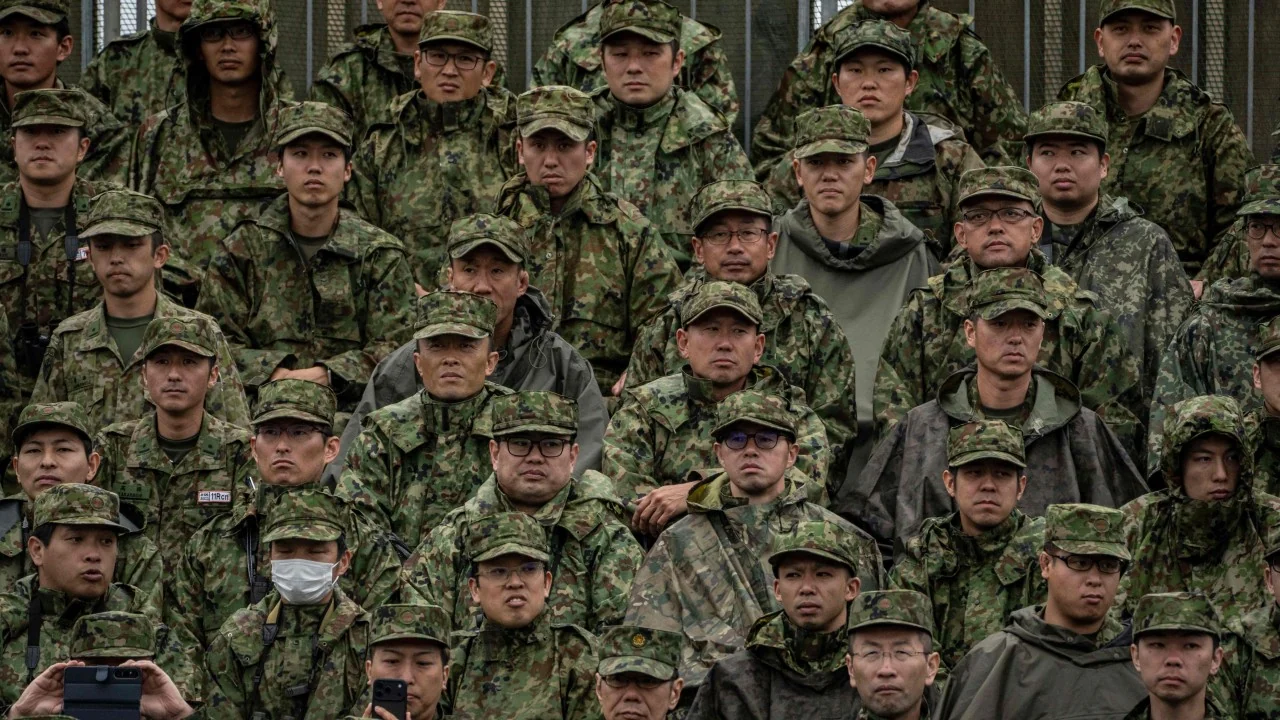
日本计划在年底前全面修订其三份关键安全文件,旨在增强军事防御能力,使其更难被击败,并降低对来自中国的经济施压的脆弱性。
Japan aims to become harder to defeat militarily and less vulnerable to economic pressure from China under plans to overhaul its three key security documents by the end of the year.
分析人士表示,拟议的修订可能会使中国更难实现其军事目标或利用财政杠杆对付日本,但其影响将取决于东京将计划转化为实际能力的能力。
Analysts said the proposed revisions could make it more difficult for China to achieve its military objectives or use financial leverage on Japan, but that their impact would depend on Tokyo’s ability to translate its plans into practical capabilities.
一些人还表示,更强的日本防务可能会引发中国的反制措施,加剧地区紧张局势升级的风险。
Some also said that stronger Japanese defences could prompt Chinese countermeasures, raising the risk of escalating regional tensions.
日本执政党自由民主党及其联盟伙伴日本维新会本周开始就计划中的变更举行实务层面磋商,政府概述了加强军事威慑、为长期冲突做准备以及增强抵御经济胁迫韧性的措施。
The country’s ruling Liberal Democratic Party and its coalition partner, the Japan Innovation Party, began working-level talks this week on the planned changes, with the government outlining measures to strengthen military deterrence, prepare for prolonged conflict and bolster resilience against economic coercion.
据《读卖新闻》报道,拟议修订将优先发展无人系统、远程导弹、综合防空反导能力以及持续长期作战的能力。修订还将加强自卫队陆、海、空三个分支的联合作战行动。东京继续将北京视为其“最大战略挑战”,修订正是在此背景下提出。
The proposed revisions, which come as Tokyo continues to regard Beijing as its “greatest strategic challenge”, would prioritise unmanned systems, long-range missiles, integrated air and missile defences and the ability to sustain prolonged combat. They would also strengthen joint operations across the Self-Defence Forces’ ground, maritime and air branches, according to the Yomiuri newspaper.
预计内阁将于12月批准这些更新,届时将修订2022年通过的《国家安全保障战略》、《国家防卫战略》和《防卫力整备计划》。
Expected to receive cabinet approval in December, the updates would revise the National Security Strategy, National Defence Strategy and the Defence Build-up Programme adopted in 2022.
东京军事提案的核心是获取能够拒止对手实现目标的能力,这在日本西南诸岛周边可能尤为重要。这些岛屿靠近台湾,在涉及北京和华盛顿的台海冲突中可能成为战略要地。
Central to Tokyo’s military proposals is the acquisition of capabilities that could deny an adversary its objectives and that could be particularly significant around Japan’s southwestern islands, which lie close to Taiwan and could become strategically important in a conflict over the island involving Beijing and Washington.
据《读卖新闻》报道,东京还计划在自卫队统合作战司令部引入先进的基于人工智能的决策支持系统,以实现更快、更准确的军事决策。
Tokyo also plans to introduce an advanced AI-based decision-making system at the SDF’s Joint Operations Command to enable faster, more accurate military decisions, according to Yomiuri.
其他措施包括加强与美国的防务工业合作,并可能通过政府所有、私营运营的工厂扩大生产。
Other measures include closer defence-industrial cooperation with the US and potentially expanding production through government-owned, privately operated factories.
为解决长期存在的人员短缺问题,东京计划精简军事指挥机构和部队编制以改善人员配置水平,特别是在一线部队。
To address persistent personnel shortages, Tokyo aims to streamline military commands and units to improve staffing levels, particularly in frontline formations.
据路透社本月初援引知情人士报道,东京正在考虑为2027至2031财年制定一项70万亿日元至80万亿日元(约合4370亿美元至5000亿美元)的防务计划,而现行计划约为43万亿日元。
Tokyo is considering a 70 trillion yen to 80 trillion yen (US$437 billion to US$500 billion) defence programme for the 2027 to 2031 financial years, compared with about 43 trillion yen under the current plan, according to a Reuters report early this month, citing people familiar with the matter.
最终数额仍在讨论中。决策者还在权衡可能开展核动力潜艇的研究,尽管尚未就是否采购作出决定。
The final figure remains under discussion. Policymakers are also weighing a possible study of nuclear-powered submarines, although no decision on acquiring them has been made.
中国多次批评日本计划中的安全政策修订,其外交部11月5日指责东京以中国为借口进行军事扩张,并加速其再军事化进程。
China has repeatedly criticised Japan’s planned security revisions, with its foreign ministry accusing Tokyo on November 5 of using China as a pretext for military expansion and accelerating its remilitarisation.
帝京大学副教授松冈美里表示,东京意在削弱北京的信心,即北京认为能够通过“相对有限的武力运用或经济压力”实现其目标。
Misato Matsuoka, an associate professor at Teikyo University, said Tokyo wanted to undermine Beijing’s confidence that it could achieve its objectives with “a relatively limited use of military force or economic pressure”.
她表示,更强的日本能力可能干扰北京在东海的海上和空中行动,并补充说,东京甚至可以在不直接参战的情况下塑造台海突发局势。
Stronger Japanese capabilities could interfere with Beijing’s maritime and air operations in the East China Sea, she said, adding that Tokyo could also shape a Taiwan contingency even without directly taking part in combat.
北京视台湾为中国的一部分,必要时将以武力实现统一。包括美国和日本在内的大多数国家不承认台湾为独立国家,但华盛顿反对任何以武力夺取该自治岛屿的企图,并承诺向其提供武器。
Beijing sees Taiwan as part of China to be reunited by force if necessary. Most countries, including the United States and Japan, do not recognise Taiwan as an independent state, but Washington is opposed to any attempt to take the self-governed island by force and is committed to supplying it with weapons.
帕利政策研究所所长、前美日同盟事务经理迈克尔·博萨克表示,日本正在从乌克兰对抗俄罗斯的防御中汲取教训,但中国也很可能在进行调整。他说,日本的计划可能提升其“挫败中国军事行动”的能力,而真正的考验在于哪一方能将政策转化为“现实世界的能力”。
Michael Bosack, director of the Parley Policy Institute and a former US-Japan alliance manager, said Japan was drawing lessons from Ukraine’s defence against Russia, but China was also likely to be adapting. Japan’s plans could improve its ability to “frustrate Chinese military actions”, he said, while the real test was which side could turn policy into “real-world capabilities”.
他补充说,虽然对台担忧由来已久,但所涉及的“战术、技术和手段”已经发生了演变。
He added that while concerns about Taiwan were long-standing, the “tactics, techniques and technologies involved” had evolved.
中国分析人士表示,这种转变在东京日益愿意超越防御性威慑、转向在地区热点问题上进行主动干预这一点上已经显现。
Chinese analysts said that shift was already visible in Tokyo’s growing readiness to move beyond defensive deterrence towards active intervention in regional flashpoints.
上海外国语大学日本研究中心主任连德贵表示,东京拒绝收回首相高市早苗2025年11月关于“台海突发事态可能触发日本军事干预”的言论,显示出其意图在涉台事务上跟随华盛顿。
Lian Degui, director of the Centre for Japanese Studies at Shanghai International Studies University, said Tokyo’s refusal to walk back Prime Minister Sanae Takaichi’s remarks from November 2025 suggesting a Taiwan contingency could trigger Japanese military intervention showed it intended to follow Washington regarding cross-strait affairs.
连德贵说,日本的安全政策大修将进一步增强其干预涉台事务的能力,“必然增加台海局势的不确定性”。
Japan’s security overhaul would further strengthen its capacity to intervene in cross-strait affairs and “inevitably increase uncertainty in the Taiwan Strait”, Lian said.
广州华南理工大学公共政策研究院副研究员徐伟军表示,如果修订案最终敲定,日本在冲突中的角色可能从监视、导弹防御和支援美军,扩大为独立的远程作战。
Xu Weijun, an associate research professor at the Institute of Public Policy at South China University of Technology in Guangzhou, said if the revisions were finalised, Japan’s role in a conflict could expand from surveillance, missile defence and supporting US forces to independent long-range operations.
他说:“一旦发生军事冲突,中国因此需要将日本自身的远程作战及其可持续性,纳入对其近海和本土安全形势的评估之中。”
“In the event of a military conflict, China would therefore need to factor Japan’s own long-range operations and their sustainability into its security assessments for its near seas and homeland,” he said.
他说,如果北京对台湾进行大规模军事演习或长期海上封锁,日本可以通过向华盛顿共享情报并协调设施和后勤支援,提前介入,然后可能升级为海上和空中巡逻、导弹防御或远程打击。
He said that if Beijing conducted large-scale military drills or a prolonged maritime blockade of Taiwan, Japan could intervene early by sharing intelligence with Washington and coordinating facilities and logistical support, before potentially escalating to maritime and aerial patrols, missile defence or long-range strikes.
“到那时,中国将在台湾海峡以及东海和黄海同时面临紧张局势。” 除了军事威慑,东京还希望降低北京在危机期间可能利用的经济脆弱性。
“At that point, China would face simultaneous tensions in the Taiwan Strait, as well as in the East China Sea and the Yellow Sea.”Beyond military deterrence, Tokyo seeks to reduce economic vulnerabilities that Beijing could exploit during a crisis.
据共同社报道,其修订后的《国家安全战略》将纳入“集体韧性”,这一概念涉及与志同道合的国家和发展中国家合作,分散关键矿产、能源和食品的供应。东京还设想更大力度使用发展援助和贸易安排。
Its revised National Security Strategy would incorporate “collective resilience”, a concept involving cooperation with like-minded and developing countries to diversify supplies of critical minerals, energy and food, according to Kyodo News. Tokyo also envisages greater use of development aid and trade arrangements.
松冈表示,日本希望向北京表明,经济依赖不应被视为“政治杠杆”。
Matsuoka said Japan wanted to signal that Beijing should not assume economic dependencies translated to “political leverage”.
博萨克说:“制定政策是一回事,执行政策是另一回事。” 他表示,北京会比对日本的声明更关注日本的实际行动。
Bosack said: “It’s one thing to write policy, and it’s another to implement it.”He said Beijing would pay closer attention to Japan’s actions than its announcements.
松冈还警告称,可能出现一种“安全困境”,即北京对日本更强大的能力作出军事对策,进而可能推动局势升级。
Matsuoka also warned of a potential “security dilemma” in which Beijing responded to stronger Japanese capabilities through military countermeasures, potentially fuelling escalation.
她说:“威慑可能是必要的,但它不能取代外交,也不能解决两国之间的根本政治分歧。”
“Deterrence may be necessary, but it cannot substitute for diplomacy or address the underlying political disagreements between the two countries,” she said.