铜业沿用数十年的矿石定价体系,正因严重短缺而出现裂痕。自 20 世纪 80 年代起,一家领先矿企与一家大型铜冶炼厂之间每年一次的谈判,确立一项年度“基准”价格,全市场以此决定采矿与冶炼两大产业如何分配铜生产利润。
The decades-old system that the copper industry uses to price mined ores is fracturing in the face of an acute shortage. Since at least the 1980s, a once-a-year negotiation between a leading mining company and a large copper smelter has set an annual ‘benchmark’ price that is used across the market to determine how the two giant industries share out the profits of producing copper.
但随着年度合同谈判进入关键阶段,咨询机构 CRU Group 指出,挂钩基准价的交易数量已大幅下降,明年预计将进一步减少。
But, with annual contractual negotiations coming to a head, the number of deals linked to the benchmark price has already fallen sharply, and is set to drop further next year, according to consultancy CRU Group.
这一转变属于重大动荡,涉及每年逾 2000 亿美元的铜精矿定价。近二十年前铁矿石市场发生的类似脱离基准定价的转变,曾被认为给矿商带来了利润暴增。
The shift is a major upheaval, affecting the pricing of more than $200 billion a year in copper ore, known as concentrates. A similar shift away from benchmark pricing that took place in the iron ore market nearly two decades ago was credited with delivering a profit windfall to miners.
根据年度供货协议,矿商通常从精矿价格中扣除固定的加工费和精炼费(TC/RC),以覆盖将精矿冶炼成精铜的成本。数十年来,主要买卖双方达成的首笔交易充当基准,其余企业跟随执行。
Under annual supply deals, miners typically deduct fixed treatment and refining charges from the price of concentrates to cover the cost of smelting them into finished copper. For decades, the first deal reached between a major buyer and seller has served as a benchmark followed by the rest of the industry.
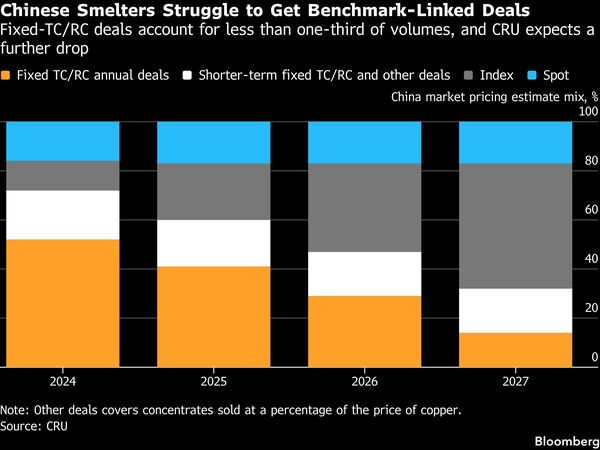
过去几年,矿端供应受限、冶炼产能激增、贸易商激烈竞价等因素叠加,已将基准费用压至历史低位。但在现货市场,TC/RC 交易价格已跌至深度负值区间,实际上意味着这些费用不再从精矿价中扣除,而是被加到精矿成本上。
Over the past few years, constraints on mine supply — combined with a surge in smelting capacity and fierce bidding by traders — have driven benchmark charges to record lows. But they’ve fallen even further in the spot market, where TC/RCs are now trading at deeply negative levels, in effect meaning that they’re being added to the cost of concentrates rather than deducted from them.
上个月,随着供应谈判在伦敦拉开帷幕,据参与谈判的人士透露,矿业高管要求任何固定价格协议的定价水平都需接近现货市场。这些人士因讨论属于私密性质而要求不具名。与此同时,冶炼厂警告称,它们已面临如此深重的亏损,以至于已开始削减产量,并计划明年进一步减产。
As supply negotiations kicked off in London last month, mining executives demanded that any fixed-price deals would need to be set at levels close to the spot market, according to people involved in the talks, who asked not to be identified because the discussions are private. Meanwhile, smelters warned that they were already facing such deep losses that they’d started cutting output and planned further reductions next year. Miners and smelters are set to meet again for crunch talks during a major industry gathering in Shanghai next week, but the debate over next year’s supply has become so polarized that many in the industry are questioning whether they’ll be able to agree a benchmark deal at all.
矿商与冶炼厂定于下周在上海举行的一次行业盛会期间再次举行关键会谈,但关于明年供应的争论已变得如此两极分化,以至于业内许多人质疑双方是否还能达成基准协议。
In a rare move, Wood Mackenzie — which much of the market relies on for supply and pricing forecasts — has decided not offer a prediction for next year’s benchmark.
在一个罕见的举动中,市场高度依赖其供应和定价预测的伍德麦肯兹决定不提供明年基准价的预测。
“The challenge this year is that negotiations are taking place against one of the widest divergences between benchmark and spot conditions seen in recent years,” said Anna Xu, a senior analyst at Wood Mackenzie.
伍德麦肯兹高级分析师安娜·徐表示:“今年的挑战在于,谈判是在近年来基准条件与现货条件之间出现最宽幅背离之一的背景下进行的。”
The upheaval in the copper concentrates market comes after a surge in smelting capacity in China, which now processes more than half the world’s mined copper.
铜精矿市场的动荡源于中国冶炼产能的激增,中国目前加工全球超过一半的矿山铜。
For years, being the dominant buyer gave China clout in annual supply negotiations, but scarce supplies of copper ores have placed its smelters in a disadvantaged position.
多年来,作为主要买方赋予了中国在年度供应谈判中的影响力,但铜矿供应短缺使其中国冶炼厂处于劣势。尽管中国冶炼厂仍在就明年的基准协议进行谈判,但行业大部分已转向与第三方机构(如 Fastmarkets Ltd. 和 SMM)提供的现货 TC/RC 指数挂钩的协议。
While Chinese smelters are still negotiating over a benchmark deal for next year, much of the industry has already shifted towards deals linked to indexes for spot TC/RCs provided by third-party agencies like Fastmarkets Ltd. and SMM. The trend mimics a shift that transformed the iron ore market in the 2010s, when top miner BHP Group pushed China’s steel mills into deals that gave them a passive exposure to price indexes based on the spot market.
这一趋势仿照了 2010 年代改变铁矿石市场的转变,当时头部矿商必和必拓集团推动中国钢厂接受协议,使其被动承担基于现货市场的价格指数风险。
The transition, which came as iron ore prices surged on the back of the Chinese infrastructure boom, helped to deliver huge profits to the largest iron ore miners.
随着中国基建热潮推动铁矿石价格飙升,这一转型帮助最大的铁矿石矿商获得了巨额利润。而在近几年市场降温之际,中国一直在积极重塑其定价权。
And as the market has cooled over recent years, China has worked aggressively to rebuild its pricing power. In the copper market, Chinese smelters have been resisting the push to index pricing for several years, fearing a similar margin squeeze and warning that the indexes could be manipulated.
在铜市场,中国冶炼厂已抵制指数定价的推行数年,担心面临类似的利润挤压,并警告指数可能被操纵。但今年,随着精矿短缺加剧,压力已大到许多冶炼厂难以承受。
But this year the pressure has become too great for many to bear as the shortage of concentrates has intensified. Many producers and traders have made the transition this year by charging a floating TC/RC, often as part of a fall-back mechanism when both parties fail to reach an agreement under long-term contracts.
许多生产商和贸易商今年已通过收取浮动加工费/精炼费(TC/RC)完成了转型,这通常作为双方在长期合同下未能达成协议时的后备机制。
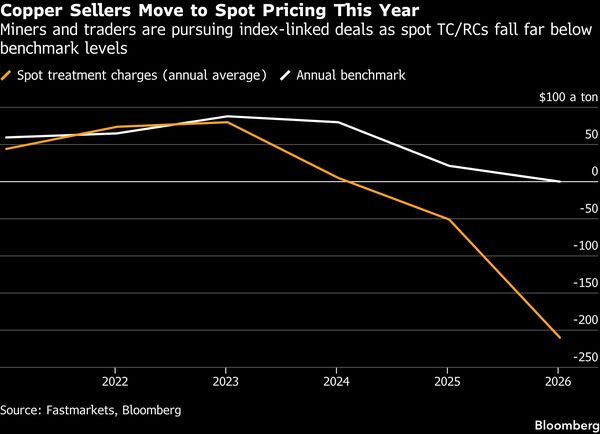
Less than 30% of China’s copper concentrates trade has been linked to the benchmark this year, dropping from more than 50% just two years ago, according to CRU.
据CRU统计,今年中国铜精矿贸易中与基准价挂钩的比例不足30%,较两年前的50%以上大幅下降。CRU预计,这一比例将在2027年进一步萎缩,届时中国进口矿中仅有14%可能采用基准价定价。
The ratio is expected to dwindle further in 2027, with only 14% of China’s imported ores likely to be priced using the benchmark, it estimates. That would make index-based pricing the mainstream method for pricing copper ores in China, but in the broader global industry, the benchmark system may prove harder for miners to challenge.
这将使指数定价成为中国铜矿定价的主流方式,但在更广泛的全球行业中,基准价体系可能更难被矿商挑战。从全球范围看,CRU预计约45%的精矿销售仍将与基准价挂钩,其中包括不定期重新谈判的矿山全生命周期协议。
On a global scale, CRU expects some 45% of concentrate sales to remain linked to the benchmark, including life-of-mine deals that don’t routinely come up for renegotiation. But cracks are also starting to appear outside the Chinese market.
但在中国市场之外,裂痕也开始显现。日本冶炼厂尤其渴望敲定不遵循中国基准价的自有固定价格协议。部分日本工厂持有大型铜矿股份,并成功主张需要更优条款以保护利润率。
Japanese smelters in particular have been eager to settle their own fixed-price deals that don’t follow China’s benchmark. Some Japanese plants hold stakes in large copper mines, and have successfully argued that they need better terms to protect their margins. Still, the practice has fueled commercial disputes, with Canadian miner Teck Resources Ltd. and Japan’s Sumitomo Metal Mining Co. going to arbitration over whether to use a Chinese or Japanese benchmark in multiyear supply deals.
尽管如此,这种做法已引发商业纠纷,加拿大矿商泰克资源有限公司与日本住友金属矿山株式会社就多年供货协议中应采用中国还是日本基准价提交仲裁。
Even for Chinese smelters, the economics are looking increasingly challenging, including leading producers like Tongling Nonferrous Group.
即便对中国冶炼厂而言,经济形势也日益严峻,龙头企业铜陵有色金属集团亦不例外。该公司正权衡大幅削减产量,因副产品价格下跌可能导致巨额亏损。
The company is weighing significant production cuts as falling byproduct prices could threaten heavy losses. Many producers are skeptical if these cuts will materialize, as smelters had made record profits this year.
许多生产商对这些减产能否落地持怀疑态度,因为冶炼厂今年曾创下创纪录利润。但那些回报建立在硫、金等副产品价格上涨之上,而这一涨势现已逆转,若进一步转向现货指数定价,明年可能给冶炼厂带来更大商业压力。
But those returns were made on a rally in byproducts like sulfur and gold that’s now going into reverse, and making a further shift towards spot indexes could heap further commercial pressure on smelters next year. That said, spot TC/RCs have stopped falling in recent weeks, and the risk for miners is that if plants do push ahead with output cuts, the drop in demand for concentrates could — for the first time in years — start moving the market back in smelters’ favor.
话虽如此,现货TC/RC(加工费/精炼费)近几周已止跌,矿商面临的风险是:如果工厂真推进减产,精矿需求下降可能——多年来首次——开始让市场重新向有利于冶炼厂的方向转移。
“The broader discussion remains centered on concentrate availability relative to smelting capacity,” said Wood Mackenzie’s Xu.
伍德麦肯兹的徐某表示:“更广泛的讨论仍集中在精矿供应相对于冶炼产能的可得性上。行业如何选择平衡这些相互竞争的压力,将决定谈判的最终结果。”
“How the industry chooses to balance those competing pressures will determine the eventual outcome of the negotiations.”