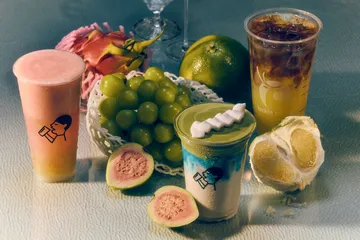
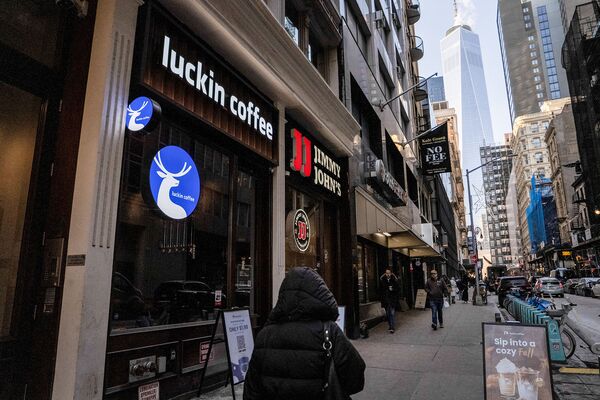
2025年5月,美国境内的瑞幸咖啡门店数量正好为零。这家中国连锁咖啡品牌在接下来的一个月里开设了其第一家纽约市门店,如今在曼哈顿已拥有20多家门店。库迪咖啡于2024年在檀香山设立门店,首次试水美国市场,如今在美国本土拥有25家以上的门店,其中许多位于纽约市的五个区内。不仅是咖啡,以茶饮为主的中国连锁品牌如霸王茶姬、喜茶和蜜雪冰城也在以惊人的速度在美国城市涌现,为消费者提供他们渴望的、适合发到社交媒体上的饮品,且价格亲民,所有这些都通过基于应用程序的交易进行订购和快速取货,而许多美国本土竞争对手尚未完全掌握这种方式。
In May 2025, there were exactly zero Luckin Coffee stores in the US. The Chinese chain opened its first New York City storefront the following month and now counts more than 20 locations across Manhattan. Cotti Coffee, which first dipped its toes in the US market in 2024 with a Honolulu outpost, today has more than two dozen stateside locations, many within NYC’s five boroughs. And it’s not just coffee: Tea-centric Chinese chains like Chagee, Heytea and Mixue are also popping up in US cities at a frenetic pace, giving consumers the Instagram-ready drinks they crave, at prices they can live with, all ordered and quickly retrieved through app-based transactions in a way many homegrown American competitors haven’t yet mastered.
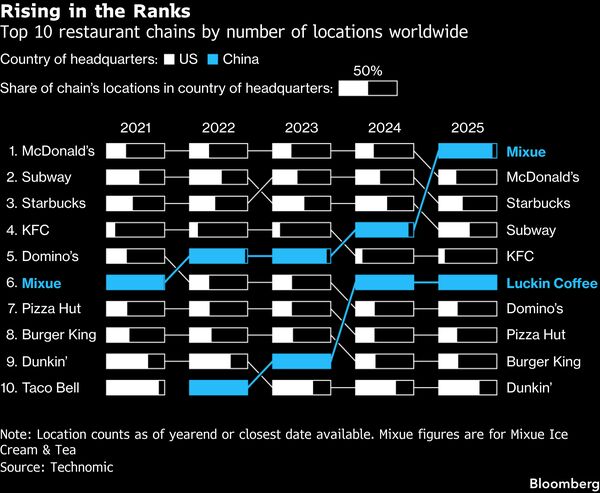
纽约人可能会对这种感觉像是一夜之间涌入的中国饮品连锁店感到惊讶,但中国问题观察家则一点也不意外。在过去的五年里,中国的优质饮品公司在其本土市场呈爆发式增长。市场研究公司Technomic的数据显示,2021年,按门店数量计算,该国最大的10家连锁餐饮企业中只有4家是中国所有,而如今这一比例为9家。
While New Yorkers might be taken aback by what feels like an overnight invasion of Chinese beverage chains, China watchers are anything but. Over the past five years, China’s premium-drinks companies exploded in their home market. In 2021, only 4 out of 10 of the biggest restaurant chains in the country by location count were Chinese-owned, but today 9 out of 10 are, according to market research firm Technomic.
这些公司在服务该国14亿人口的过程中,积累了大量关于客户服务、病毒式社交媒体传播和消费者奇思妙想的经验,而当本土城市趋于饱和时,这些连锁品牌自然将目光转向了海外。许多品牌已经在新加坡、泰国和其他亚洲国家开设了门店。在全球范围内,蜜雪冰城按门店数量计算已经超越麦当劳,成为了最大的连锁餐饮企业。
The companies learned a lot about customer service, viral social media moments and consumer whims catering to the country’s 1.4 billion people, and when their own cities got saturated, the chains naturally turned their attention abroad. Many have set up shop in Singapore, Thailand and other Asian countries. Globally, Mixue has surpassed McDonald’s as the biggest restaurant chain by number of locations.
来到美国是顺理成章的下一步。这一情况发生的同时,“Chinamaxxing”(把中国元素发挥到极致)的潮流正席卷社交媒体的信息流,对这些连锁店及其美国消费者来说,这似乎是一个幸运的巧合。老一辈人可能会把中国文化与20世纪90年代的廉价进口商品,或是几乎无法反映这个国家多元地方菜系的美国化中餐联系在一起,但在社交媒体上,全美各地的Z世代纷纷涌向TikTok,宣布自己的人生进入了“非常中国的时间”。
Arriving in the US was a natural next step. That it happened at the same time the “Chinamaxxing” trend was taking over social media feeds seems to have been a happy coincidence for the chains and their US consumers. Older generations might associate Chinese culture with the cheap imported goods of the 1990s or Americanized food that hardly reflects the nation’s diverse regional cuisine, but on social media, Gen Zers across the US have taken to TikTok to declare themselves to be in “a very Chinese time” in their lives.
这可能意味着穿上居家拖鞋、身着受中国启发的时尚服饰,或者用热茶取代冰咖啡。而且,如果他们住在某个主要的沿海城市,他们可能会顺道光顾该国无处不在的某家饮品连锁店——这些店仿佛在一夜之间神奇地出现。
That might mean donning house slippers, wearing Chinese-inspired fashion or trading their iced coffee for hot tea. And, if they live in a major coastal city, stopping by one of the country’s ubiquitous beverage chains that seem to have magically appeared overnight.
“这些连锁店正顺应一股它们并未创造、也无需付费的软实力浪潮,”纽约大学全球事务系助理教授袁少宇(音)表示。
“These chains are riding a soft power wave they didn’t create and aren’t paying for,” says Shaoyu Yuan, an assistant professor of global affairs at New York University.
这些连锁品牌部分地通过“技术优先”的方式与老牌品牌拉开差距,这与星巴克形成对比:在星巴克,由人工在柜台点单是标准流程,手机点单只是“一种基于技术的替代方案”,Technomic 国际研究与洞察高级总监 Aaron Jourden 表示。在这些中国连锁店里,甚至可能完全没有人工接单。取而代之的是,顾客可以在公司的各类应用程序上提前下单,往往还能直接收到推送到手机上的优惠券,到店时饮品已备好等候,无需与任何人交谈即可快速离开。
The chains have in part differentiated themselves from established brands with their tech-as-default approach, unlike Starbucks, where counter ordering via a human is the standard and phones are a “tech-based alternative,” says Aaron Jourden, senior director of international research and insights at Technomic. At the Chinese chains, there might not even be a human taking orders at all. Instead, shoppers can order a drink in advance on the companies’ various apps, often with a coupon pushed straight to their phone, find the beverage ready and waiting when they arrive, and quickly get on with their day without even having to speak to another person. (For app-less customers, there’s a kiosk screen for ordering.)
(对于未安装应用程序的顾客,店内设有点单屏幕终端。)创新口味也是一大吸引力。如今珍珠奶茶已非新鲜事,因此这些连锁品牌推出了看似无穷无尽的选择:例如瑞幸的“粉色日出气泡美式”(一款色彩鲜艳的椰子芒果饮品,顶部覆盖泡泡糖粉色草莓冷萃奶盖),或是奈雪的茶招牌“芝士云”乌龙茶(由奶油芝士制成,而非戈贡佐拉芝士),价格往往对资金紧张但仍觉得可以犒劳自己一点小确幸的食客颇具吸引力。
Innovative flavors are also an appeal. By now, boba teas are old news, so these chains are introducing a seemingly endless array of options: the Pink Sunrise Refresher (a vibrant coconut-mango drink with a bubble-gum-pink strawberry cold foam) at Luckin, for instance, or Heytea’s oolong tea topped with its signature “cheese cloud” (made of cream cheese, not gorgonzola), and often at prices that appeal to cash-strapped diners who still feel OK treating themselves to permissible small indulgences.
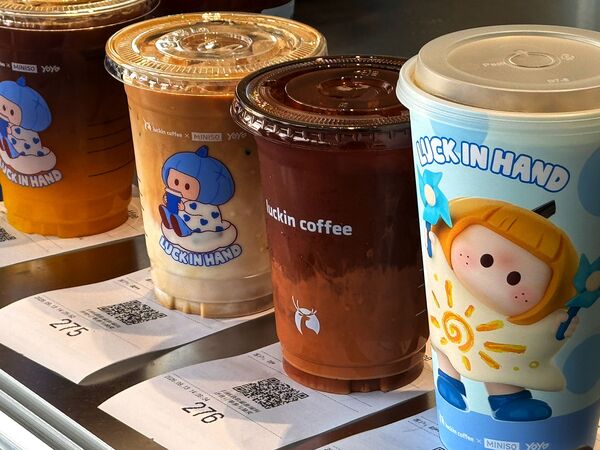
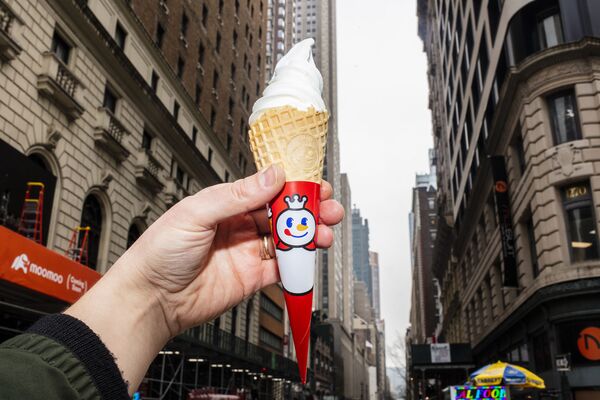
蜜雪冰城在纽约售价 1.19 美元的原味软冰淇淋甜筒,抹茶口味只需加 50 美分。库迪的橙汁美式咖啡可能对部分美国人口味偏苦,但因开业特惠含税仅 3.26 美元,很难让人觉得后悔。分层的橙色与深棕色无论怎样都很适合发到 Instagram。(注册应用程序后,顾客最初可 99 美分购得。)周边商品也吸引顾客,从限量版毛绒玩具到世界杯主题冰箱贴。
Mixue sells a soft-serve ice cream cone, priced in New York at $1.19 for plain, or 50¢ more for the matcha flavor. An orange juice Americano at Cotti may be too bitter for some American palates, but at $3.26 with tax, thanks to a grand opening special, it’s hard to feel much regret. The layered orange and dark brown colors are perfect for Instagram either way. (Sign up for the app, and a customer can initially get it for 99¢.) Merch, from limited-edition stuffies to World Cup-themed magnets, lures customers in too.
库迪的集换徽章引起了纽约建筑工人、自称“星巴克死忠粉” Toni Davis 的注意。在拿徽章时,她决定顺便试一杯饮品。
Cotti’s collectable pins caught the attention of Toni Davis, a construction worker in New York and self-proclaimed “Starbucks head.”While grabbing a pin, she decided she might as well try a drink.
她点了一杯加了少许草莓糖浆的西柚白茉莉茶。“我喜欢尝试新事物,”她说,并补充说她计划下次来附近时尝尝别的口味。“如果他们有桃子味的,我绝对还会来这儿,因为我也是个桃子迷。”
She got the grapefruit and white jasmine tea with a little strawberry syrup added in. “I love to try something new,” she says, adding that she plans to try another flavor next time she’s in the neighborhood. “If they have a peach one, I’m definitely coming in here, because I’m a peach head too.”
在经历了数十年美国向中国输出文化之后,这种势头似乎正在反过来。虽然这些公司在美国的销售额仅占其总收入的一小部分——市场研究公司Technomic估计,瑞幸咖啡2025年在美国的销售额为510万美元,而其全球总收入约为70亿美元——但它们也有广阔的增长空间。
After decades of America exporting its culture to China, the momentum seems to be going in the other direction. While the companies’ US sales generate a small fraction of their total revenue — Technomic estimates Luckin did $5.1 million in the US in 2025, out of global revenue of about $7 billion — they also have plenty of room to grow.
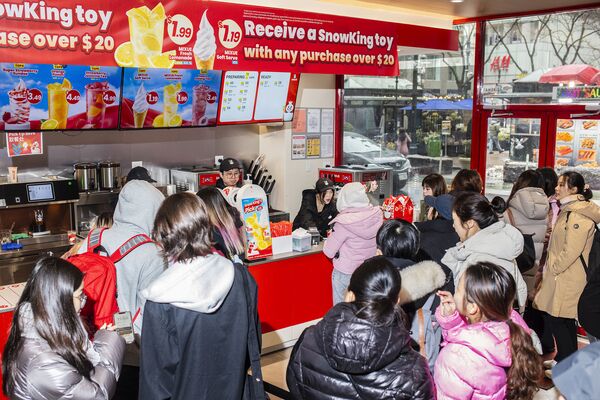
这些连锁店大体上将精力集中在能找到热情且愿意消费的顾客的地区,比如纽约和洛杉矶,那里的中国外派人员和追求新鲜感的美国年轻人等当地人口汇聚在一起。这就使得该国大部分地区仍然是一片空白。
The chains have largely focused on areas where they’ll find excited, willing customers, like New York and Los Angeles, where local populations of Chinese ex-pats and young, novelty-seeking Americans converge. That leaves most of the country wide open.
根据消费者洞察公司Langston Co.在8月份进行的一项研究,在13岁至74岁的美国人中,只有23%的人光顾过任何源自中国大陆或台湾的茶饮或咖啡连锁店,包括珍珠奶茶店。不出所料,受社交媒体驱动的Z世代是最大的客户群——但即便在他们当中,也只有38%的人表示自己尝试过其中任何一家。
Only 23% of Americans age 13 to 74 have visited any tea or coffee chain originally from mainland China or Taiwan, including boba spots, according to research conducted for in August by consumer insights firm Langston Co. Unsurprisingly, Gen Z, driven by social media, is the largest customer base — but even among them, only 38% said they’ve tried any of them.
针对媒体的提问,霸王茶姬、库迪咖啡、喜茶、瑞幸咖啡和蜜雪冰城这几家在美国不断扩张的中国知名餐饮巨头,其发言人对美国的扩张计划做出了大体开放但态度乐观的回应。“我们将随着市场对我们模式的验证来调整规模,”瑞幸咖啡的一位发言人说。喜茶称美国是其“最重要的海外市场”之一,并表示该公司正在投资当地的采购和供应链基础设施。
In response to questions from , spokespeople from Chagee, Cotti, Heytea, Luckin and Mixue — some of the biggest-name Chinese competitors growing in the US — gave largely open-ended but optimistic responses about their US expansion plans. “We’ll scale as the market validates our model,” a Luckin spokesperson says. Heytea calls the US one of its “most important overseas markets” and says the company is investing in local sourcing and supply chain infrastructure. (In mid-October, it opened a location in New York’s Union Square with a “Gelato Lab.”)
(10月中旬,它在纽约联合广场开设了一家设有“冰淇淋实验室”的门店。)霸王茶姬的一位发言人表示,该公司将美国视为其实现进驻100个国家“愿景”的“重要部分”;目前其业务已覆盖包括中国在内的9个国家。库迪咖啡表示,其希望将业务拓展到纽约和洛杉矶以外的地区,并计划利用低价“打入当地市场”。蜜雪冰城表示,其在美国纽约和加利福尼亚州拥有的10家门店“仍处于早期阶段”。
Chagee’s spokesperson says it sees the US as an “important part” of its “vision” to reach 100 countries; it’s currently in nine, including China. Cotti says it wants to go beyond New York and LA, with plans to use low prices “to break into the local market.”Mixue said its US presence, 10 stores in New York and California, is “still in the early stages.”
当然,一切都无法保证,标普全球评级中国零售业首席分析师桑迪·林警告说。她指出,蜜雪冰城在发现日本高昂的人工和租金成本与该连锁店的低价策略不符后,不得不缩减了在日本的激进扩张计划。其他连锁店也面临着类似的制约因素。在美国人工成本高企且通货膨胀率居高不下的大背景下,有什么能阻止同样的问题在这里出现呢?“现阶段,这些连锁店还有很多需要证明的地方,”林说。
Of course, nothing is guaranteed, cautions Sandy Lim, S&P Global Ratings’ lead analyst for China retail. She noted that Mixue had to curtail its aggressive expansion plans in Japan after finding the country’s high labor and rental costs wouldn’t work with the chain’s cheap prices. Other chains have faced similar constraints. With high labor costs and still-elevated inflation in the US, what’s to prevent the same problem from cropping up here? “At this stage, these chains have a lot to prove,” Lim says.
南加州大学政治学和国际关系教授、中国社会问题专家斯坦利·罗森表示,尽管如此,美国公司最好还是予以关注——考虑到中国连锁店最初是通过模仿星巴克起家的,这算是一个有趣的转变。星巴克公司向中国人民出售了其版本的奢华体验,其中包括源源不断的新产品、饮品定制、手机点单,以及在单座城市里开办多家门店意味着一致性、可靠性和便利性而非冗余的理念。
Still, US companies would do well to pay attention — an interesting turn, considering the Chinese chains learned in the first place by modeling Starbucks, says Stanley Rosen, a professor of political science and international relations with a specialty in Chinese society at the University of Southern California. Starbucks Corp. sold its version of luxury to the Chinese people, including a constant stream of new products, drink customization, mobile ordering and the idea that having multiple shops all over a single city meant consistency, dependability and convenience, not redundancy.
但罗森表示,现在“中国品牌已经超越了星巴克”。它们的点单速度更快、饮品更具创新性,而且对于预算有限的美国人来说至关重要,它们的价格通常更低。(在纽约宾夕法尼亚车站的一家星巴克门店,16盎司杯装的季节限定南瓜拿铁售价为7.45美元;半个街区外新开业的瑞幸提供同等价格的南瓜派拿铁,但应用软件上的新用户可以用1.99美元将其拿下。)
But now, Rosen says, “the Chinese brands have gone beyond Starbucks.”Their ordering is faster, their drinks are more innovative, and, crucially for Americans on a budget, their prices are usually lower. (At a Starbucks location in New York’s Penn Station, the seasonal favorite pumpkin spice latte in a 16-ounce cup goes for $7.45; the newly opened Luckin half a block away offers a pumpkin pie latte for the same price, but a new user on the app can snag it for $1.99.)
当被问及这群新竞争对手时,星巴克的一位发言人强调了其门店所提供的“扎根于人际连接的日常仪式感”,以及与客户的深厚关系。事实上,许多中国连锁店并不是为了成为人们闲逛的“第三空间”而设计的;有些甚至没有座位。但即便星巴克在改进自身的应用点单体验方面取得了进展,对于一些发现其他选项更适合其忙碌生活的潜在客户来说,可能已经太晚了。
Asked about the pack of new rivals, a spokesperson for Starbucks emphasized the “daily ritual rooted in human connection” that its stores offer, as well as its deep relationships with customers. Indeed, many of the Chinese chains are not designed to be a “third place” for people to hang out; some don’t even have seating. But even as Starbucks makes strides in improving its own app-ordering experience, it may be too late for some would-be customers who’ve found another option more suitable to their busy lives.
最近的一个早晨,曼哈顿中城的一名银行家安德烈·布朗拿着焦糖咖啡走出了瑞幸。他说,他喜欢这款应用的便利性、低廉的价格、丰富的品种、速度和口感。“我以前经常去星巴克。”
On a recent morning, Andre Brown, a banker in Midtown Manhattan, exits a Luckin holding his caramelized coffee. He says he likes the convenience of the app, the low prices, the variety, the speed and the taste. “I used to go to Starbucks all the time.”