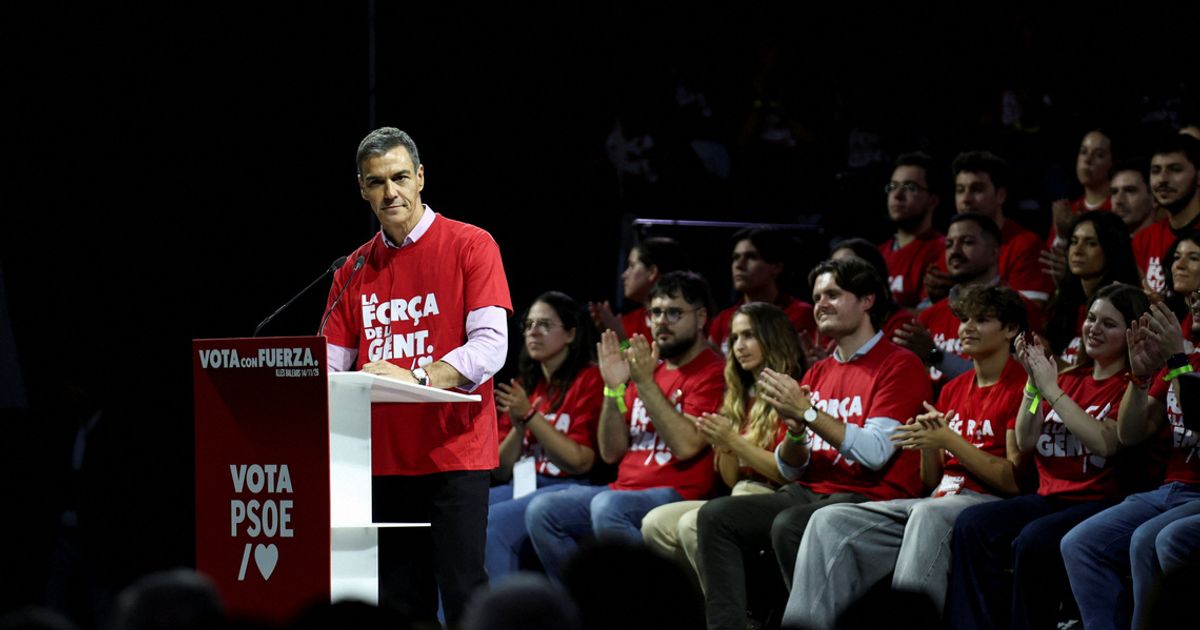
马德里,11月17日——过去一个月里,西班牙政府批准了超过15亿欧元(合16.5亿美元)的新福利补贴,并计划在11月29日提前大选前推出更多措施,展开最后一轮支出热潮,以提升其进步派形象。
MADRID, Nov 17 - Spain's government has approved over €1.5 billion ($1.65 billion) in new welfare benefits in the past month and plans more before a snap election on November 29 in a last-haul spending spree aimed at boosting its progressive credentials.
这些措施体现了西班牙社会党领导的政府自2023年以来在缺乏足够议会支持通过新预算的情况下日益采取的一种策略:通过法令支出,国会可以叫停,但无法追溯撤销。
The measures exemplify a growing strategy by Spain's Socialist-led government in the absence of sufficient parliamentary support to pass a new budget since 2023: spending by decrees that Congress can halt but not retroactively undo.
根据路透社对该政府网站上公布成本的汇总,过去一个月里,在大多数民调中落后并为争取选票而战的政府已批准约8.2亿欧元用于扶持弱势家庭。
In the past month, the government, trailing in most polls and fighting for votes, has authorised some €820 million in support for vulnerable families, according to a Reuters summation of costs posted on its website.
政府还批准了2.21亿欧元用于洪灾或上月火车事故等灾害的受害者,以及约4.26亿欧元的住房补贴。住房是选民最关心的问题,首相佩德罗·桑切斯誓言若获得多数席位将直面解决。
It has also approved €221 million for victims of disasters like floods or last month's train crash, plus around €426 million in subsidies for housing – voters' top concern, which Prime Minister Pedro Sanchez has vowed to tackle head-on if granted a majority.
政治分析师爱德华多·巴永表示,这些措施可能有助于动员原本会弃权的选民,强化社会党作为弱势群体保护者的叙事。
The measures could help mobilise voters who would otherwise abstain by strengthening the Socialists' narrative as the party protecting the vulnerable, said political analyst Eduardo Bayon.
“这个进步派联合政府正在证明……实现经济增长和再分配是可以兼得的,”首相佩德罗·桑切斯周一接受西班牙电视五台采访时被问及这些支出时说道。“拖延问题”更高的税收收入和欧盟资金为在不推高短期公共债务的情况下资助此类措施提供了手段。但智库Fedea的经济学家迭戈·马丁内斯·洛佩斯表示,眼下为赢得选票而做出的多年承诺可能会给西班牙下一届政府带来问题。
"This progressive coalition government is demonstrating... that it is possible to achieve both economic growth and redistribution," Prime Minister Pedro Sanchez said in an interview with Spanish channel Telecinco on Monday when asked about the spending. 'KICKING THE CAN' Higher tax revenues and EU funds have provided the means to fund such measures without pushing up public debt in the short term. But multi-year commitments being made to win votes now could prove a problem for Spain's next government, said Diego Martinez Lopez, an economist at think tank Fedea.
经济学家和西班牙财政监督机构AIReF批评这类支出缺乏透明度,因为相比常规预算更新,这类支出要难追踪得多。
Economists and Spain's fiscal watchdog AIReF have criticised the lack of transparency of this type of spending, which is much harder to track than regular budget updates.
民调领先的保守派人民党承诺对公共财政进行全面审计,其领导人阿尔韦托·努涅斯·费霍在多次采访中反复表示,他“不相信这些数字”。
The conservative People's Party, leading in polls, has promised a full audit of public finances, with its leader Alberto Nuñez Feijoo repeatedly stating in interviews that he "does not believe the numbers".
西班牙独立财政责任机构(AIReF)也警告称,尽管西班牙的债务占GDP比率近年来有所下降,但较高的公共支出正危及与欧盟商定的净初级支出上限,以及其自身的国内支出上限。
AIReF has also warned that despite Spain's debt-to-GDP ratio falling in recent years, higher public spending was jeopardising net primary expenditure limits agreed with the EU and its own domestic spending caps.
马丁内斯·洛佩斯说:“这些支出在短期影响方面具有显著的选举影响力,但未来融资的多年承诺可能会引发问题。它们本质上是在把问题往后推。”西班牙财政部未回应置评请求。
"These expenditures have significant electoral clout in terms of short-term impact, but multi-year commitments of future financing could cause problems," Martinez Lopez said. "They are essentially kicking the can down the road." Spain's finance ministry did not respond to a request for comment.
财政缓冲的丧失 根据政治分析机构Electomania的数据,自2018年6月上任以来,桑切斯内阁批准的紧急法令法——暂时绕过议会以通过新措施——比1975年西班牙民主转型以来的任何其他首相都多。通常情况下,国会必须在30天内投票永久批准这些措施。
LOSS OF FISCAL BUFFER Since taking office in June 2018, Sanchez's cabinets have approved more emergency decree laws temporarily bypassing parliament to approve new measures than any other prime minister since Spain's transition to democracy in 1975, according to political analysis outlet Electomania. Usually, Congress must vote to permanently approve the measures within 30 days.
最新措施是在议会解散后通过的,只需获得一个由69名议员组成的常设委员会批准,该委员会的议员力量对比比350人的全体国会略微更有利于执政联盟。
The latest measures, passed after parliament was dissolved, need only to secure approval from a 69-member standing committee where the balance of lawmakers is slightly more favourable to the ruling coalition than that of the full 350-person Congress.
部分措施由西班牙的应急基金提供资金,该缓冲基金价值为非金融总支出的2%——自2023年以来设定为39.6亿欧元——旨在应对不可预见的紧急情况。
Some measures have been funded by Spain's contingency fund, a buffer worth 2% of total non-financial expenditure — set at €3.96 billion since 2023 — intended for unforeseen emergency scenarios.
然而,经济学家反复指出,应急基金常被用于本应通过常规预算渠道融资的项目,根据AIReF的数据,去年71%的支出流向了可预见且经常性的开支,如维和行动或普通福利待遇。
Yet economists have repeatedly flagged that contingency funds are often spent on items which should be financed via regular budget lines, with 71% of last year's spending going to foreseeable and recurring expenses like peacekeeping operations or ordinary welfare benefits, according to AIReF.
经济学家雷蒙德·托雷斯表示:“西班牙被迫采取措施——无论是在收入方面还是支出方面——以防止失去其财政缓冲或预算政策的操作空间。”
"Spain is compelled to take measures — whether on the revenue or the expenditure side — to prevent the loss of its fiscal buffer or the room for manoeuvre in its budgetary policy," said economist Raymond Torres.