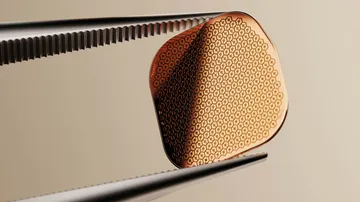
Science公司是一家研发视网膜芯片的企业,该芯片可为患有老年性失明症的人群恢复部分视力。在最近一轮融资后,该公司估值达到35亿美元。
Corp, the company behind a retinal chip that restores some vision to people with an age-related form of blindness, is valued at $3.5 billion after a recent fundraising round.
公司表示,此次融资4亿美元,将用于进一步开发治疗失明的植入物,并构建利用工程化细胞与大脑连接的神经设备。Science称,该估值包含新增资金。本轮投资方包括Khosla Ventures、Tenet Healthcare Corp.以及Ackman Oxman Institute。后者是一个脑科学研究中心,由对冲基金亿万富翁Bill Ackman及其妻子Neri Oxman于今年创立。
The company said it raised $400 million to further develop implants to treat blindness and build neural devices that plug into the brain using engineered cells. The valuation includes the new money, Science said. Investors in this latest round include Khosla Ventures, Tenet Healthcare Corp., and the Ackman Oxman Institute, a brain research center established this year by hedge fund billionaire Bill Ackman and his wife Neri Oxman.
Science是脑机接口公司不断壮大的阵营之一,这些公司正竞相开发神经系统疾病的治疗方法,并获得全球范围内的关注和投资。部分投资者还寻求最终实现人机融合,目标是提升人类的认知能力。据PitchBook数据,过去十年间,美国脑植入公司累计融资超过30亿美元,中国政府也在支持国内相关产业的发展。
Science is part of a growing crop of brain-computer interface companies getting interest and investment from around the world as they race to develop treatments for neurological disorders. Some investors are also seeking to eventually enmesh humans and machines with the goal of upgrading people’s cognitive capacity. US brain implant companies have raised over $3 billion in the last decade, according to data from PitchBook, and the Chinese government is supporting the development of a domestic industry.
Science的Prima装置于今年早些时候在欧洲获批,是首个可为老年性黄斑变性患者恢复部分视力的治疗手段。老年性黄斑变性是老年人视力丧失最常见的形式。该装置获准用于治疗该疾病的晚期形式。该装置是一枚植入眼内的芯片,需配合一副配套眼镜使用。
Science’s Prima device, approved in Europe earlier this year, is the first treatment that restores some vision to people with age-related macular degeneration, the most common form of vision loss in older people. It was cleared to treat an advanced form of the disease. The device is a chip that sits in the eye and works with a companion pair of glasses.
首席执行官Max Hodak在接受采访时表示,新资金将助力Science研究该装置在其他眼部疾病上的应用,并开发更先进的系统版本。他希望扩大植入物的视野范围,并缩小部分电子元件,以提供更多视力。Hodak也是Neuralink的联合创始人兼前总裁,该脑植入公司由Elon Musk支持。
The new funds will help Science study the device for other eye diseases and develop a more advanced version of the system, Chief Executive Officer Max Hodak said in an interview. He wants to expand the implant’s field of view and shrink some of the electronics so it can provide more sight. Hodak was also a cofounder and former president of Neuralink, the brain implant company backed by Elon Musk.
患者目前已在德国接受 Prima 植入体,公司发言人表示,该设备很快将在意大利、法国和英国上市。Science 称,已在德国为两名患者植入了其视网膜芯片的商业版本,还有数十例手术正在安排中。
Patients are now getting the Prima implant in Germany, and it will be available soon in Italy, France and the UK, a company spokesperson said. Science said it has implanted the commercial version of its retina chip in two patients in Germany and has dozens more being scheduled.
Science 计划在伦敦的 Moorfields Private Eye Hospital(摩尔菲尔兹私立眼科医院)为自费患者提供该设备,但拒绝透露价格。这家初创公司的投资方预期其将快速增长。
Science plans to make the device available for cash-paying patients as well at Moorfields Private Eye Hospital in London, but declined to say how much it would cost. The startup’s backers expect fast growth.
“我押注这家公司能迅速实现数亿美元营收,长期来看达到数十亿美元,”Khosla Ventures 创始人 Vinod Khosla 表示。
“My bet is this company can quickly get to hundreds of millions in revenue, and longer-term get to billions,” said Vinod Khosla, founder of Khosla Ventures.
Hodak 称,Science 已向美国食品药品监督管理局提交 Prima 设备的审批申请。他希望该设备明年上半年在美国商业化上市。
Science has submitted the Prima device to the US Food and Drug Administration for approval, Hodak said. He hopes it will be commercially available in the US in the first half of next year.
该公司还在开发另一种植入体,可利用工程化神经元直接与大脑连接。Hodak 表示,公司已选定该实验性植入体拟治疗的首个疾病,但尚未公布。该设备已在动物身上测试,Science 希望在未来 16 个月内开展人体测试。
The company is also developing another type of implant that plugs directly into the brain using engineered neurons. The company has chosen the first disease it hopes to treat with this experimental implant but hasn’t announced it, Hodak said. The device has been tested in animals, and Science hopes to test it in humans in the next 16 months, he said.