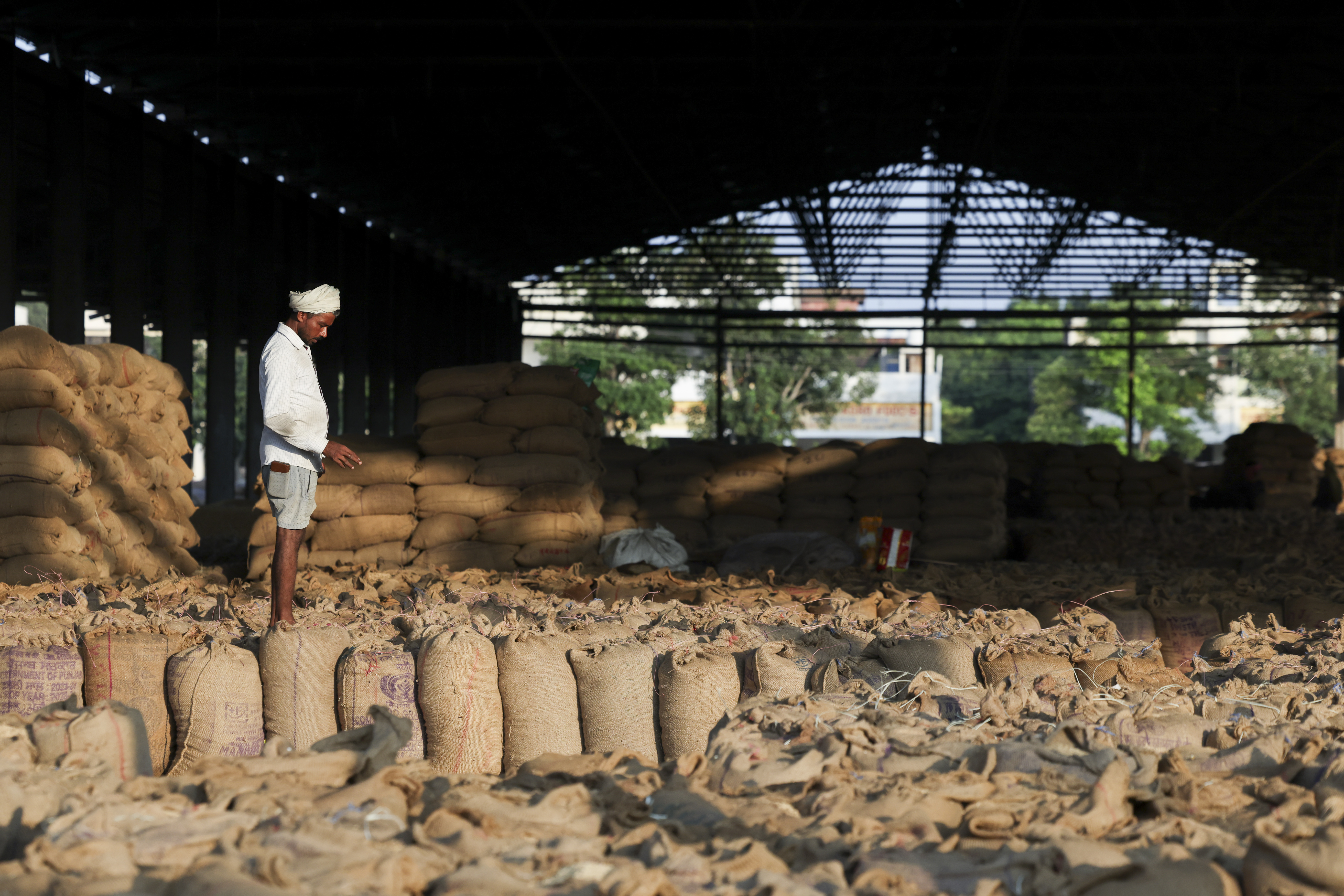
印度锡索尼讯——得益于数十年前为保障国家粮食安全而设计的作物科学进步和补贴政策,印度已成长为稻米生产强国。
SISONEE, India - India has grown into a rice-producing powerhouse, thanks to crop-science advances and subsidies designed decades ago to keep the nation fed.
这也产生了不断增长的稻米盈余——其中大部分用于出口——与此同时,印度政府承担的补贴成本却与日俱增。
It's also generated a growing rice surplus – much of it exported – even as India's government shoulders the rising cost of subsidies.
路透社对联邦政府与各邦政府的沟通文件进行审查,并采访了10名官员和十多名科学家,结果显示,总理纳伦德拉·莫迪政府对补贴稻米造成的财政压力日感担忧,因为这些补贴稻米不仅供养国内民众,也供养国外消费者。
A Reuters review of federal government communications with states and interviews with 10 officials and more than a dozen scientists show rising concern in Prime Minister Narendra Modi's administration about the fiscal strain of subsidising rice that's feeding people abroad as well as Indians at home.
稻米补贴占印度联邦粮食补贴账单的三分之二强,十年间这一账单翻了一番多,在2025/26年度达到2.28万亿卢比(约合241亿美元)。
Rice subsidies make up more than two-thirds of India's federal food subsidy bill, which has more than doubled in a decade to 2.28 trillion rupees ($24.1 billion) in 2025/26.
“实际上,我们是在用纳税人的钱补贴外国消费者,”农业经济学家、前政府作物价格顾问阿肖克·古拉蒂表示。他说,盈余稻米“以低于竞争对手的价格倾销到全球市场”。尽管受厄尔尼诺现象导致降雨不足影响,预计2026/27年度印度收成将下降,但库存充足意味着美国农业部(USDA)仍预测印度稻米出口在未来两年将继续增长。
"In effect, we are using taxpayers' money to subsidise foreign consumers," said Ashok Gulati, an agricultural economist and former government adviser on crop prices. He said the surplus was being "dumped on global markets at prices that undercut competitors." Even as poor rains due to El Nino are expected to deliver a lower Indian harvest in 2026/27, ample stocks mean the US Department of Agriculture (USDA) still forecasts Indian exports rising in the next two years.
盈余部分源于新稻种的推广,使得易涝的印度东部大片地区实现了稳定种植,帮助全国产量在十年内增长50%,在2025/26年度达到创纪录的1.54亿吨——超过了这个14亿人口国家1.07亿吨的国内消费量。
The surplus stems in part from new rice varieties that have opened up swathes of flood-prone east India to reliable cultivation, helping boost national output by 50% in a decade to a record 154 million tons in 2025/26 – outstripping domestic consumption of 107 million tons in the nation of 1.4 billion people.
自20世纪60年代中期以来,联邦稻米补贴制度支撑了这一增长,当时印度尚难以自给自足。近年来,各邦政府也在联邦最低收购价基础上提供所谓的“奖金”,进一步推高了产量。
The rise has been supported by a federal rice subsidy system since the mid-1960s, when India struggled to feed itself. More recently, state governments have also offered so-called bonuses on top of the federal minimum price, lifting output further.
1965年,因收成不佳,政府要求印度人每周有一天不吃晚饭。如今,出口量在十年内翻了一番,2025年达到2230万吨,印度粮食占全球大米贸易的40%,仓储空间却勉强够用,难以容纳不断增加的库存。
In 1965, the government told Indians to go without dinner one day a week because of inadequate harvests. Now, exports have doubled in a decade to 22.3 million tons in 2025, Indian grain accounts for 40% of the global rice trade and there is barely enough storage for the rising stocks.
“我们没地方存了,”私营碾米厂主纳文·阿加瓦尔(Navin Aggarwal)说,他在东部奥里萨邦的库塔克经营,当地产量激增。“我们一直在等政府机构来提走它们已经从我们这里买走的大米。”“不公平竞争”在补贴制度下,联邦政府每年设定大米最低收购价,参考从人工到化肥等各项投入成本,给农民种植大米的激励。产粮邦往往在其上再追加一笔款项,使大米更有利可图。
"We have run out of space," said Navin Aggarwal, a private miller in Cuttack, in the east Indian state of Odisha, where production has surged. "We have been waiting for government agencies to lift the rice they have already bought from us." 'UNFAIR COMPETITION' Under the subsidy system, the federal government sets a Minimum Support Price for rice each year, taking account of inputs ranging from labour to fertiliser costs, giving farmers an incentive to grow the grain. Rice-producing states often offer an additional sum on top, making rice more profitable.
由此产生的过剩导致印度联邦政府与邦政府之间因这些邦级奖励金产生越来越多的摩擦,这些奖励金加剧了大米过度生产,挤占了油籽和豆类等需要进口的作物种植面积。
The resulting surpluses have led to rising tensions between India's federal government and state administrations over those state bonuses, which add to rice overproduction and squeeze out crops, such as oilseeds and pulses, that need to be imported.
一位联邦食品部高级官员告诉路透社,产粮邦持续施压该部收购更多大米,称这种情况“令人恼火”。
One senior federal food ministry official told Reuters that rice-producing states continue to pressure the ministry to buy more rice, calling the situation "exasperating".
政治摩擦已超越印度国界。随着印度出口攀升,从泰国、越南到美国的竞争对手生产商纷纷表达不满。
Political tensions stretch beyond India. As India's exports climb, rival producers from Thailand and Vietnam to the United States have voiced growing frustration.
美国总统特朗普去年12月指责印度“倾销”,即以低于成本的价格出售大米。正在与华盛顿谈判贸易协定的新德里驳回了这一指控,称其向美国出售昂贵的优质巴斯马蒂米。
US President Donald Trump in December accused India of "dumping", or selling rice below cost. New Delhi, which is negotiating a trade deal with Washington, dismissed the charge, saying it sold expensive premium basmati rice to the US.
行业组织美国大米联合会(USA Rice)4月表示,“来自印度等不良行为体的不公平竞争”威胁美国销售。
Trade body USA Rice said in April "unfair competition from bad actors like India" threatened US sales.
美国农业部发言人在给路透社的声明中称,华盛顿“长期以来对印度的大米补贴提出关切”。美国贸易、商务及白宫官员未回应置评请求。
A USDA spokesperson told Reuters in a statement that Washington had "long raised concerns" about India's rice subsidy. US trade, commerce and White House officials did not respond to requests for comment.
与此同时,泰国在2025年呼吁与印度和越南合作以阻止价格下跌,并在10月表示,印度的大量库存增加了泰国出口商的压力。
Thailand, meanwhile, appealed for cooperation with India and Vietnam in 2025 to stop prices falling and, in October, Bangkok said India's large stocks added to pressure on Thai exporters.
印度大米的售价比基准泰国大米每吨低约110美元,泰国大米在11月中旬的交易价格约为每吨497美元。
Indian rice sells at a discount of about $110 a ton to benchmark Thai rice, which was trading around $497 per ton in mid-November.
泰国和越南官员未回应置评请求。印度财政部、农业部、食品部和贸易部也未回复。“我们种的大米比我们能吃的还多”印度的水稻革命得益于Swarna-SUB1品种,该品种由印度研究人员将耐洪涝的FR13A品种与广泛使用、以高产著称的Swarna品种结合培育而成,于2009年投入商业使用。
Thai and Vietnamese officials did not respond to requests for comment. India's finance, agriculture, food and trade ministries also did not reply. 'WE GROW MORE RICE THAN WE CAN EAT' India's rice revolution has been fuelled by the Swarna-SUB1 grain, released for commercial use in 2009 by Indian researchers who combined the flood-tolerant FR13A variety with the widely used Swarna variety, known for high yields.
传统上,大部分水稻产量来自印度北部和西北部的旁遮普邦、哈里亚纳邦等州。如今,新品种改变了易受洪涝灾害的印度东部的收成。
Most rice production traditionally came from north and northwest India, in states such as Punjab and Haryana. Now, the new variety has transformed harvests in flood-prone east India.
钱德拉莫汉·亚达夫在东部比哈尔邦务农。他的村庄西索尼靠近科西河,因毁灭性洪水频发而被称为“悲伤之河”。
Chandramohan Yadav farms in the eastern state of Bihar. His village of Sisonee is near the Kosi River, known as the "River of Sorrows" for its devastating deluges.
他说:“有些年份我们勉强种够自家吃的大米,有时洪水会毁掉全部收成。现在,我们种的大米比我们能吃的还多。”过去15年里,比哈尔邦的产量激增182%,在2025/26年度达到875万吨。邻邦奥里萨邦的产量增长50%,达到1020万吨。
"There were years when we barely grew enough rice to feed our family, and sometimes the floods wiped out the entire harvest," he said. "Now, we grow more rice than we can eat." Production in Bihar surged 182% in the past 15 years to 8.75 million tons in 2025/26. In neighbouring Odisha, it rose 50% to 10.2 million tons.
国营机构ICAR-中央水稻研究所的高级科学家拉梅斯瓦尔·萨赫表示,研究人员正在致力于将耐洪涝和抗旱性结合到单一品种中,帮助依赖难以预测的季风雨水的农民。
Researchers are working on combining flood and drought tolerance into a single grain, helping farmers dependent on unpredictable monsoon rains, said Rameswar Sah, a senior scientist at state-run ICAR-Central Rice Research Institute.
据两名科学家和两名政府官员引用的估计,新品种预计将在未来五年增加至少1000万吨产量。
New varieties are expected to add at least 10 million tons to output over the next five years, according to estimates cited by two scientists and two government officials.
印度政府最高咨询机构NITI Aayog的一份报告预测,到2036年总产量将达到1.71亿吨。但国内需求仅将增至1.1亿吨。路透社看到了这份报告。
A report by top government advisory body NITI Aayog, seen by Reuters, forecast total output would reach 171 million tons by 2036. But domestic demand would only rise to 110 million tons. Faced with a growing surplus, the government has directed some rice towards ethanol production.
面对日益增长的过剩,政府已将部分稻米转向乙醇生产。但政府稻米库存持续攀升,10月1日达到创纪录的5547万吨,是目标的四倍多。
But government rice stocks continue to climb, reaching a record 55.47 million tons on October 1, more than four times the target.
联邦食品部在9月的一份文件中表示,政府计划增加1310万吨仓储能力,以应对“采购与调拨之间日益加剧的错配以及区域失衡”。路透社看到了这份文件。旁遮普邦首席部长巴格万特·曼在9月29日的一封信中敦促联邦政府,将去年收购的60万吨政府收购稻米从当地仓储转移到其他仓库,否则收购新收成的延误可能在农民中引发“动荡”。
The federal food ministry said in September, in a document seen by Reuters, the government planned to add 13.1 million tons of storage capacity to address a "growing mismatch between procurement and offtake and regional imbalances." Bhagwant Mann, chief minister of Punjab, urged the federal government in a September 29 letter to move 600,000 tons of government-bought rice harvested last year out of local storage to other warehouses – or risk a delay in buying the new harvest that could spark "unrest" among farmers.
各邦奖金成为政府针对目标 在印度,农业雇佣了超过40%的劳动力,那里的农民反对任何削减补贴的举措。2020年和2021年,农民抗议他们担心将终结联邦最低支持价格的农业法,促使政府在2021年11月废除了这些法律。
STATE BONUSES IN GOVERNMENT CROSSHAIRS Farmers in India, where agriculture employs more than 40% of the workforce, have opposed any move to trim subsidies. A protest in 2020 and 2021 against farm laws that farmers feared would end the federal Minimum Support Price prompted the government to repeal the laws in November 2021.
政府不愿调整联邦补贴,已试图阻止各邦奖金。但进展甚微,因为各邦政府担心,如果限制这些补贴,农民会在选票上予以报复。
Reluctant to adjust the federal subsidy, the government has tried to stop state bonuses. It has made little headway, as state governments fear a backlash from farmers at the ballot box if they rein in the handouts.
三位政府消息人士称,联邦食品部在过去两年里三次接触财政部,敦促其阻止各邦提供奖金。
The federal food ministry approached the finance ministry three times in the past two years urging it to stop states from offering bonuses, three government sources said.
在1月9日的一封信中,财政部的支出司敦促各邦将激励措施与发展其他作物的国家优先事项对齐,并表示耗水量大的稻米正在给地下水资源的带来压力。路透社看到了这封信。
In a January 9 letter seen by Reuters, the finance ministry's Department of Expenditure urged states to align incentives with national priorities to grow other crops and said water-intensive rice was straining groundwater resources.
进口油籽和豆类在2025年使印度花费227亿美元,过去十年增长了120%,而大米出口收入为120亿美元,贸易部数据显示。
Importing oilseeds and pulses cost India $22.7 billion in 2025, up 120% in the past decade, while rice exports earned $12 billion, trade ministry data shows.
专家称,大米的肥料使用量高于油籽和豆类,这将增加印度的肥料补贴支出。肥料部估计,2026/27财政年度的补贴支出将超过3万亿元卢比(约318亿美元),是十年前水平的四倍。
Experts say rice uses more fertiliser than oilseeds and pulses, adding to India's fertiliser subsidy bill, which is expected to exceed 3 trillion rupees ($31.8 billion) in 2026/27, four times the level of a decade ago, the fertiliser ministry estimated.
食品部官员还在2025年9月和2026年3月与州食品官员就大米补贴问题提出了担忧,四位政府消息人士称。
Food ministry officials also raised concerns about rice bonuses with state food officials in September 2025 and March 2026, four government sources said.
BigMint 咨询公司农业业务负责人阿比谢克·戈维尔卡尔表示,说服州官员取消补贴并不容易。
Abhishek Govilkar, head of agribusiness at BigMint consultancy, said convincing state officials to drop the bonuses won’t be easy.
他说:“各州政府把补贴当作赢得选举的工具”,这使得政府难以遏制其失控的支出。
"State governments see bonuses as a tool to win elections," he said, making it "difficult for the government to check its runaway expenditure."