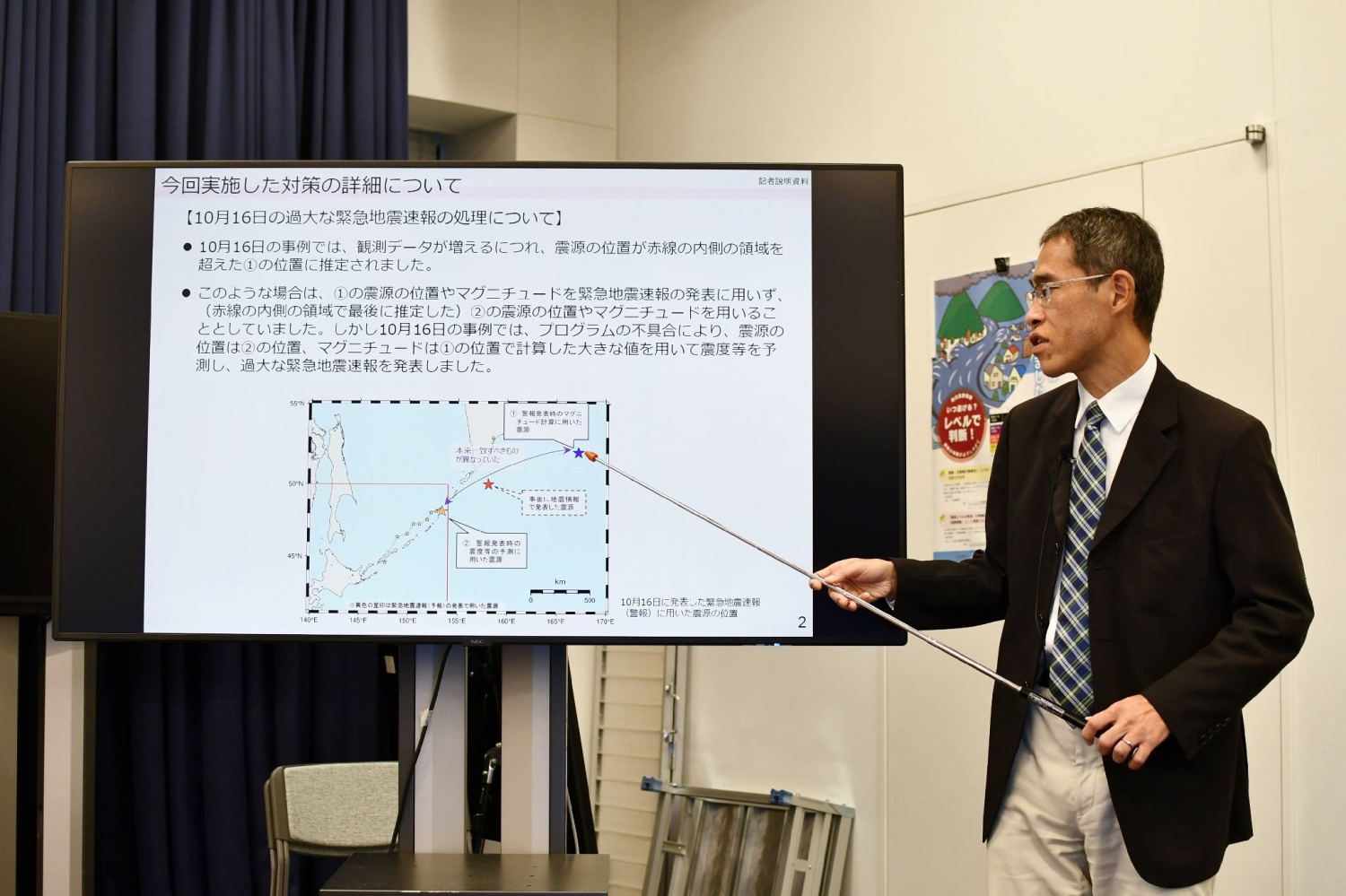
日本气象厅表示,其自动计算机计算程序中的两处错误导致该厅于10月16日误发紧急大地震警报。
The Japan Meteorological Agency has said that two errors in its automated computer calculation program led it to mistakenly issue an emergency massive earthquake warning on Oct. 16.
当天,在千岛半岛附近发生地震后,该厅误判了震源位置,并将地震规模估算为9.9级,由此预测日本将遭遇最高达7级的震度,这是日本地震烈度表中的最高级别。
Following an earthquake near the Kamchatka Peninsula that day, the agency miscalculated the focus of the quake and estimated its magnitude at 9.9, predicting as a result that Japan would be hit by shaking of up to 7, the highest level on the country’s seismic intensity scale.
据该厅周二发布的公告,其中一处错误是:2020年因鸟岛附近地震误发警报后引入的纠正措施,在2022年的系统更新中未被继承。
According to the agency’s announcement Tuesday, one of the errors was that a corrective measure introduced after the agency issued an erroneous warning following an earthquake near the Pacific island of Torishima in 2020 was not carried over during a 2022 system update.
该纠正措施旨在计算地震规模时,排除距离估计震源超过700公里的观测点数据。引入该措施是因为当地震发生在距离日本地震观测网过远的位置时,对震源位置和规模的估算往往准确性较低。
The corrective measure was designed to exclude data at observation points more than 700 kilometers away from an estimated focus when calculating an earthquake’s magnitude. It was introduced because estimates of the location and magnitude of an earthquake tend to be less accurate when the temblor occurs too far from Japan’s seismic observation network.
然而,该设置在系统更新中丢失,导致系统对气象厅紧急地震警报覆盖区域(北纬20度至50度、东经120度至154度)之外的10月16日地震,估算出9.9级的规模。
However, the setting was lost during the system update, resulting in the system estimating the magnitude of 9.9 for the Oct. 16 earthquake outside the area covered by the agency’s emergency earthquake warnings, which extends from 20 to 50 degrees north latitude and from 120 to 154 degrees east longitude.
此外,气象厅在预测日本国内震度时,将震源估算在千岛群岛北部,这一判断有误,因此错误警告称北海道北部和东北地区部分区域将出现7级震动。
Furthermore, the agency based its forecasts of seismic intensity in Japan by estimating the focus of the quake at the northern part of the Chishima Islands, which was incorrect, and therefore erroneously warned that parts of the northern prefecture of Hokkaido and the Tohoku region would experience shaking of 7.
2023年引入的第二项纠正措施要求:用于计算地震规模的震源与用于预测震度的震源必须一致。然而,这一措施未完全纳入计算机程序。
A second corrective measure, introduced in 2023, required the focus of an earthquake used to calculate its magnitude and that used to forecast seismic intensity to be matched. However, this measure was not fully incorporated into the computer program.
“我们未能充分检查该程序,导致一些问题未被发现,”该机构地震火山工程事务部门的一名官员说。“为防止再次发生,我们已采取措施修复这两个缺陷。”
“We failed to adequately check the program, and some problems went unnoticed,” an official of the agency’s Earthquake and Volcanic Engineering Affairs Division said. “To prevent a recurrence, we have taken measures to fix the two defects.”