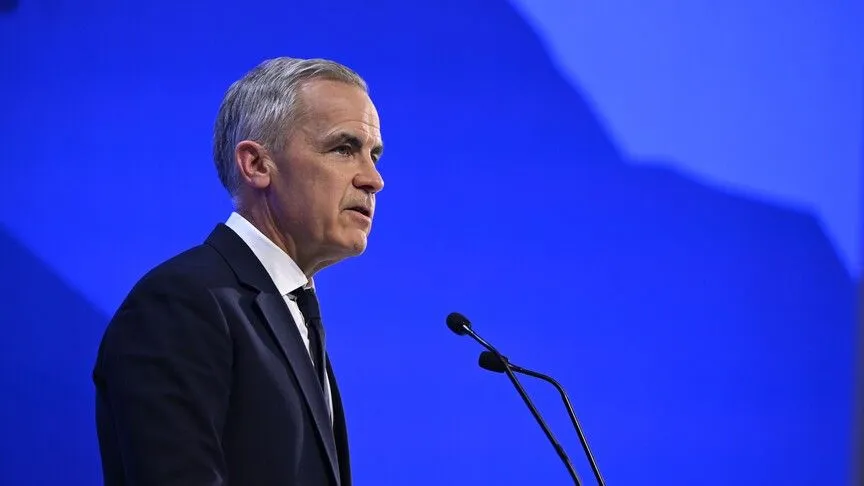
加拿大总理马克·卡尼周三向加拿大民众推介本国作为能源和关键矿产强国的定位,称正通过将贸易多元化转向亚太地区,谋求“更大主权”和“集体韧性”。
Canadian Prime Minister Mark Carney pitched Canada on Wednesday as an energy and critical minerals powerhouse seeking "greater sovereignty" and "collective resilience" by diversifying trade toward the Asia-Pacific.
卡尼在中国深圳举行的亚太经合组织工商领导人峰会上对商界领袖表示:“我们正把全球不确定性转化为国家机遇。在这个更加危险、更加分裂的世界里,加拿大正选择一条通往更强大、更繁荣、更有韧性未来的道路。”
"We are turning global uncertainty into national opportunity in a more dangerous and divided world, Canada is choosing a path toward a stronger, more prosperous, more resilient future," Carney told business leaders at the Asia-Pacific Economic Cooperation CEO Summit in Shenzhen, China.
卡尼强调与北京的外交关系重启,称中国是加拿大第二大贸易伙伴。他指出,渥太华与北京最近延长了关税减免,恢复了逾90%受影响加拿大贸易的市场准入,同时续签了央行货币互换协议,以避免依赖“过少的货币或单一支付渠道”。卡尼将加拿大定位为“太平洋国家”,并列出计划在数月内将对来自15亿人口市场的免关税消费品准入规模翻倍,并提到已与东南亚伙伴结束自贸谈判,与泰国和印度的谈判正在进行中。
Highlighting a diplomatic reset with Beijing, Canada's second-largest trading partner, Carney noted that Ottawa and China recently extended tariff relief restoring market access for more than 90% of affected Canadian trade, alongside renewing a central bank currency swap to avoid relying on "too few currencies or single payment channels." Framing Canada as "a Pacific nation," he outlined plans to double tariff-free consumer access from 1.5 billion people within months, citing concluded free-trade talks with Southeast Asian partners and ongoing negotiations with Thailand and India.
卡尼表示,过去一年,渥太华与超过15个国家签署了50多项关键矿产协议,释放了200亿加元(140亿美元)的投资。
Over the past year, Ottawa signed more than 50 critical minerals agreements with more than 15 countries, unlocking 20 billion Canadian dollars ($14 billion) in investment, Carney said.
卡尼誓言到本十年末将对亚洲的液化天然气(LNG)出口翻两番,此前自去年6月以来已出口超过1100万吨;同时推进太平洋连接输油管道项目,并在五年内撬动1万亿加元(6984亿美元)的国内投资。
Carney vowed to quadruple liquefied natural gas (LNG) exports to Asia by the decade's end, building on more than 11 million tons shipped since last June, while advancing the Pacific Link oil pipeline and catalyzing 1 trillion Canadian dollars ($698.4 billion) in domestic investment in five years.