
我曾是众多用过PC台式机的人之一,对MapQuest怀有温暖的回忆。这个千禧年前后的旅行网站用一叠叠打印出来的路线指引,让千禧一代的司机们不偏离方向——相比笨重难用的手套箱地图,这是一次巨大的飞跃。但我以为它早已像AIM和Skype一样消亡,它那套手动逐向导航已被大型科技公司淘汰。
I am among the legion of former PC desk occupants with warm memories of MapQuest, the Y2K-era travel website that kept millennial drivers on course with sheaves of printed-out directions – a quantum leap over the ungainly glovebox map. But I assumed it had long since gone the way of AIM and Skype, its manual turn-by-turn guidance made obsolete by big tech.
它还活着的证据出现在2025年1月,当时唐纳德·特朗普发布行政命令,将墨西哥湾更名为美国湾——苹果地图和谷歌地图迅速跟进,而MapQuest……什么也没做。它不仅从未认可这一更名,还把自己重新塑造成一个勇敢的反对派英雄,一个最有可能捍卫你的地理信念的应用。
Proof of life came in January 2025, when Donald Trump issued an executive order renaming the Gulf of Mexico the Gulf of America – a change Apple Maps and Google Maps promptly adopted, while MapQuest … did nothing. Not only had it never signed off, MapQuest was reinventing itself as a plucky oppositional hero, the app most likely to uphold your geographical beliefs.
“我想内部提出的问题正是这个,”MapQuest总经理道格·伯杰说,他是在“美国湾”这场风波期间接任的。“如果我们不……会怎样?”在随后的一条推文中,公司开玩笑说,它保留墨西哥湾这个名字“不是因为政治,而是因为我们大概15年没更新过地图了,也不记得怎么更新了”。这种不恭显然引起了共鸣:尽管在很大程度上已被更方便的GPS选项取代,MapQuest每月仍吸引3500万网站访客,其流量在一个月内增长了约10%。
“I think the question that was posed internally was exactly that,” said MapQuest’s general manager, Doug Berger, who took over during the Gulf of America mishigas. “What if we didn’t …?”In a subsequent tweet, the company joked that it was retaining the Gulf of Mexico name “not because of politics but because we haven’t updated our maps in like 15 years and don’t remember how to do it”. The irreverence clearly resonated: MapQuest, which still attracted 35 million monthly website visitors despite having been largely supplanted by more convenient GPS options, saw a roughly 10% jump in traffic over a month.
2025年2月,它进一步加码,推出了一项新功能,允许用户自己为这个海湾取名,或让应用“给我惊喜”,提供诸如“秋葵浓汤湾”和“某个湾”之类的选项。
In February 2025, it doubled down, tintroducing a new feature allowing users to pick their own name for the gulf or let the app “surprise me” with options such as Gulf of Gumbo and Gulf of Something.
这一切都只是去年8月那道行政令的预热。当时特朗普将安大略湖改名为美国湖,而MapQuest宣布:“我们不会改。”就在竞争对手纷纷再次匆忙更新地图之际,MapQuest表示自己在短短一周内新增了超过200万移动端用户,这波激增一度使其成为iOS和安卓平台上排名第一的免费导航应用。新增用户中约有一半来自加拿大。
All of that was just a warmup for the executive order that came this past August, when Trump renamed Lake Ontario as Lake America – and MapQuest declared: “We’re not changing it.”While competitors scrambled to update their maps again, MapQuest said it added more than 2 million mobile users in the span of a week, a surge that temporarily made it the top free navigation app on iOS and Android. Canadians accounted for about half of the new following.
伯格说:“我们的立场虽然可以被解读为政治性的,但实际上是为了给人们熟悉的名称。住在安大略湖附近的人,无论在美国还是加拿大一侧,都不会用别的名字称呼它。”MapQuest唱反调并没有什么可失去的。它脱胎于印刷巨头当纳利父子公司的制图服务部门,过去30年里几经易手:从美国在线(1999年以11亿美元将其收购)到威瑞森(2015年以44亿美元收购美国在线),再到数字广告公司System1在2019年以未披露但无疑是打折的价格将其买下。
“Our stance, while it can be interpreted as political, really is about giving people familiar names,” Berger said. “People who live near Lake Ontario, on either side of the US-Canada border, aren’t going to call it something else.”MapQuest didn’t have much to lose by playing the contrarian. Spawned from the cartographic services division of printing giant RR Donnelley & Sons, it has spent the past 30 years changing hands: from AOL (which paid $1.1bn for it in 1999) to Verizon (which acquired AOL for $4.4bn in 2015) before the digital ad firm System1 snapped it up for an undisclosed but surely discounted sum in 2019.
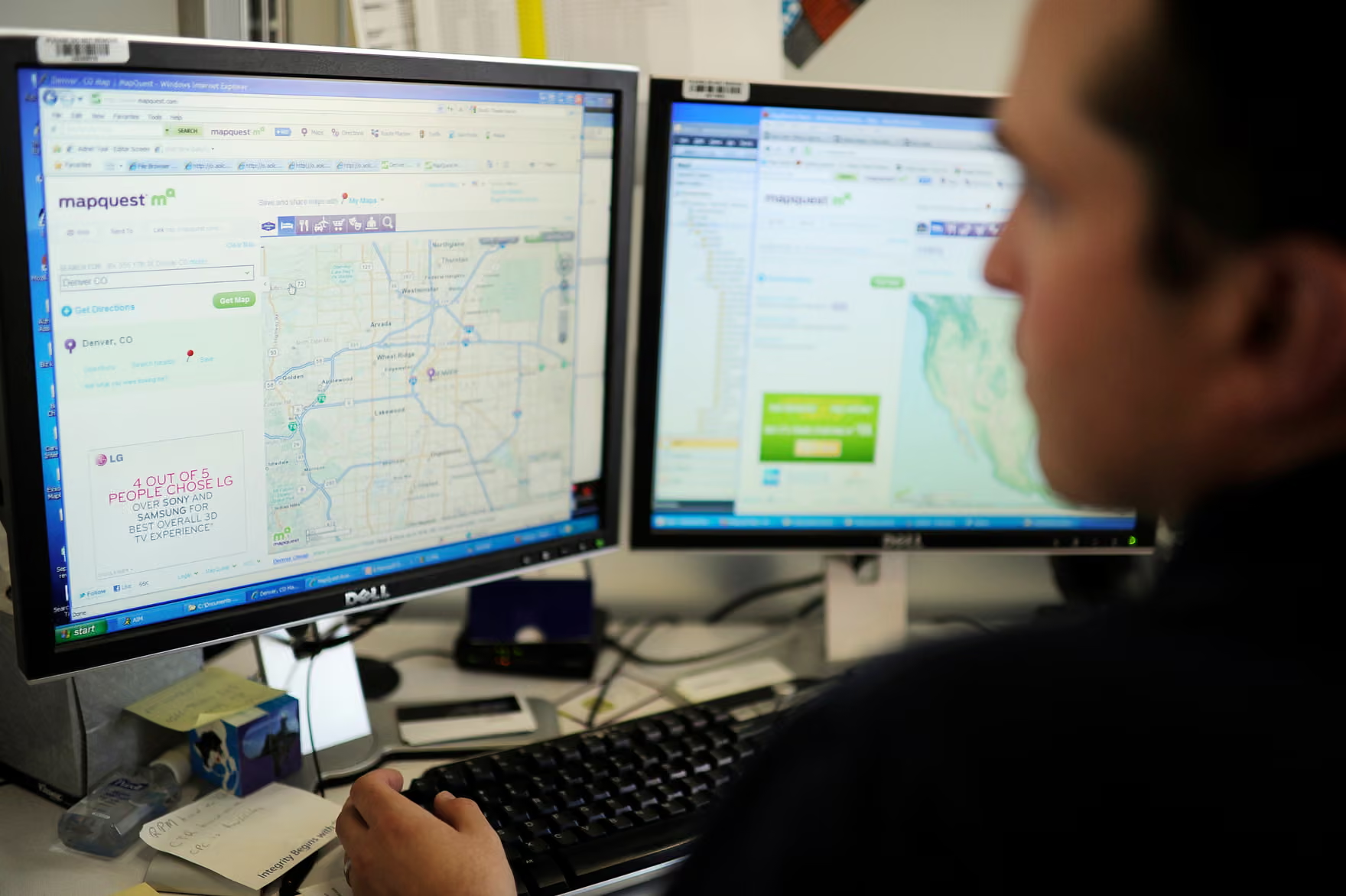
如今MapQuest是位于洛杉矶、约40人的团队,靠销售横幅广告和付费订阅而非数据赚钱。它还在授权围绕用户互动打造的工具,供其他公司用于自己的地图用途。
Now a Los Angeles-based operation of about 40 people, MapQuest makes money selling banner ads and premium subscriptions instead of data. It is also licensing tools built around user engagement that other companies can put to their own mapping purposes.
任何用过苹果地图、谷歌地图或Waze导航的人都会对这款应用的用户体验感到熟悉,只是像素感更明显。这一切都是刻意设计,极力主打怀旧风,其中有可互换的个人位置标记“questies”,让人想起昔日的32位电子游戏角色。伯格极力强调,questies是手工制作的。他说:“相信我,用AI来制作它们会非常容易。”
The app user experience will be familiar to anyone who navigates with Apple Maps, Google Maps or Waze, just with more obvious pixeling. That’s all by design that leans hard into nostalgia, with interchangeable personal location markers called “questies” that evoke the 32-bit video game characters of yore. Berger is at pains to point out that questies are handcrafted. “Trust me, it would be very easy to create them with AI,” he said.
自从安大略湖行政令以来,社交媒体、电子邮件甚至普通邮件都涌入了大量新功能请求。伯格如此欢迎反馈,以至于MapQuest创建了一个在线建议箱,供人们提出想法并进行投票。正是如此,它才增加了投票站工具,这个工具本月早些时候特别有用。“这里有一个写着‘投票’的按钮,”伯格在我们的视频通话中演示道。
Since the Lake Ontario executive order, requests for new features have poured in from social media, email and even snail mail. Berger welcomes the feedback so readily that MapQuest created an online suggestion box for people to propose ideas and put them up for a vote. That’s how it wound up adding a polling places tool, which came in especially handy earlier this month. “There’s a button right here that says ‘vote’,” Berger demonstrates on our video call.
“点击它,会出现一只红白蓝相间的小独角兽,并告诉你提前投票、投递选票以及选举日当天该去哪里。”但这并不是让我自iPhone将其送入与Go.com和LiveJournal并列的互联网“休眠区”后,第一次重新启动MapQuest。
“When you tap it, it shows a little unicorn in red, white and blue and tells you exactly where to go for early voting, ballot drop-off and on election day.”But that’s not what had me booting up MapQuest again for the first time since the iPhone consigned it to the internet’s suspended animation wing alongside Go.com and LiveJournal.
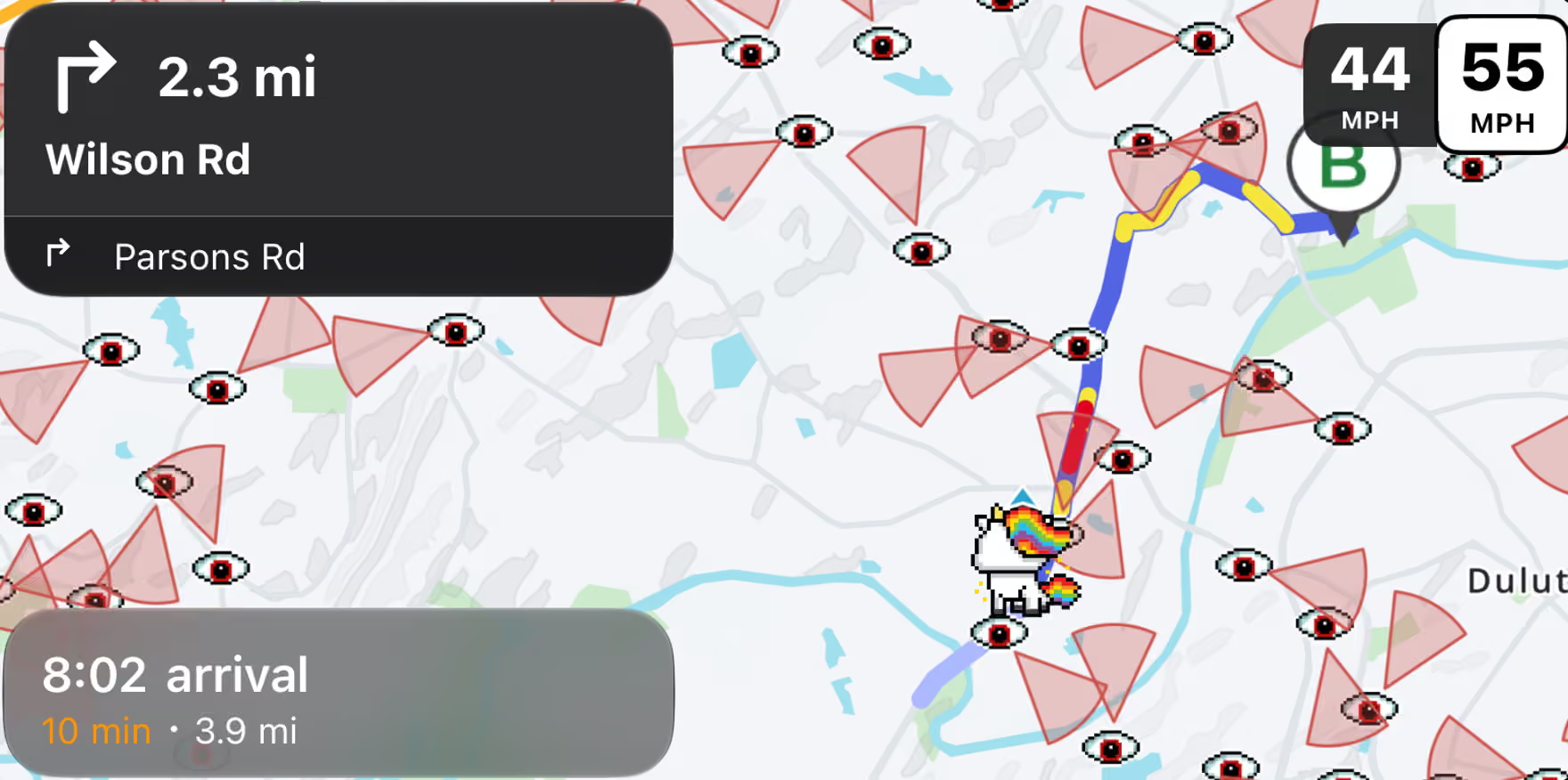
在亚特兰大躲避Flock。上个月,作为万圣节主题应用更新的一部分,MapQuest推出了一项用户请求的功能,用于追踪道路上的监控摄像头。新MapQuest图层中显眼的是Flock摄像头,这是一种由人工智能驱动、太阳能供电的设备,用于拍摄过往车辆图片,记录车牌号及其他识别信息,通常在司机不知情的情况下进行。这些摄像头以闪烁的红眼睛表示,红色光束朝镜头方向投射。现实中的影响远不那么卡通化。
Dodging Flock in Atlanta Last month, as part of a Halloween-themed app update, MapQuest introduced a user-requested feature for tracking surveillance cameras on the road. Prominent in the new MapQuest layer are Flock cameras, the AI-driven, solar-powered devices that capture images of passing vehicles, logging license plates and other identifying details, often without drivers’ knowledge. The cameras are represented by blinking red eyes that beam red cones in the direction their lenses face. The real-life implications are considerably less cartoonish.
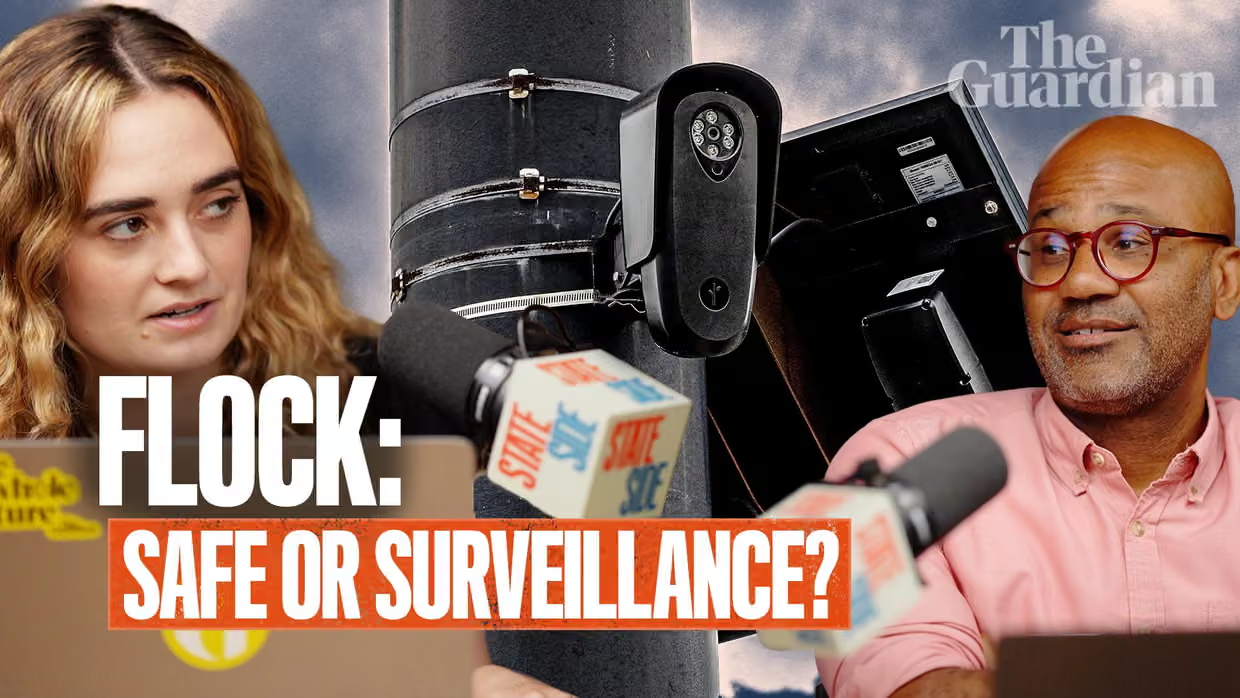
根据该公司的说法,过去五年来,Flock车牌识别器已发展成一个覆盖超过6000个社区、拥有12万台摄像头的全国性网络。它们将过往车辆变成可供执法机构——以及可能其他拥有网络访问权限的人——查询谁在何时何地的记录。它们的扩散引起了公民自由团体的批评,这些团体担心对非嫌疑人的监控:电子前哨基金会的研究表明,使用自动车牌识别器(ALPR)扫描的车辆中,不到1%曾与公共安全问题或犯罪相关联。
Over the past five years, Flock license-plate readers have grown into a nationwide network of 120,000 cameras spanning more than 6,000 communities, according to the company. They turn passing cars into searchable records for law enforcement agencies – and potentially others with network access – of who was where and when. Their spread has drawn criticism from civil-liberties groups concerned about the surveillance of non-suspects: research from Electronic Frontier Foundation shows that less than 1% of vehicles scanned with automatic license plate readers, or ALPRs, are ever connected with a public safety issue or crime.
一些居民也开始质疑这些摄像头在社区中的使用。社区活动人士詹姆斯·海斯将大规模监控视为第四修正案问题,认为这无异于非法搜查。他说,两年前警方在凌晨1点不请自来地出现在他家门口,四处搜寻一辆涉及追车事件的汽车。“他们车上没有车牌信息,但通过摄像头掌握了车辆描述,”海斯说,“他们没有逮捕令,什么都没有。”
Some residents are beginning to challenge their use in communities, too. James Hayes, a community activist, frames mass surveillance as a fourth amendment issue – that it’s tantamount to unlawful search. Two years ago, he says police showed up at his house unannounced at 1am, sniffing around for a car involved in a chase. “They didn’t have the plate on the car, but they had a description through the cameras,” Hayes said. “They had no arrest warrant, no anything.”
我居住的亚特兰大都会区不仅是Flock Safety的总部所在地。它还是一座嗡嗡运转的监控末日实验室,人均摄像头数量超过美国任何其他城市,或许也超过中国以外世界上的任何城市,其中许多是车牌自动识别系统。坐在亚特兰大出了名糟糕的交通中,尽力不在年幼的儿子面前咒骂其他司机和城市规划者时,我从未真正停下来想过这一点。
Metro Atlanta, where I live, isn’t just where Flock Safety is headquartered. It’s a humming doomsday laboratory for surveillance, with more cameras per capita than any other city in the US and perhaps any city in the world outside China, many of them ALPRs. I never really stopped to consider this while sitting in Atlanta’s notoriously bad traffic, trying my best not to cuss out other drivers and city planners in front of my young sons. (We all fall down.)
(人非圣贤嘛。)但后来我用了一周Mapquest。我的儿子们兴高采烈地看着我们那辆彩虹独角兽“探索车”在路上缓缓移动,每当那位英国奶奶口音的导航员报出下一步路线时,他们就笑得前仰后合,那声音听起来像一台被扔进泰晤士河淹坏的Speak & Spell学习机。但真正吸引他们——以及我——注意力的是那些眼睛。它们无处不在——夹在我们往返家的主要路线两侧,沿着高速公路一路排开,直勾勾盯着通往奶奶家的路。
But then I spent a week using Mapquest. My sons watched gleefully as our rainbow unicorn questie inched along the road and dissolved into laughter whenever the British grandma-voiced navigator chimed in with our next move, sounding like a Speak & Spell that had been left to drown in the Thames. But what really held their attention, and mine, were the eyes. They were everywhere – bracketing our main routes to and from home, all along the highway, boring in on the road to grandma’s house.
“我觉得我们能打破MapQuest历史上摄像头数量最多的纪录!”本月早些时候的一个早晨送孩子上学途中,屏幕上出现了17只眼球,我的大儿子这样说道。
“I feel like we could break a record for the most cameras ever seen on MapQuest in history!” my oldest said when 17 eyeballs dotted the screen on a morning school run earlier this month.
在应用中点击一个眼睛图标,你就能看到摄像头的类型、位置坐标以及它朝向的方向。我想,距离出现一个让你标记应用遗漏摄像头的功能应该不远了,就像我孩子学校附近几码处的那个摄像头。(这或许又是一个建议箱里的建议。)数据来自OpenStreetMap,一种类似于制图版维基百科的平台,它开始绘制监控摄像头地图,这些摄像头包括Flock的硬件,以及来自摩托罗拉解决方案公司(Motorola Solutions)的设备,该公司从造就世界砖块手机的人手中分拆出来;还有Axon Enterprises,该公司一直在尝试利用人工智能将警察执法记录仪与人脸识别技术结合起来。
Tapping an eye in the app lets you see the type of camera, its location coordinates and the direction it’s facing. I imagine it won’t be long before there’s a feature that lets you flag a camera the app missed, like the one just yards from my kid’s school. (Could be another one for the suggestion box.) The data is drawn from OpenStreetMap, a cartographical Wikipedia of sorts that has taken to mapping surveillance cameras, which include Flock’s hardware as well as machines from Motorola Solutions, spun off from the people who gave the world the brick cell phone; and Axon Enterprises, which has experimented with using AI to marry police body cameras with facial recognition tech.
“Flock让人们有了一个可以围绕其展开的名字,”位于英国的OpenStreetMap志愿者克里斯·弗莱明(Chris Fleming)谈到美国近期对监控的反对浪潮时说,“在英国,你不会与某家公司或类似的东西联系在一起。”
“Flock has given people a name to put around them,” said Chris Fleming, a UK-based OpenStreetMap volunteer, about the recent US backlash to surveillance. “In the UK you don’t associate with a company or anything like that.”
他继续说道:“就我个人而言,我认为了解这些摄像头有多普遍很重要,因为如果我们不知道它们的存在,又如何能讨论正在进行什么程度的监控,什么是合适的,谁有权访问它们呢?使用这些摄像头似乎比为手机申请搜查令更容易,在我看来这是不对的。”活动人士海斯(Hayes)住在亚特兰大都会区外围的切罗基县。
He continued: “Personally, I think it’s important to know how prevalent these are, because if we don’t know that they exist how can we debate about what level of surveillance is taking place, what is appropriate and who has access to it? It seems that using these cameras is easier than getting a warrant for a phone, and that’s wrong to me.”Hayes, the activist, lives just outside the Atlanta metro perimeter in Cherokee county.
上个月,该县五人组成的委员会审议了一项为期10年、金额3730万美元的合同,与Axon签约,使其成为切罗基县执法部门的一站式供应商,提供执法记录仪、车载摄像头、无人机和车牌识别设备。万圣节周末期间,当地监督团体发起了一场“糖果或捣蛋”电子邮件活动,敦促关心此事的居民在投票前联系委员。与此同时,一场名为“DeFlock America”的病毒式活动呼吁全国万圣节狂欢者自行承担相当大的法律风险,遮盖或禁用Flock摄像头及类似设备。
Last month, the county’s five-member commission board considered a 10-year, $37.3m contract with Axon to become Cherokee law enforcement’s one-stop shop for body cameras, in-car cameras, drones and license-plate readers. Over Halloween weekend, local watchdog groups ran a “trick or treat” email campaign urging concerned residents to contact commissioners before the vote. At the same time, a viral DeFlock America campaign urged Halloween revelers nationwide to cover or disable Flock cameras and the like, at their own considerable legal risk.
11月3日,当人们在选举日前往投票站投票时,切罗基县委员会一致通过了该措施——这是私营监控公司与全美各地地方政府达成的一系列令人担忧的交易之一。
On 3 November, while people were at the polls on election day, the Cherokee county commissioners voted unanimously to approve the measure – one in a number of worrying deals made between private surveillance firms and local governments across the country.
然而,切罗基县做出这一决定的时机——尽管只是例行公事,委员会每月第一个和第三个周二开会——仍让人留下了恶劣的印象。“这很肮脏,非常肮脏,”海耶斯说,并补充道,监控摄像头成为主要选票议题不会太久了。“数据中心问题是过去中期选举中的一大议题,但Flock与之相关。数据中心越多,Flock就越多。我跟很多人谈过这事——共和党人、民主党人。没人觉得这事好。”
The timing of the Cherokee county decision, however routine – the commissioners meet on the first and third Tuesday of each month – still left a bad taste. “It’s dirty, so dirty,” said Hayes, adding that it won’t be much longer before surveillance cameras become a major ballot issue. “The datacenter thing was big this past midterm, but Flock is related to it. The more datacenters, the more Flock. I’ve talked to a lot of people about this – Republican, Democrat. Nobody’s good with this.”
切罗基县在自动车牌识别系统(ALPR)投资上仍落后于我的大亚特兰大家乡辖区。去年9月,德卡尔布县委员会批准了全美有记录以来最大的Flock监控合同,为期10年,金额达1890万美元,随后上周又否决了一项设立平民监督委员会以监控权利滥用的提案。令人不安的是,Flock视频在数千个执法机构间共享,催生了一个监控网络,使他们能够对抗议者、寻求堕胎者、移民及其他人员建立案卷,即使这些人进出不同司法辖区也是如此。
Cherokee county still trails in ALPR investment behind my metro Atlanta home jurisdiction. Last September, Dekalb county commissioners signed off on the nation’s largest documented surveillance contract with Flock, $18.9m over 10 years, and followed that up last week by rejecting a proposal for a civilian oversight committee to stand sentry for rights abuses. Troublingly, Flock video is shared among thousands of law enforcement agencies, giving rise to a surveillance network that makes it possible for them to build cases on protestors, abortion seekers, immigrants and others even as they cross in and out of jurisdiction.
这一切都说明:你能理解为什么有人想知道Flock摄像头和其他自动车牌识别系统在哪里,甚至在还能避开的时候尽量避开。MapQuest还会继续存在吗?
All that is to say: you could see why someone might want to know where the Flock cameras and other ALPRs are and potentially even steer clear while they still can. Is MapQuest here to stay?
我对待导航应用的态度有点像游戏节目主持人,看谁先开口,就叫 Apple、Google 还是车载 GPS 来领路。但用了一周 MapQuest 后,我发现若不带上那双“眼睛”再换回别家,总觉得少了点什么——抛开监控国家不谈,感觉仿佛接续了当年的旧缘,那时 MapQuest 还是初出茅庐的年轻司机的随行伴侣,打印出来的路线单光荣地摆在仪表台和副驾驶座上。
I tend to approach navigation apps like a gameshow host, calling on Apple, Google or the in-car GPS based on which one pipes up first. But after a week with MapQuest, I found it difficult to go back to the others without feeling like something was missing – those eyeballs. Surveillance state aside, it was as if I was picking up where I left off, back when MapQuest was a companion to young drivers just starting out on the road, its printouts taking pride of place on the dashboard and front seat.
如今 MapQuest 能顺利融入 CarPlay 系统,虽然它的地图缺少 Apple 和 Google 提供的那些环境纹理,但对我来说,赶时间比这要紧得多。和许多渴望轻轨扩建的亚特兰大本地人一样,我令人沮丧地大把时间都耗在方向盘后,接送两个儿子上学(单程最快也要一小时)、参加课外活动和应付没完没了的聚会。没有什么比看着红色拥堵线和随着每一次怠速而不断攀升的预计到达时间更让我心烦的了。
These days MapQuest integrates easily enough into the CarPlay setup, and while its maps lack the environmental textures Apple and Google offer, that matters less to me than making time. Like many Atlanta locals who yearn for light rail expansion, I spend a distressingly large chunk of my life behind the wheel, ferrying my sons to school (an hour-long commute each way, at best), extracurricular activities and a never-ending slate of playdates. Nothing irks my soul quite like the sight of red congestion lines and an ETA that climbs with every idle moment.
作为驾驶助手,MapQuest 和其它应用一样称职——尽管它仍缺乏完整的操作系统集成,有时会在仪表盘上卡死。它也比我希望的要乐观。Apple 倾向于给出更宽裕的预计到达时间,让我有“战胜”它的满足感。而我的 MapQuest 路线往往起步时预计到达时间较早,随后随着拥堵的现实逐渐向上修正。有个下午接送放学,直到“任务”完成,足足多花了近 20 分钟,终点在地图上用一个夸张的大“B”标记,代表 B 点。
As a driving aide, MapQuest is as competent as any – even as it still lacks full operating system integration and freezes up on the dashboard at times. It’s also more optimistic than I would prefer. Apple tends to provide a more generous ETA, giving me the satisfaction of “beating” it. My MapQuest routes, though, often started with earlier ETAs that gradually ticked upward as the reality of gridlock set in. One afternoon school run lasted nearly 20 minutes longer until our “quest” was complete, our destination rendered on an exaggerated location pin with a big “B”, as in point B.
有时在州际公路旅行中——这些旅行占据了我目前大部分驾车时间——应用程序会鼓励我进行“匝道跳转”(驶出主高速公路再驶回去)以避开瓶颈。其他时候,它会把我送到我知道前方等待着更多交通苦难的道路上,让我怀疑自己是否还是按自己的方式走更好。也许付费版本更好,但我凭什么拒绝免费版本呢,尤其是MapQuest暂时停止投放广告以吸引新用户?
Sometimes on interstate journeys, which account for most of my driving these days, the app would encourage me to ramp-hop (exit and re-enter the main highway) to avoid bottlenecks. Other times, it would send me down roads where I knew more traffic miseries awaited, leaving me to wonder if I was better off going my own way. Maybe the paid versions are better, but who was I to turn down the free version, especially with MapQuest temporarily suspending ads to attract new users?
Waze多年前就表明,主屏幕上还能再容纳一款GPS应用——那是在谷歌将其收购之前。如果不是因为其路线规划能力,MapQuest似乎有机会在其自身开辟的这条赛道上重新定位自己,至少凭借其复古风格和调皮的反叛精神也能做到。
Waze showed years ago that there was space on the home screen for one more GPS app – that is, before Google swallowed it up. MapQuest would seem to have a fair shot at repositioning itself in the very lane it established, if not for its routing capabilities than for its retro stylings and cheeky contrarianism.
地理政治很容易被视为理所当然,直到边界受到争议或地标名称受到质疑。几年前,我记得开车前往佐治亚州西北部的一个大型陆军基地,从一个偏远的后门进入,当看到标志上写着“摩尔堡”而不是“本宁堡”时,我吃了一惊。这是拜登政府下九个陆军基地更名的其中之一,旨在删除对南方邦联人物的引用——特朗普政府后来推翻了这项立法。
The politics of geography are easy enough to take for granted until a border is disputed or a landmark name is contested. I remember making the drive a few years ago to the big army base in north-west Georgia, entering through a distant back gate and doing a double take when signs for Fort Benning read Fort Moore instead. It was one of nine army bases renamed under the Biden administration to remove references to confederate figures – legislation that the Trump administration would later roll back.
这一变化让伯格开始思考MapQuest可以采取的更多替代路线:“现在你让我对功能请求、熟悉地点的同义词概念思绪万千,”他说。“那会很有趣。”
The switch-around had Berger thinking about more alternate routes MapQuest can take: “Now you have my head spinning about feature requests, the concept of synonyms for familiar places,” he said. “That would be interesting.”