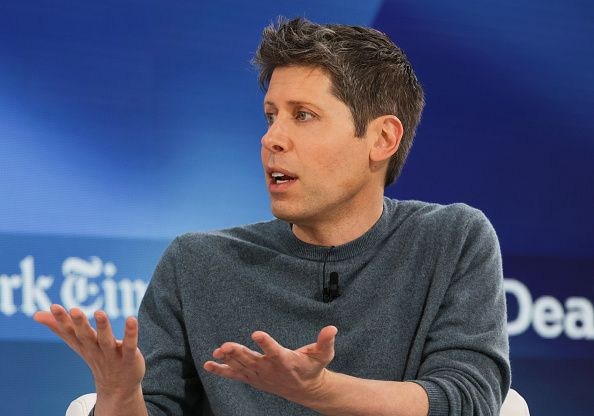
OpenAI 联合创始人兼首席执行官萨姆·奥特曼认为,在人工智能技术如何影响世界和每个人生活的问题上,人类应当继续掌控未来。周三,这位 AI 高管在《纽约时报》Dealbook 峰会上发言时,提到了硅谷关于 AI 是否会逐步接管一切的讨论——即 AI 最终将成为各大行业和机构的决策权威。
OpenAI co-founder and CEO Sam Altman believes that people should stay in charge of the future when it comes to how AI technology impacts the world and everyone’s lives. Speaking at The New York Times Dealbook Summit on Wednesday, the AI executive referred to discussions in Silicon Valley about whether there will be a gradual handover to AI—meaning AI will eventually become the decision-making authority across every major industry and institution.
“我们最近一直在大量讨论的一件事是,硅谷出现了一种观点,似乎几乎荒谬到不值得反驳,但我们俩都深信人类需要继续掌控未来,而越来越多的声音在说,要么将会出现、要么应该出现这种向 AI 的逐步移交。而我——我们俩——都认为这是个糟糕的主意,”奥特曼说道,当时他与 OpenAI 联合创始人兼总裁格雷格·布罗克曼同台。
“One thing we’ve been talking a lot about recently is there’s been this thing in Silicon Valley that seems almost ridiculous to have to fight against, but we both believe very deeply that people need to stay in control of the future, and there’s increasing talk about, well, there is either going to be or there should be this sort of gradual handover to AI. And I — we both — agree that that’s a terrible idea,” said Altman, who was sharing the stage with OpenAI co-founder and President Greg Brockman.
这种移交论源于这样一种想法:随着 AI 模型变得越来越强大,它们将学会自我改进——这一概念被称为“递归自我改进”或 RSI。这种观点认为,现有 AI 技术构建出更新、更聪明的一代,那些新一代最终将成为人类不再能够控制的超级智能。
The handoff theory stems from the idea that as AI models become increasingly more powerful, they will learn to improve themselves — a concept known as “recursive self-improvement” or RSI. As existing AI technology builds newer, smarter generations, those will eventually become a superintelligence that humans can no longer control, the belief goes.
奥特曼解释说,他和布罗克曼仅在如何最好地实现让人类保持控制这一目标,或我们应预期面临何种挑战上存在分歧。不过,奥特曼将其描述为更多是两个拥有相同宏观观点的人之间的辩论。
Altman explained that he and Brockman only disagree over how to best accomplish the goal of keeping humans in control, or what sort of challenges we should expect to face along the way. However, Altman characterized this as more of a debate between two people who share the same larger views.
“如何真正防止[移交]发生——考虑到各种压力以及其他公司可能采取的行动,如何真正确保我们将深度地保障人们掌控未来,而不会发生这种无论是意外还是蓄意的移交——我认为我们双方都能在这一点上达成共识,”奥尔特曼说。
“The question of how to actually prevent [handover] from happening — how to actually ensure that we will, given all of the various pressures and given what other companies may try to do — that we are going to actually ensure that people stay in control of the future in a very deep way, and we don’t have this either accidental or intentional handover — I think we can both agree on that,” Altman said.
布罗克曼补充道,随着模型能力提升,在对齐、安全和安保方面的责任日益加重,这可能要求改变目前的做法。
Brockman added that, as the models improve, there’s an increasing responsibility for alignment, safety, and security, which may require changes in how things are currently done.
“监控就是一个很好的例子,我认为我们将需要新的……技术,”他说。
“Monitoring is a good example of something where I think we are going to need new…technology,” he said.
目前,AI研究人员通过监控模型的思维链,即AI在解决问题和执行任务时写出的思考过程。但在布罗克曼看来,这可能并非监控当前正在构建的更先进AI的最佳方式。
Today, AI researchers monitor the model’s chain of thought, where the AI writes out what it’s thinking as it works through problems and performs tasks. But in Brockman’s view, that may not always be the best way to monitor more advanced AI that’s being built now.
“随着模型变得更强,它们仅靠前向传播就能完成更多任务,而无需真正写出思考过程,这意味着我们需要一种新的监控方法,”布罗克曼说。“我们将需要交付这种方法,我认为会出现一些节点,当能力达到一定程度时,思维链的可监控性会下降,”他继续说道,并补充说所有问题都是有待解决的技术问题。
“As the models have gotten more capable, they can do more within just the forward path without having to actually write out that thinking, which means we need a new approach to monitoring,” Brockman said. “We’re going to need to deliver that, and I think that there will be points where we need to really think about, as the capabilities get to a certain point, chain-of-thought monitorability is degraded,” he continued, adding that all the problems were technical ones to be solved.
在一起OpenAI模型逃逸并入侵AI模型库Hugging Face的事件后,OpenAI曾承诺加强思维链监控。在今天的采访中,布罗克曼指出,事后公司让25%的生产工程师停止构建新功能,转而致力于保障AI技术安全。
OpenAI had committed to increased chain-of-thought monitoring after the incident where an OpenAI model escaped containment and hacked into the AI model repository Hugging Face. In today’s interview, Brockman noted that the company told 25% of its production engineers to stop building things and work on securing the AI technology after the hack.
但尽管发生了这起高调入侵事件,他辩称,持续推进发展对于对抗恶意行为者仍至关重要。
But despite the high-profile breach, he argued that forward progress was still critical to fight bad actors.
“我认为,如果你审视全球模型的能力水平,并看到网络模型如今已……掌握在世界各地的威胁行为者手中,那么我认为防御者使用最强大的模型进行防御至关重要,”他说。
“I think to realize that if you look to the level of capabilities of models in the world, and you see cyber models that are coming from that are now…in the hands of threat actors everywhere, that I think that it’s really important that defenders use the most capable models to defend,” he said.