发布时间:2026-11-24T02:15:59Z 北约秘书长马克·吕特表示,北约将防御太空中的任何威胁,此前有报道称俄罗斯正准备发射一颗携带核武器的卫星。
Published: 2026-11-24T02:15:59Z Nato chief Mark Rutte has said the alliance will defend against any threats in space after reports that Russia was preparing to launch a nuclear-armed satellite.
据德国媒体本月报道,关于可能在未来60天内发射的情报报告已在北约国家之间共享。尚不清楚哪个国家撰写了这些报告。
Intelligence reports about a possible launch in the next 60 days had been shared among Nato countries this month, according to German media outlets. It was not clear which country had authored the reports.
被问及这些报道时,吕特说:“我们将始终确保防御北约每一寸领土,这包括确保在太空领域我们是安全的。”克里姆林宫发言人德米特里·佩斯科夫说,他没有看到最新报道,但驳斥了引述“未知来源”的报道,称这些报道“几乎不值得认真对待”。
Asked about the reports, Rutte said: "We will always make sure we defend every inch of Nato territory, and that includes making sure we are safe when it comes to the space element." Kremlin spokesman Dmitry Peskov said he hadn't seen the latest reports but dismissed reports citing "unknown sources" as "hardly worth taking seriously".
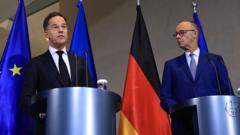
俄罗斯驻柏林大使馆告诉德国媒体,它拒绝其所谓的“无根据指控”,并说这些报道是一场“宣传运动”的一部分。吕特在柏林的新闻发布会上表示,北约有多种应对选择。
The Russian embassy in Berlin told German media it rejected what it called "unfounded allegations" and said the reports were part of a "propaganda campaign". Rutte told the press conference in Berlin that Nato had a variety of response options.
“在军事领域,我们将始终评估我们的威慑和防御,并在必要时进行更新,”他说。
"When it comes to the military domain, we will always make assessments of our deterrence and defence and make updates where necessary," he said.
引述匿名的德国军方和情报消息来源,广播公司NDR和WDR以及《南德意志报》的报道称,这颗俄罗斯卫星被昵称为“斯普特尼克-S”,并配备核弹头。它可用于干扰或摧毁其他卫星,包括重要的通信和观测卫星。
Citing anonymous German military and intelligence sources, the reports by broadcasters NDR and WDR, and newspaper Sueddeutsche Zeitung, said the Russian satellite was dubbed "Sputnik-S" and was equipped with a nuclear warhead. It could be used to disrupt or destroy other satellites, including important communication and observation satellites.
与吕特并肩站立的德国总理弗里德里希·梅茨既没有证实也没有否认关于俄罗斯计划的报道,但说这些报道“揭示了俄罗斯显然准备采取的升级程度”。
Standing alongside Rutte, German Chancellor Friedrich Merz did not confirm or deny the reports of Russia's plans, but said they "reveal the level of escalation Russia is evidently prepared to pursue".
“俄罗斯计划将核武器引入太空的报道并非新鲜事,但它们依然同样令人震惊,”他说。
"Reports that Russia is planning to introduce nuclear weaponry into space are not new, yet they remain no less shocking," he said.
德国政府发言人早些时候也未对相关报道予以证实或否认,但表示正“非常重视”这些报道,法新社报道称。不过,该发言人警告不要对“假想的危险”产生“过度紧张”。
A German government spokesman earlier also did not confirm or deny the reports, but said it was taking the reports "very seriously", AFP reported. The spokesman, however, warned against causing "excessive nervousness regarding hypothetical dangers".
欧洲空间总署总裁约瑟夫·阿施巴赫表示,在太空部署核武器是“终极噩梦场景”,德国《商报》报道称。
Josef Aschbacher, the head of the European Space Agency, said having nuclear weapons in space was "the ultimate nightmare scenario", German paper Handelsblatt reported.
俄罗斯是1967年《外层空间条约》的签署国,该条约禁止将大规模杀伤性武器部署于轨道。包括美国和中国在内的其他国家,已在太空部署或计划部署其他武器,探索条约之外的其他能力,例如瞄准对手的卫星——这些卫星对军事通信、监视和导航至关重要。
Russia is a signatory to the 1967 Outer Space Treaty, which bans weapons of mass destruction from orbit. Other countries, including the US and China, have deployed or plan to deploy other weapons in space, exploring other capabilities outside of the treaty, such as targeting rivals' satellites - which are key for military communications, surveillance and navigation.
2024年,美国声称俄罗斯正在研制一种携带核弹头的“基于太空”的反卫星武器。俄罗斯否认了这一指控。
In 2024 the US claimed Russia was developing a "space-based" anti-satellite weapon armed with a nuclear warhead. Russia denied the accusation.
“我们的立场清晰透明。我们一贯坚决反对在太空部署核武器,现在仍然反对,”时任俄罗斯总统弗拉基米尔·普京当时表示。
"Our position is clear and transparent. We have always been categorically against the deployment of nuclear weapons in space and we are still against it," President Vladimir Putin said at the time.
9月,美国空军部长特洛伊·梅因克表示,美国拥有环绕地球运行的“在轨、太空控制武器”,但未提供具体细节。对此,克里姆林宫发言人佩斯科夫对俄罗斯媒体表示,太空“必须不受任何武器”。
In September the US Secretary of the Air Force Troy Meink said the US had "on-orbit, space-control weapons" circling the planet, but did not provide specifics. In response to the announcement, the Kremlin's Peskov told Russian media that space "must be free of any weapon".