在一项战略转向中,新德里正向东京开放训练场地,助其磨砺“反击”锋芒。
In a strategic shift, New Delhi is opening training grounds to help Tokyo sharpen its ‘counterstrike’ edge.
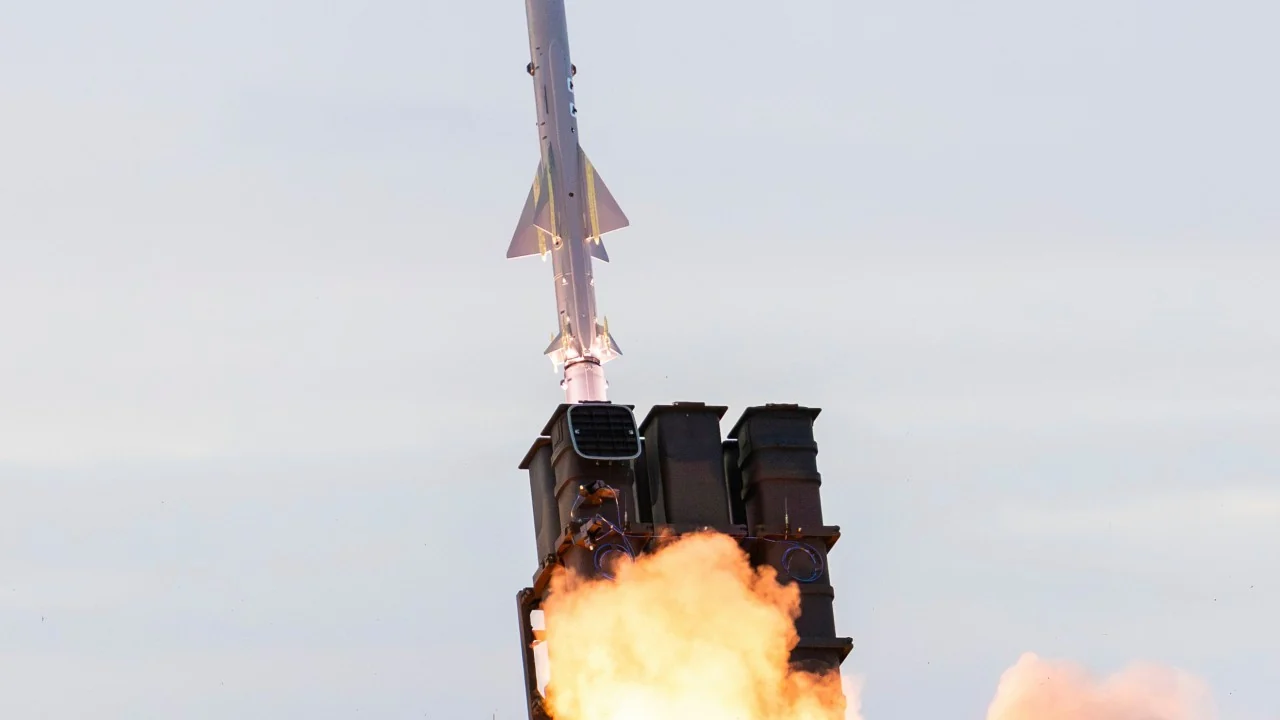
2025年7月,在澳大利亚杰维斯湾附近的比克罗夫特武器靶场举行的联合军演中,日本陆上自卫队发射12式地对舰导弹。分析人士表示,印度决定允许日本部队在其射击场进行实弹导弹演习,标志着两国军队合作迈上新台阶,因对中国的共同担忧,两国正走向更紧密的防务关系。
A Japan Ground Self-Defence Force Type-12 surface-to-ship missile is launched during a joint military exercise at Beecroft Weapons Range near Jervis Bay, Australia, in July 2025. Photo: Australian Department of Defence/AP India ’s decision to allow Japanese forces to conduct live-fire missile drills at its firing ranges signals a new level of cooperation between their militaries, analysts have said, as shared concerns over China push the two countries towards closer defence ties.
“我们看到的无疑是安全关系的提升。印度和日本举行联合演习已有多年,但新德里允许另一国部队从印度领土发射远程导弹,这是完全不同层面的信任,”日本横须贺亚太研究委员会研究员萨姆·巴伦说。
“What we’re seeing is certainly an elevation of the security relationship. India and Japan have run joint exercises for years, but the fact that Delhi is letting another country’s forces fire long-range missiles from Indian soil is a different level of trust,” said Sam Baron, a research fellow at the Yokosuka Council on Asia-Pacific Studies in Japan.
该声明是在周四于东京举行的第四次“2+2”部长级对话之后发布的,印度外交部长苏杰生和国防部长拉杰纳特·辛格与日本同行茂木敏充和小泉进次郎举行了会谈。
The announcement followed a fourth “2+2” ministerial dialogue in Tokyo on Thursday, in which India’s External Affairs Minister S. Jaishankar and Defence Minister Rajnath Singh met their Japanese counterparts, Toshimitsu Motegi and Shinjiro Koizumi .
在一份联合声明中,双方欢迎签署关于使用印度射击场的意向书,并指出日本自卫队将从明年起首次在印度进行实弹演习,包括涉及地对舰导弹的演练。
In a joint statement, the two countries welcomed the signing of a letter of intent on the use of Indian firing ranges, noting that the Japan Self-Defence Forces would conduct live-fire drills in India for the first time starting next year, including exercises involving surface-to-ship missiles.
日本防卫相小泉进次郎上周三陪同印度同行拉杰纳特·辛格视察横须贺海军基地的“最上”级隐身护卫舰“名取”号。图片:路透社日本和印度在过去一年里加强了防务合作,周四的会谈标志着自8月以来,辛格与小泉的第三次会晤。
Japanese Defence Minister Shinjiro Koizumi escorts Indian counterpart Rajnath Singh during an inspection of the Mogami-class stealth frigate JS Natori at the Yokosuka naval base last Wednesday. Photo: Reuters Japan and India have intensified their defence cooperation over the past year, with Thursday’s talks marking the third meeting between Singh and Koizumi since August.
8月,两国防长签署了《海上安全合作备忘录》,涵盖海上态势感知以及联合海军造船和设计的探索性会谈等领域。
In August, the two countries’ defence ministers signed a Memorandum of Arrangement on Maritime Security Cooperation covering maritime domain awareness and exploratory talks on joint naval shipbuilding and design, among other areas.
9月,日本航空自卫队战机首次访问印度,参加“勇敢卫士26”空中演习。双方还于2月举行了首次与印度尼西亚的三边海上通过演习。
Japan’s Air Self-Defence Force fighter aircraft visited India for the first time for the Veer Guardian 26 air exercise in September. The two sides also held their first trilateral naval passage exercise with Indonesia in February.
巴伦表示,允许日本使用印度的试验场可能涉及共享跟踪数据、协调空域和海上安全安排,以及了解彼此系统的性能表现。
Allowing Japan to use India’s test ranges could involve sharing tracking data, coordinating airspace and maritime safety arrangements and gaining visibility into how each other’s systems perform, Baron said.
他补充道:“这将双边安全关系从单纯开展联合演习,推向了相互赋能军事能力的层面。”
“It moves the bilateral security relationship from simply conducting joint exercises to enabling each other’s military capabilities,” he added.
巴伦称,时机意义重大,因为日本首相高市早苗的政府正准备在12月底前敲定《国家安全战略》、《国家防卫战略》和防卫力整备计划的修订。
Baron called the timing significant as Japanese Prime Minister Sanae Takaichi ’s administration prepares to finalise revisions to its National Security Strategy, National Defence Strategy and defence build-up programme by the end of December.
他说:“普遍预计,他们将在对华立场上更加强硬,并强调反击能力、抵御经济胁迫的韧性,以及超越美日的更深层安全伙伴关系。使用印度试验场非常契合这一方向。”高市早苗7月访问印度,举行双边峰会,进一步强化了防务关系。
“It is widely expected that they will take a firmer position on China and emphasise things such as counterstrike capability, resilience against economic coercion and deeper security partnerships beyond the US,” he said. “Access to Indian ranges fits that direction extremely well.”Takaichi visited India in July for a bilateral summit that further strengthened defence ties.
同月,日本和印度原则上同意共同开发日本研发的统一复合无线电天线(Unicorn)系统的衍生型号,用于印度军舰——这是在2024年框架基础上的进展——最终项目安排计划在印度于2027年初正式批准采购前完成。
That same month, Japan and India agreed in principle to co-develop a derivative of the Japanese-developed Unified Complex Radio Antenna, or Unicorn, system for Indian warships – building on a 2024 framework – with final project arrangements slated for completion ahead of India’s formal procurement clearance in early 2027.
“东京和新德里现在用相似的视角看待来自中国的挑战,即使他们谈论这些挑战的方式不同,”巴伦说。“他们对局势的战略判断正在趋同,这项协议清楚地证明了这一点。”
“Tokyo and New Delhi are now looking at the challenges from China in similar terms, even if they talk about them differently,” Baron said. “Their strategic reading of the situation is converging, and this agreement is a clear demonstration of that.”
日本海上自卫队的“名取”号最上级隐形护卫舰,装备一体化“Unicorn”天线桅杆,周三在神奈川县横须贺海军基地拍摄。 弹演习,而此类测试受限于日本自身的地理条件。
他说:“这尤为相关,因为日本持续发展其远程反击能力,包括升级型12式反舰导弹。”
The Japan Maritime Self-Defence Force’s Mogami-class stealth frigate JS Natori, fitted with the integrated “Unicorn” antenna mast, seen at Yokosuka naval base in Kanagawa prefecture on Wednesday. Photo: AFP Both countries stood to gain from the latest agreement, Baron said, with Japan, in particular, obtaining access to additional training facilities where it could conduct live-fire drills for longer-range missiles whose testing was constrained by its own geography.
巴伦补充道:“对印度而言,接待日本部队进行实弹演习,提供了增进军事了解、提升防务互操作性和知识共享的机会,特别是在海上行动方面。”他指出,接触日本导弹系统,包括精确制导技术和无人平台,也能为印度防务规划者提供有益参考。
“This is particularly relevant as Japan continues to develop its longer-range counterstrike capabilities, including upgraded Type-12 anti-ship missiles,” he said. “For India, hosting Japanese forces for live-fire exercises provides opportunities for greater military familiarity, defence interoperability and knowledge-sharing, particularly in maritime operations,” Baron added, noting that exposure to Japanese missile systems, including precision-guidance technologies and unmanned platforms, could also offer useful insights for Indian defence planners.
减少对美国的依赖?华盛顿外交关系委员会东南亚和南亚问题高级研究员乔什·库尔兰齐克表示,两国都有望获得新的机遇,尤其是随着日本日益感到自己不能再仅仅依靠美国来保障防务。
Reducing reliance on the US? Josh Kurlantzick, senior fellow for Southeast and South Asia at Washington’s Council on Foreign Relations, said both countries stood to gain new opportunities, particularly as Japan increasingly felt it could no longer count solely on the US for defence.
他说:“两国都朝着潜在互操作性迈出了一步。两国都朝着威慑中国迈出了一步,这对两国都很重要。”
“They gain steps towards potential interoperability. They both gain steps towards deterrence of China, which is important to both countries,” he said.
他补充说,该协议还使日本朝着海外军事活动正常化更近了一步,这是其现任领导层的一大目标。不过,库尔兰齐克警告说,此举可能会加剧中国和巴基斯坦的担忧。
The agreement also moved Japan a step closer to normalising overseas military activities, a major goal of its current leadership, he added. However, Kurlantzick warned that the move could heighten concerns in both China and Pakistan .
他说,总体而言,这一倡议表明,从长远来看,印太地区大国或许能够在不过度依赖美国防务保护伞的情况下提供威慑。
Overall, the initiative suggested that regional powers in the Indo-Pacific might be able to provide deterrence without relying on the US defence umbrella in the long run, he said.
美国注册非营利组织“武装冲突地点与事件数据项目”的研究员劳拉·索里卡说:“印度正在深化与日本这一重要地区行为体的防务关系,同时加强其作为印太地区安全合作提供者的地位。”
“India is deepening its defence relationship with Japan, an important regional actor, while strengthening its position as a provider of security cooperation in the Indo-Pacific,” said Laura Sorica, a researcher at Armed Conflict Location & Event Data Project, a US-registered non-profit organisation.
她说:“更紧密的军事合作还创造了扩大防务工业联系的机会,包括通过技术转让以及在导弹和海军技术方面的潜在合作。”她补充说,该协议反映出双方战略日益趋同,以及对中国日益增强的海上自信心的共同担忧。
(From left) India’s Defence Minister Rajnath Singh, Japan’s Defence Minister Shinjiro Koizumi and Japan’s Foreign Minister Toshimitsu Motegi chat after their joint press conference in Tokyo last Thursday. Photo: AFP “Closer military cooperation also creates opportunities to expand defence-industrial ties, including through technology transfers and potential collaboration in missile and naval technologies,” she said, adding that the agreement reflected growing strategic convergence and shared concerns over China’s increasing maritime assertiveness.
虽然商业和工业联系一直是印日关系的核心支柱,但这项导弹试验协议“打破了”双边关系仅限于贸易的看法,并展示了“常规安全领域的重大合作”,果阿大学国际关系与区域研究助理教授达特什·帕鲁莱卡尔表示。
While commercial and industrial ties have been a core pillar of India-Japan relations, the missile-testing agreement “disabuses the notion” that ties are limited to trade and showcases “conventional security heavy-lifting”, said Dattesh Parulekar, an assistant professor of International Relations and Area Studies at Goa University.
他指出,这一举措“毫无争议地强化了印太地区多元化安全化的愿景”。
The move “unmistakably bolsters visions of pluralised securitisation of the Indo-Pacific”, he said.
总部位于德里的印度研究者论坛战略接触与伙伴关系主任斯里尼瓦桑·巴拉克里希南将该协议描述为“一个低调但影响深远的步骤,而非为博取头条而设计的戏剧性宣布”。
Srinivasan Balakrishnan, director of strategic engagement and partnerships at the Delhi-based Indic Researchers Forum, described the agreement as “a quietly consequential step, not a dramatic announcement designed for headlines”.
他说:“该安排在精神上是互惠的,即使当前的流动是单向的。这表明印度不再将先进防务合作视为技术或装备的单向转移,而是视为共享的作战空间。”
“The arrangement is reciprocal in spirit even if the immediate traffic is one way. It signals that India no longer sees advanced defence cooperation as a one-directional transfer of technology or equipment but as a shared operational space,” he said.
板块:本周亚洲 / 政治 / 新闻 / 亚洲 / 南亚 / 东亚 | 话题:印度、日本、中国、美国、小泉进次郎、苏杰生、高市早苗、拉杰纳特·辛格、美国外交关系协会短链接:
Sections: This Week in Asia / Politics / News / Asia / South Asia / East Asia | Topics: India, Japan, China, United States, Shinjiro Koizumi, S. Jaishankar, Sanae Takaichi, Rajnath Singh, Council on Foreign Relations (US) Short link: https://sc.mp/mu21d Read the original article on SCMP