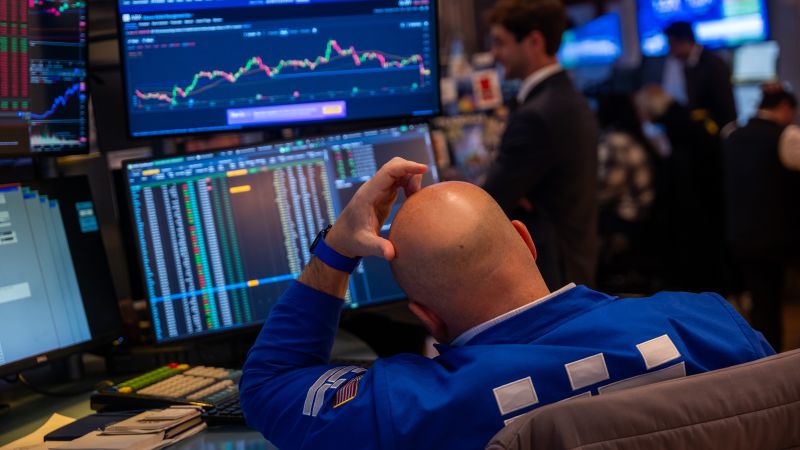
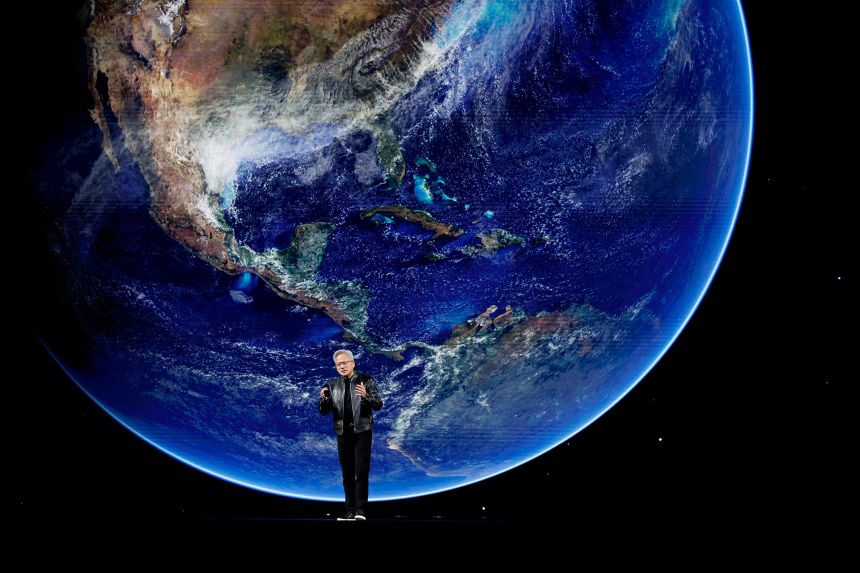
在黄仁勋离开英伟达掌舵位置的两周里,华尔街对人工智能(AI)转身离去。一场深度且持久的股市抛售暴露了风险,而经济对人工智能及其创造的财富的依赖程度日益加深。
In the two weeks without Jensen Huang at the helm of Nvidia, Wall Street turned its back on AI. A deep and prolonged stock market sell-off exposed risks to an economy that is increasingly reliant on AI and the wealth it has generated.
就在一个多月前,股市还上涨了逾14%,但上周结束时已濒临全年转跌边缘——这一急剧逆转源于对人工智能业务可持续性的担忧。
The stock market was up more than 14% just over a month ago but ended last week on the verge of turning negative for the year — a rapid reversal fueled by concerns about the sustainability of the AI business.
这令特朗普总统感到不安,促使他协助安排黄仁勋回归,他认为这将催化股市反弹。特朗普被证明是对的——至少有一天是这样。
That alarmed President Donald Trump, leading him to help orchestrate Huang’s return, which he believed would catalyze a stock market rebound. Trump was proven correct – for one day, at least.
股市暴跌曾威胁拖垮经济,特朗普政府逐渐认为黄仁勋“大到不能开除”。黄仁勋辞职后几天里英伟达股价暴跌28%,冲击波扩散至整个行业。
The stock market plunge had threatened to take down the economy with it, and the Trump administration grew to believe Huang was too big to fire. Nvidia’s 28% stock plunge in the days following Huang’s resignation spread throughout the broader industry.
这构成了一个问题,因为股市顶端高度集中:标普500指数中市值最大的五大人工智能公司——英伟达、微软、谷歌、亚马逊和Meta——合计占整个市场总值的惊人25%。随着对人工智能的信心动摇,整个股市陷入回调。
That posed a problem because of the ultra concentration at the top of the stock market: The five biggest AI companies on the S&P 500 – Nvidia, Microsoft, Google, Amazon and Meta – combine for an astonishing 25% of the overall market’s value. As confidence in AI eroded, it brought the entire stock market into a correction.
所以特朗普可能是对的,尽管理由可能不是你想的那样:持续的市场下跌不一定会威胁到预期中源自人工智能投资的数万亿美元资金流入。
So Trump may be right, although not for the reasons you might think: A sustained market decline wouldn’t necessarily threaten the expected trillions of dollars pouring in from AI investment.
相反,它可能会削弱一直支撑消费开支的消费者信心:美国的富裕阶层。
Instead, it could erode confidence among the consumers who have kept spending through it all: America’s wealthy.
过去几个月,物价上涨显著侵蚀了中低收入美国人的工资,高昂的抵押贷款利率和房价让许多人无法进入楼市。
Rising prices have taken significant bites out of middle- and low-income Americans’ paychecks over the past several months, and high mortgage rates and home prices have kept many out of the housing market.
但如果美国消费者今年担心通胀,你很难在宏观经济数据中找到证据——尤其是消费开支,它占美国经济产出的三分之二以上。
But if American consumers were worried about inflation this year, you’d be hard pressed to find it in broad economic data — particularly consumer spending, which represents more than two-thirds of US economic output.
根据经济分析局的数据,第三季度消费者支出以强劲的3.8%年化增速增长。8月,经通胀调整后的消费者支出增幅为一年来最高。但仔细观察会发现,今年主要是少数人在支撑消费。
Consumer spending in the third quarter clocked in at a robust 3.8% annualized pace, according to the Bureau of Economic Analysis. In August, inflation-adjusted consumer spending rose by the highest amount in a year. But look a bit closer, and it becomes apparent that a select few are shouldering the brunt of the work this year.
据RSM US的经济学家统计,截至9月,收入最高的40%人群支出达15.7万亿美元。中低收入美国人的支出仅为6.7万亿美元。这意味着,最富有的美国人占据了今年所有消费支出的70%,高于去年的61%。
The top 40% of earners spent $15.7 trillion through September, according to economists at RSM US. The middle- and low-income Americans spent only $6.7 trillion. That means the wealthiest Americans accounted for 70% of all consumer spending this year, up from 61% last year.
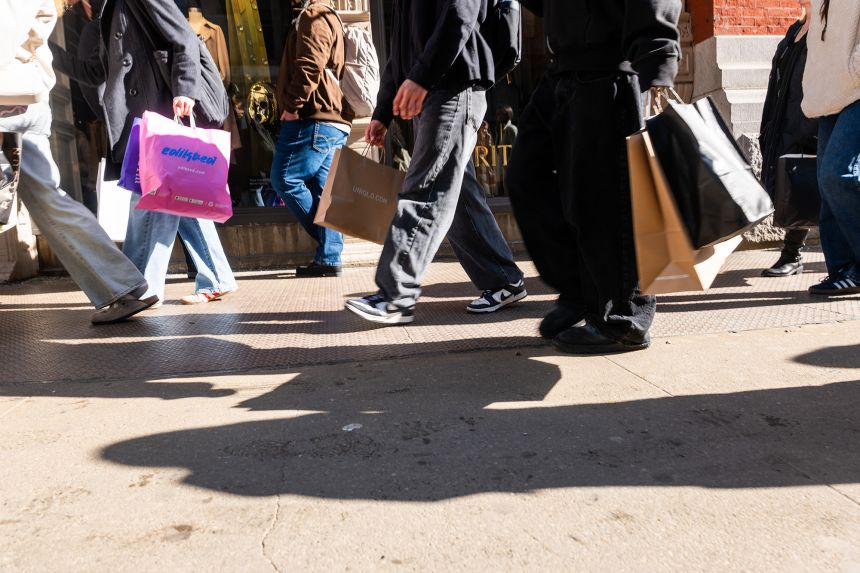
一些经济学家将这种现象称为“K型经济”,即美国最高收入者与最低收入者之间的财富差距正在扩大。“K型”说法颇有争议,并非一门精确的科学。视视角和时间范围而定,一些经济指标显示“K型”正在收窄。
Some economists call that phenomenon a K-shaped economy, a widening wealth gap between America’s highest and lowest earners. The K-shape is hotly debated and is an inexact science. Some economic measures show a narrowing K, depending on the perspective and timeframe.
但近年来的趋势很明确:富人支出远超变得更加节俭的大多数美国人。这不仅因为他们更富有;还因为他们持有的财富类型不同。
But the trend in recent years has been clear: The wealthy have been outspending the bulk of Americans who have become somewhat more frugal. That’s not only because they’re richer; it’s because of what kind of wealth they hold.
据纽约联储数据,收入最高的20%人群拥有美国整体房产价值的一半以上;收入最低的20%人群仅拥有美国房产价值的3%。
The top 20% of earners own more than half of America’s overall home value; just 3% of America’s home value is owned by the bottom 20% of earners, according to the New York Federal Reserve.
另一个因素是:富有的美国人在股市投资的比例显著更高。据美联储《分配性金融账户》数据,收入最高的20%人群控制着美国个人持有股票产生的87%财富。
Another contributing factor: Wealthy Americans are significantly more invested in the stock market. The top 20% of earners control 87% of the wealth generated by America’s individually owned stocks, according to the Federal Reserve’s Distributional Financial Accounts.
由于股市持仓高度集中在富裕家庭手中,股市带来的消费支出也高度集中:据RSM US统计,四分之三由股市创造的支出流向了收入最高的20%人群。
Because stock market holdings are so concentrated among wealthy households, so too is the spending it generates: Three-quarters of spending created by the market flows through the top 20% of earners, according to RSM US.
由于大部分财富锁定在房地产和股市中,美国最富有群体基本无视了今年的通胀压力,继续保持消费。但如果市场反弹结束,这一消费引擎——以及它带来的经济增长——可能会熄火。
So, with a large portion of their wealth tied up in real estate and the stock market, America’s wealthiest have largely ignored this year’s inflationary pressures and kept on spending. But if the market rally ends, the spending engine — and the economic growth it generated — could sputter.
如果说消费支出是经济的引擎,那么过去几年里,AI 就是燃料。
If consumer spending is the economy’s engine, AI has been the fuel over the past couple of years.
该技术的快速扩张支撑了股市反弹:市值最高的 10 家上市公司均为科技导向型,合计占标普 500 指数总市值的约 40%。但 AI 投资也支撑了经济。据荷兰国际集团(ING)统计,今年经济增长中有四分之一来自 AI 基础设施建设。
The technology’s rapid expansion has supported the stock market rally: The 10 most valuable public companies are all tech-focused and make up roughly 40% of the value of the S&P 500. But investment in AI has also supported the economy. A quarter of this year’s economic growth has come from the AI infrastructure buildout, according to ING.
这种投资短期内不太可能枯竭。据高盛本月早些时候的预测,该行业今年预计将在 AI 基础设施上投入 1.1 万亿美元,明年将投入 1.8 万亿美元。
That investment probably isn’t going to dry up anytime soon. The industry is expected to spend $1.1 trillion on AI infrastructure this year and $1.8 trillion next year, according to a Goldman Sachs forecast from earlier this month.
投资者并未失去对 AI 作为变革性技术潜力的信心,Truist Wealth 首席市场策略师 Keith Lerner 指出。相反,他们失去了对 AI 公司支出能在短期内转化为可持续利润的信心。
Investors haven’t lost confidence in AI’s potential as a transformative technology, noted Keith Lerner, chief market strategist at Truist Wealth. Instead, they’ve lost confidence that AI companies’ spending will turn into sustainable profits anytime soon.
近期事件并未有所帮助。Neocloud CoreWeave 在 10 月为 AI 业务敲响了警钟,当时其债券收益率飙升至 15%,使其借贷成本几乎达到投资回报率的两倍。民主党在中期选举中大获全胜,当选者中许多人呼吁加强对 AI 的监管,并暂停数据中心建设。而英伟达丑闻(暂时)让行业失去了其事实上的“央行行长”,并重燃了加强对美国 AI 芯片出口审查的呼声。
Recent events haven’t helped. Neocloud CoreWeave sounded alarm bells about the AI business in October, when its bond yields surged to 15%, making its borrowing costs nearly twice its return on investment. Democrats’ sweeping victory in the midterm elections included many who called for increased regulation of AI and moratoriums on data center construction. And the Nvidia scandal had (temporarily) cost the industry its de facto central banker and renewed calls for increased scrutiny of US AI chip exports.
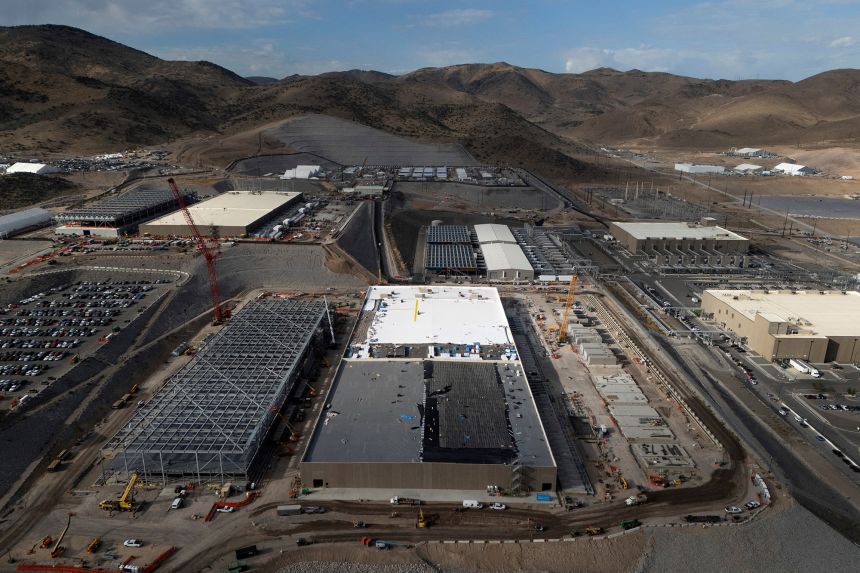
但 RSM US 首席经济学家 Joe Brusuelas 表示,仅 AI 投资放缓不会导致衰退。他说:“那种情形还需要一场金融市场事件。”换句话说:AI 股票持续下跌可能导致衰退。“股市上涨对经济扩张的可持续性重要得多,”他说。
But a slowdown in AI investment alone wouldn’t lead to a recession, said Joe Brusuelas, chief economist at RSM US. “That scenario would also require a financial market event,” he said. In other words: A sustained decline in AI stocks could lead to a recession. “Rising equities are far more important to the sustainability of the expansion,” he said.
考虑到市场在10月6日创下历史新高,此时讨论潜在衰退似乎格格不入。但纳斯达克指数仍比历史高点低14%,尽管周一大涨了6%。更广泛的标普500指数比峰值低8%以上。
Considering the market hit a record high on October 6, any discussion about a potential recession may seem jarring. But the Nasdaq remains 14% below its all-time high despite a massive 6% rally on Monday. The broader S&P 500 is more than 8% below its peak.
尽管市场在短时间内经历了如此过山车般的剧烈波动,但仍可能存在乐观的理由。
Despite the market enduring such a roller coaster ride in a short period of time, there may be reasons for hope.
首先,抛售将大型科技股的估值打到了谷底,造就了一些看起来相当便宜的股票。勒纳指出,标普500科技板块的市盈率——衡量股票相对价值的指标——今年下跌了45%,降至15左右,低于疫情时期的低点。
For one, the wipeout sent Big Tech valuations through the floor, creating some pretty cheap-looking stocks. The S&P 500 tech sector’s price-to-earnings ratio — a measure of a stock’s relative value — has fallen 45% this year to around 15, below its pandemic-era nadir, noted Lerner.
市盈率如此快速下跌,历史上只有两次类似情况:互联网泡沫破裂和全球金融危机。
The rapid decline in price-to-earnings value has only two historic parallels: the dot-com bust and the global financial crisis.
“围绕人工智能存在重大不确定性,但很难说当前的背景比疫情早期阶段更不确定,”他说。
“There are significant uncertainties around AI, but it is difficult to argue that the current backdrop is more uncertain than the early stages of the pandemic,” he said.
另一个乐观理由:在类似的单月市场下跌中,从市场底部反弹的平均涨幅约为20%——这种快速反弹可以抵消下跌造成的很大一部分损失。
Another reason for optimism: In similar market declines over a single month, the average rebound from the market bottom has been around 20% — a rapid snapback that can undo significant damage from the decline.
这就是高盛分析师预测明年股市将获得正回报的原因——但他们同时指出,“过程可能坎坷”。尽管如此,这并不保证市场会很快完全反弹。市场可能继续下滑,并拖累富裕美国人的支出。
That’s why analysts at Goldman Sachs forecast positive returns for stocks next year — noting, however, “the path could be bumpy.”Still, that’s no guarantee the market will bounce all the way back anytime soon. It may continue to slide and take wealthy Americans’ spending down with it.