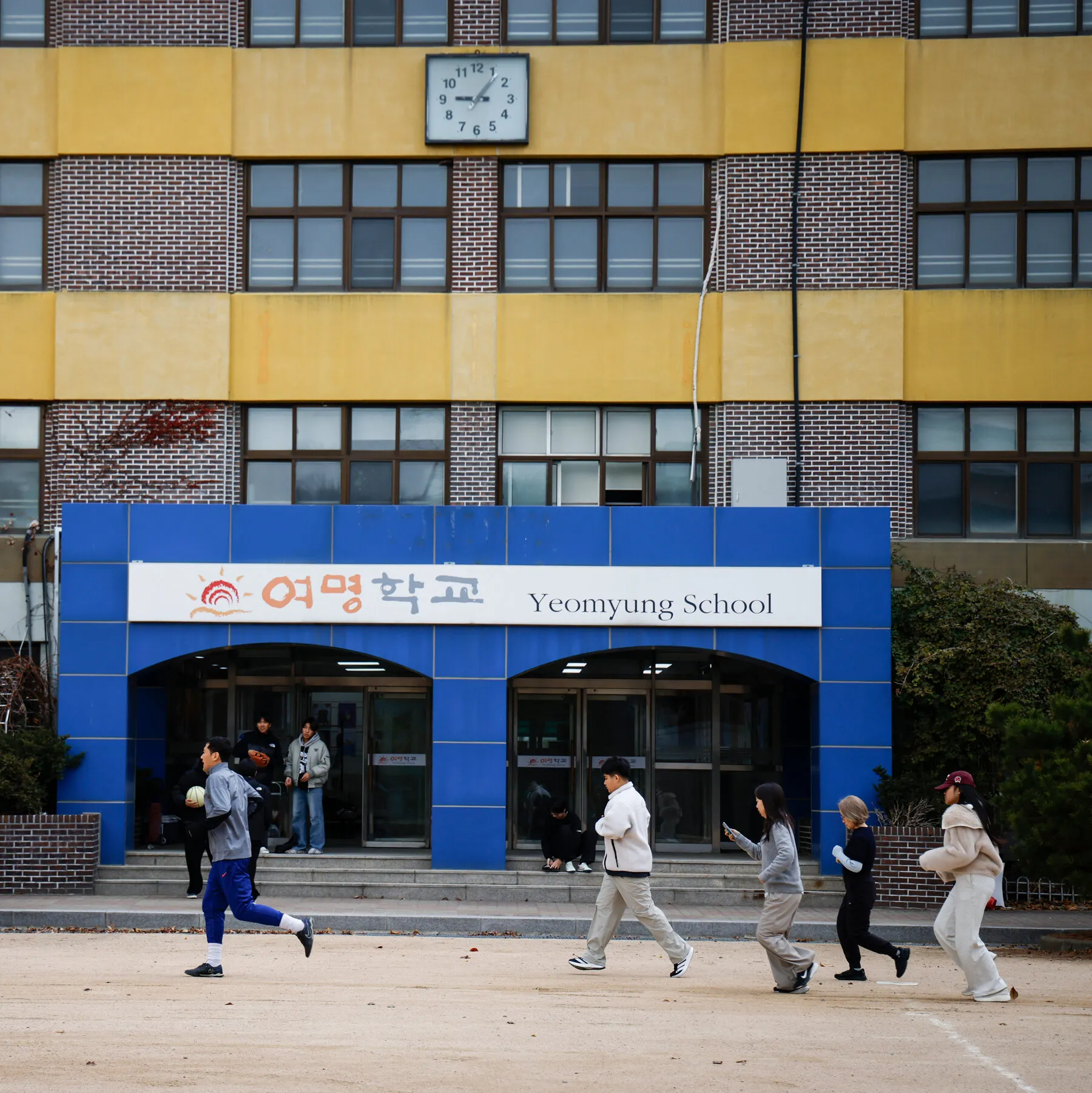
首尔一所学校专门招收父母逃离朝鲜的学生。邻居们希望它搬走,学生则表示,这只是他们在韩国所面临歧视的一个例子。
A school in Seoul caters to students whose parents fled North Korea. Neighbors want it gone, and students say it is just one example of the prejudice they face in the South.
17岁的姜一权(音)对朝鲜几乎没有什么记忆。父母带着他逃离那个极权国家、投奔韩国时,他还是个蹒跚学步的孩子。
Kang Il-kwon, 17, barely remembers North Korea. He was a toddler when his parents fled their totalitarian homeland with him, defecting to South Korea.
但在学校里,同学们因为他来自朝鲜而对他另眼相看,还激他将朝鲜领导人金正恩,仿佛是在考验他的忠诚。
But at school, classmates singled him out for his North Korean roots, daring him to insult the North’s leader, Kim Jong-un, as if to test his loyalties.
他以为进入一所专为脱北者子女开设的学校后,就能摆脱这种污名。脱北者冒着生命危险逃离朝鲜,来到韩国后却要面对冷漠、偏见,往往还过着接近社会底层的生活。对他们中的许多子女来说,首尔西部的黎明学校是一处庇护所。如今,这处庇护所正面临压力。
He thought he had escaped that stigma when he enrolled at a school dedicated to the children of North Korean defectors. After risking their lives to escape the North, defectors arrive in the South to face indifference, prejudice and often a life near the bottom of the social ladder. For many of their children, Yeomyung School in western Seoul is a sanctuary. Now, this refuge is under pressure.
学校周边的社区居民在公交站张贴海报,要求学校搬走,并呼吁将该地块用于“为我们服务的设施”。在这个老龄化国家,各地社区争相吸引学校落户,而他们却因为学生的背景发起运动,要把一所学校赶走——尽管这些学生是韩国公民,受教育权受宪法保障。
Neighborhood residents have put up posters at bus stops around the school, demanding that it move elsewhere and calling for the site to host “facilities for us.”In an aging country where communities compete to attract schools, they are campaigning to drive one away because of its students’ backgrounds, although the pupils are South Korean citizens with a constitutional right to education.
姜一权幼年时来到韩国,在之前的学校里曾遭到嘲弄。他在黎明学校找到了庇护。
Kang Il-kwon, who moved to the South as a toddler, was taunted at his previous school. He found refuge at Yeomyung.
本月,公交站张贴着传单,上面写着“居民反对建设黎明学校的计划”。学校的租约即将到期,校方希望建设自己的校园。
Woohae Cho for The New York Times Leaflets reading “Residents Oppose the Plan to Build the Yeomyung School” were posted at a bus stop this month. With its lease set to expire, the school wants to build its own campus.
“很不舒服,”2023年入读黎明学校的日权(Il-kwon,音)说。“我希望一旦他们真正了解我们是什么样的学生,情况会有所改善。”韩国官方主张接纳朝鲜难民,这是长期以来实现两国统一目标的一部分。但分离八十多年后,两韩之间的政治、经济和情感鸿沟只增不减。许多韩国人,尤其是年轻选民,已对朝鲜的核威胁感到厌倦,更关心失业和生活成本上涨。政府去年的一项调查显示,韩国人对朝鲜脱北者的包容度低于对其他国家移民工人的包容度。
“It’s unpleasant,” said Il-kwon, who started at Yeomyung in 2023. “I hope things will improve once they truly understand what kind of students we are.”Officially, South Korea calls for embracing North Korean refugees, part of a longstanding goal of reunifying the two nations But after eight decades of separation, the political, economic and emotional gap between the two Koreas has only widened. Many South Koreans, younger voters in particular, have grown weary of the North’s nuclear threat and more concerned about unemployment and the rising cost of living. A government survey last year found South Koreans less accommodating toward North Korean defectors than toward migrant workers from other nations.
乍看之下,作为韩国五所此类学校之一的黎明学校,生活似乎平淡无奇。学生们练习大提琴、口琴等乐器。午餐时,他们手持餐盘排队。但仔细观察会发现,学生们正努力从抵达前很久就已造成的创伤中恢复。学生大提琴手在黎明学校的学年末比赛前练习。
At first glance, life at Yeomyung, one of five schools of its kind in South Korea, looks unremarkable. Students practice the cello, the harmonica and other instruments. At lunchtime, they line up with plates in hand. But a closer look reveals students struggling to recover from damage done long before they arrived. Student cellists practiced before their year-end competition at Yeomyung.
学校展板上展出了姜春赫(Kang Chun-hyok,音)的素描《花燕子与士兵》。姜春赫是画家、说唱歌手,也是黎明学校的毕业生。“花燕子”(Kkotjebi)意为“乞讨儿童”或“孤儿”。在艺术治疗中,一些学生描绘了人们在朝鲜被绞死或被枪决的场景。一幅学生画作显示,孤儿们像流浪狗一样围在朝鲜警察用餐的桌子旁,等待残羹冷炙掉落。一次体检发现,100名左右的学生中,超过一半需要植牙。
A school display included “Kkotjebi and Soldiers,” a sketch by Kang Chun-hyok, a painter, rapper and Yeomyung graduate. “Kkotjebi” means “child beggars” or “orphans.”In art therapy, some painted scenes of people hanged or shot by firing squads in North Korea. One student drawing showed orphans huddling like stray dogs around a table where North Korean police officers ate, waiting for scraps to fall. A medical checkup found that more than half of the 100 or so students needed dental implants.
“他们承载着朝鲜难民的痛苦,”校长赵明淑(Cho Myung Sook,音)说,她于2004年协助创办了黎明学校。
“They bear the pains of North Korean refugees,” said the principal, Cho Myung Sook, who helped start Yeomyung in 2004.
那个16岁的男孩身高不足4英尺,因营养不良而发育迟缓。在夜色掩护下,他从中国渡过图们江返回朝鲜,身上带着赵女士给他的几百美元,钱被装在塑料袋里藏在直肠内。父母双亡,他两个年幼的弟妹能否活下去,全靠他能带回多少救济。
Taunts The 16-year-old boy was barely 4 feet tall, stunted by malnutrition. Under the cover of night, he crossed the Tumen River from China back into North Korea with a few hundred dollars Ms. Cho had given him, sealed in a plastic bag and hidden in his rectum. With their parents dead, his two younger siblings’ survival depended on the aid he could bring back.
“看着他消失在河对岸,走向一个我永远无法知晓的命运,”赵女士说,“我下定决心,要尽我所能帮助朝鲜儿童。”那是1997年,赵女士正在中国度蜜月。然而她却遭遇了一场危机:消瘦、饥饿的朝鲜人为逃避饥荒纷纷越境逃往中国。一名40多岁、牙齿脱落的妇女看起来像70多岁。这些非法滞留中国的难民担心被遣返回朝,在那里他们将面临酷刑、强迫劳动或以叛国罪被处决。人口贩子将母亲和女儿贩卖给中国农村的男性。
“As he disappeared across the river to a fate I would never know,” Ms. Cho said, “I determined that I should do what I could to help North Korean children.”It was 1997 and Ms. Cho was in China for her honeymoon. Instead, she found a crisis: gaunt, starving North Koreans fleeing famine across the border. One toothless woman in her 40s looked past 70. Living undocumented in China, these refugees feared deportation to the North, where they faced torture, forced labor or execution as traitors. Human traffickers sold mothers and daughters to men in rural China.
曙明学校校长赵明淑在学校休息室内。她是最早开始援助朝鲜难民和脱北者的活动家之一。在曙明学校上韩语课的学生,他们出生在中国,父母是朝鲜难民。
Cho Myung Sook, Yeomyung’s principal, in the school’s lounge. She was one of the first activists who started helping refugees and defectors from the North. Students, who were born in China to North Korean refugees, taking a Korean language class at Yeomyung.
赵女士成为最早帮助这些难民前往韩国的活动家之一,带领他们穿越东南亚丛林。此后已有3.4万多人抵达韩国,韩国给予他们公民身份、经济援助和廉价住房,希望他们的重新融入能让韩国民众为最终的统一做好准备。雇主们称赞他们肯吃苦、爱储蓄,把钱寄给北方的亲属或资助偷渡客把亲人带到南方;但也有人怨恨他们消耗福利、医疗和教育资源。
Ms. Cho became one of the first activists to help these refugees move to South Korea, guiding them through Southeast Asian jungles. More than 34,000 have since reached South Korea, which grants them citizenship, financial aid and cheap housing, hoping that reintegrating them will prepare its people for eventual unification. While employers have praised their willingness to work hard and save, sending money to relatives in the North or funding smugglers to bring them south, others resented them as a drain on welfare, health care and education.
难民儿童往往在逃亡途中多年失学。那些被贩卖给中国男子的母亲所生的孩子,从小只会说中文。她们的母亲常常独自逃到韩国,再婚之后多年才与子女团聚。在学校里,这些年轻人功课吃力,还被人嘲笑为“红人”或“jjangkkae”(韩国人对中国人的蔑称)。一权说:“我尽量不暴露自己的出身。”“无处可去”一位要求只透露姓氏韩的黎明学校学生说,她曾因为朝鲜口音被拒绝录用。她担心自己若暴露身份,会连累在朝鲜的亲属。
Refugee children often lost years of schooling during their journeys. Those born to mothers trafficked to Chinese men grew up speaking only Chinese. Often their mothers fled to South Korea alone, remarrying before being reunited with their offspring years later. At school, these youths struggled with lessons and were taunted as “reds” or jjangkkae (a Korean slur for Chinese people). Il-kwon said, “I made it a point not to reveal my background whenever I could.”‘Nowhere Else to Go’A Yeomyung student who asked to be identified only by her last name, Han, for fear of retaliation against relatives in the North, recalled being rejected for a job because of her North Korean accent.
她说:“我费了那么大劲来到这里、成为韩国人,结果还是被排在别的韩国人下面。”她目前正在争取当一名助理护士,但需要高中文凭。因此,她每天要花三个小时往返于首尔以南的家和黎明学校之间。年龄较小的学生则住在附近的宿舍里。
“After all the trouble I took to come here and become South Korean,” she said, “I was still positioned below the other South Koreans.”She is now working to get a job as an assistant nurse but needs a high school diploma. So she spends three hours a day commuting between her home south of Seoul and Yeomyung. Younger students live in dormitories nearby.
她说:“他们叫我‘大姐’,因为31岁的我是这里年龄最大的学生。这所学校给了我一个机会,因为其他学校不会接收我这个年龄的学生。”然而,学校周边的居民却没那么包容。黎明学校目前在一栋黄色建筑里办学,这里原是一所普通小学。
“They call me ‘Big Sister’ because at 31, I am the oldest student here,” she said. “This school opened an opportunity for me because other schools would not accept students of my age.”Residents around the school, however, proved less accommodating. Yeomyung currently operates out of the yellow building, which was formerly a general elementary school.
学校旁边的公寓楼上挂着一条横幅,上面写着“居民反对建设黎明学校的计划”。黎明学校意为“黎明”,它从一个租来的场地搬到另一个租来的场地。2023年,它在一所小学因招生不足而关闭后搬进了现在的校舍。
The apartment block next to the school has a banner reading “Residents Oppose the Plan to Build the Yeomyung School.”Yeomyung, which means dawn, has moved from one rented space to another. In 2023, it moved into its current home after a primary school closed for lack of enrollment.
由于租约将于2月到期,黎明学校在7月与政府签署了一项临时协议,以相当于1200万美元的价格在校园地块的一角建设自己的校区。这笔钱来自捐赠者,包括现代汽车集团和捐出第一笔薪水的校友。
With its lease set to expire in February, Yeomyung signed a temporary agreement in July with the government to build its own campus on a corner of the site for the equivalent of $12 million. It raised the money from donors, including Hyundai Motor Group and alumni who contributed their first paychecks.
反弹迅速而猛烈。9月的一次市民大会上,愤怒的居民高喊:“去别的地方!”赵女士跪倒在地,恳请居民理解,她的学生“别无去处”。反对者向社交媒体、政府机构和政界人士发送了大量愤怒的信息。一条帖子声称,并非所有黎明学生都是“纯种”韩国人,因为其中一些人的父亲是中国人。
The backlash was swift. At a town hall in September, angry residents shouted, “Go elsewhere!”Ms. Cho dropped to her knees, pleading with residents to understand that her students “had nowhere else to go.”Opponents flooded social media, government agencies and politicians with furious messages. One post claimed that not all Yeomyung students were “pure-blood” Koreans because some had Chinese fathers.
几位接受《纽约时报》采访的居民表示,他们并不反对这些学生的背景或受教育权,但坚持认为政府对待他们社区的方式不公平。当局于2020年关闭了当地的小学,当时入学人数已降至170人。居民质疑,为什么官员要为黎明学校的103名学生新建设施,而这些学生甚至不是来自该社区。
Several residents who spoke to The New York Times said they did not object to the students’ backgrounds or their right to an education, but insisted the government had treated their neighborhood unfairly. Authorities closed their local primary school in 2020 when enrollment fell to 170. Residents questioned why officials would build a new facility for Yeomyung’s 103 students, who were not even from the neighborhood.
在该社区居住了45年的李温妮(Winnie Lee,音)说,官员曾承诺将关闭的学校改建为幼儿园设施,以吸引有幼龄子女的家庭搬入——而不是建一所为朝鲜脱北者设立的学校。但当局表示,该场地的大部分仍将用于建设承诺的幼儿园中心。黎明学校的学生在音乐课上学习演奏韩国传统鼓。
Winnie Lee, a neighborhood resident for 45 years, said officials had promised to turn the closed school into a preschool facility to attract families with young children — not a school for North Korean defectors. But the authorities say that most of the site would still be devoted to the promised preschool center. Yeomyung students learn how to play traditional Korean drums during a music class.
14岁的许成勋(Heo Seong-hun,音)站在黎明学校的足球场上。他说想当老师,以便将来能照顾母亲。
Heo Seong-hun, 14, on Yeomyung’s soccer field. He says he wants to become a teacher so he will be able to care for his mother.
14岁的许成勋不解,为什么邻居不能把黎明学校当作“只是另一所普通学校”来接受。2012年,他出生在中国,母亲是朝鲜难民。四年后,他来到韩国。在描述母亲的病情、努力回忆中国籍父亲时,他不停地折叠、展开手中的一张纸。
Heo Seong-hun, 14, wondered why neighbors could not accept Yeomyung as “just another school.”Born in China in 2012 to a North Korean refugee mother, Seong-hun arrived in South Korea four years later. He kept folding and unfolding a piece of paper as he described his mother’s illness and struggled to remember his Chinese father.
去年来到黎明学校之前,他在三所小学辗转,曾“不知如何交朋友”。
He arrived at Yeomyung last year, after drifting through three primary schools, where he was “at a loss how to make friends.”
“在这里我感到被爱、被改变,”他说。“我现在有了梦想:将来成为一名老师,亲自照顾妈妈。”
“I feel loved and changed here,” he said. “I now have a dream: to one day become a teacher and take care of my mom myself.”