新德里——20世纪90年代,印度启动了一项新的平权行动计划,旨在改善该国低种姓群体的就业和教育前景,迪内什·库马尔一家因此迎来了新的机遇。近年来,该计划帮助库马尔的女儿们获得了不错的大学录取名额。库马尔出身于一个农业种姓。
NEW DELHI—After India embarked on a new affirmative-action program in the 1990s aimed at improving work and education prospects for the country’s lower castes, the family of Dinesh Kumar saw new doors open. In recent years, the program helped the daughters of Kumar, who comes from an agricultural caste, win good university spots.
然而,这项计划——将低种姓和土著群体在公务员职位和大学名额中的份额从约20%提高到50%——引发了高种姓群体的愤怒抗议。
However, the program—which increased the share of state jobs and university places from about 20% to 50% for lower castes and indigenous people—triggered furious protests by upper-caste groups.
“全国陷入了火海,”库马尔说。那些出身优渥种姓的人“希望人们维持现状,继续做工人阶级,继续从事体力劳动。”如今,印度正着手重新收集其近15亿公民的种姓信息,这可能会推动进一步提高卑微种姓群体的配额。
“The country caught fire,” said Kumar. Those from privileged castes “want people to remain as they are, remain working class, and keep doing their manual labor.”Now, India is embarking on a fresh effort to gather caste information from all of its nearly 1.5 billion citizens, which could fuel a push to further increase the quotas for people of modest castes.
这一举措再次激起了政治和社会紧张局势。批评者对纳伦德拉·莫迪总理领导的政府采用一种可能无法揭示低种姓确切人数、也无法说明其境况是否改善的方法论感到不满。
Once again, the effort is stirring political and social tensions. Critics are upset that the government of Prime Minister Narendra Modi is using a methodology that could shed little light on their exact numbers or whether the lot of lower castes has improved.
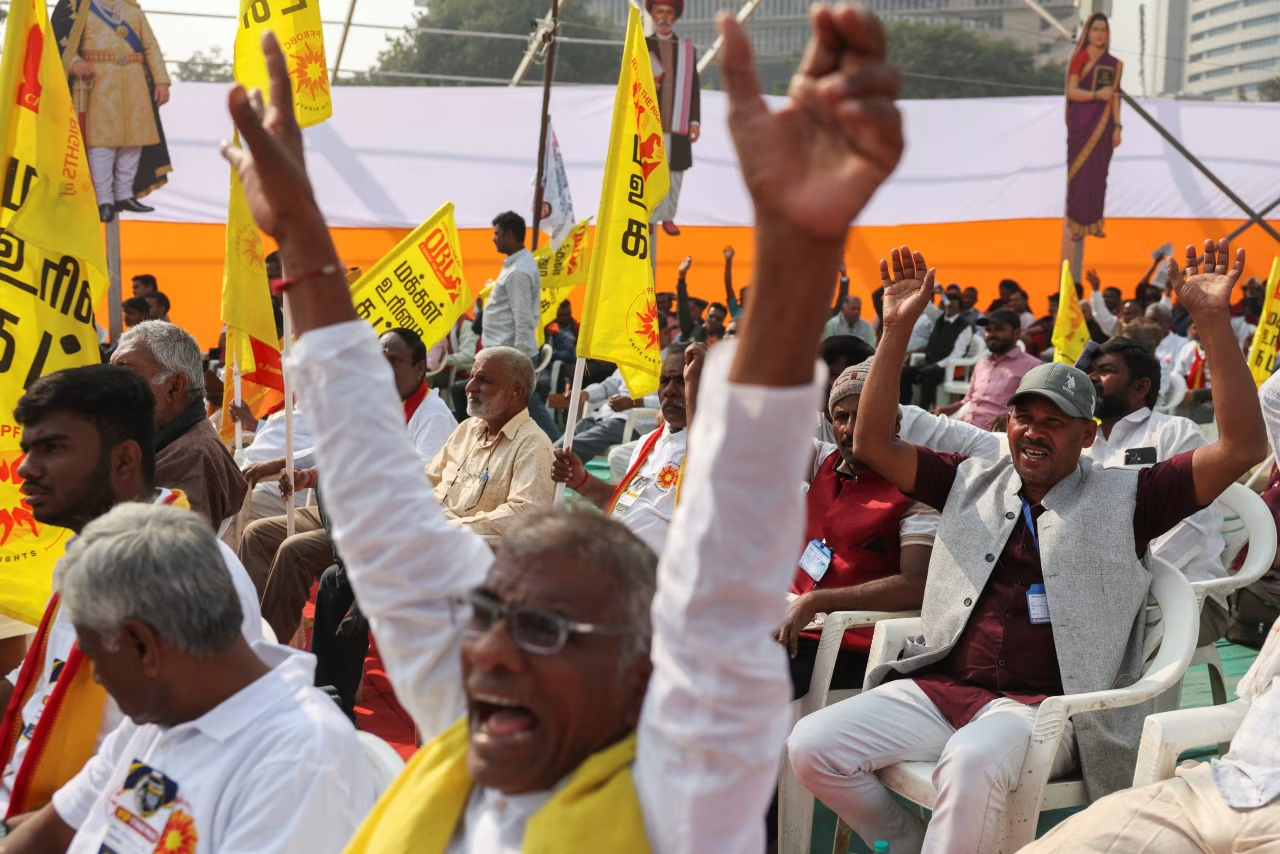
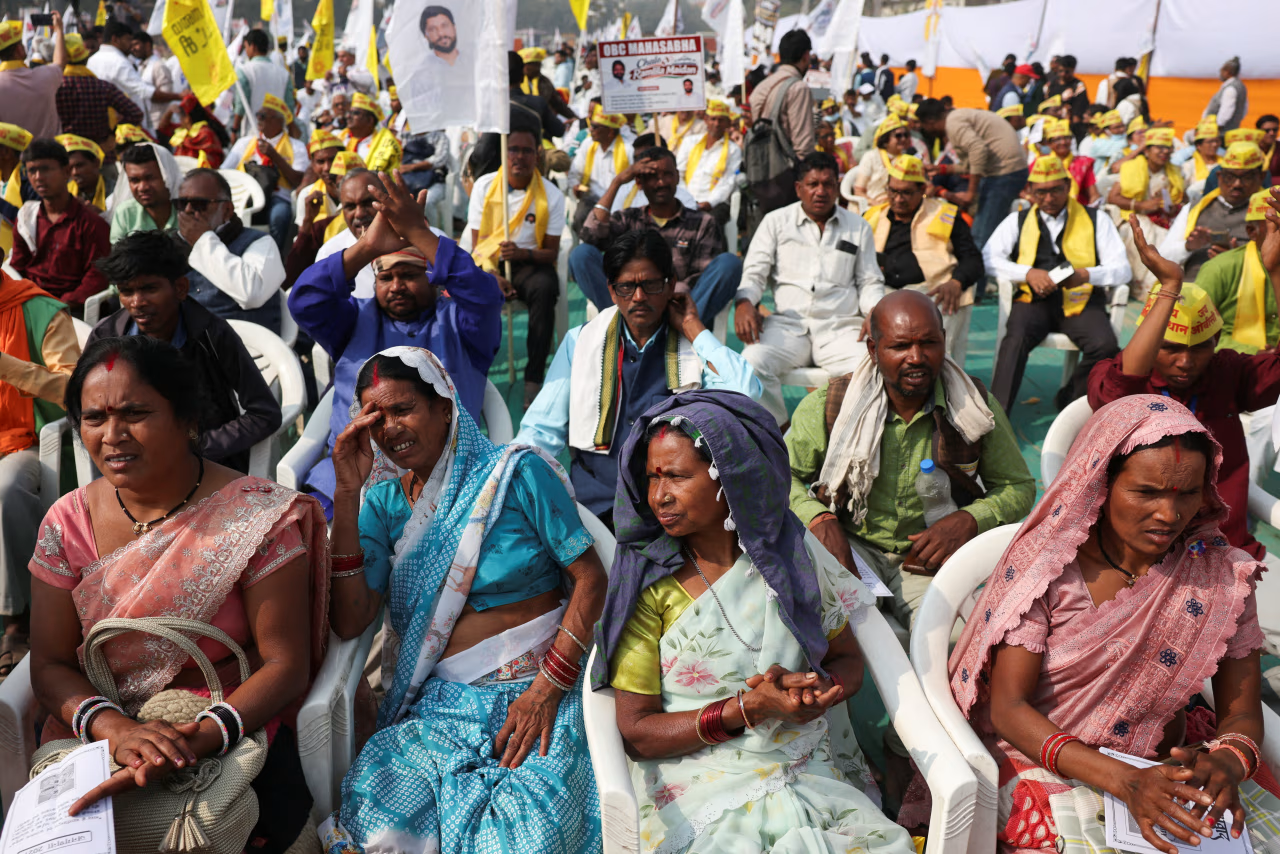
周六,低种姓协会成员抵达首都,要求政府准确统计他们的人数。“我们要公正,”一群学生活动家在抗议现场高呼口号。这些示威活动紧随今年早些时候印度青年因缺乏优质教育和就业机会而发起的抗议之后。
On Saturday, members of lower-caste associations arrived in the capital to demand the government count their numbers properly. “We want justice,” a group of student activists chanted at the protest site. Those demonstrations come on the heels of youth protests in India this year over a lack of good education and job opportunities.
印度延续数百年的种姓制度,曾由印度教传统规定并由该国统治阶级维系,将人们划分为世袭群体。这一社会等级由婆罗门(传统上为祭司和知识分子)、刹帝利(统治者、战士和地主)、吠舍(商人和实业家)以及首陀罗(工人和工匠)组成。每个群体又包含数百个种姓。
India’s centuries-old caste system, which was once dictated by Hindu tradition and sustained by the country’s ruling class, divides people into hereditary groups. The social hierarchy is composed of Brahmins, who are traditionally priests and intellectuals; Kshatriyas, comprising rulers, warriors and land owners; Vaishyas, the traders and businessmen; and Shudras, workers and artisans. Each group is made up of hundreds of castes.
在这一体系之外的是达利特人,他们曾被贴上“贱民”或“不可接触者”的标签,被指派从事被视为卑贱的工作,如扫街或制革。官方所谓的“其他落后阶层”(OBC)大多属于首陀罗,约占印度人口的一半。
Falling outside this were the Dalits, once branded outcastes or “untouchables” and assigned tasks considered degrading such as street sweeping or leather work. So-called “other backward classes,” or OBCs in official parlance, were mostly part of the Shudras and make up an estimated half of India’s population.
虽然最严重的种姓歧视已有所消退,但该体系仍是印度社会的核心。印度几乎所有婚姻都在种姓界限内进行,种姓忠诚度能左右选举结果。提交议会的数据显示,上层种姓的印度教男性仍主导政府高层职位。
While the worst discrimination around caste has faded, the system remains central to Indian society. Almost all marriages in India take place within caste lines, and caste allegiances can swing elections. Data shared in parliament shows that upper-caste Hindu men still dominate the top jobs in government.
自独立以来,印度的人口普查一直统计达利特人和该国土著部落的人数,根据2011年最近一次普查,两者分别约占人口的17%和9%。一项宪法规定的平权行动计划在国家层面给予这两个群体合计22.5%的政府职位和公立大学学位配额。
Since independence, India’s censuses have counted the Dalits and the country’s indigenous tribes, who constitute about 17% and 9% of the population respectively in the last count in 2011. A constitutionally mandated affirmative-action program grants the two groups a combined 22.5% quota in government jobs and public university seats at the national level.
对于剩下约75%的印度人——包括其他落后阶层——政府在很大程度上不再询问种姓,以期削弱根深蒂固的社会等级。(给予其他落后阶层等群体的配额,部分基于殖民时代的人口普查。)“这是乌托邦式的想法,”反对党国大党领导人乌迪特·拉杰说,该党推动中央政府在今年的全国人口普查中纳入所有种姓。“印度领导人以为种姓制度会消失。”
For the remaining roughly 75% of Indians—including the OBCs—the government had largely stopped asking about caste in the hope of weakening entrenched social hierarchies. (Quotas for groups such as the OBCs were awarded partly based on a colonial-era census.)“It was utopian,” said Udit Raj, a leader in the opposition Congress Party, which pushed the national government to include all castes in this year’s national census. India’s leaders “thought that the caste system will vanish.”
政治活动家约根德拉·亚达夫表示,一项执行得当的种姓普查将是印度社会的“全面X光片”。他说,将每个人种姓的全面信息与其社会、经济和教育状况的数据相结合,将呈现出不同种姓生存状况的图景。
A well-conducted caste census would be a “complete X-ray” of Indian society, said Yogendra Yadav, a political activist. Combining comprehensive information about everyone’s caste with data about their social, economic and educational conditions would provide a picture of how the different castes are faring, he said.
“如果我们了解这个国家特权阶层的画像——这至今一直完全隐藏——那将使我们能够将其与其余人口进行比较,并理解他们所面临的劣势的性质,”他说。
“If we know the profile of the privileged in the country, which has been hitherto completely hidden, that would allow us to compare the rest of the population and understand the nature of the disadvantage” they are facing, he said.
对于执政的印度人民党而言,种姓普查的结果可能很棘手。莫迪的种姓被列为其他落后种姓,他一直努力改变印度人民党作为上层种姓印度教徒政党的形象,并通过争取其他种姓选民的支持,锻造一个全国性的印度教投票集团。
For the ruling Bharatiya Janata Party, the findings of a caste census could be delicate. Modi, whose caste is listed as OBC, has worked hard to change the BJP’s image as a party of upper-caste Hindus and forge a national Hindu voting bloc by reaching out to voters of other castes.
在政治压力下,政府去年同意在本次普查中纳入种姓。但结果可能引发印度人民党内部各印度教选民群体就扩大平权行动展开争斗——这对莫迪来说可能是个潜在的头疼问题。现在,围绕普查的实施方式,争议正在爆发。
Under political pressure, the government agreed last year to include caste in the current census. But the results could spark a fight among the BJP’s various Hindu constituencies over expanding affirmative action—a potential headache for Modi. Now, controversy is erupting over how the census is being undertaken.
准确描绘印度种姓制度的困难可以追溯到几十年前。1931年在英属印度主持普查的J.H.赫顿曾感叹:“要获得正确的种姓回报,同样要为普查目的对其进行解释,都很困难。”2011年,由国大党领导的政府不仅统计了土著和达利特种姓,还统计了所有群体。
The difficulty of getting an accurate picture of India’s caste system dates back decades. J.H. Hutton, who conducted the census in British-ruled India in 1931, lamented “the difficulty of getting a correct return of caste and likewise the difficulty of interpreting it for census purposes.”In 2011, the Congress Party-led government carried out a count of not just the indigenous and Dalit castes, but all groups.
然而,那次统计因一项决定而蒙上阴影:允许人们自行填写种姓,而不是从预设列表中选择——后者是用于达利特和土著群体的方法。另一个复杂因素是,印度姓氏往往与种姓标签同义。在一个幅员辽阔、多语言的国家,人们经常用各种拼写书写自己的名字。
However, that count was marred by a decision to allow people to enter their own castes, rather than pick from predetermined lists, the method used for Dalits and indigenous groups. Another complication was that Indian surnames often are synonymous with caste labels. In a vast and multilingual country, people often use various spellings for their names.
“如果我把Yadav写成Y-A-D-A-V,另一个人写成Y-A-D-A-V-A,另一个人写成Y-A-D-E-V,还有人拼写错误,普查就会把我们记录为四个完全不同的种姓,”历史教授、其他落后种姓权益活动家苏拉杰·亚达夫·曼达尔说,他是协调周六抗议活动的一个团体的成员。
“If I write Yadav as Y-A-D-A-V, another person writes Y-A-D-A-V-A, another writes Y-A-D-E-V, and another makes a spelling error, the census records us as four completely distinct castes,” said Suraj Yadav Mandal, a history professor and OBC rights activist, who is part of a group that coordinated Saturday’s protest.
因此,2011年调查识别出460多万个不同种姓,而1931年仅发现约4000个。政府认为这些数据不适合发布。
As a result, the 2011 survey identified more than 4.6 million different castes, compared with about 4,000 found in 1931. The government decided that the data wasn’t fit for release.
在本次人口普查中,在线表格没有单独栏目将种姓标识为OBC(其他落后种姓),只有一个“其他种姓”类别。还有拒绝透露任何种姓或表明受访者无种姓的选项。因此,OBC活动人士担心新的统计也会有缺陷,可能让政府搁置结果。
In the current census, an online form has no separate column to identify one’s caste as OBC, only a category of “other castes.”There are also options to decline disclosing any caste or indicate the respondent has no caste. Consequently, OBC activists worry the new count will also be flawed, potentially allowing the government to set aside the results.
人口普查最近已在偏远山区村庄开始,但将于下周在该国最大的几个邦全面展开。人口普查局和监督其工作的内政部未回应置评请求。
The census recently started in remote mountainous villages but kicks off in earnest next week in the country’s largest states. The census authority and Home Ministry, which supervises it, didn’t respond to requests for comment.
本次人口普查对OBC尤为重要,因为他们自1931年以来未被统计过。他们历史上从事牧牛、木匠、铁匠、理发师、花商和农业工人等职业。尽管面临的歧视比达利特人少,但许多人仍表示处于劣势。
The current census is particularly important for OBCs, who haven’t been counted since 1931. They have historically worked as cattle herders, carpenters, ironsmiths, barbers, florists and agricultural laborers. Though facing less discrimination than the Dalits, many still say they are disadvantaged.
目前,由于最高法院裁定配额总额不得超过50%,他们的配额上限为27%,约为其人口占比的一半。
Currently, due to Supreme Court rulings that quota totals can’t exceed 50%, their quota is capped at 27%, about half their share of the population.
曼达尔说:“他们构成了传统的生产和服务阶层,其劳动建设了经济,却被剥夺了受教育、进入行政部门和掌握政治权力的机会。”
“They constituted the traditional productive and service classes whose labor built the economy, yet they were denied access to education, administration and political power,” said Mandal.
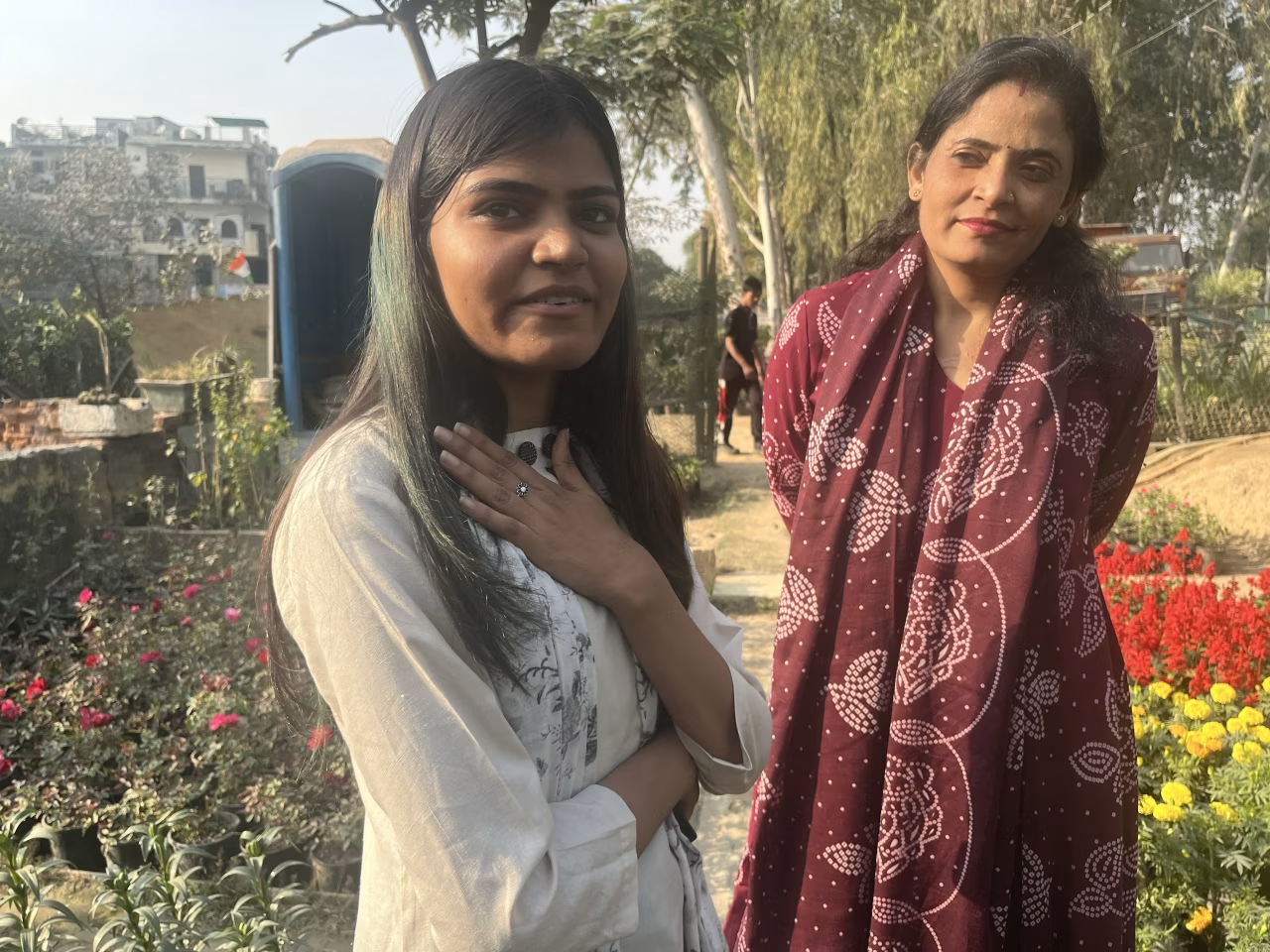
库马尔的女儿迪帕·库马里上大学后,发现顶尖大学职位或政府职务中很少有像她这样种姓出身的人。现在她认为新的人口普查可能有助于提高法院设定的配额上限,增加OBC名额。
Once in college, Kumar’s daughter, Deepa Kumari, saw few people from castes such as hers in top university positions or government roles. Now she thinks a new census could help raise the court-imposed cap on quotas and increase spots for OBCs.
21岁的库马里说:“如果我们的人口普查进行得当,大家知道了我们的人口有多少……我们就可以谈论那个上限,并提高那个上限。”
“If our census is conducted properly, and it becomes known how much our population is…we can talk about that ceiling and raise that ceiling,” said Kumari, 21.
她父亲确信,如果配额更高,他本会获得一份政府工作。他两次通过公务员考试,在数万名考生中脱颖而出,最终却落选。他认为,平权行动本可以帮助平衡一个在他看来偏向上层种姓的竞争环境,因为选拔委员会由上层种姓主导。
Her father is certain that if the quota had been higher, he would have won a government job. He twice passed civil service exams, besting tens of thousands of candidates, only to lose out in the end. Affirmative action could have helped level a playing field that he feels was stacked in favor of upper castes, who dominated the selection committee.
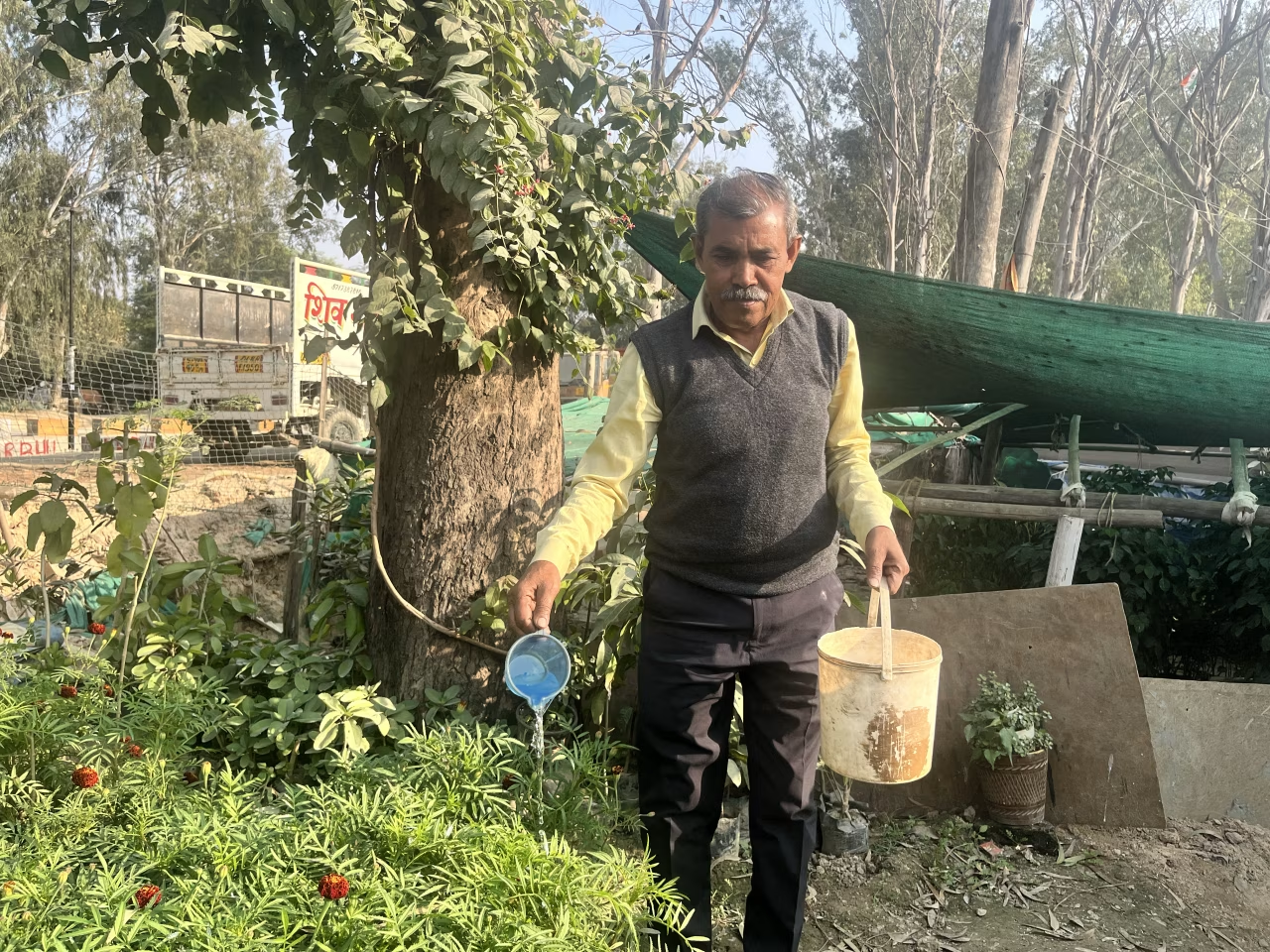
“心态是:‘提拔自己人,’”库马尔一边照料他在德里垃圾场旁经营的小型苗圃一边说。“并非他们对我们怀有直接的个人恶意,而是他们的观念是:‘无论身在何处,都要让自己种姓的人往前走。’”但他认为印度应转向以经济地位为基础的制度——这一想法今年早些时候也被一些反对配额的种姓活动人士提出。
“The mindset is: ‘Promote your own people,’” said Kumar, as he tended to the small plant nursery he runs next to a garbage dump in Delhi. “It’s not that they bear direct personal ill-will toward us, but their outlook is: ‘Bring our own caste forward, wherever we are.’”But he thinks India should shift to a system based on economic status—an idea also proposed by some caste activists who oppose quoteas earlier this year.
迪帕·库马里持不同看法。她认为,为其他落后阶层(OBC)设定更大配额将帮助更多人晋升,而他们反过来又能帮助他人。
Deepa Kumari feels differently. She believes that a bigger quota for OBCs will help more of them advance. They in turn can help others.
“在许多地方,其他落后阶层仍受到非常恶劣的对待,”她说。“我们得不到机会,所以保留名额对我们进一步向前发展是必要的。”
“In many places OBCs are still treated in a very bad manner,” she said. “We are not getting opportunities, so reservation is necessary for us to move further ahead.”