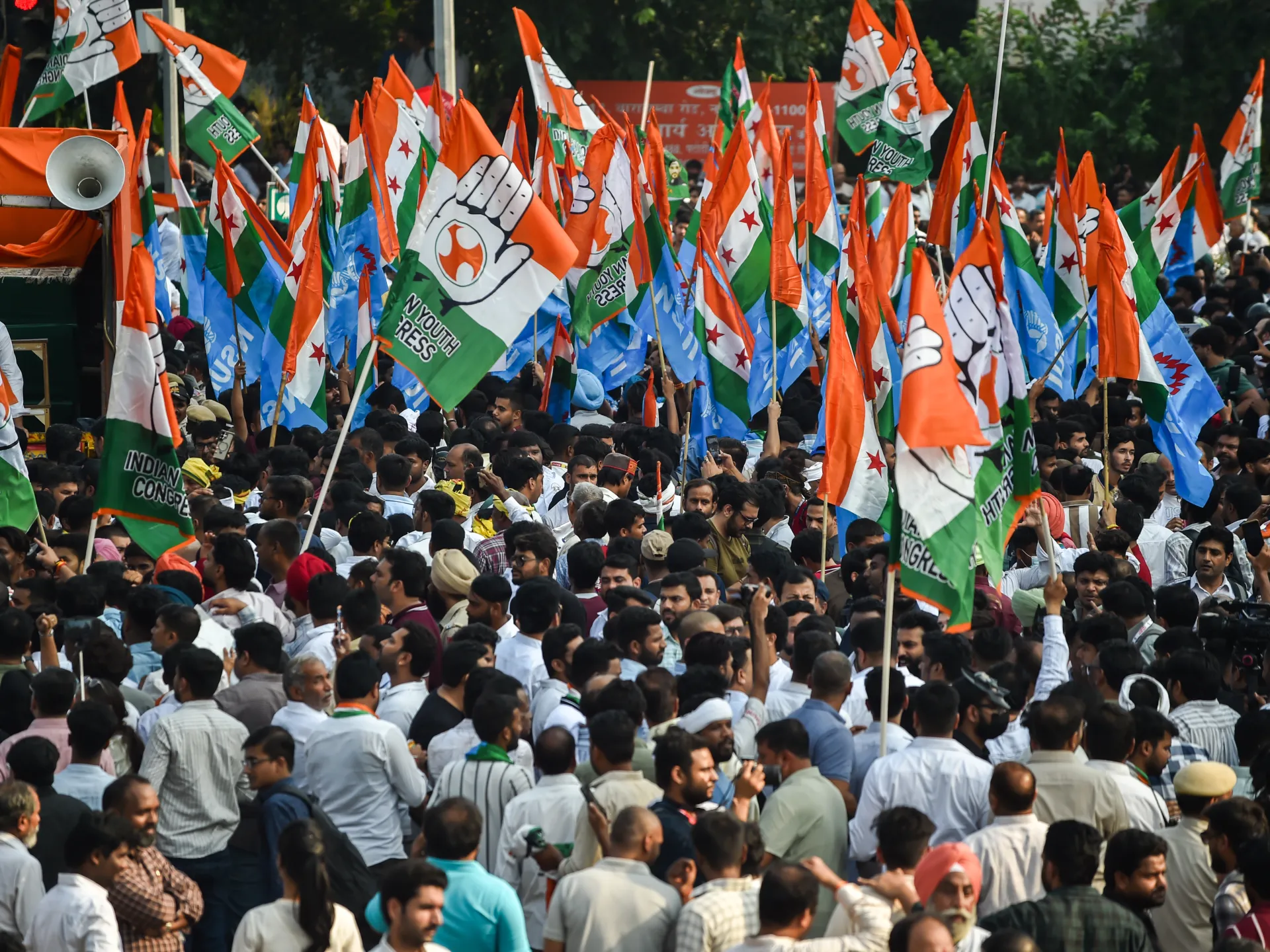
周末,数千名要求印度首席选举委员员古亚内什·库马尔辞职的抗议者在新德里面临大规模拘留和警方的严厉镇压。这些示威活动汇聚了青年活动人士和反对党,焦点在于印度选民名单中超过1.3亿个名字被删除,引发了对印度民主现状的深刻质疑。
Over the weekend, thousands of protesters demanding the resignation of India’s chief election commissioner, Gyanesh Kumar, faced mass detentions and a heavy police crackdown in New Delhi. The demonstrations, which have brought together youth activists and opposition parties, centre on the removal of more than 130 million names from India’s electoral rolls, raising profound questions about the state of Indian democracy.
这些删除是印度选举委员会(ECI)所进行的有争议的“特别强度修订”(SIR)的结果。ECI 定期修订选民名单,以增加新选民并删除已故或永久迁出者的名字。上一次强度修订是在2003-2004年完成的。然而,当前的SIR之所以前所未有,是因为其规模、程序的任意性和越界性,以及随后出现的大规模剥夺选举权。此次行动对穆斯林、女性、移民和其他边缘化群体的影响尤为严重,同时也引发了对执政党印度人民党(BJP)在比哈尔邦和西孟加拉邦选举胜利合法性的质疑。
The deletions are the result of the controversial Special Intensive Revision (SIR) undertaken by the Election Commission of India (ECI). The ECI periodically revises electoral rolls to add new voters and remove the names of those who have died or permanently moved away. The last intensive revision was completed in 2003-2004. What makes the current SIR unprecedented, however, is its scale, the arbitrariness and overreach of its procedures, and the mass disenfranchisement that has followed. The exercise has disproportionately affected Muslims, women, migrants and other marginalised communities while also raising questions about the legitimacy of the ruling Bharatiya Janata Party’s (BJP’s) electoral victories in Bihar and West Bengal.
ECI和执政党都以“净化”的语言为这次行动辩护。在种姓社会中,这种修辞既令人深感不安,又具有揭示性。支撑此次行动的官僚程序和技术基础设施 barely 掩盖了其意图:在印度制造两种公民阶层,一种通过投票权拥有政治声音,另一种则被降至哲学家乔治·阿甘本所称的“裸生命”状态。
Both the ECI and the ruling party have defended the exercise by using the language of “purification”. In a caste society, that rhetoric is deeply troubling but also revealing. The bureaucratic procedures and technological infrastructure underpinning the exercise barely mask its intention to create two classes of citizenship in India, one endowed with political voice through the right to vote and the other reduced to what the philosopher Giorgio Agamben calls “bare life”.
SIR的意图、程序和结果揭示了一种阴险的设计:最大限度地排除选民,而非提升选民参与度。这背离了普遍成年选举权的承诺,而普遍成年选举权是印度宪政民主的基石。选举委员会最初将政府发放的Aadhaar卡从SIR期间用于选民身份验证的文件名单中排除,据说是因为它被认为是“过度包容”。如果这还不足以暴露该行动的排他性意图,那么选举委员会在西孟加拉邦SIR期间发明的“逻辑差异”这一类别肯定暴露了这一点。
The SIR’s intent, procedures and outcomes reveal a sinister design: to maximise voter exclusions rather than enhance voter participation. This subverts the promise of universal adult suffrage, a cornerstone of India’s constitutional democracy. The ECI initially excluded the government-issued Aadhaar card from the list of documents accepted for voter verification during the SIR, supposedly because it was considered “overinclusive”. If that did not expose the exercise’s exclusionary intent, the ECI’s invention of the category “logical discrepancy” during the West Bengal SIR certainly did.
这种伪法律创新占到了孟加拉邦近900万被删除选民名单中的270万人。要求提供教育证书、土地记录、遗产文件和家谱作为证据,也给贫困和边缘化选民带来了沉重负担,特别是在那些仍陷于大规模贫困、土地匮乏和普遍文盲的地区。随着“举证责任”转移到普通选民身上,SIR旨在实现其最初设定的目标:大规模删除选民名单,继而导致剥夺选举权。
This pseudo-legal innovation accounted for 2.7 million of the nearly 9 million names removed from electoral rolls in Bengal. The demand for educational certificates, land records, legacy documents and family trees as evidence also places a heavy burden on poor and marginalised voters, especially in regions still reeling under mass poverty, landlessness and rampant illiteracy. With the “burden of proof” shifted to ordinary voters, the SIR aims to achieve precisely what it set out to do: mass deletions and consequent disenfranchisement.
定制化应用程序和在线表格、数字化选民名单以及要求以规定格式上传扫描文件,都被视为SIR效率和客观性的证据。但这种做法忽视了深度不平等社会中的数字鸿沟。技术并非脱离权力关系而运作。事实上,它常常成为一种控制机制。“逻辑差异”这一类别依赖于一款启用人工智能的应用程序ERONET(选举名单官员网络),该程序将选民的详细信息与较旧的选民名单进行比较,并标记姓名和家庭关系方面的差异。
Customised apps and online forms, digitised electoral rolls and the requirement to upload scanned documents in prescribed formats are all presented as evidence of the SIR’s efficiency and objectivity. But this approach ignores the digital divide in a deeply unequal society. Technology does not operate outside relations of power. In fact, it often serves as a mechanism of control. The category of “logical discrepancy” relies on an AI-enabled application, ERONET (Electoral Roll Officers’ Network), which compares voters’ details with older electoral rolls and flags discrepancies in names and family relationships.
此类集中式系统的使用也引发了关于谁控制选举数据以及这些差异如何被评估的质疑。女性尤其容易受到这些程序的影响。许多女性在婚后会改变姓名或地址,可能缺乏建立与较旧选民记录关联所需的文件。对女性的过度排除表明,表面上看似中立的技术程序如何强化了现有不平等,并削弱了人们的政治声音。
The use of such centralised systems has also raised questions about who controls electoral data and how these discrepancies are assessed. Women are particularly vulnerable to these procedures. Many change their names or addresses after marriage and may lack the documents needed to establish links with older electoral records. The excessive exclusion of women demonstrates how ostensibly neutral technological procedures can reinforce existing inequalities and weaken people’s political voice.
SIR 表面的中立性与其效果背道而驰,其影响沉重地落在弱势和边缘群体身上。在宗教少数群体中,全国穆斯林因删除而承受了特别沉重的负担。在孟加拉,据报道,穆斯林占因“逻辑差异”被删除选民登记的270万人中的约65%。仅有19个特别设立的法庭处理超过380万起申诉,实际上的纠正程序对许多被排除的选民而言仍然难以触及。
The SIR’s purported neutrality is at odds with its effects, which fall heavily on the weak and the marginalised. Among religious minorities, Muslims across the country bear a particularly heavy burden of deletions. In Bengal, Muslims reportedly accounted for about 65 percent of the 2.7 million people removed from electoral rolls on grounds of “logical discrepancy”. With only 19 specially constituted tribunals to handle more than 3.8 million appeals, the corrective process in effect has remained inaccessible to many excluded voters.
在海得拉巴,194万名被标记为“缺席、迁移、死亡和重复”(ASDD)类别下的删除对象。据估计,这些条目中有40.7%似乎属于穆斯林选民,而穆斯林仅占该市人口的30%。在海得拉巴老城的一些选区,被标记为删除的名字中穆斯林占比高达80%。同样的模式在国家首都地区德里重复出现,届时现有选民近三分之一未出现在SIR草案名单中。
In Hyderabad, 1.94 million names were marked for deletion under the “absent, shifted, dead and duplicate” (ASDD) category. An estimated 40.7 percent of those entries appeared to belong to Muslim voters, compared with Muslims’ 30 percent share of the city’s population. In some constituencies in Hyderabad’s Old City, Muslims accounted for as much as 80 percent of the names marked for deletion. The pattern is repeated in the National Capital Region, Delhi, where nearly one-third of the existing electorate was missing from the draft SIR roll.
研究指出,在少数族裔和移民人口较多的地区以及非正式和未经授权定居的居民中,排除率特别高。穆斯林被不成比例地排除,表明SIR表面上无人情味的官僚体系实际上与印度右翼的社会和政治议程存在意识形态上的契合。
Studies flag especially high rates of exclusion in areas with large minority and migrant populations and among residents of informal and unauthorised settlements. The disproportionate exclusion of Muslims suggests an ideological alignment between the SIR’s ostensibly impersonal bureaucracy and the social and political programme of the Hindu right.
作为政治和意识形态工具,该行动已被证明具有双重效力。通过对特定社会群体(如穆斯林)进行大规模选民删除,它有助于削弱印度人民党(BJP)主要竞争对手的选举基础。在SIR之后,比哈尔邦和西孟加拉邦的选举呈现出可辨识的模式。在2020年比哈尔邦立法议会选举中,由人民党(RJD)领导的联盟在得票率上仅以0.03个百分点之差败给了由印度人民党领导的联盟。
As a political and ideological instrument, the exercise has proved to be doubly potent. Through mass deletion of voters from targeted social categories, such as Muslims, it has contributed to shrinking the electoral base of the BJP’s principal rivals. The elections in Bihar and Bengal after the SIR suggest a discernible pattern. In the 2020 Bihar Assembly elections, the Rashtriya Janata Dal (RJD)-led alliance lost to the BJP-led alliance by just 0.03 percentage points in vote share.
相比之下,在2025年选举中,在从现有名单中删除680万名选民并新增210万名选民之后,印度人民党联盟的领先优势扩大至近9个百分点。对2026年西孟加拉邦立法议会选举的分析也表明,SIR删除在选举结果中发挥了决定性作用。该行动在印度人民党历来难以获得支持的地区,对穆斯林、移民和贫困选民产生了不成比例的影响。
In contrast, in the 2025 elections after the removal of 6.8 million names from the existing rolls and the addition of 2.1 million new voters, the BJP alliance’s lead increased to nearly 9 percentage points. Analysis of the 2026 Bengal Assembly elections also points to the decisive role SIR deletions played in the electoral outcome. The exercise disproportionately affected Muslim, migrant and poorer voters in districts where the BJP had historically struggled to gain support.
在许多由印度人民党赢得的选区中,被删除或存在争议的选民人数超过了该党的胜利差距。
In many constituencies won by the BJP, the number of deleted or disputed voters exceeded the party’s margin of victory.
此外,该官僚行动强化了更大的意识形态项目——打造“纯粹印度教徒”的国家。它还为驱逐“罗兴亚人”、“渗透者”和“孟加拉国人”的呼声提供了正当性,这些词被用作穆斯林的暗语,有助于在宗派线上两极分化选举。尽管孟加拉印度教徒和其他人也发现他们的名字被从选民名单中删除,但在宗派紧张的选举运动中围绕SIR的政治话语将穆斯林描述为可疑群体,危及他们的公民和社会权利。
Furthermore, the bureaucratic exercise reinforces the larger ideological project of a “pure Hindu” nation. It has also legitimised calls for the expulsion of “Rohingyas”, “infiltrators” and “Bangladeshis”, terms used as dog whistles for Muslims, helping to polarise elections along communal lines. Although Bengali Hindus and others also found their names removed from electoral rolls, the political messaging around the SIR in a communally charged election campaign cast Muslims as a suspect community, imperilling their civil and social rights.
可以预见的是,新当选的印度人民党政府在比哈尔邦和西孟加拉邦采取行动,剥夺了那些在选民名单中被删除的人的公共分配制度福利。
Predictably, the newly elected BJP governments in Bihar and Bengal moved to deny Public Distribution System benefits to those who found their names expunged from the electoral rolls.
因此,SIR 受到对一个肮脏且非法入侵者的想象的推动,认为必须将其驱逐以维护现有秩序。它延续了由最高法院监督的阿萨姆邦公民登记册(NRC),该登记册使该邦190万居民(主要是孟加拉语使用者)实际上沦为无国籍人士。它也类似于2019年《公民身份修正法案》,该法案引入了基于宗教的公民身份获取差异,这是对共和国世俗结构的冒犯。
The SIR is thus fuelled by the imagined spectre of a vile and illicit intruder who must be expelled to preserve the existing order. It follows the Supreme Court-supervised National of Citizens (NRC) in Assam, which left 1.9 million of the state’s residents, mostly Bengali speakers, essentially stateless. It also resembles the Citizenship Amendment Act of 2019, which introduced religiously differentiated access to citizenship, an affront to the republic’s secular structure.
最近成立的负责评估因“非法渗透”和“宗教及社会群体”中“异常”人口变化而在印度各地发生的人口变化的高级别人口变化委员会,同样出自一脉相承的思路。最终,SIR 是多种工具之一,旨在将被视为对印度教民族国家构想构成威胁的社会群体和社区刑事化、剥夺选举权和夺取国籍。
The recently established High-Level Committee on Demographic Change, mandated to assess demographic changes occurring across India due to “illegal infiltration” and “abnormal” population changes among “religious and social communities”, is cut from the same cloth. Ultimately, the SIR is one of several instruments at play to criminalise, disenfranchise and denationalise social groups and communities considered inimical to the Hindutva vision of an ethnic state.