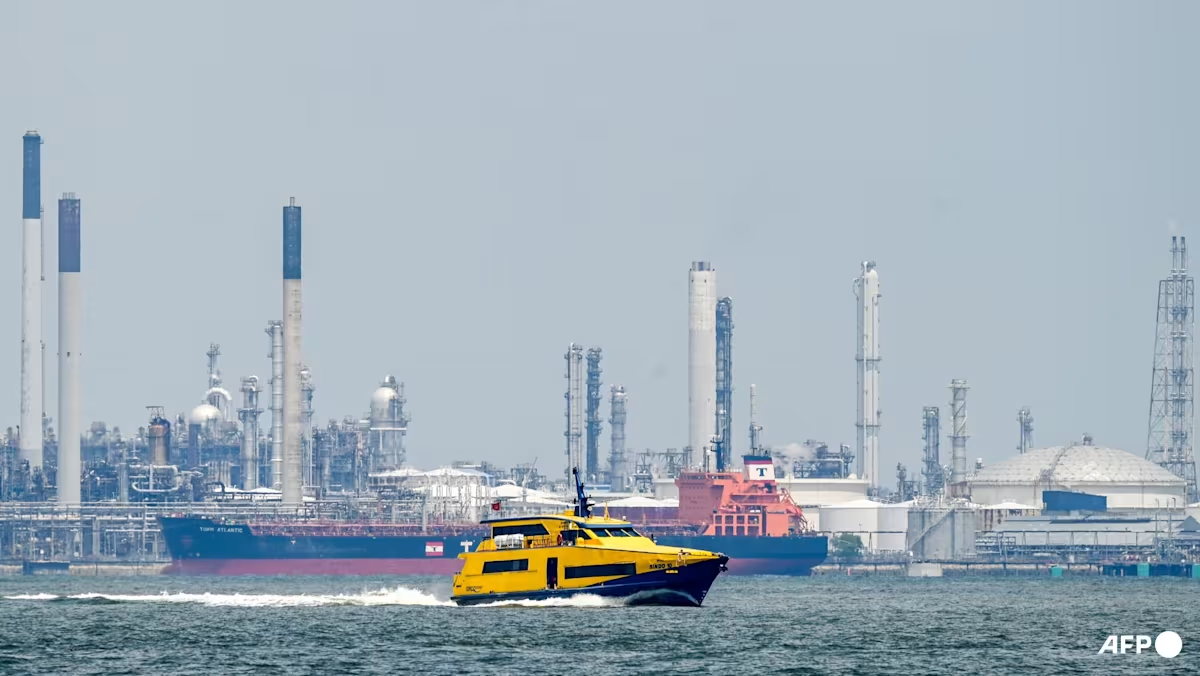
新加坡:国际能源署(IEA)一份新报告警告称,东南亚国家的能源消耗虽创历史新高,但对进口燃料的依赖日益加深,使该地区易受供应中断和价格冲击的影响。
SINGAPORE: Southeast Asian countries are using more energy than ever but becoming increasingly reliant on imported fuel, leaving the region vulnerable to supply disruptions and price shocks, warns a new report by the International Energy Agency (IEA).
该报告于周一(10月5日)发布,正值东南亚国家联盟(ASEAN)能源部长会议于10月7日在马尼拉召开前夕,部长们预计将审查区域燃料安全措施。
The report, published on Monday (Oct 5), came ahead of an Association of Southeast Asian Nations (ASEAN) Energy Ministers meeting in Manila on Oct 7 where the ministers are expected to review regional fuel-security measures.
自2月28日以来,该地区持续面临来自中东的燃料供应中断,当时美国和以色列对伊朗发动袭击,促使伊朗实际上封锁了霍尔木兹海峡这一关键航运通道。
The region continues to grapple with fuel supply disruption from the Middle East since Feb 28, when the United States and Israel launched strikes on Iran, prompting Iran to effectively block the Strait of Hormuz, a key shipping passage.
国际能源署——该机构敦促该地区实现能源来源和供应路线多元化,在可行的情况下更多利用国内资源,并扩大能源效率和电气化应用——表示将在东盟会议上展示其主要调查结果。
The IEA – which urged the region to diversify energy sources and routes of supply, make greater use of domestic resources where viable and expand energy efficiency and electrification – said it would present its key findings at the ASEAN meeting.
在2月28日之前,东南亚约60%的原油进口和三分之一的天然气进口源自中东。
Around 60 per cent of Southeast Asia's crude oil imports and one-third of its natural gas imports originated from the Middle East before Feb 28.
国际能源署在周一(10月5日)发布的《东盟能源安全回顾》中表示,此次中断凸显了严重依赖进口、供应路线高度集中以及多元化程度有限的风险。
The disruption has highlighted the risks of heavy import dependence, concentrated supply routes and limited diversification, the IEA said in its ASEAN Energy Security Review published on Monday (Oct 5).
分析人士指出,当前危机再次提醒人们,东南亚仍极易受到外部能源冲击的影响。
Analysts said that the current crisis is a reminder of how exposed Southeast Asia remains to external energy shocks.
新加坡伊萨·尤索夫研究院(ISEAS – Yusof Ishak Institute)东盟研究中心高级研究员兼协调员林乔安(Joanne Lin)告诉CNA:“该地区能源需求快速增长,而许多国家对进口石油和天然气的依赖日益加深。因此,中东发生的事态能非常迅速地转化为国内更高的能源和运输成本、通胀压力以及供应安全担忧。”
“The region’s energy demand is growing rapidly, while many countries are becoming more dependent on imported oil and gas. As such, what happens in the Middle East can very quickly translate into higher energy and transport costs, inflationary pressures and concerns over supply security at home,” Joanne Lin, senior fellow and coordinator of the ASEAN Studies Centre at Singapore’s ISEAS – Yusof Ishak Institute, told CNA.
东南亚电力需求预计将在2026年至2030年间以每年约5.4%的速度增长,国际能源署指出,这主要受工业扩张、制冷需求以及数据中心快速发展的驱动。过去十年间,该地区人均能源需求增长了约30%。
Southeast Asia’s electricity demand is expected to grow by about 5.4 per cent a year between 2026 and 2030, driven by industrial expansion, cooling needs and the rapid development of data centres, IEA noted. The region’s energy demand has grown by about 30 per cent per person over the past decade.
根深蒂固的依赖 东南亚的脆弱性远不止于对进口石油的依赖。
A DEPENDENCE THAT RUNS DEEP Southeast Asia's vulnerability goes beyond its reliance on imported oil.
国际能源署报告称,石油需求持续增长,而区域原油产量自1990年代高峰以来已下降40%,导致对进口原油的依赖自2015年以来上升了30%。
Oil demand continues to grow while regional crude production has fallen by 40 per cent since its peak in the 1990s, increasing dependence on imported crude, which has risen by 30 per cent since 2015, the IEA report said.
报告补充道,该地区面临一系列相互关联的能源安全挑战,包括对进口石油和液化天然气(LNG)的依赖日益加深。东南亚约89%的石油产品需求由区域内炼厂满足。
The region faces a broad set of interconnected energy security challenges, including rising dependence on imported oil and liquefied natural gas (LNG), it added. Around 89 per cent of petroleum product demand is met by refineries within Southeast Asia.
但国际能源署指出,这些炼厂仍严重依赖进口原油,其中大部分来自中东。该地区约45%的成品油源自中东原油。
But those refineries still depend heavily on imported crude, much of it from the Middle East, the IEA said. Around 45 per cent of refined oil products in the region are derived from Middle Eastern crude.
这意味着,即使东南亚不直接从中东进口成品油,也可能面临中东供应中断的风险。
That means Southeast Asia can be exposed to Middle East disruptions even when it is not directly importing finished fuel from the region.
部分炼厂还配置为加工海湾产油国常供应的中质和重质原油,这使得快速转向替代供应来源变得更加困难。
Some refineries are also configured to process the medium and heavy crude grades commonly supplied by Gulf producers, making it harder to switch quickly to alternative sources.
储备可争取时间 本周,东南亚能源部长预计将讨论《东盟石油安全框架协议》(APSA)下的措施,包括各国在严重供应中断时如何协调行动。但该地区依靠应急储备的能力参差不齐。
STOCKPILES CAN BUY TIME This week, Southeast Asian energy ministers are expected to discuss measures under the ASEAN Framework Agreement on Petroleum Security, or APSA, including how countries could coordinate during severe supply disruptions. But the region's ability to rely on emergency stocks varies widely.
国际能源署的评估显示,一些国家仍在建设战略石油储备之中。印尼虽有储备框架但未付诸实施,而菲律宾正在规划建立战略石油储备。
The IEA's review shows that some countries are still developing strategic petroleum reserves. Indonesia has a reserve framework but has not implemented it, while the Philippines is planning a strategic petroleum reserve.
据国际能源署称,新加坡并未设立战略石油储备,不过该国要求发电企业必须储备柴油,作为天然气的备用能源。
Singapore does not have a strategic petroleum reserve, according to the IEA, although power generators are required to maintain diesel stocks as a backup to natural gas.
东盟能源中心警告称,若中东地区的石油供应出现严重中断,东盟地区最终石油消费量的近28%都可能面临供应缺口风险。这一情况使得建立区域石油储备机制的提议愈发紧迫。
The ASEAN Centre for Energy has warned that a severe disruption to Middle East supplies could put oil volumes equivalent to nearly 28 per cent of ASEAN's final oil consumption at risk. That has added urgency to proposals for regional stockpiling.
2026年4月7日,一名男子在马尼拉的加油站为摩托车油箱加油。
A man refuels the tank of a motorcycle at a petrol station in Manila on Apr 7, 2026.
据路透社报道,菲律宾能源部长莎伦·加林表示,马尼拉正在探讨区域性燃料储存合作方案,未来还有可能建设相关储存设施。
Philippine Energy Secretary Sharon Garin has said Manila is exploring regional fuel-storage arrangements and could host future storage facilities, Reuters reported.
分析人士指出,石油储备机制能在供应突发中断时起到缓冲作用,但并非长期解决方案。
Analysts said stockpiling serves as a buffer when there is a sudden disruption, rather than a long-term solution.
林女士说道:“建设及维护这些储备设施的成本高昂,而东南亚各国的储存能力与财政资源水平参差不齐。基于这些原因,要求每个国家都独自维持大规模石油储备或许并不现实。”她补充道,石油储备机制应作为整体应对方案的一部分,该方案还应涵盖能源来源多元化、区域能源互联互通以及更完善的危机应对准备措施。
“They are … costly to build and maintain, and Southeast Asian countries have very different levels of storage capacity and fiscal resources. It may not be realistic for every country to maintain very large reserves on its own due to these reasons,” said Lin. She added that stockpiling needed to be part of a much wider approach that includes diversification, regional connectivity and better crisis preparedness.
新加坡李光耀公共政策学院环境与可持续发展研究所副所长兼所长陈修杰也认同储备机制的“明显局限性”。他表示:“即便储备量能维持30天、60天甚至90天的需求,面对长期供应中断也收效甚微。此外,储备机制还需要相应的储存设施、资金支持、库存管理流程,以及关于所有权与使用规则的明确规定。”他强调,各国政府还需制定需求管理方面的应急预案。
Reserves have “obvious limitations”, agreed Tan-Soo Jie Sheng, assistant professor and director of the Institute for Environment and Sustainability at Singapore’s Lee Kuan Yew School of Public Policy. “A 30-, 60- or 90-day reserve does little for a prolonged disruption,” he said. “Stocks also require storage capacity, financing, inventory management and very clear rules on ownership and usage.”He stressed that governments also need contingency plans for managing demand.
“举例来说,哪些燃料用途是必不可少的?公共交通系统该如何应对需求增长?若油价上涨,又该如何帮助弱势群体?是应该实施全面的汽油补贴,还是采取更具针对性的援助措施呢?” “因此,储备能源具有重要意义,因为它能为我们争取时间。不过,争取时间绝不等同于解决能源脆弱性的根本成因,”他警告道。
“For instance, which uses of fuel are essential, how can public transport absorb additional demand, how should vulnerable households be supported if prices rise, should support come through blanket petrol subsidies or more targeted assistance?”“Stockpiling is therefore valuable because it buys time. But buying time should not be confused with addressing the structural causes of energy vulnerability,” he warned.
国际能源署指出,东盟各国可通过制定更完善的能源储备政策、采取需求侧调控措施以及明确危机应对流程来提升国内石油供应韧性。
The IEA said ASEAN countries can strengthen domestic oil resilience by building more robust stockholding policies, demand-side measures and clear crisis procedures.
报告称,拥有本土资源的国家可探索如何通过制定有利于投资的可预测财政政策来提高石油产量。
For instance, countries with domestic resources can consider how to increase production through predictable fiscal regimes that are supportive of investment, the review said.
陈苏还提到另一个问题:该地区许多国家都对汽油及其他燃料价格实施补贴或调控。 “虽然这些措施对保护民众利益至关重要,尤其是在油价骤涨时期,但补贴并不能消除外部冲击——它只是将成本从家庭预算转嫁到了政府预算上,”他说。 “此外,当消费者不受高油价影响时,在供应紧张的情况下他们也就缺乏减少燃料消耗的动机。”
An additional issue is that many countries in the region subsidise or regulate petrol and other fuel prices, said Tan-Soo. “While this is important for protecting households, especially during a sudden price spike, the subsidy does not make the external shock disappear as it transfers the cost from household budgets to the government budget,” he said. “And if consumers are insulated from higher prices, there is also less incentive to reduce fuel consumption when supply is tight.”
此次危机也引发了人们对东盟现有能源安全机制落地效率的质疑。尽管各成员国已就加强合作达成共识,但具体计划的实施仍需时日。
The crisis has also raised questions about how quickly ASEAN's existing energy-security mechanisms can be put into practice. While member states have agreed on the principle of greater cooperation, implementing those plans can take time.
国际能源署强调,随着该地区能源需求持续增长,将区域承诺转化为信息共享、应急响应及跨境支援等实际机制将愈发重要。
Turning regional commitments into working arrangements for information sharing, emergency response and cross-border support will be increasingly important as the region’s energy needs grow, IEA said.
不过,协调一致的能源安全措施“必须兼顾各国的具体国情”。报告指出,目前仍有多个东盟国家高度依赖煤炭用于发电和工业生产,因此确保煤炭稳定供应并探索多元化能源路径势在必行。
But coordinated energy security measures “must reflect different national circumstances”. Several ASEAN countries still rely significantly on coal for power generation and industry and will need a reliable supply and ways to diversify away from it, it cited.
根据国际能源署的数据,2024年煤炭分别占印度尼西亚和菲律宾发电量的71%与62.5%。
In 2024, coal accounted for 71 per cent of Indonesia’s electricity generation and 62.5 per cent of the Philippines’ electricity generation, according to IEA data.
展望未来:可再生能源与电动汽车有望逐步降低该地区对进口石油的依赖;而加强各国间的电力互联则能在能源供应紧张时实现电力资源共享。分析人士指出,当前的危机或将加速这一转型进程。
LOOKING BEYOND THE NEXT CRISIS Renewable energy and electric vehicles could reduce the region's exposure to imported oil over time, while greater electricity interconnection could allow countries to share power when supplies are tight. The current crisis could accelerate that shift, analysts said.
“美伊冲突凸显了东南亚地区对中东石油与天然气的高度依赖,”东南亚研究所高级研究员伊恩·斯托里说道,“此次危机将促使东南亚各国加大可再生能源及清洁能源的利用力度,尤其是核能,从而提升能源安全水平。”新加坡拉惹勒南国际研究院高级研究员阿尔文·周补充道,加强区域电力互联可进一步助力能源结构多元化。
“The US-Iran conflict has shone a spotlight on Southeast Asia’s dependence on the Middle East for oil and gas,” said Ian Storey, a senior fellow at the ISEAS-Yusof Ishak Institute. “The crisis will act as a catalyst for Southeast Asian countries to strengthen their energy security by increasing the use of renewable energy resources … and clean energy sources, especially nuclear power.”Greater regional electricity connectivity could complement that diversification, said Alvin Chew, Senior Fellow at the S Rajaratnam School of International Studies (RSIS) in Singapore.
“该地区亟需构建区域电网,以便整合各方产能以满足整体能源需求,”他说道,“可再生能源是重要发展方向,核能也将成为提供基荷电力的关键来源。”据国际能源署估算,2025年至2040年间,该地区需投入约270亿美元用于推进各项电力互联项目,这一数额相当于自20世纪70年代以来东南亚地区相关投资总额的14倍左右。
“It is important that the region establish a regional grid whereby there could be aggregation of regional production capacity to meet its energy demand,” he said. “Renewable energy is one area, while nuclear will be another for the supply of baseload energy." The IEA estimates that around US$27 billion will be needed between 2025 and 2040 for the current pipeline of regional interconnection projects, roughly 14 times the investment in Southeast Asian interconnectors since the 1970s.
国际能源署在报告中指出:“该地区拥有丰富的可再生能源资源,包括太阳能、风能、水电、地热能以及可持续生物质能,这些资源有助于实现电力供应多元化,并降低对进口化石燃料的依赖。”
“The region’s diverse renewable energy resource potential, including solar, wind, hydropower, geothermal and modern sustainable biomass, can support greater diversification of electricity supply while reducing exposure to imported fossil fuels,” IEA’s review stated.
这张拍摄于2021年1月22日的照片显示,一名工作人员正在检查位于新加坡北部近海、马来西亚柔佛州对岸的海上浮动太阳能发电场。
This photograph taken on Jan 22, 2021 shows a worker checking a floating solar power farm at sea, off Singapore's northern coast just across the Malaysian state of Johor.
国际能源署指出,有必要采取各项措施以提高可再生能源在能源结构中的占比,比如建设灵活性更强的发电厂、提升电网承载能力等。
Measures to integrate a greater share of renewables in the energy mix are needed – flexible power plants and enhanced grid capacity, among others, IEA said.
新加坡国立大学能源研究所执行主任彼得·戈文达萨米表示,清洁能源有助于增强能源安全。
Clean energy can strengthen security, said Peter Govindasamy, executive director of the Energy Studies Institute at the National University of Singapore.
“可再生能源、能效提升、电气化以及分布式能源系统虽然常被置于气候议题的框架下讨论,但从能源安全角度来看它们同样至关重要。每一单位的本土太阳能、风能、水电或地热能发电都能降低我们受国际燃料市场波动影响的程度,”他说道。
“Renewables, efficiency, electrification, and distributed energy systems are often discussed in climate terms, but they are equally important from a security perspective. Every unit of domestic solar, wind, hydro, or geothermal generation reduces exposure to international fuel markets,” he said.
林女士指出,能源多样化意味着构建更加多元的能源结构:加大对可再生能源与能效提升领域的投入,强化电网与储能能力,同时建立可在危机时期提供支援的区域合作机制。
Diversification means having a more diversified energy mix, investing in renewables and efficiency, strengthening grids and storage, and developing regional arrangements that can provide support during a crisis, said Lin.
“我们的目标应当是提供更多选择,避免用一种依赖模式去取代另一种依赖模式,”她说道。
“The objective should be to have more options and avoid replacing one dependency with another,” she said.
国际能源署还指出,东南亚地区若能推广使用更节能的汽车、建筑、家用电器及工业设备,便可有效减轻燃料进口压力并缓解电力系统的运行负担。
In the meantime, Southeast Asia can ease pressure on its fuel imports and power systems by having more efficient vehicles, buildings, appliances and industrial equipment, the IEA said.
“能效提升往往是强化能源安全最具成本效益的手段:它能降低能源需求、减少能源支出,还能减少能源基础设施投资需求及燃料进口量,”该机构说道。
“Energy efficiency is often the most cost-effective means of strengthening energy security because it reduces energy demand, lowers energy expenditure, and reduces the need for energy infrastructure investment and fuel imports,” it said.