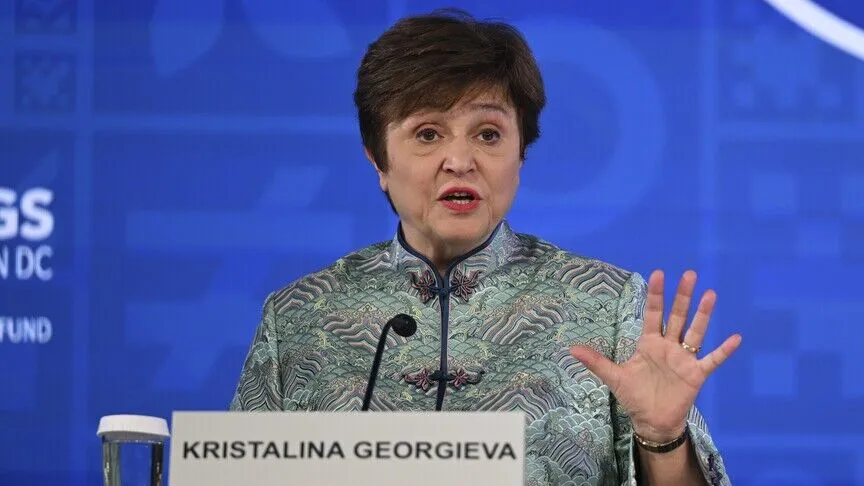
国际货币基金组织负责人周三指出,全球经济正承受着能源供应受阻带来的负面影响,以及人工智能需求增长带来的正面推动,面临双重压力。
The global economy faces dual pressures from a negative energy supply shock and a positive artificial intelligence (AI) demand shock, the head of the International Monetary Fund said Wednesday.
克里斯塔利娜·格奥尔基耶娃在泰国年度会议前夕于新加坡发表演讲,强调全球经济必须应对三大主要趋势:人工智能的迅速崛起、持续高企的能源价格以及创纪录水平的公共债务。
Kristalina Georgieva delivered a speech in Singapore ahead of the upcoming annual meetings in Thailand; highlighting that the global economy must navigate three major crosscurrents, which are the rapid arrival of AI, persistently high energy prices and record levels of public debt.
她指出,全球公共债务总额预计很快将超过国内生产总值(GDP)的100%,达到二战结束以来的最高水平。格奥尔基耶娃还提到,发达经济体的债务负担最为沉重。
She noted that global public debt tracks to soon exceed 100% of the gross domestic product, reaching its highest levels since the end of World War II. Advanced economies stand out as the worst offenders with some of the highest gross debt loads, Georgieva said.
这位国际货币基金组织负责人强调,当前存在两股相反的力量在拉扯全球经济。
The managing director pointed out that opposite forces pull the global economy in two different directions.
她警告称,受运输成本及其他风险因素影响,目前石油价格仍维持在每桶100美元左右。此外,由于霍尔木兹海峡的航运安全受到威胁,海湾地区天然气供应也受到严重制约。
Georgieva warned that oil prices remain around $100 per barrel due to transport costs and other risks. She emphasized that natural gas supply from the Gulf remains severely impaired because shipping through the Strait of Hormuz faces threats.
在技术领域,格奥尔基耶娃表示,目前人工智能硬件及相关产品已占全球商品贸易总额的10%以上。她预测,只要各国妥善应对,人工智能有望每年为全球经济增长贡献0.5%的增幅。
On the technology front, Georgieva stated that AI hardware and related products now account for more than 10% of world goods trade. She added that AI could eventually deliver up to 0.5% of extra world growth annually if countries manage it correctly.
最后,格奥尔基耶娃敦促各国经济决策者不要再拖延必要举措,尽快制定切实可行的财政整顿计划。同时,鉴于人工智能基础设施建设、能源冲击及高额公共债务都在推高通胀水平,她建议各国央行在货币政策上继续保持审慎偏紧的立场。
Georgieva urged economic policymakers to stop delaying necessary actions and implement credible fiscal consolidation plans. She also advised central banks in various countries to maintain a prudently hawkish bias in their monetary policies because the AI building boom, energy shocks and high public debt fuel inflation.