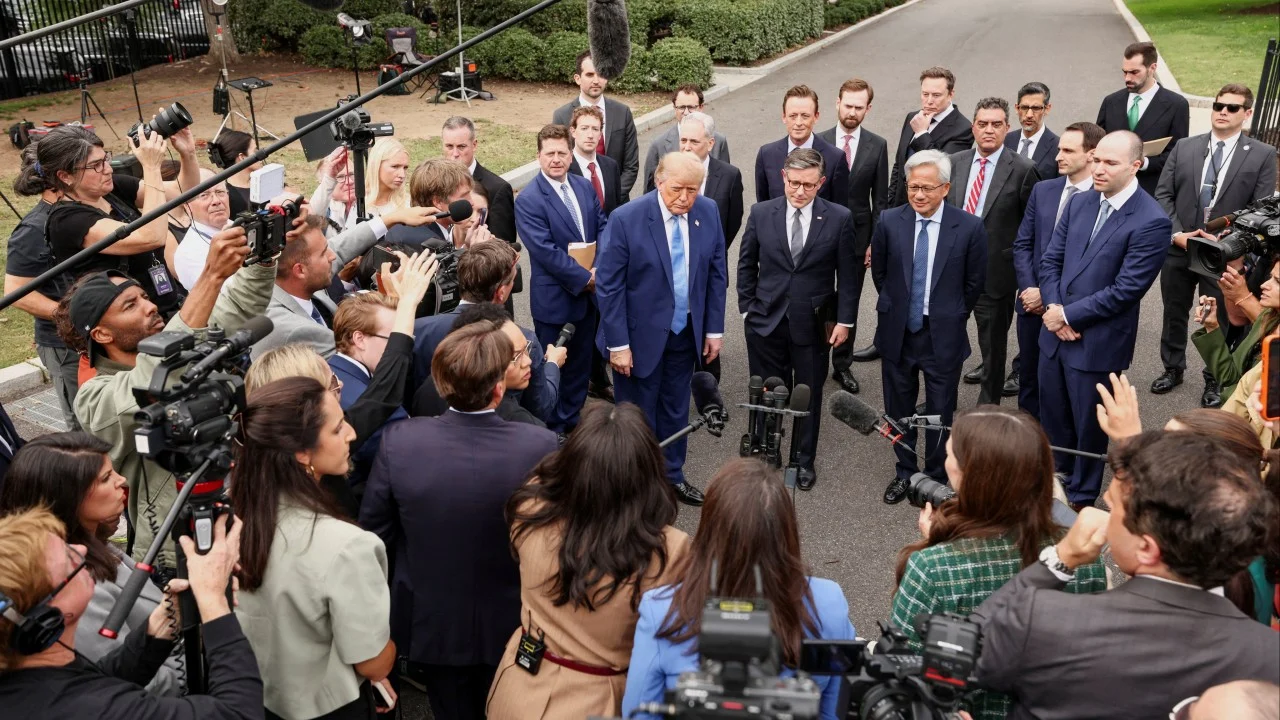
美国总统唐纳德·特朗普与多位知名科技高管并肩站立,宣布了一项自愿协议,即旨在管理风险的主要人工智能(AI)公司将采用内部控制和监测、外部审计以及董事会监督等措施。白宫称这些承诺具有“道义上的约束力”,但该协议并未建立起类似的法律执行体系。
Standing alongside prominent technology executives, US President Donald Trump announced a voluntary agreement under which major artificial intelligence (AI) companies will use internal controls and monitoring, outside audits and board oversight to manage risks. The White House calls the commitments “morally binding”, but the accord does not create a comparable system of legal enforcement.
该行政府的逻辑是可以理解的。人工智能正日益成为经济和军事实力的来源,华盛顿不希望监管措施拖慢美国公司的发展速度,尤其是在中国迅速赶上的背景下。但当一个国家开发了世界上许多最强大的人工智能系统时,它告诉世界其他国家,这些系统的建设者应该主要依靠自我监管,这会出现什么情况呢?
The administration’s logic is understandable. AI is becoming a source of economic and military power, and Washington does not want regulation to slow American companies while China races ahead. But what happens when the country developing many of the world’s most powerful AI systems tells the rest of the world that the companies building them should largely police themselves?
这个问题不能仅局限于华盛顿。一个人工智能模型可能在加利福尼亚州开发,依靠美国的计算基础设施进行训练,融入销往欧洲的产品中,最终在亚洲或非洲使用。它的影响并不会止于开发国的边界。
That question cannot be confined to Washington. A model may be developed in California, trained on American computing infrastructure, incorporated into a product sold in Europe and eventually used in Asia or Africa. Its consequences do not stop at the boundary of the country where it was developed.
欧洲采取了不同的方法。欧盟的《人工智能法》对通用人工智能模型的提供者施加了具有法律约束力的义务,并对被认为存在系统性风险的系统提出了额外要求。与此同时,中国正将国内监管与积极影响国际讨论相结合。
Europe has taken a different approach. The European Union’s AI Act imposes binding obligations on providers of general-purpose AI models, with additional requirements for systems considered to pose systemic risk. Meanwhile, China is combining domestic regulation with an active effort to influence the international discussion.
中国政府对这一努力一直言论清晰。其《2025年全球人工智能治理行动计划》呼吁加强国际合作、提升能力建设,并建立更具包容性的人工智能治理框架。2025年7月,北京还提出成立“世界人工智能合作组织”,并表示联合国应当保持全球人工智能治理的主要渠道。这一组织于2026年7月从提议转变为现实,当时有29个国家签署了在上海建立该组织的协议。
The Chinese government has been explicit about that effort. Its 2025 Global AI Governance Action Plan calls for international cooperation, capacity building and a more inclusive framework for AI governance. In July 2025, Beijing also proposed the World AI Cooperation Organisation and said the United Nations should remain the principal channel for global AI governance. That organisation moved from proposal to reality in July 2026, when 29 countries signed the agreement establishing it in Shanghai.
我最近的工作使我得出结论:中国越来越将国际科学交流、标准和网络视为其更广泛的技术战略的一部分。北京正试图将更大的技术自主性与更广泛的全球科学技术事务作用相结合。
My recent work has led me to conclude that China increasingly sees international scientific engagement, standards and networks as part of its broader technological strategy. Beijing is trying to combine greater technological self-reliance with a more expansive role in global scientific and technological affairs.
技术领导力和制度领导力并非同一回事。美国可以在人工智能的重要领域保持领先,同时仍可能失去对支配该技术规则的影响力。
Technological leadership and institutional leadership are not the same thing. The United States can remain ahead in important areas of AI and still lose influence over the rules that govern the technology.
如果华盛顿的主要答案是说,前沿人工智能公司应该自我监管,那么其他政府会注意到这一点。有些人可能会采用类似的安排。另一些则会得出结论:具有跨国边界影响的系统不能主要依靠企业判断。可能的结果是一片规则拼图:在自愿的美国框架下运营的美国公司、面临详细法律要求的欧洲用户,以及其他地方政府制定自己的方式。
If Washington’s principal answer is that frontier AI companies should police themselves, other governments will take notice. Some may adopt similar arrangements. Others will conclude that systems with consequences across national borders cannot be left primarily to corporate judgment. The likely result is a patchwork of rules: American companies operating under a voluntary US framework, European users facing detailed legal requirements, and governments elsewhere developing their own approaches.
发展中国家在这场辩论中有着特别大的 stake。许多国家希望获得人工智能的经济利益,但不希望成为永久性的技术消费者,其标准由他国制定。中国理解到这一关切,并将人工智能能力建设和与全球南方的合作纳入其国际信息之中。
Developing countries have a particular stake in this debate. Many want the economic benefits of AI without becoming permanent consumers of technologies whose standards are established elsewhere. China has understood this concern and has made AI capacity building and cooperation with the Global South part of its international message.
其于2025年9月发布的《AI+国际合作倡议》呼吁政策交流、实务合作和更广泰的人工智能利益共享。华盛顿应该认识到,在那些寻求在制定技术规则方面拥有更大发言权的国家中,这个信息具有吸引力。
Its September 2025 AI+ International Cooperation Initiative calls for policy exchange, practical cooperation and broader access to the benefits of AI. Washington should recognise the appeal of that message in countries seeking a larger voice in setting technological rules.
此外,美中在人工智能领域的竞争可能会演变成安全困境。即使任何一方政府都不想要军备竞赛,竞争压力也可能产生类似军备竞赛的效果。
Moreover, US-China competition in AI could become a security dilemma. Neither government has to want an arms race for competitive pressures to produce something resembling one.
正因如此,华盛顿与北京之间的沟通才至关重要。在讨论实际问题之前,两国政府无需先解决彼此之间的重大分歧:危险模型的能力应如何测试?发生严重人工智能事故后,应共享哪些信息?网络安全风险应如何应对?军事应用在何种情况下需要额外的安全措施?
That is why communication between Washington and Beijing matters. The two governments do not need to settle their larger differences before discussing practical questions: how should dangerous model capabilities be tested? What information should be shared after a serious AI incident? How should cybersecurity risks be handled? When should military applications require additional safeguards?
卡罗琳·瓦格纳和我曾倡导“智慧开放”:在采取适当安全保护措施的同时,维持中美之间富有成效的科研交流渠道。此前与理查德·阿普尔鲍姆合作的研究则主张,应继续开展合作,以在美国保持对快速变化的中国科研体系影响力的同时,维持其可见度。
Caroline Wagner and I have argued for “smart openness”: maintaining useful channels of US-China scientific engagement while applying appropriate security safeguards. Earlier work with Richard Applebaum made the case for continued engagement to preserve US visibility in China’s rapidly changing research system.
这一切都不需要设立一个统一的全球人工智能监管机构。更实际的目标应更为具体:为严重风险制定通用术语,建立大致可比较的测试程序,设立重大事故报告机制,在网络安全领域开展合作,并确保政府之间在人工智能相关事件跨越国界时拥有可靠的沟通渠道。
None of this requires a single global AI regulator. A more practical objective would be narrower: common terminology for serious risks, broadly comparable testing procedures, mechanisms for reporting major incidents, cooperation on cybersecurity and reliable channels through which governments can communicate when an AI-related event crosses borders.
联合国已开始构建部分此类能力。今年2月,大会任命了40名成员组成“人工智能独立国际科学小组”,旨在对该技术带来的机遇、风险与影响进行独立评估。
The United Nations is beginning to build some of that capacity. In February, the General Assembly appointed 40 members to an Independent International Scientific Panel on AI, intended to provide independent assessments of the technology’s opportunities, risks and impacts.
问题不在于美国是否应该效仿欧洲的《人工智能法案》或中国的治理模式,而在于华盛顿是否有意参与塑造一项美国企业和研究机构拥有巨大影响力的技术的国际规则。
The issue is not whether the US should copy Europe’s AI Act or China’s governance model. It is whether Washington intends to help shape international rules for a technology in which American companies and research institutions have enormous influence.
如果华盛顿对国际治理问题基本保持不作为,欧洲将继续实施监管,中国将继续推广自身理念,而发展中国家则不得不在两者之间寻求平衡。
If Washington leaves the international governance question largely unresolved, Europe will continue to regulate, China will continue promoting its own ideas, and developing countries will have to navigate between them.
美国曾经的技术领导地位,使其在国际规则的制定中拥有非凡的影响力。人工智能为华盛顿提供了另一个机遇。关键在于,美国是选择利用这种影响力,还是任由规则由相互竞争的国家、企业和国际机构零散地塑造出来。这一选择不仅将影响美国的人工智能产业,还将塑造围绕该产业形成的国际技术秩序。
American technological leadership once gave the US an extraordinary voice in shaping international rules. AI offers Washington another opportunity. The choice is whether to use that influence – or allow the rules to emerge piecemeal from competing governments, companies and international institutions. The answer will shape not only America’s AI industry, but the international technological order around it.