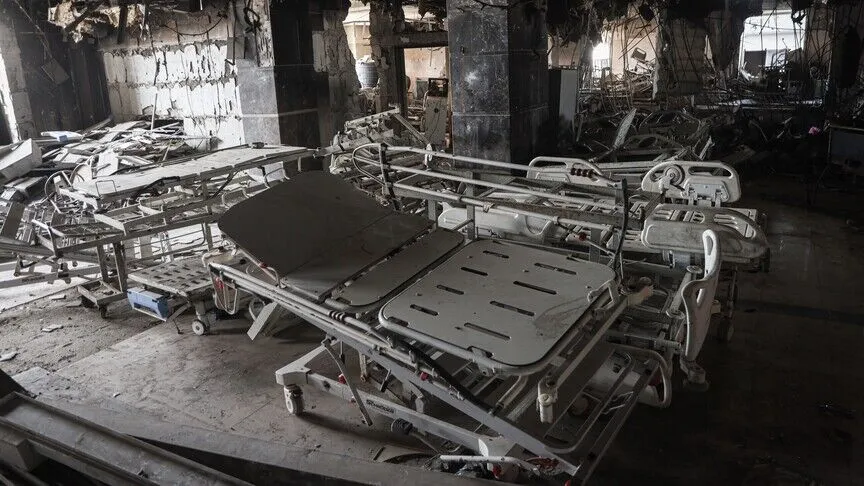
以色列三年的战争摧毁了加沙的医疗系统,削弱了其提供最基本医疗服务的能力,并破坏了应对人口需求的能力。
Three years of Israeli war have devastated Gaza’s healthcare system, reducing its capacity to deliver even the most basic health services and undermining its ability to respond to needs of the population.
以色列的残酷军事行动杀死了数百名医务人员,摧毁了医疗设施,并使医疗团队无法获得照顾病人所需的设备和用品。受战争影响的医务人员和医疗设施根据世界卫生组织总干事特德罗斯·阿德汉诺姆·盖布雷耶苏斯的介绍,过去三年间至少有1,700名医务人员在920多次对医疗机构和人员的袭击中丧生。这些袭击还影响了386辆救护车。
Israel's brutal military campaign has killed hundreds of health workers, destroyed health facilties, and deprived medical teams of equipment and supplies needed to care for patients. Health workers and medical facilities hit by war According to WHO chief Tedros Adhanom Ghebreyesus, more than 1,700 health workers have been killed in at least 920 attacks on health facilities and staff in the last three years. The attacks had also affected 386 ambulances.
联合国卫生机构的最新情况更新称,目前加沙医疗服务中仅剩下2,253张住院床位、104张重症监护室床位、343张产科床位、384张急诊床位和126台孵化器,却需要服务超过200万人口。医疗系统陷入崩溃边缘在2023年10月战争爆发之前,加沙地带有36家医院在医疗系统中运行。
The UN health agency’s latest situation update said only 2,253 inpatient beds and just 104 ICU beds, 343 maternity beds, 384 emergency room beds and 126 incubators remain available across Gaza health services to serve a population of over 2 million people. Healthcare system pushed to the brink Before the war in October 2023, the Gaza Strip had 36 hospitals operating within its healthcare system.
根据最新的世界卫生组织评估,目前仅有19家医院部分维持运营。基层医疗保健也遭受严重影响。
According to the latest World Health Organization (WHO) assessment, only 19 remain partially fuctioning now. Primary healthcare has also been severely affected.
在233家基层医疗机构中,仅有146家仍在运营,使得大量人口难以获得日常和专科医疗服务。短缺加剧了患者的压力由于以色列限制“双用途”物品,包括胰岛素在内的基本药品、诊断设备和燃料出现严重短缺。
Of the 233 primary health care facilities, only 146 are functional, leaving large parts of the population with limited access to routine and specialized care. Shortages deepen pressure on patients Due to Israeli restrictions on "dual-use" items, essential medicines including insulin, diagnostic equipment and fuel are in critically short supply.
癌症患者无法持续获得治疗,肾病患者难以获得定期透析,孕妇和新生儿面临更高的风险。
Cancer patients are unable to consistently access treatment, kidney patients face difficulties obtaining regular dialysis, and mothers and newborns face increased risks.
数千人也遭受了截肢——通常是在没有麻醉的情况下——以及其他改变生活的伤害,而康复服务仍然严重不足。诊断能力仍受设备、消耗品、发电机燃料和备件短缺的限制。
Thousands of people have also suffered amputations – often without anesthesia – and other life-changing injuries, while rehabilitation services remain severely limited. Diagnostic capacity remains restricted by shortages of equipment, consumables, generator fuel and spare parts.
总体而言,估计数据显示,加沙每年至少有2000人被诊断出患有癌症,有45000名患者患有心血管疾病,超过100万人患有精神障碍。
Overall, estimates showed at least 2,000 people in Gaza are being diagnosed with cancer each year, 45,000 patients are living with cardiovasculur diseases, and over 1 million have mental disorders.
与此同时,超过50万名育龄女性无法获得包括产前护理、产后护理、计划生育和性传播感染治疗在内的基本医疗服务。
Meanwhile, more than 500,000 women of reproductive age lack access to essential services including antenatal care, postnatal care, family planning, and management of sexual transmitted infections.
流离失所和卫生条件恶劣加剧了健康风险。医疗系统的崩溃,叠加水资源、卫生设施、住所和生活条件的恶化,使问题更加严重。
Displacement and poor sanitation add to health risks The collapse of healthcare is compounded by deteriorating water, sanitation, shelter and living conditions.
根据世卫组织的估计,仍有约170万人流离失所,其中许多人生活在过度拥挤的环境中,缺乏足够的住所、水和卫生设施。
According to WHO estimates, about 1.7 million people remain displaced, many living in overcrowded conditions with inadequate shelter, water and sanitation.
卫生部门和人道主义组织持续报告呼吸道感染、皮肤病和急性水样腹泻,而水污染和卫生条件不足则增加了进一步爆发疫情的风险。
Health authorities and humanitarian organizations continue to report respiratory infections, skin diseases and acute watery diarrhoea, while water contamination and inadequate sanitation increase the risk of further outbreaks.
对于无法在当地接受治疗的患者而言,医疗撤离仍然是至关重要的生命线。
For patients whose conditions cannot be treated locally, medical evacuation remains a critical lifeline.
世卫组织在一份9月份的报告中表示,自2023年10月以来,已有超过13760名患者从加沙通过医疗渠道撤离,但仍有数万人需要该地区无法提供的专科治疗。世卫组织驻被占领的巴勒斯坦领土代表莱因希尔德·范德韦尔特在4月份的一次媒体简报会上表示,重建加沙的医疗系统预计将在未来五年内需要100亿美元。
In a September report, the WHO said over 13,760 patients have been medically evacuated from Gaza since October 2023, but tens of thousands more still require specialized care unavailable inside the territory. Reinhilde Van de Weerdt, WHO representative for the occupied Palestinian territory, told a media briefing in April that rebuilding Gaza's healthcare system will require an estimated $10 billion over the next five years.