作者:Juliana Liu随着欧洲与中国濒临贸易战,北京面临一个严峻的选择:做出让步以缓和紧张局势,抑或煽风点火。北京应选择前者,而逐步取消对汽车制造商海外销售奖励的激励措施,正是合适的起点。
By Juliana Liu With Europe and China on the brink of a trade war, Beijing has a stark choice: offer a concession to defuse tension or fan the flames. It should opt for the former, and phasing out an incentive that rewards its carmakers for selling more vehicles overseas is a good place to start.
取消数十年来一直支持中国出口商的税收返还政策,并不会单方面解决欧盟的所有抱怨。但这将有助于解决最大的摩擦来源之一——目前每日超过10亿美元的对华贸易逆差。更重要的是,此举将表明北京愿意做出妥协,是一个切实的积极信号。
Eliminating a tax rebate that has supported Chinese exporters for decades won’t unilaterally resolve all of the European Union’s complaints. But it would begin to address one of the biggest sources of friction — a trade deficit with China that now exceeds $1 billion a day. More importantly, such a move would be a tangible gesture that Beijing is willing to compromise.
此外,还有另一个重要原因。中国正试图遏制价格战以及困扰本国汽车行业的过剩产能。缩减并最终取消电动汽车13%的增值税出口返还政策,将给实力较弱的制造商带来更大压力,迫使其缩减规模或退出市场,同时让实力最强的出口商凭借自身优势展开竞争。
There’s another compelling reason. China is trying to curb a price war and the excess factory capacity that’s plaguing its auto industry. Scaling down and eventually ending the value-added tax export rebate of 13% for electric vehicles would put more pressure on weaker manufacturers to downsize or fold, while leaving the strongest exporters to compete on their own merits.
这项税收返还政策可追溯至1985年,当时中国迫切希望赚取外汇并提升制造业能力。此类激励措施在全球范围内普遍存在,它们允许出口商获得用于生产海外销售商品的原材料所缴纳税款的返还。2021年,北京已开始削减钢铁、铝、铜、太阳能产品和电池等已足够成熟、不再需要此类激励的行业的补贴。
Rebates date back to 1985, when China was eager to earn foreign exchange and build its manufacturing capability. Such incentives are common globally. They allow exporters to recover taxes paid on the raw materials used to make goods sold overseas. In 2021, Beijing began cutting payments for industries such as steel, aluminum, copper, solar products and batteries that had matured enough to no longer need them.
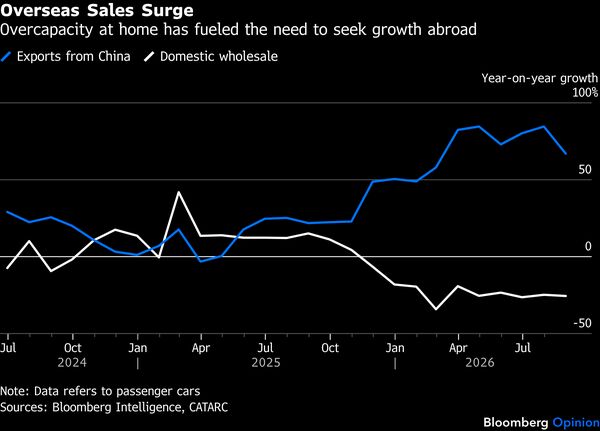
电动汽车如今已准备好加入这一行列。尽管中国汽车制造商已经向海外销售汽车超过20年,但直到最近,他们才开始巩固自己作为全球最大清洁能源汽车出口商的地位。据中国乘用车协会近期估计,今年他们预计将在海外销售超过1200万辆汽车——包括轿车、客车和卡车——比2025年的830万辆增长44%。在欧洲,中国品牌从五年前几乎无人知晓,到如今已经超越了韩国和日本竞争对手的销量。
EVs are now ready to join that list. Even though Chinese carmakers have been selling abroad for more than 20 years, they only began cementing their position as the world’s top exporters of clean-energy cars recently. They’re expected to sell more than 12 million vehicles overseas this year —including passenger cars, buses and trucks — up 44% from 8.3 million in 2025, the China Passenger Car Association estimated recently. In Europe, Chinese marques went from being virtually unknown five years ago to outselling South Korean and Japanese rivals.
然而,赢得市场份额并非问题所在。让欧洲政策制定者担忧的是,这些市场增长对就业的影响。汽车制造仍然是欧洲最重要的产业之一,直接通过供应商网络为数百万工人提供就业岗位。上周,德国最大的工会警告称,大众汽车公司终止了多项工资协议,并明确提及来自中国制造商日益加剧的价格压力,这可能引发劳资纠纷。这家德国巨头已经宣布裁员10万人,而宝马公司则计划削减多达8000个岗位。
But winning market share isn’t the problem. What concerns European policymakers is the impact of those gains on jobs. Carmaking remains one of the continent’s most important industries, supporting millions of workers directly and through supplier networks. Germany’s largest union warned of a labor dispute last week after Volkswagen AG terminated a number of wage deals, explicitly citing intensifying price pressure from Chinese manufacturers. The German giant has already announced 100,000 job cuts, while BMW AG plans to eliminate up to 8,000 positions.
这种压力也解释了为何当欧盟贸易委员马罗斯·塞夫科维奇周四与中国同行王文涛会面时,北京需要提供的不仅仅是报复威胁。逐步取消出口退税政策,可以在不采用配额或其他销售限制措施的情况下,缩小中国制造商所享有的成本优势。
The pressure helps explain why Beijing needs to offer something beyond the threat of retaliation when EU Trade Commissioner Maros Sefcovic sits down with his Chinese counterpart Wang Wentao on Thursday. Phasing out the export rebate would narrow the cost advantage enjoyed by Chinese manufacturers without resorting to quotas or other restrictions on where they can sell.
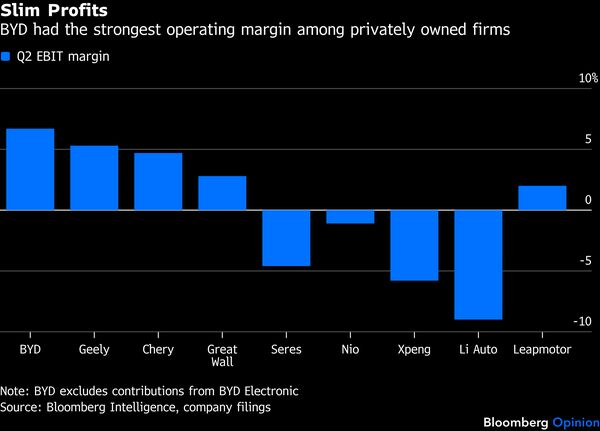
取消补贴绝非小事。多年的价格竞争已使汽车行业的许多企业仅以微薄的利润运营,因此这项补贴显得尤为宝贵。去年,相关支付总额高达3180亿美元。取消补贴将迫使制造商提高价格、寻找更多成本削减方案,或者干脆承受损失。根据比亚迪公司海外汽车业务的收入和销售量,我粗略估算,今年上半年这项税收优惠的价值可能高达168亿元人民币(约合25亿美元),超过了该公司同期123亿元人民币的净利润。
Removing the rebate would be no small matter. Years of price competition have left much of the car industry operating on thin margins, making it particularly valuable. Last year, payments totaled $318 billion. Taking it away would force manufacturers to raise prices, find further cost savings or just absorb the hit. My back-of-the-envelope estimate based on BYD Co.’s overseas automotive revenue and sales volume suggests the tax break could have been worth as much as 16.8 billion yuan ($2.5 billion) in the first half of the year. That’s more than the company’s 12.3 billion yuan net profit in the same period.
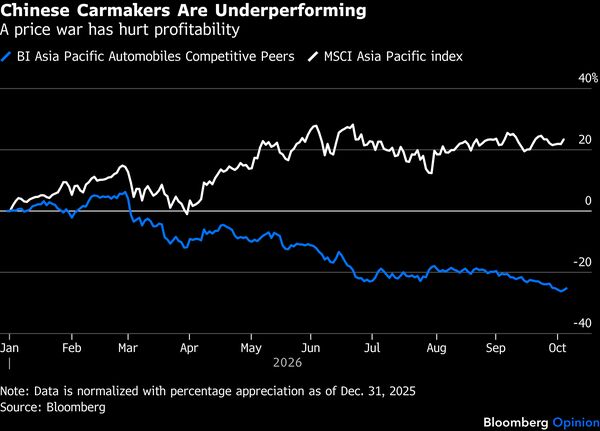
尽管如此,仍值得在一年或更长时间里逐步取消这项补贴。汽车经销商及其他海外合作伙伴早已清楚了解这一税收优惠,他们已经开始将这项激励措施纳入定价预期,并从中国出口商处争取到了让步。
Still, it’s worth scrapping the rebate gradually over the course of a year or more. The tax benefit is well understood by car dealers and other overseas partners who have already started to incorporate the incentive into their pricing expectations and extracted concessions from Chinese exporters.
过去两年,北京一直在努力遏制恶性竞争,因为这种竞争不断压低价格和利润。逐步取消这项激励措施将有助于实现这一目标。规模较大、财务状况更稳健的制造商将更有能力承受损失,而实力较弱的企业则会面临更大的亏损压力。
Beijing has spent the past two years trying to rein in the cutthroat competition that has pushed prices and profits lower. Phasing out the incentive would support that goal. Manufacturers with scale and stronger balance sheets would be better placed to shoulder the deficit, while weaker players would come under even greater pressure to cut their losses.
中国工业政策的目标是培育具有全球竞争力的电动汽车制造商。如今这一目标已经实现,最成功的汽车制造商需要证明,他们能够在没有纳税人补贴的情况下在海外取得成功。取消补贴将让欧洲及其他市场获得喘息之机,同时迫使过度拥挤的汽车行业最终走向成熟。
The goal of China’s industrial policy was to build globally competitive EV manufacturers. Now that the objective has been achieved, the most successful carmakers need to demonstrate that they can win overseas without taxpayers footing the bill. Ending the rebate would give Europe and other markets a break, while forcing the overcrowded auto industry to finally grow up. OPIN To contact the author of this story: at jliu2060@bloomberg.net