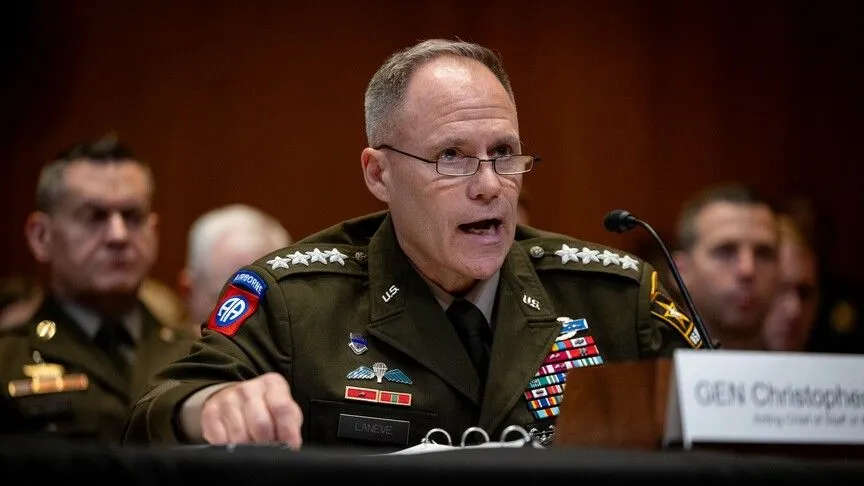
美国陆军正在推出新的作战指导原则,旨在将其作战理论、训练、兵力结构和技术投资与不断演变的战场威胁保持一致,陆军副参谋长克里斯托弗·拉内夫上将周二表示。
The US Army is introducing new operational warfighting guidance designed to align its doctrine, training, force structure, and technology investments with evolving battlefield threats, Gen. Christopher LaNeve, vice army chief of Staff, said Tuesday.
他在美国陆军协会艾森豪威尔午餐会上发表讲话。拉内夫同时担任代理陆军参谋长,他阐述了陆军的新指导原则《陆军如何作战》,该文件上周发布。
Speaking at the Association of the United States Army’s Eisenhower Luncheon, LaNeve, who is also serving as acting army chief of staff, outlined the army’s new guidance, How the Army Fights, which was published last week.
该文件旨在建立一个共同框架,以明确陆军在联合军事行动中的作用,汲取包括俄乌冲突和中东地区战斗在内的冲突经验。
The document is intended to establish a common framework for how the army contributes to joint military operations, drawing lessons from conflicts including Russia’s war in Ukraine and fighting in the Middle East.
拉内夫说:“坦率地说,《陆军如何作战》并不是多域作战的背离。该文件的目的是提供作战指导,使每一位领导人都能理解自己在多域作战中的角色。”
"Upfront, I’ll just say, How the Army Fights is not a departure from Multi-Domain Operations. The purpose of this document is to provide warfighting guidance that enables every single leader to understand their role in Multi-Domain Operations," he said.
拉内夫表示,战场正在发生变化,其特点是无人机系统广泛使用、持续监视、远程火力精度日益提高,以及网络和空间能力的重要性日益凸显,这要求陆军调整其作战方式。
LaNeve said the changing battlefield, characterized by widespread unmanned aerial systems, persistent surveillance, increasingly precise long-range fires, and the growing importance of cyber and space capabilities, requires the army to adapt how it fights.
他概述了新指导原则核心的四个相互关联的要素:汇聚、打击、近战和持久作战。
He outlined four interconnected elements at the heart of the new guidance: convergence, strike, close battle, and endurance.
他说:“这四个陆军力量要素共同为美国陆军在联合部队中提供了作战和赢得国家战争的能力。”
"Together, these four elements of land power provide the US Army, within the Joint Force, the ability to fight and win our nation’s wars," he said.
陆军计划在其各个编制单位中扩大自主和无人系统的整合,包括引入专注于无人机系统和机器人的军事职业专长。
The army plans to expand the integration of autonomous and unmanned systems across its formations, including the introduction of military occupational specialties focused on unmanned aerial systems and robotics.
拉内夫还宣布,在自主战争司令部成立之后,未来与概念司令部已更名为美国陆军未来与自主系统司令部,简称FASCOM。他说:“陆军并未放弃现代化。我们正在为之奋进。”
LaNeve also announced that the Futures and Concepts Command had been redesignated the US Army Futures and Autonomous Systems Command, or FASCOM, following the establishment of the Autonomous Warfare Command. "The army is not turning its back on modernization. We are sprinting towards (it)," he said.
拉内夫呼吁国防工业合作伙伴支持陆军大规模部署有效技术的努力,强调创新必须直接与战场需求挂钩。
LaNeve called on defense industry partners to support army efforts to field effective technologies at scale, stressing that innovation must be linked directly to battlefield requirements.
他说,最终目标是保持陆军作为世界领先陆地力量的地位,并确保其随时准备好在国家需要时作出响应。
The ultimate objective, he said, is to preserve the Army’s position as the world’s leading land power and ensure it remains prepared to respond whenever the nation calls.