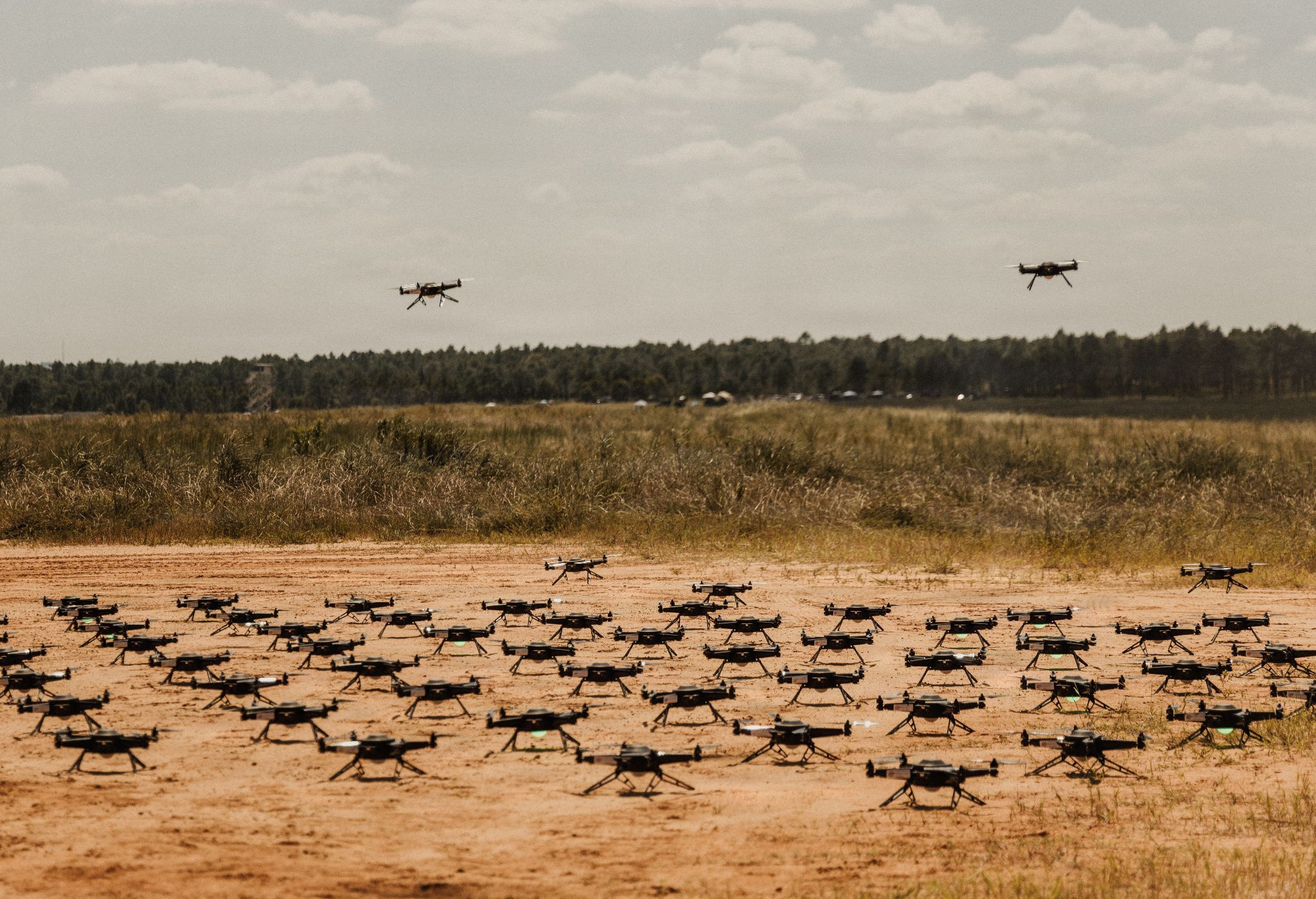
美国陆军最高军官试图向行业领袖保证,该军仍致力于现代化和自主系统,并在华盛顿特区美国陆军协会年会上的讲话中宣布,负责塑造未来部队的指挥部将更名。
The U.S. Army’s top officer sought to reassure industry leaders that the service remains committed to modernization and autonomous systems, announcing a new name for the command charged with shaping the future force during remarks at the Association of the U.S. Army’s annual meeting in Washington, D.C.
代理陆军参谋长克里斯托弗·拉内夫上将表示,陆军未来与概念司令部已更名为美国陆军未来与自主系统司令部,简称FASCOM。此次更名正值陆军围绕上周发布的新版《陆军作战方式》指导原则,调整武器采购、部队结构和训练之际,该指导原则阐明了陆军在未来战争中如何运用陆地力量。
Acting Army Chief of Staff Gen. Christopher LaNeve said that the Futures and Concepts Command has been redesignated as U.S. Army Futures and Autonomous Systems Command, or FASCOM. The change comes as the Army aligns its weapons purchases, force structure and training around new “How the Army Fights” guidance, which was published last week and explains how the service intends to wield land power in future wars.
拉内夫在演讲中对行业合作伙伴直接表示:“我们并未放弃现代化。”他还说:“我们正在冲刺前进。”并补充道:“我们在这样做时,也意识到资源并非无限,因而将负责任地推进。”拉内夫要求FASCOM通过实验和测试发展军级自主能力。
“We are not walking away from modernization,” LaNeve said, addressing the industry partners directly at one point in his speech. “We are sprinting towards, it,” he said, adding “and we are doing so responsibly with a recognition that resources are not endless.”LaNeve has charged FASCOM with developing corps-level autonomous capabilities through experimentation and testing.
根据周二发布的公告,该三星级司令部将围绕“以能力为基础的编队”展开,重点在于自主远程火力、防护、坦克、后勤和障碍物突破,并将包括陆军本月刚刚启用的首批390A机器人技术兵。
According to a Tuesday release, the three-star command will have “capability-based formations centered on autonomous long-range fires, protection, tanks, logistics and obstacle breaching,” and will include some of the Army’s first 390A Robotic Technicians, which were activated this month.
陆军表示,之所以选择这些能力,是因为它们能够影响机动作战,并符合上周指导原则中阐述的陆地力量的“四要素”:汇聚、打击、近战和持久作战。
The Army said it chose those capabilities based on their ability to affect maneuver and their alignment to the “four elements” of land power outlined in last week’s guidance: convergence, strike, close battle and endurance.
“此举不仅仅是关于无人机,”拉内夫在声明中表示,“FASCOM将率先探索利用自主能力覆盖所有作战职能的作战概念。”陆军最近因在欧洲关闭其试验性无人机营而受到批评——该营成立不到一年,旨在测试此类编制如何运作。据《华尔街日报》报道,终止该实验的决定是拉内夫所倡导的广泛“回归基础”方法的一部分,该实验最初是其前任兰迪·乔治的构想。
“This goes beyond drones,” LaNeve said in the release, “FASCOM will pioneer operational concepts that harness autonomous capabilities across all warfighting functions.”The Army has come under fire recently after shuttering its experimental drone battalion in Europe less than a year after launching the novel unit to test how such a formation could operate. According to The Wall Street Journal, the decision to end the experiment — the brainchild of LeNeve’s predecessor, Randy George — came as part of LeNeve’s broad “back-to-basics” approach.
九月,两党议员联名签署一封信,表达对取消600人编制的“无人突击营”的担忧。该营是作为第173空降旅的一部分成立的。立法者质疑美国将如何继续从乌克兰学习无人机作战。
In September, a bipartisan group of lawmakers signed a letter expressing concern about eliminating the 600-member “Unmanned Assault Battalion,” which was created as part of the 173rd Airborne Brigade. The legislators questioned how the U.S. would continue to learn drone warfare from Ukraine.
在九月的媒体圆桌会议上,美国陆军欧洲和非洲司令部代理司令克里斯托弗·诺里少将表示,美国陆军无人机作战的未来将分散于各个编制之中,而非集中于单一单位。
In a September media roundtable, Maj. Gen. Christopher Norrie, the acting Commanding General of U.S. Army Europe and Africa, said the future of the U.S. Army’s drone warfare is spread across formations, not condensed into one unit.
“在乌克兰和俄罗斯,你们看到那些军队成立了旅级乃至整个无人系统部队,而美国陆军的做法是去中心化;在所有单位中加速学习,”他说,并补充称,陆军计划在不久的将来将单向攻击无人机推广至排级。
“In Ukraine and Russia you’ve seen those armies create brigades and entire unmanned systems forces, whereas the U.S. Army’s approach has been to decentralize; to accelerate learning across all units,” he said, adding that the Army is aiming to push one-way attack drones to the squad level in the near future.