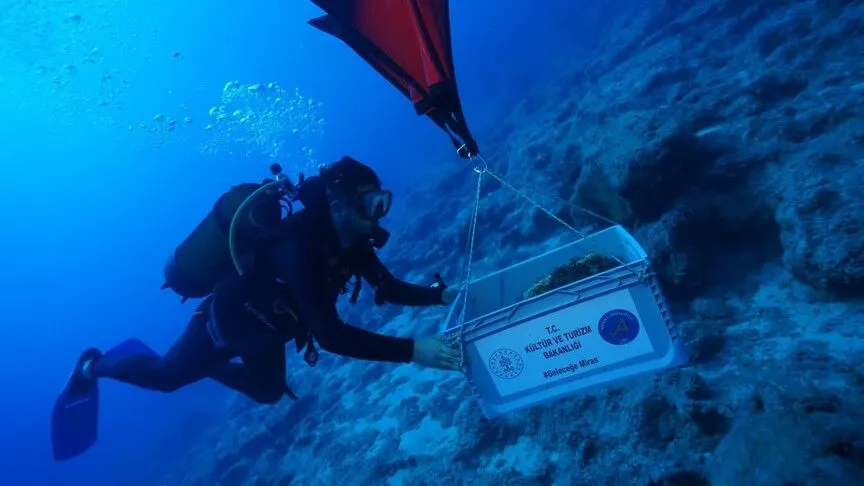
土耳其文化及旅游部长穆罕默德·努里·埃尔索伊周三宣布,在土耳其南部安塔利亚省凯科瓦岛附近的水下考古工作中,发现了距今4700年的古代陶罐。
Culture and Tourism Minister Mehmet Nuri Ersoy announced on Wednesday that underwater excavations near Kekova Island in Türkiye's southern Antalya province uncovered amphorae dating back 4,700 years.
埃尔索伊在社交媒体上介绍了这一发现,称该遗址为世界上最古老的沉船遗址。他写道:“在这片蓝色家园中,我们正发掘出世界上最古老沉船的遗迹。”
Ersoy shared details of the discovery on social media, describing the site as the world's oldest shipwreck. "In the Blue Homeland, we are bringing to light the traces of the world's oldest shipwreck," he said.
据埃尔索伊介绍,这些古代陶罐据信曾用于盛装橄榄油或葡萄酒,它们的发现为东地中海地区的海上贸易与文化交流提供了重要证据。
The ancient vessels, believed to have transported olive oil or wine, provide evidence of maritime trade and cultural exchange across the Eastern Mediterranean, according to Ersoy.
经黏土成分分析,这些陶罐可能产自约旦河谷地区的作坊;而在埃及、特洛伊和克里特岛发现的同类陶罐也印证了当时广泛的古代海上贸易网络的存在。
Clay analyses suggest the amphorae may have been produced in workshops in the Jordan Valley, while similar examples discovered in Egypt, Troy and Crete point to extensive ancient maritime trade networks, he said.
埃尔索伊特别提到其中一只陶罐,其表面带有九处不同标记及两个孔洞。据推测,该容器可能曾被用作制作奶酪或黄油的搅拌器,这一发现或可揭示古代航海者在长途航行中是否自行制作食物。
Ersoy highlighted one amphora featuring nine distinct markings and two holes in its body. The vessel, believed to have been used as a churn for making cheese or butter, could offer clues about whether ancient seafarers produced food during long voyages, he added.
该部长强调,土耳其将继续致力于发掘安纳托利亚地区的海洋历史,同时妥善保护水下文化遗产,以传承给后世。
The minister said Türkiye would continue uncovering Anatolia's maritime history while preserving underwater cultural heritage for future generations.