国际货币基金组织预计,亚太地区经济增长将在今年及明年放缓,警告称能源价格上涨以及人工智能热潮的任何回落都可能考验该地区的韧性。
The International Monetary Fund expects economic growth in the Asia-Pacific to slow this year and next, warning that rising energy prices and any pullback in the artificial-intelligence boom could test the region’s resilience.
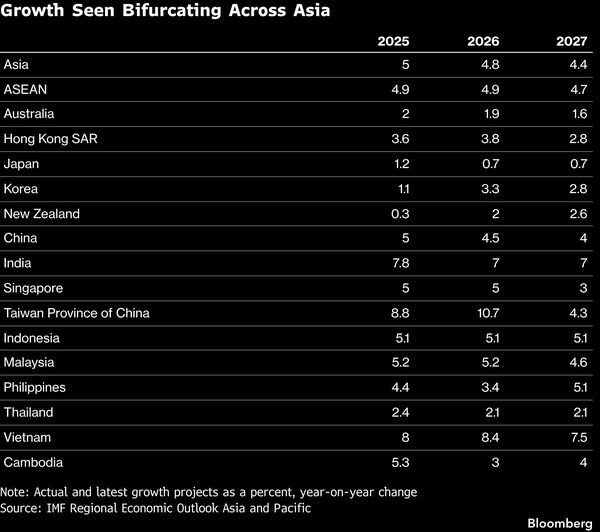
亚太地区的增长预计将在2026年达到4.8%,低于去年的5%,但高于基金会4月份的预测4.4%。基于华盛顿的基金在其10月份的地区经济展望报告中表示,这一增速将进一步放缓至2027年的4.4%。
Growth in the Asia-Pacific is projected at 4.8% in 2026, down from 5% last year but above the IMF’s April forecast of 4.4%. This will further moderate to 4.4% in 2027, the Washington-based fund said in its October regional economic outlook report.
国际货币基金组织上调了多数发达经济体的增长预测,对韩国、台湾和香港等受益于人工智能驱动的投资激增的经济体进行了“显著”上调。它还上调了对中国和印度的预期,但对面临更高通胀且未从技术需求中获得相当收益的国家的预测进行了下调。
The IMF raised its growth forecasts for most advanced economies, with projections revised up “sizably” for the likes of South Korea, Taiwan and Hong Kong that are reaping the benefits of the AI-driven investments surge. It also upgraded its outlook for China and India, while lowering predictions for countries facing higher inflation without comparable gains from technology demand.
这些修订凸显了半导体、数据中心及相关技术产品的强劲需求如何帮助亚洲部分地区抵御日益增长的经济压力。但这些收益分布不均,集中在融入全球技术供应链的经济体中,国际货币基金组织表示。
The revisions highlight how strong demand for semiconductors, data centers and related technology products has helped cushion parts of Asia against mounting economic pressures. But the gains have been uneven, concentrated in economies plugged into global technology supply chains, the IMF said.
“可以把孟加拉国、柬埔寨、老挝这样的国家想一想,这些国家都是进口石油的。它们从人工智能热潮中获益并不多。因此,这些国家更加脆弱,而且政策缓冲空间也更小,”国际货币基金组织亚洲及太平洋部门主管克里希纳·斯里尼瓦桑在接受彭博社采访时表示,并补充说,暴露于能源冲击但全球供应链融入程度较低的经济体面临更大风险。
“Think of countries like Bangladesh, Cambodia, Laos, all these countries are importing oil. They are not benefiting from the AI boom that much. So these countries are a lot more vulnerable and they also have fewer policy buffers,” said Krishna Srinivasan, director of the IMF’s Asia and Pacific Department, in an interview with Bloomberg, adding that economies exposed to energy shocks but less integrated into global supply chains face greater risks.
亚洲的一些国家已经开始将人工智能技术周期的放缓纳入考量。新加坡央行预计,人工智能热潮将在2027年下半年缓解,这呼应了全球政策制定者对万亿美元规模的投资热潮可持续性的更广泛担忧——该热潮正押注于人工智能以突破性速度发展。
Some countries in Asia are already beginning to factor in a moderation in the AI tech cycle. Singapore’s central bank is expecting the boom to ease in latter half of 2027, following broader concerns from global policymakers about the sustainability of the trillion-dollar investment bonanza that’s betting on AI evolving at breakneck speed.
“风险仍然偏向下行,”IMF在其报告中表示。“与人工智能相关的投资或资产估值的修正可能会对亚洲产生不成比例的影响,因为亚洲在全球技术供应链中处于核心位置。”该基金表示,新兴亚洲市场和发展中经济体的增长预计将从2025年的5.6%放缓至今年的5.1%,随后在2027年进一步降至4.9%。与此同时,该地区的发达经济体预计将在2026年增长3.2%,高于去年的2.5%,随后在2027年放缓至2%。
“Risks remain tilted to the downside,” the IMF said in its report. “A correction in AI-related investment or asset valuations could weigh disproportionately on Asia given its central role in global technology supply chains.”Growth in emerging Asian markets and developing economies is expected to slow to 5.1% this year from 5.6% in 2025, before easing further to 4.9% in 2027, the fund said. Advanced economies in the region, meanwhile, are projected to expand 3.2% in 2026, up from 2.5% last year, before moderating to 2% in 2027.
科技繁荣也推动了亚洲股市的上涨,今年地区科技股的估值涨幅快于其美国同行。IMF警告称,估值偏高、投资者杠杆增加以及市场集中度上升可能加剧显著动荡的风险。
The technology boom has also fueled a rally in Asian equities, with valuations of regional technology stocks rising faster than their US counterparts this year. The IMF warned that elevated valuations, growing investor leverage and market concentration could increase the risk of significant turbulence.
报告还指出的其他风险包括:中东地区长期冲突可能导致能源价格保持高位;全球主权债券收益率上升;以及可能扰乱农业、渔业和水力发电的强烈厄尔尼诺现象,这将进一步加剧食品和能源通胀。
Other risks cited by the report include a prolonged conflict in the Middle East that could keep energy prices elevated, rising global sovereign bond yields and a severe El Niño episode that could disrupt agriculture, fisheries and hydropower generation, adding to food and energy inflation.