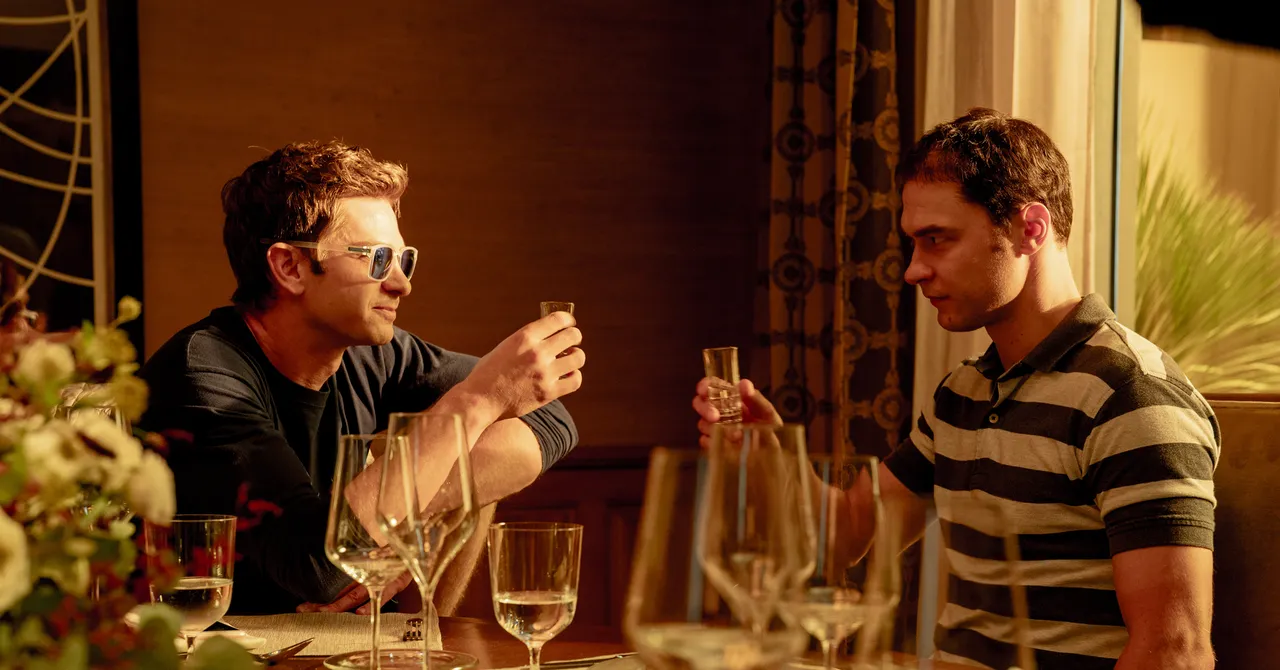
人工智能,这部关于OpenAI和人工智能竞赛的新喜剧戏剧,是一部充满奇异步伐的电影。
Artificial, the new comedy-drama about OpenAI and the artificial intelligence arms race, is a movie of weird walks.
作为OpenAI联合创始人伊利亚·苏茨克iver,俄罗斯演员尤里·博里索夫摇摇欃梓,像个怪异的疯狂科学怪人。作为备受争议的OpenAI首席执行官山姆·奥特曼,安德鲁·加菲尔德跳跃着,少年般地跳过去——这种步态最近奥特曼本人还称赞过其准确性。而作为埃隆·马斯克,艾克·巴林霍尔兹展现了一种懒散的骚气,像只阿尔法大猩猩一样统治着一群计算机极客(这种气势还体现在他那张长长的撅嘴脸上,让人想起那些古老的无聊猿NFT)。
As OpenAI cofounder Ilya Sutskever, Russian actor Yuri Borisov clomps around, like a geeky Frankensteinian monster. As the controversial OpenAI CEO Sam Altman, Andrew Garfield bounces and skips boyishly—a gait that Altman himself recently commended for its accuracy. And as Elon Musk, Ike Barinholtz puts on a loping swagger, commanding rooms of computer nerds like some sort of alpha gorilla (a semblance matched by his long, pouting faces, which call to mind those old Bored Ape NFTs).
在纽约电影节上周举行的电影首映后Q&A环节中,巴林霍尔兹讥讽性地描述了他的角色为"一个走路正常的人"。这就是正在发生的历史的笨拙漫步。
During the movie’s post-premiere Q&A earlier this week at the New York Film Festival, Barinholtz wryly described his character as “a person who walks normally.”Such are the awkward saunters of the march of history in the making.
由卢卡·瓜达尼诺执导的《人工智能》在纽约电影节上门带着一些争议。该片最初计划由AmazonMGM发行,但在亚马逊与OpenAI签下一笔500亿美元的交易后,这家公司显而易见地在今年夏天放弃了它。(独立公司Neon飞快地接手了它。)纽约电影节的艺术总监丹尼斯·林在台上介绍时提到了"围绕这部电影的环境"。
Artificial, directed by Luca Guadagnino, waltzed into NYFF with some controversy clinging to it. The film was originally set to be released by AmazonMGM, which conspicuously dropped it this summer after Amazon struck a $50 billion deal with OpenAI. (Indie house Neon swooped in to pick it up.) NYFF artistic director Dennis Lim referenced “the circumstances” around the film in his onstage introduction. That OpenAI may have brooked issues with Artificial makes sense.
OpenAI可能对《人工智能》有所不满,这并不奇怪。该片几乎毫无褒奖之处,将奥特曼和其他OpenAI利益相关者——以及所有推动AI热潮的主要人物——描绘成虚荣、鲁莽且令人难以忍受的乏味。2010年的《社交网络》成功地将硅谷的计算机天才描绘成强壮的工业巨头和未来的建筑师,而《人工智能》则走相反的方向。它将科技巨头们描绘成自恋的书呆子。
The film is almost completely unflattering, depicting Altman and other OpenAI stakeholders—as well as all the major drivers of the AI boom—as vain, reckless, and insufferably boring. Where 2010’s The Social Network succeeded in making Silicon Valley computer savants look like robust titans of industry and architects of the future, Artificial works to opposing ends. It depicts its tech titans as self-regarding dweebs. Comparisons to David Fincher’s Facebook drama are inevitable.
与大卫芬奇的《脸书传奇》的比较是不可避免的。当然,有主题上的相似之处。还有就是两部电影都由加尔菲德主演。(应该说,《人工》其实更像是一部关于萨特凯弗的传记片——在这里,他既被描绘成当前人工智能浪潮的推动者,也是其烦人的道德良心——而不是关于奥特曼的。)但瓦达尼诺和编剧制片人西蒙里奇的方法与芬奇截然不同。《社交网络》是一部紧凑、精致、言辞丰富的戏剧。而《人工》则被定位为一种近乎超现实的黑色喜剧。
There’s the subject matter, of course. And the fact that both films feature Garfield in a lead role. (It should be said that Artificial is really more of a biopic of Sutskever, here depicted as both the prime mover of the current AI wave and its nagging moral conscience, than it is of Altman.) But Guadagnino and writer-producer Simon Rich’s approach to the material feels diametrically opposed to Fincher’s. The Social Network was a steely, polished, wordy drama. Artificial is pitched as a black comedy that verges on the surreal. Guadagnino, best known in Hollywood for the coming-of-age drama Call Me by Your Name and the three-way tennis romance Challengers, has mastered a strain of tense eroticism. There are shades of that in Artificial, in Altman’s seductive wooing of Sutskever’s character.
瓦达尼诺在好莱坞最为人所知的是青春成长剧《叫我你的名字》和三角恋三幕爱情喜剧《挑战者联盟》,他已经掌握了一种紧张的性感风格。在《人工》中也有这种风格的影子,出现在奥特曼对萨特凯弗角色的诱惑性追求中。但这部电影在大多数情况下,既字面上也比喻上,都是无性的。
But the film is, for the most part, literally and figuratively sexless. The images are plain, and even a little ugly. You can almost feel Guadagnino’s more rococo style begging to break out.
这些画面平淡无奇,甚至略显丑陋。你几乎能感受到瓜达尼诺那种更具洛可可风格的审美倾向正试图挣脱束缚。有一段慢动作镜头:一群笨拙的程序员们互相往身上倒Jarritos饮料,庆祝他们开发的人工智能刚刚达成了新的自我学习里程碑——这一幕实在毫无性感可言。影片高潮部分,奥尔特曼与OpenAI的追随者们在旧金山的一条斜坡街道上与苏茨克维对峙,这一场景让人联想到汤米·维索的邪典经典《房间》中那些绿幕背景。
A slo-mo sequence of a room of gawky programmers dousing each other in bottles of Jarritos, celebrating their AI’s latest self-learning benchmark, is stickily unsexy. A climactic scene of Altman and his OpenAI lackeys confronting Sutskever on a sloping San Francisco street recalls the green-screen backdrops of Tommy Wiseau’s cult classic The Room. After the screening, Guadagnino claimed the story captured a different strain of desire—what he described as “the desire to prevail.”It’s a need many viewers might share, as leaders in the AI industry (including Altman) appear united in tamping down the technology’s acceleration.
放映结束后,瓜达尼诺称这部影片呈现的是另一种形式的欲望——他称之为“求胜的欲望”。这种需求想必也是许多观众共有的:当前AI行业的领军人物们(包括奥尔特曼在内)似乎都一致主张要遏制这项技术的加速发展。据说人工智能的发展速度极快、技术也日益精进,甚至有可能破坏我们所熟知的人类生存环境。在最近接受《连线》杂志采访时,前Anthropic AI员工雅各布·考克森称,他的前同事们曾把未来几年视为人类可能面临的“终局”。
Artificial intelligence, we are told, is developing so rapidly, and is becoming so sophisticated, that it risks compromising life on Earth as we know it. In a recent interview with WIRED, former Anthropic AI employee Jacob Coxon alleged that his former colleagues have described the next few years as the potential “endgame” for humanity itself. Another Anthropic researcher claimed that there’s a chance that AI could “kill all humans” within a decade. (The odds were set below 10 percent, which still seems extremely high.) Artificial stages these tensions as a kind of a high moral drama.
另一位Anthropic的研究员则指出,未来十年内AI有可能“杀死所有人类”——尽管这一概率被估定为不到10%,但依然高得离谱。影片将这些矛盾冲突演绎成一场宏大的道德大戏:鲍里索夫饰演的那位心地善良的研究员——设定上他生性绝不会说谎——竭力呼吁采取防护措施、放缓发展步伐,并让AI的发展方向与人类的整体利益相契合。而另一方面,几乎所有其他角色都在鼓吹技术与资本的指数级增长。
Borisov’s well-meaning researcher—depicted as being temperamentally incapable of lying—pleads for safeguards, slow-downs, and AI’s “alignment” with humanity’s broader interests. Meanwhile, the case for exponential technological and capital growth is argued by, well, basically everyone else. Even the idea of safety itself as saleable.
甚至连“安全性”这一概念本身都能被当作卖点来宣传。在某一场景中,对OpenAI可能造成严重危害的担忧竟被描绘成唯独对公司的盈利有利。发出警示信号反倒被视为体现透明度与审慎态度的表现;而技术本身具备的潜在危害性反倒成了其发展水平高超的有力证明。这看似是双赢的局面,实则谁也得不到真正的好处。
In one scene, concerns about OpenAI’s capacity for serious harm is framed as being beneficial only to the company’s bottom line. Sounding alarm bells signals transparency and due diligence. And the harmful capacity itself is seen as proof positive of the technology’s advancement. It’s win-win.
《Artificial》对正在进行的AI竞争提出了一个有说服力、却又令人沮丧的观点。随便选个比喻:火车已经开出了车站,马已经跑出了马厩,牙膏已经挤出了管子。技术已经存在。因此,正如上世纪的核武器一样,问题不再在于力量本身,而在于谁被允许驾驭它,以及如何驾驭。(在离开Anthropic后的采访中,Coxon直接将该公司比作曼哈顿计划。)
And it’s also no-win. Artificial makes a persuasive, and frustrating, point about the ongoing AI contest. Pick a metaphor: The train has already left the station, the horses have fled the barn, the toothpaste is out of the tube. The technology already exists. And so, as with nukes in the last century, it becomes not a question of the power itself but who is allowed to harness it, and how. (In his post-Anthropic exit interview, Coxon directly compared the company to the Manhattan Project.)
当所有参与者都遵循不同的规则手册时,伦理问题就变成了学术探讨,或者只是令人恼火。如果不是OpenAI掌控计算的未来,那就是Anthropic、谷歌或埃隆·马斯克。或者是最坏的情况——至少根据特朗普政府的说法——是中国。(《Artificial》早期的一个场景展示了Sutskever和他的导师、诺贝尔奖得主计算机科学家Geoffrey Hinton(由Mark Rylance饰演)拒绝了一位中国投资者的示好,后者渴望利用他们的神经网络技术用于无人机和人脸识别系统。)
Questions of ethics become academic, or just annoying, when everyone involved is playing by a different rulebook. If it’s not OpenAI that controls computing’s future, it will be Anthropic, or Google, or Elon Musk. Or, worst of all—at least according to the Trump administration—China. (An early scene in Artificial sees Sutskever and his mentor, Nobel laureate computer scientist Geoffrey Hinton, played by Mark Rylance, rebuff the advances of a Chinese investor eager to use their neural network technology for drones and face-recognition systems.) It may be hard for the average moviegoer, who may only engage with AI for email rewriting or calendar organization, to gauge just how seriously to take Artificial’s alarmist warnings.
对于普通观众来说,他们可能只用AI来重写邮件或整理日程,很难判断该多大程度认真对待《Artificial》的危言耸听式警告。更不用说,电影中几乎每个角色都被描绘成至少彻头彻尾的自私自利,如果不是反社会人格的话。当然,人们难免作为一部寓意片,《Artificial》似乎只会加深AI悲观论者最坏的担忧,同时激怒其铁杆支持者。
Not least of all because basically every character in the film is depicted as at least completely self-serving, if not sociopathic. And of course, one may naturally wince a little bit at a star-studded Hollywood movie raising these alarms, with a lavish premiere at a Rolex-sponsored film festival and a glitzy afterparty attended by stars, famous comedians, and notable filmmakers (including octogenarian Taxi Driver screenwriter Paul Schrader, who recently publicly confessed to being dumped by an “AI girlfriend”). As a message movie, Artificial seems likely only to confirm the worst misgivings of AI doomers, while riling its diehard boosters.
然而,影片在某些地方确实很好笑,它以毁灭性的蔑视审视那些自封的未来工程师群体,从他们古怪的派对到他们怪异的走路姿态。
It is, however, genuinely funny in places, regarding the bulk of our future’s self-appointed engineers with withering contempt, from their dorky parties to their weird walks.
这种立场为巴林霍尔茨所采纳,他在首映之夜向观众给出了自己半心半意、讽刺意味浓厚的安慰:“未来光明!我们都会好起来的!”随之而来的是一阵极度紧张的笑声。
It was a stance embraced by Barinholtz, who offered the premiere-night audience his own half-hearted, sarcastic reassurance: “The future is bright! We’re all gonna be fine!”Cue a round of very nervous laughter.