抵达者在黎明前便已开始到达。妇女们背着孩子、提着塑料袋;男子们几乎两手空空。每周,约有3000名难民和返乡者从苏丹跨境进入南苏丹。
The arrivals begin before dawn. Women carry children and plastic bags; men walk with almost nothing. Every week, about 3,000 refugees and returnees cross into South Sudan from Sudan.
许多人饥肠辘辘、筋疲力尽,身无分文或所剩无几。但他们赖以生存的粮食援助也即将耗尽。
Many arrive hungry, exhausted and with little or no money. But the food assistance they depend on is also running out.
根据世界粮食计划署(WFP)的数据,除非获得额外资源,否则到10月份,超过一百万弱势群体可能失去获取救命粮食和营养援助的机会。
More than one million vulnerable people could lose access to life-saving food and nutrition assistance by October unless additional resources are secured, according to the World Food Programme (WFP).
世界粮食计划署表示,在上尼罗州的关键物流枢纽马拉卡尔,粮食库存已从去年同期的1万吨骤降至不足300吨。这一下降发生在人道主义机构资源缩减而需求持续上升的背景下。
In Malakal, one of the agency’s key logistics hubs in the Upper Nile state, food stocks have fallen from 10,000 metric tonnes at this time last year to less than 300 tonnes now. The drop comes as humanitarian agencies face shrinking resources while needs continue to rise, WFP says.
本月,世界粮食计划署助理执行主任马修·霍林沃斯走访了上尼罗州的伦克和马拉卡尔,以及 Jonglei 州的皮吉县,亲眼目睹了在冲突、流离失所、饥饿和气候冲击多重打击下挣扎求生的社区所面临的压力。
WFP assistant executive director Matthew Hollingworth visited Renk and Malakal in Upper Nile and Pigi county in Jonglei state this month, where he witnessed firsthand the pressures facing communities already struggling with conflict, displacement, hunger and climate shocks.
霍林沃斯对半岛电视台表示,苏丹战争推高了物价,给本已因难民涌入而不堪重负的国家带来了额外压力。
Hollingworth told Al Jazeera that the war in Sudan had driven up prices and put additional pressure on a country already stretched by the influx of refugees.
他说:“苏丹战争对该国北部造成了灾难性影响。由于从苏丹进口商品的复杂性,物价飙升。”他补充道:“此外,难民涌入的国家在援助他们方面已捉襟见肘。”在伦克,霍林沃斯看到了干旱的影响,以及仍受洪水影响的地区。
“The war in Sudan has been catastrophic for the north of this country. Prices have gone so much higher due to the complexity of importing goods from Sudan,” he said. “Moreover, the influx of refugees [comes] to a country that is really stretched when it comes to helping them.”In Renk, Hollingworth saw the effects of drought alongside areas still affected by flooding.
他对半岛电视台表示:“所有这些都发生在国际社会捐助大幅减少、我们不再拥有以往资源的时刻。”
“It all comes at the time when the international community has a lot less to give, and we don’t have the same resources we used to have,” he told Al Jazeera.
“另一方面,南苏丹政府必须考虑非法检查站的问题,这些检查站阻碍我们到达各地。我们需要触达全国各地的弱势群体。”世界粮食计划署助理执行主任马修·霍林沃斯在访问南苏丹伦克评估人道主义局势期间,与联合国和人道主义合作伙伴代表团合影留念 [Maura Ajak/Al Jazeera] 皮吉的流离失所者彼得·梅克表示,不安全局势和其他地区流离失所者的涌入,使得耕种和找工作变得困难。
“On the other side, the government of South Sudan has to consider the issue of illegal checkpoints that prevent us from being able to get everywhere. We need to reach vulnerable people across the country.”WFP Assistant Executive Director Matthew Hollingworth joins a delegation of UN and humanitarian partners for a group photo in Renk, South Sudan, during a visit to assess the humanitarian situation [Maura Ajak/Al Jazeera] Peter Maker, a displaced person in Pigi, said insecurity and the arrival of people displaced from other areas had made it difficult to farm or find work.
“由于国家不安全和外来人口涌入,我们面临重大挑战。我们的主要问题是不安全和无法进入农田,”他告诉半岛电视台。
“We face major challenges due to national insecurity and an influx of people from other areas. Our main issues are insecurity and lack of access to farmland,” he told Al Jazeera.
“虽然我身体健壮、有劳动能力,但不安全局势阻止我外出寻找机会或安全耕种,导致我们严重依赖联合国和援助。”梅克表示需要长期解决方案,并警告进一步削减或阻断援助将造成毁灭性后果。他将当地大部分苦难归咎于政治领导层和社区间的分歧,同时表示人们目前通过分享资源、依靠信仰和接受偶尔的援助来生存。
“Although I am able-bodied and qualified to work, insecurity prevents me from travelling for opportunities or farming safely outside, leaving us heavily reliant on the UN and aid.”Maker said longer-term solutions were needed and warned that further cuts or blockages to assistance would be devastating. He attributed much of the local suffering to political leadership and divisions between communities, while saying people currently survive by sharing resources, relying on God and receiving occasional aid.
边境承压 位于上尼罗州、靠近苏丹边境的伦克,已成为2023年4月苏丹战争爆发后逃难者的主要入境点。
A border under pressure Renk, in Upper Nile state near the border with Sudan, has become a major entry point for people fleeing the war that erupted there in April 2023.
根据世界粮食计划署数据,自2023年苏丹战争爆发以来,已有超过140万难民和返乡者越境进入南苏丹。许多人在经历检查站盘查、勒索和暴力的旅程后抵达,对未来一无所知。
More than 1.4 million refugees and returnees have crossed into South Sudan since the war erupted in Sudan in 2023, according to the World Food Programme. Many arrive after journeys marked by checkpoints, extortion and violence, with little idea of what comes next.
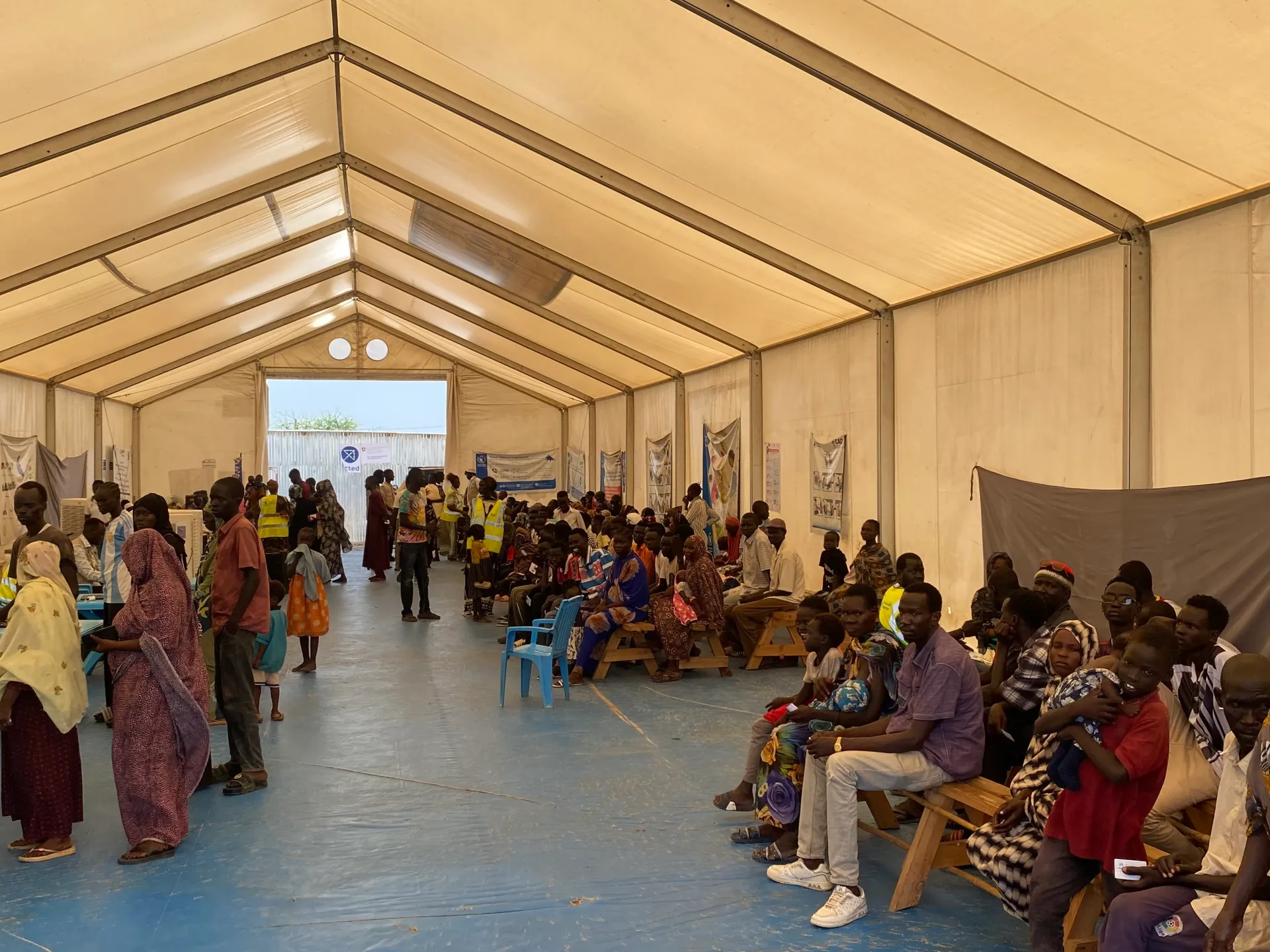
难民和返乡者在南苏丹伦克的过境中心聚集,他们刚从苏丹越境而来,而人道主义机构正努力应对不断增长的需求 [Ala Kheir/半岛电视台] 住在伦克过境中心的六个孩子的母亲扎伊纳布·穆萨最近从苏丹越境而来。她说条件艰苦,食物极少。
Refugees and returnees areed at the transit centre in Renk, South Sudan, after crossing from Sudan, as humanitarian agencies struggle to keep up with growing needs [Ala Kheir/Al Jazeera] Zainab Musa, a mother of six staying at a transit centre in Renk, recently crossed from Sudan. She said conditions were difficult and there was little food.
“人道主义局势艰难,没有东西吃,只有饥饿,”她告诉半岛电视台。“我想从乔达边境搬到过境中心寻求帮助。”穆萨说她计划前往上尼罗州马班县的邦杰,投奔她的祖父。
“The humanitarian situation is hard and there is nothing to eat, just hunger,” she told Al Jazeera. “I thought of moving from the border at Jodha to the transit centre to look for help.”Musa said she planned to travel to her grandfather in Bunj, in Maban county, in Upper Nile.
伦克的过境中心原本并未设计为接收如此规模的抵达者。家庭们等待前往马拉卡尔或南苏丹其他地区的后续运输,而有些人则滞留数月。随着资金枯竭,世界粮食计划署被迫削减配给并减少支持。
The transit centres in Renk were not designed for the scale of arrivals they are now receiving. Families wait for onward transport to Malakal or other parts of South Sudan, while some remain for months. The WFP has been forced to reduce rations and cut support as funding has dried up.
8月,世界粮食计划署和联合国难民事务高级专员办事处(UNHCR)警告称,超过65万难民和寻求庇护者面临失去粮食援助的风险。他们表示,如果没有额外资金,预计9月将耗尽对最脆弱的24万难民的粮食和营养援助。
In August, the WFP and the United Nations High Commissioner for Refugees (UNHCR) warned that more than 650,000 refugees and asylum seekers were at risk of losing food assistance. They said food and nutrition assistance for the most vulnerable 240,000 refugees was expected to run out in September without additional funding.
苏丹难民努拉·穆罕默德·艾哈迈德表示,饥饿和缺乏充足营养已在过境中心造成沉重打击。
Nura Mohammed Ahmed, a Sudanese refugee, said hunger and a lack of adequate nutrition were already taking a heavy toll at the transit centre.
马拉卡尔脆弱的庇护所 多年来,马拉卡尔一直收容因冲突和灾害而流离失所的家庭。
Malakal’s fragile refuge Malakal has hosted families displaced by conflict and disaster for years.
今年早些时候,前“平民保护站”被重新指定为境内流离失所者安置点,目前收容近4万名流离失所者,分布在6000多个家庭中。许多人已流离失所多年。但基本服务也正面临压力。
The former Protection of Civilians site, redesignated as an internally displaced people’s settlement earlier this year, hosts nearly 40,000 displaced people across more than 6,000 households. Many have been displaced for years. But basic services are also coming under pressure.
国际移民组织(IOM)警告称,由于资金短缺,本蒂乌和马拉卡尔的供水、环境卫生和个人卫生服务面临风险。如果没有排水泵站运行和堤坝维护,马拉卡尔在雨季还面临更高的洪水风险。
The International Organization for Migration (IOM) has warned that water, sanitation and hygiene services in Bentiu and Malakal are at risk because of funding shortfalls. Without drainage pumping and dyke maintenance, Malakal also faces a heightened risk of flooding during the rainy season.
苏丹难民、四个孩子的母亲纳贾·泰耶布·法杜勒于2023年12月抵达一个过境中心,此前她的丈夫被杀害。
Najah al-Tayieb al-Fadhul, a Sudanese refugee and mother of four, arrived at a transit centre in December 2023 after her husband was killed.
“丈夫被苏丹武装部队当面杀害,我无法带着孩子留在那里,因为局势让人备受创伤,”她告诉半岛电视台。
“My husband was killed by the Sudan armed forces in front of me, and I could not stay with my kids there because the situation was traumatising,” she told Al Jazeera.
“我进入南苏丹,尽我所能在伦克的人道主义组织谋些零工。”法杜勒说,饥饿、疾病和营养不良是日常生活的一部分。
“I entered South Sudan, and I have tried my best to hustle and earn some small job with the humanitarian organisations based in Renk.”Al-Fadhul said hunger, sickness and malnutrition were part of daily life.
苏丹难民和南苏丹返乡者在南苏丹伦克的一个过境中心排队取水 [Luis Tato/AFP]“儿童中大量出现饥饿、疾病和营养不良的情况,”她说。“甚至我自己的孩子患有心脏病,我却无力医治。”她说自己有时在市场干活一天能赚约2.5美元,但尽管拥有大学学位,仍难以找到稳定工作。
Sudanese refugees and South Sudanese returnees gather for water at a transit centre in Renk, South Sudan [Luis Tato/AFP]“There are massive cases of hunger, sickness and malnutrition among the children,” she said. “Even my child has a heart disease, and I cannot afford to treat him.”She said she sometimes earned about $2.50 a day from work in the market, but struggled to find stable employment despite having a college degree.
“尽管在一家组织找到了工作,人道主义局势却在恶化,”她说。“世界粮食计划署只在这里为我们提供少量配给,专门针对儿童。老人和大多数人因饥饿而缺乏干活的精力。” 资金缺口 世界粮食计划署称,其面临8600万美元的即时资金缺口,以及未来六个月4.16亿美元的资金短缺,这威胁到其援助难民、流离失所者和脆弱接纳社区的能力。
“The humanitarian situation is worsening despite securing a job with one of the organisations,” she said. “WFP only helped us here with the small ration for the children in particular. Elders and most individuals lack energy to work due to hunger.”The funding gap The WFP says it faces an immediate $86m funding gap and a $416m shortfall over the next six months, threatening its ability to assist refugees, displaced people and vulnerable host communities.
对于更广泛的人口而言,饥饿危机已十分严重。世界粮食计划署称,780万人(超过南苏丹人口的一半)面临严重急性粮食短缺,而220万儿童严重营养不良。
For the wider population, the hunger crisis is already severe. The WFP says 7.8 million people, more than half of South Sudan’s population, face high levels of acute food shortage, while 2.2 million children are acutely malnourished.
世界粮食计划署目前的南苏丹紧急响应还列出了2026年剩余时间内2.58亿美元的资金缺口。
The WFP’s current South Sudan emergency response also lists a $258m funding shortfall for the remainder of 2026.
在南苏丹伦克的国际计划组织儿童友好空间里,孩子们接受心理社会支持并参加娱乐活动 [Peter Caton/Plan International] 对于从苏丹抵达的人们来说,危机在越过边境后仍在继续。
Children at a Plan International child-friendly space in Renk, South Sudan, where they receive psychosocial support and take part in recreational activities [Peter Caton/Plan International] For people arriving from Sudan, the crisis continues after they cross the border.
努拉·穆罕默德·艾哈迈德用直白的语言描述了部分难民面临的抉择:“许多人在这里因饥饿和营养不良而死亡。这里什么都没有,也没有能给我们力量的食物。唯一的出路是尽管有风险也要返回战火纷飞的苏丹,或者在这里饿死。”
Nura Mohammed Ahmed put the choice facing some refugees in stark terms: “Many people died here because of hunger and lack of nutrition. There’s nothing, or food that can give us strength. The only solution is to return to war-torn Sudan despite the risks, or die here from hunger.”