关税引发的通货膨胀影响具有滞后性。纽约联储的研究人员指出,进口成本上升会在美国供应链中产生连锁反应,对本土生产商品的价格影响甚至要一年后才会显现。
Tariff inflation has a long tail. Higher import costs can ripple through U.S. supply chains, with effects on domestically produced goods emerging as much as a year later, according to Federal Reserve Bank of New York researchers.
重要性:2025年实施的关税所带来的通胀压力虽已有所缓解,但新近征收的关税仍在持续推高物价,而当前的通胀水平已令政策制定者深感不安。
Why it matters: The inflation hit from 2025 tariffs is fading, but newer levies are still feeding through to prices as inflation is already too high for policymakers' comfort.
研究结论:纽约联储经济学家玛丽·阿米蒂、塞巴斯蒂安·海泽以及大卫·E·温斯坦指出:“平均关税每提高一个百分点,一年后消费品价格便会上涨约0.25%。”
What they're saying: "For every percentage point increase in average tariffs, consumer goods prices increase by about a quarter of a percent after one year," New York Fed economists Mary Amiti, Sebastian Heise and David E. Weinstein wrote.
此前该研究团队曾指出,今年初美国企业和消费者承担了绝大部分关税成本,这一结论遭到了特朗普政府经济官员的强烈批评。
The authors previously found that U.S. companies and consumers bore most tariff costs earlier this year — research that Trump economic officials sharply criticized.
作用机制:关税对物价的影响是分阶段显现的。约90%的关税增幅会迅速传导至进口商品价格;零售价格的变化则相对缓慢——约半数直接效应会在三个月内显现,几乎全部效应会在六个月内体现。而在六至十二个月期间,美国本土制造商品的价格涨幅更是翻倍,这类商品贡献了整体物价涨幅的三分之一左右。
How it works: Tariff price effects unfold in stages. Nearly 90% of a tariff increase passes through to import prices almost immediately. Retail prices move more slowly: About half the direct effect appears within three months, and nearly all within six months. Effects on U.S.-made goods more than double between six and 12 months. About one-third of the overall price increase comes from those goods.
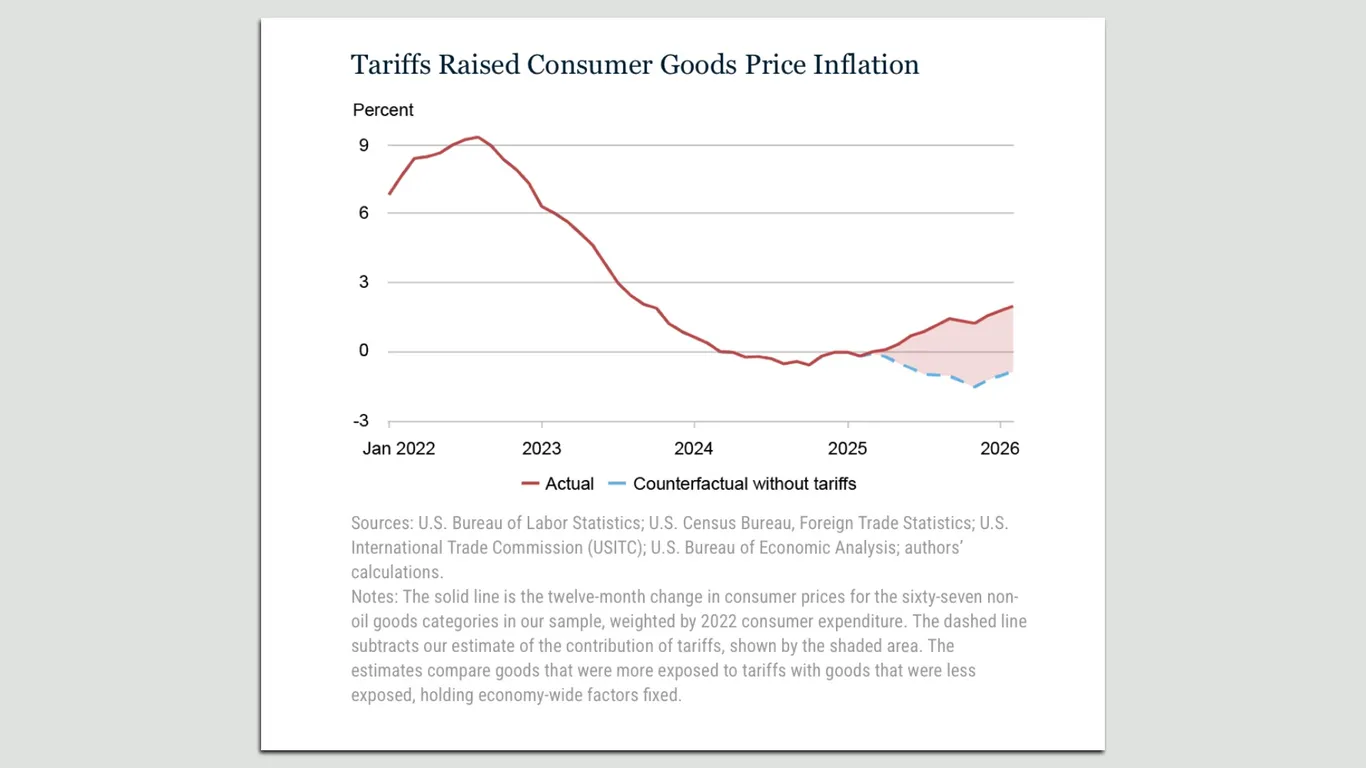
现状评估:研究人员测算,截至2026年2月,特朗普实施的关税政策使消费品通胀率额外升高了2.9个百分点(不含服务与石油价格)。若无这些关税,商品价格本应出现小幅下降。受最高法院裁定取消特朗普基于紧急权力征收的关税影响,相关税率被下调至10%,消费品价格涨幅也从2月份的近3%逐步回落至8月的2%左右。未来展望:明年物价走势仍值得密切关注。
State of play: The researchers estimate that President Trump's tariffs added 2.9 percentage points to consumer goods inflation by February 2026 (excluding services and oil). Without them, goods prices would have fallen slightly. The effect on consumer goods prices peaked near 3% in February and eased to about 2% by August after a Supreme Court ruling struck down Trump's emergency powers tariffs. Those were replaced by a lower 10% import tax. What to g effect next year.