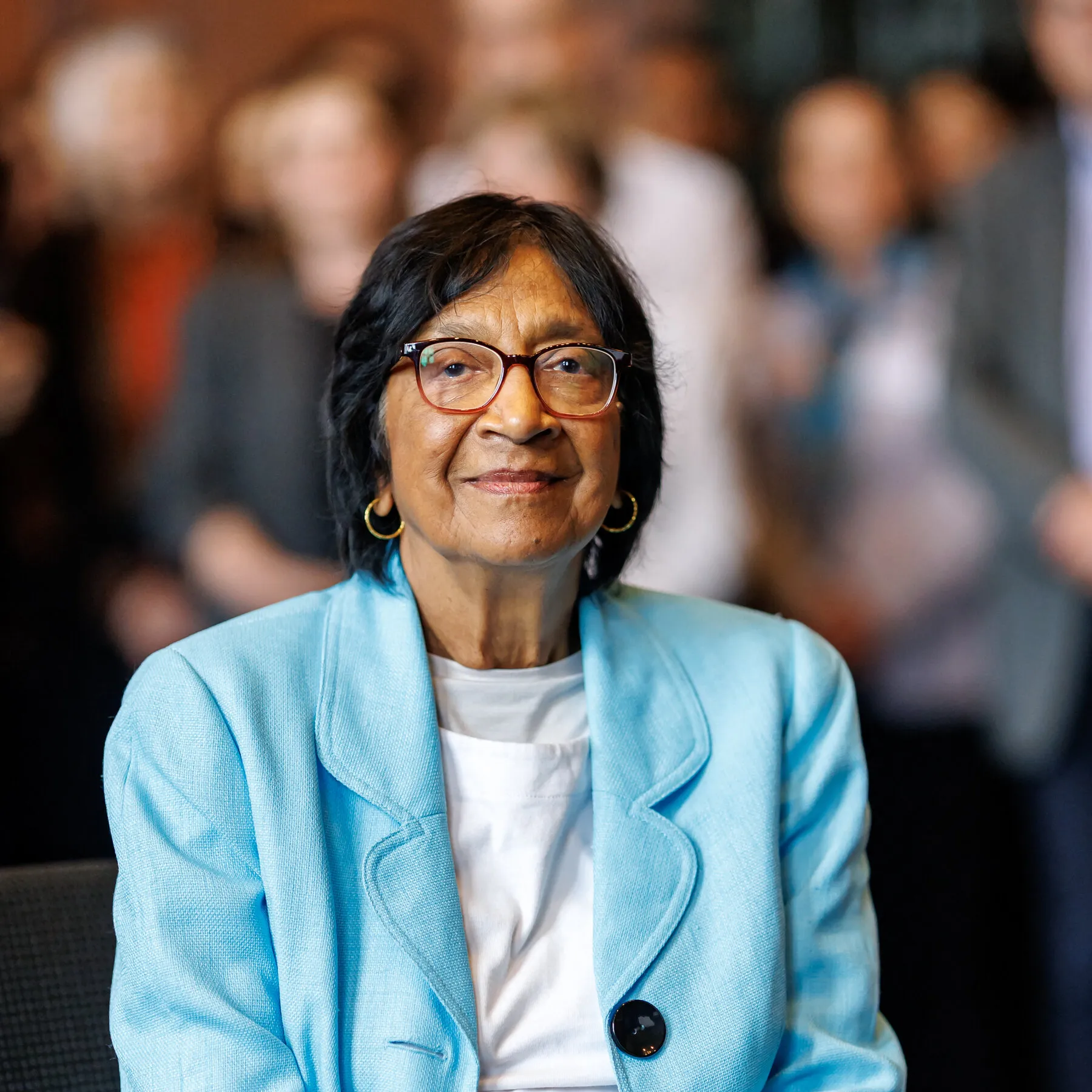
由种族隔离制度的斗争铸就的国际生涯 纳维·皮莱,今年诺贝尔和平奖得主,曾在南非与种族主义作斗争,塑造了她作为法官和正义与人权倡导者的国际生涯。
An International Career Forged by the Struggles of Apartheid Navi Pillay, who won this year’s Nobel Peace Prize, fought racism in South Africa, shaping her international career as a judge and advocate for justice and human rights.
她童年时期生活在一个没有污水或供水的贫民窟,就读于仅限印度裔儿童的学校,并意识到她的肤色禁止她去父亲在圣诞节期间驾车路过的海滩。
She lived her childhood in a slum without sewage or water, attended a school for only children of Indian descent, and knew that her skin color prohibited her from going to the beach her father would drive past during the Christmas season.
纳维·皮莱,85岁,在南非种族隔离时期成长过程中,从很小的时候就明白被剥夺人性意味着什么,她在2019年接受澳大利亚广播公司采访时如此解释。
Navi Pillay, 85, was aware from a very young age growing up in apartheid South Africa what it meant to be stripped of her humanity, she explained in an interview with the Australian Broadcasting Corporation in 2019.
但她也描述了一个关键时刻,帮助她摆脱了种族主义的压迫:她所在的沿海城市德班社区的父母们凑钱送她上大学,因为她的高中校长曾说她有潜力。
But she also described a pivotal moment that helped her rise from under the thumb of racism: Parents in her community in the coastal city of Durban pooled their money to send her to university, after her high school principal said she had potential.
这一机遇开启了她打破障碍的职业生涯,使皮莱女士成为了一名律师、多个国际法院的法官、联合国人权事务高级专员,以及周五的诺贝尔和平奖得主。
That opportunity began a barrier-breaking career that led Ms. Pillay to becoming a lawyer, a judge on multiple international courts, the human rights chief of the United Nations and, on Friday, a Nobel Peace Prize laureate.
在宣布奖项时,诺贝尔委员会表示,皮莱女士在“确保战争罪、反人类罪和种族灭绝罪得到起诉”方面发挥了关键作用。她成为第五位获得该奖的南非人,加入纳尔逊·曼德拉和德斯蒙德·图图大主教等该国最受尊崇人物的行列。
In announcing the prize, the Nobel committee said that Ms. Pillay had been “instrumental in ensuring that war crimes, crimes against humanity and genocide are prosecuted.”She becomes the fifth South African to win the award, joining the ranks of the country’s most vaunted figures including Nelson Mandela and Archbishop Desmond Tutu.
虽然纳维·皮莱的全球认可度很大程度上源于她在国外开展的人权工作,但她在南非的经历深刻塑造了她的一生,她始终深度关注祖国有时脆弱的民主进程。
While much of Ms. Pillay’s global recognition comes from human rights work she has done abroad, her experiences in South Africa have indelibly shaped her life, and she has remained deeply invested in her home country’s sometimes-fragile democracy.
“我把这个奖看作是世界上大多数人的声音,”帕莱女士在周五接受南非国家广播公司采访时说。她补充说,南非大多数人“希望法治得到尊重,他们希望独立司法得到尊重。”纳维特姆·奈杜,人称纳维,成长于南德班一个被指定为印度人社区的地区,该地区一直面临被宣布为白人区的威胁,这将意味着被迫搬迁,萨茨·库珀说,他是帕莱女士的朋友和客户,同样具有印度血统,也在德班长大。
“I see this award as the voice of the majority of the world,” Ms. Pillay said in an interview with the South African state broadcaster on Friday. She added that a majority of South Africans “want the rule of law, they want the independent judiciary to be respected.”Navenethem Naidoo, known as Navi, grew up in a community designated for Indians in southern Durban that was constantly under the threat of being declared a white area, which would have meant forced removal, said Saths Cooper, a friend and client of Ms. Pillay’s who is also of Indian heritage and grew up in Durban.
“我们会讨论当时存在的威胁,但我们的精神不会被这种事情压垮,”库珀先生说,并补充说,他们决心与全国各地的社区互动,以克服 apartheid 政府试图强加的孤立。
“We’d talk about the threats that were there but that our spirit is not going to be cowed by that kind of thing,” Mr. Cooper said, adding that they were determined to engage with communities far and wide to overcome the isolation that the apartheid government tried to impose.
帕莱女士的父亲是一名公交车司机,他希望确保她和她的六个兄弟姐妹不会被局限于体力劳动,库珀先生说。她是德班众多参与斗争并认同黑人身份的年轻印度人之一,部分原因是为了反驳 apartheid 对有色人种的定义为“非白人”。库珀先生说,将自己认定为黑人而非“非白人”是“一种精神解放的工具”。帕莱女士在如今的夸祖鲁-纳塔尔大学学习法律。
Ms. Pillay’s father was a bus driver who wanted to ensure that she and her six siblings were not confined to menial labor, Mr. Cooper said. She was among the many young Indians in Durban who took up the struggle and embraced Black identity, in part countering the apartheid framing of people of color as “nonwhite.”Mr. Cooper said it was “a tool for mental liberation to identify as Black rather than a ‘non.’”She studied law at what is now the University of KwaZulu-Natal.
由于该校实行种族隔离,黑人学生只能晚上上课,人权律师和活动家杰西卡·纽维思说,她认识帕莱女士已有四十年。白天,帕莱女士会去图书馆,在那里她找到了关于纽伦堡审判的书籍,这帮助激发了她对国际正义的兴趣,纽维思说。
Because it was segregated, Black students had to attend classes at night, said Jessica Neuwirth, a human-rights lawyer and activist who has known Ms. Pillay for four decades. During the day, Ms. Pillay would go to the library, where she found books about the Nuremberg trials, helping inspire her fascination with international justice, Ms. Neuwirth said.
1965年取得法律学位后,帕莱女士在一位著名的印度裔反 apartheid 律师N.T.奈克尔手下工作。她完成了他许多的田野工作,比如会见客户,因为 apartheid 政府将他限制在家中。
After earning her law degree in 1965, Ms. Pillay worked under a prominent anti-apartheid attorney of Indian descent, N.T. Naicker. She did much of his field work, like meeting with clients, because the apartheid regime had confined him to his home.
皮莱女士因种族限制而难以被律师事务所录用,但最终开设了自己的律所。她代表反种族隔离活动人士,并通过创造性的方法赢得了关键裁决,纽沃思女士如是说。
Ms. Pillay struggled to get hired by a law firm because of racial restrictions but eventually opened her own practice. She represented anti-apartheid activists and won critical rulings with creative approaches, Ms. Neuwirth said.
当种族隔离政府因政治活动将她的丈夫加比·皮莱(也是一名律师)关押并切断他与外界的联系时,皮莱女士使用了他的授权委托书,以他的名义提起诉讼,纽沃思女士如是说。她最终赢得了一项禁止对他施以酷刑的命令。
When the apartheid government locked up her husband, Gaby Pillay, who was also a lawyer, for political activities and cut off his access to the outside world, Ms. Pillay used his power of attorney to file an action on his behalf, Ms. Neuwirth said. She ended up winning an order prohibiting his torture.
在一个案件中,她引用了美国精神病学家路易斯·乔利昂·韦斯特的研究成果,主张遭受酷刑的反种族隔离活动人士无法提供可信的供词。法庭接受了她的论点,纽沃思女士如是说。
In one case, she introduced the findings of the American psychiatrist Louis Jolyon West to argue that anti-apartheid activists who were tortured could not give credible confessions. The court sided with her argument, Ms. Neuwirth said.
皮莱女士成功为罗本岛上的囚犯赢得了正当程序权利,那里曾关押着像曼德拉先生这样的高调反种族隔离活动人士,他们被送往单独监禁。
Ms. Pillay was able to win due process rights for inmates on Robben Island, where high-profile anti-apartheid activists like Mr. Mandela were sent to solitary confinement.
在1973年德班罢工期间,因煽动被捕的库珀先生及其他几人获她代表。她允许他们积极参与塑造辩护策略,而不是由她单方面决定,库珀先生如是说。通过与被告及其他曾面临类似指控的活动人士协商,她制定了一套有效且统一的辩护方案,库珀先生如是说,最终他们被宣告无罪。
She represented Mr. Cooper and several others after they were arrested for agitation during strikes in Durban in 1973. She allowed them to take an active role in shaping their defense rather than dictating their strategy, Mr. Cooper said. Consulting with the defendants and other activists who had faced similar charges, she crafted an effective, unified defense, Mr. Cooper said, and they were acquitted.
种族隔离政府后来将库珀先生软禁在家。尽管他并非印度教徒,皮莱女士仍建议他申请例外以便前往寺庙,申请获批,库珀先生如是说,因此他每周日大约能获得三小时的外出时间。
The apartheid government later put Mr. Cooper under house arrest. Though he was not a practicing Hindu, Ms. Pillay advised him to apply for an exception to go to temple, which was granted, Mr. Cooper said, and he got about three hours outside every Sunday.
尽管皮莱女士作为律师取得了进展,但她始终面临各种屈辱。在澳大利亚广播公司的采访中,她描述了作为印度裔律师,她必须使用单独的入口,并与白人律师分桌就座。
Even as Ms. Pillay made strides as a lawyer, she faced constant indignities. In the Australian Broadcast Corporation interview, she described how, as an Indian lawyer, she had to use a separate entrance and sit at a different table from the white lawyers.
我是说,当客户看到我们在法庭上处于劣势时,他们还能对我们抱有什么信心?”她说。
“I mean, what confidence can clients have in us when they could see that we were held in inferior position in the courtroom?” she said.
她回忆起去治安法官办公室与他交谈,当她走进去时,他把脚搁在桌子上。“所以你是在和他鞋底的污渍说话,”她说。“这就是我想说的,说明那种羞辱有多严重。”皮莱女士曾在接受采访时表示,她在种族主义体制下应对不公正法律的挣扎,在某种程度上帮助她培养了所需的坚持力。她去年在一次播客采访中表示,即使法律动议成功的希望渺茫,她也会继续提出,因为她认为这是她对抗体制的唯一武器。
She recalled going to a magistrate’s office to speak with him, and when she entered he had his feet on the desk. “So you’re talking to the dirty soles of his shoes,” she said. “That’s what I mean about how humiliating it was.”Ms. Pillay’s struggle to maneuver within a racist system applying unjust laws in some ways helped her develop the persistence she needed, she has said in interviews. She said in a podcast interview last year that she would keep filing legal motions even if they had little chance of succeeding because she believed that was the only weapon she had to fight the system.
“对我来说,很明显,我唯一能做的就是继续前行,寻求正义,”她说。
“It was clear to me the only thing I can do is keep going, seeking justice,” she said.
apartheid 结束后不久,即在1990年代,皮莱女士因担任卢旺达种族灭绝问题法庭的法官而声名鹊起,该法庭在起诉种族灭绝罪方面开创了先河,并将大规模强奸视为一种种族灭绝形式。
She rose to international prominence shortly after apartheid ended in the 1990s, as a judge on the tribunal on the Rwanda genocide, which broke new ground in prosecuting the crime of genocide and treating mass rape as a form of genocide.
皮莱女士后来担任国际刑事法院法官、联合国人权事务高级专员以及国际法院的临时法官。她也一直关注国内事务。
Ms. Pillay later served as a judge on the International Criminal Court, the U.N. High Commissioner for Human Rights, and a substitute judge of the International Court of Justice. She has also remained engaged in matters at home.
皮莱女士曾主持一个委员会,调查南非移民面临的挑战,并向政府提交了报告。她还与联合国合作,在南非发起了L.G.B.T.Q.平等运动。她曾参与一个调查南非腐败问题的法庭,并对该国领导人提出了严厉的指控。
Ms. Pillay chaired a commission that looked into the challenges of migration in South Africa and presented a report to the government. With the United Nations, she launched an L.G.B.T.Q. equality campaign in South Africa. She was part of a tribunal that probed corruption in South Africa and made damning findings against the country’s leaders.
2021年,她在斯泰伦博斯大学发表了人权讲座,尖锐批评了她认为南非在维护人权方面的一些失败。
In 2021, she gave a lecture on human rights at Stellenbosch University and offered a searing critique of what she saw as some of South Africa’s failures to stand for human rights.
诺贝尔奖可能会让帕莱女士面临新的审查,这部分原因在于她对巴勒斯坦人困境所持的鲜明立场。去年,她主持了一个联合国委员会,该委员会得出结论认为以色列在加沙犯下了种族灭绝罪。她获得诺贝尔奖的消息引发了以色列总理本雅明·内塔尼亚胡的强烈谴责。
The Nobel Prize could bring new scrutiny to Ms. Pillay in part because of the bold stance she has taken on the plight of Palestinians. She chaired a U.N. commission last year that concluded that Israel had committed genocide in Gaza. Her receipt of the Nobel drew a strong rebuke from Israel’s prime minister, Benjamin Netanyahu.
但考虑到她的出身,帕莱女士不太可能因批评而退缩,库珀先生表示。
But given where she came from, Ms. Pillay is unlikely to be deterred by critics, Mr. Cooper said.
在种族隔离时期,帕莱女士“对危险有着完全的理解,”他说。“但也有克服这些危险的实际方法。
During apartheid, Ms. Pillay had “a complete understanding of the dangers,” he said. “But also the practical ways to overcome those dangers.”
约翰·埃利贡是《纽约时报》约翰内斯堡分社社长,负责报道南部非洲各地影响并塑造普通人生活的广泛事件和趋势。
Zimasa Matiwane contributed reporting from Johannesburg. John Eligon is the Johannesburg bureau chief for The Times, covering a wide range of events and trends that influence and shape the lives of ordinary people across southern Africa.