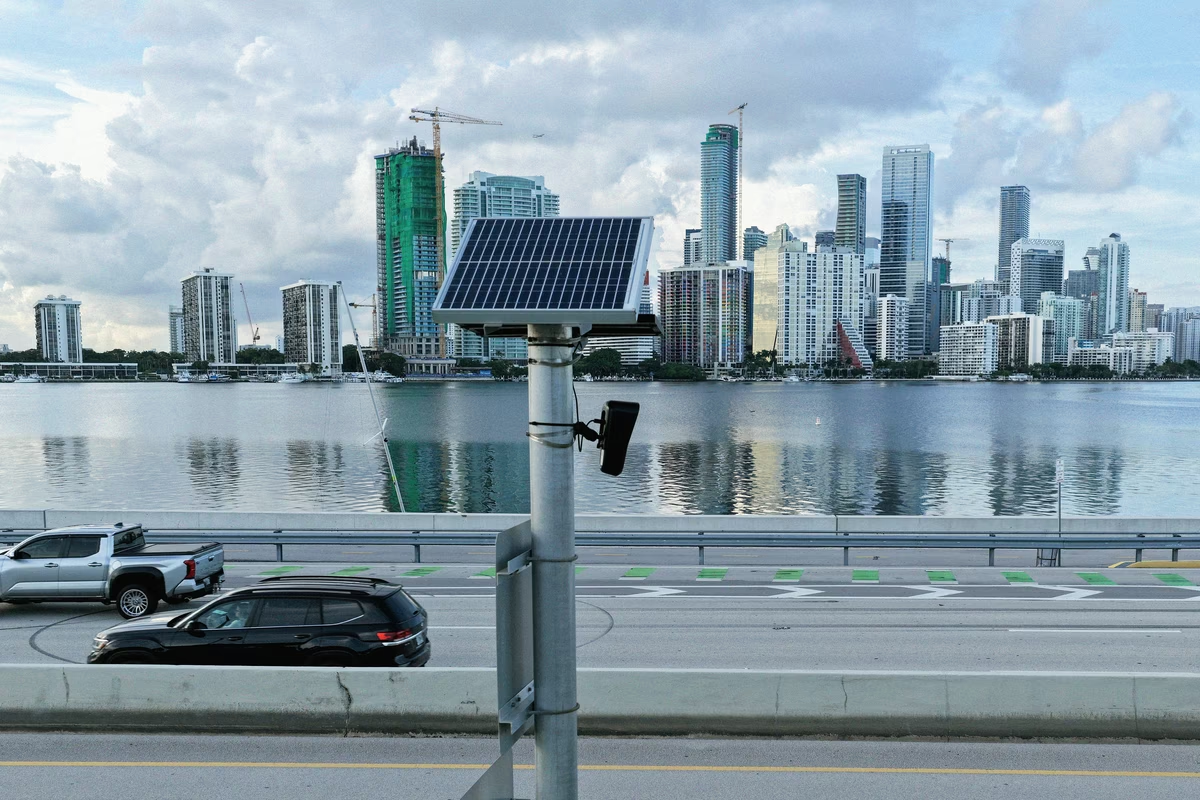
弗洛克安全公司的创始人兼首席执行官兰利是监控行业危害的意外代言人:他的公司表示,已在美国49个州部署了超过12万个路边摄像头。但在八月,当他为自己的产品和政策进行辩护时,或许无意中展示了为何美国人应当对这项技术感到警惕。
Langley, the founder and CEO of Flock Safety, is an unlikely spokesperson for the dangers of the surveillance industry: His company says it has deployed more than 120,000 roadside cameras across 49 states. But in August, while defending his products and policies, he perhaps inadvertently showed why Americans should be alarmed by this technology.
兰利在播客节目中承认,弗洛克在推出用于识别其数据滥用的工具时,抓获了“大量”涉嫌违规的“恶劣警察”。(虽然弗洛克将很快要求所有执法客户使用该工具,但截至八月中旬,仅有少数客户在使用。许多恶劣警察很可能未被发现。)他主张弗洛克将对客户施加防护措施,尽管这可能导致公司失去业务,因为他希望能够“安心入睡”。
Flock caught “a ton” of “bad cops” when it rolled out a tool to identify abuse of its data, Langley acknowledged on the podcast. (While Flock will soon require the tool for all of its law-enforcement clients, just a fraction of clients were using it as of mid-August. Many bad cops likely went uncaught.) He argued that Flock will force safeguards on clients, though that may lose the company business, because he wants to “sleep at night.”
与此同时,他的竞争对手则“更加鲁莽行事”——例如,他们在车牌识别器中提供视频和面部识别功能。如果你相信他的话——而我认为他夸大了弗洛克防护措施的力度——那么可以清楚地看到,该行业的运作方式令人担忧,甚至连它的最大支持者之一也对此感到不安。
His competitors, meanwhile, “run more reckless”—offering video and facial recognition with their license-plate readers, for example. If you take him at his word—and I’d argue that he overstates the strength of Flock’s safeguards––it’s clear that the way the industry works is worrying even one of its biggest boosters.
我自身的睡眠已因私人监控行业而困扰超过十年。2014年,弗洛克成立前三年,我在《大西洋月刊》中警告称,对所有汽车出行的大规模监控几乎即将到来。我指出,私营公司正在美国公共道路上大规模部署自动车牌识别系统(ALPR),威胁着我们一直享有的隐私,国会应当对快速增长的监控行业进行监管。如今,如果你在美国本土大部分地区驾车出行,弗洛克可能通过向他人出售重建你行踪的手段而获利。
My own sleep has been troubled by the private surveillance industry for more than a decade. In 2014, three years before Flock was founded, I warned in The Atlantic that mass surveillance of all car trips was nearly upon us. I noted that private companies were deploying automatic license-plate readers, or ALPRs, at scale on America’s public roads, threatening a privacy we’ve always enjoyed, and that Congress should regulate the fast-growing surveillance industry. Today, if you drive in much of the continental United States, Flock may profit by selling others the means to reconstruct your movements.
根据8月YouGov的一项调查,反对这种形式的监控如今已成为多数立场,调查显示,反对该技术在其社区使用的美国人多于支持该技术的美国人。两党政客都在批评ALPRs,而该名称如今已成为某种误称:这些摄像头可以捕捉经过车辆的详细图像,而不仅仅是车牌。追踪该公司客户的反Flock活动人士列出了近几个月取消合同或停用摄像头的过去和潜在客户名单,数量众多。
Opposition to this form of surveillance is now a plurality position, according to an August YouGov survey, which found that more Americans oppose the technology’s use in their neighborhood than support it. Politicians in both major parties are criticizing ALPRs, whose name has become something of a misnomer: The cameras can capture detailed images of passing vehicles, not just of the license plate. And anti-Flock activists who track clients of the company list scores of past and potential clients that have canceled their contracts or deactivated cameras in recent months.
“我从未真正见过如此规模的草根反对监控技术的起义,”美国公民自由联盟高级政策分析师杰伊·斯坦利对《卫报》表示。“左翼方面,有执法部门监视和干涉社会变革倡导者的历史记忆……右翼方面,有长期的‘不要踩在我身上’传统——让政府远离我的生活,不要让它监视我的一举一动。”尽管如此,Flock的大部分网络及其竞争对手的摄像头仍然保持原位。
“I’ve never really seen such a grassroots uprising against surveillance technology,” Jay Stanley, an ACLU senior policy analyst, told The Guardian. “On the left, there’s a historical memory of law enforcement spying on and interfering with advocates for social change … On the right, there’s a long tradition of ‘don’t tread on me’—keep the government out of my life, keep it from looking over my shoulder.”Still, most of Flock’s network and its competitors’ cameras remain in place.
而该技术的支持者希望保持现状;他们认为,道路上没有合理的隐私期望,而记录每一辆经过车辆的摄像头网络是打击犯罪的重要工具。大多数监控支持者并不否认严重滥用行为已经发生,也不完全否定隐私担忧。相反,他们主张使用防护措施并通过法规来应对这些问题。
And fans of the technology want to keep it that way; they argue that there is no reasonable expectation of privacy on roads, and that a network of cameras that logs every passing vehicle is a vital tool for catching criminals. Most surveillance boosters don’t deny that serious abuses have happened or wholly dismiss privacy concerns. Instead, they urge the use of safeguards and the passage of regulations to address them.
然而,这项技术已经无处不在。各州和地方不应听任其危害继续存在,寄希望于我们往往被动的立法者有一天能采取行动。相反,美国人应当在他们能够从民选官员那里获得支持的每一个司法管辖区,努力禁止对公共道路进行大规模监控,直至建立起强有力的保护措施。支持监控的联盟拥有巨大的政治影响力,其成员中不乏精明老练的说客。它加快推进隐私保护措施的唯一途径,就是这样做成为维持监控业务的唯一出路。
But this technology is already ubiquitous. States and localities should not permit its dangers to persist in the hope that one day, our often passive legislators will act. Instead, Americans should work to ban mass surveillance of public roads in every jurisdiction where they can secure support from elected officials until strong protections are in place. The pro-surveillance coalition has significant political influence, and some of its members employ accomplished lobbyists. The only way that it will hasten privacy safeguards is if doing so is the only way to sustain the surveillance business.
在勾勒具体立法保护措施的面貌之前,有必要指出,关于自动车牌识别系统(ALPR)的普遍争论夸大了其潜在益处,却低估了其潜在危害。其主要益处——它们有助于抓获一些犯罪分子——随着对该技术的了解及其规避方法的传播,其效用将随时间推移而降低。例如,车牌已经被克隆。而随着益处减少,守法公民因隐私丧失而付出的代价却将持续存在。
Before sketching out what specific legislative protections could look like, it’s helpful to notice that popular debates about ALPRs overstate their likely benefits and understate their dangers. The primary benefit––they help catch some criminals––will grow less effective over time as knowledge of the technology and how to evade it spreads. For example, license plates are already being cloned. And as the benefits decline, the cost that law-abiding citizens pay in lost privacy will persist.
它甚至可能会增加。毕竟,这种商业模式——付给我们钱,我们就帮你们抓获犯罪分子——为监控公司创造了一个强有力的动机,即通过侵犯新的隐私来应对有效性的下降。Flock公司今天或许会避开面部识别,但没有任何联邦法律阻止它明天改变主意,也没有要求它在推出新工具之前向公众发出警报。
It may even increase. After all, the business model––pay us and we’ll help you catch criminals––creates a powerful incentive for surveillance companies to address falling effectiveness with new privacy intrusions. Flock may eschew facial recognition today, but no federal law prevents it from changing its mind tomorrow, or requires that it alert the public before introducing a new tool.
尽管证据依然有限,表明自动车牌识别系统(ALPR)能够减少总体犯罪或特定暴力犯罪,但有确凿证据表明它们能减少汽车盗窃:犯罪学家斯科特·M·穆尔特戈斯(Scott M. Mourtgos)和伊恩·T·亚当斯(Ian T. Adams)于8月发表的一篇工作论文发现,自动车牌识别系统网络与此类盗窃案11%的下降以及破案率的上升有关(尽管他们警告称,在摄像头部署前的几周里,破案率已经在上升)。但如果车主安装自己的追踪器,所有选择加入的人都能获得好处,而不会给每个人的隐私强加成本。
While evidence remains limited that ALPRs reduce crime in general or violent crime in particular, there is solid evidence that they reduce car theft: A working paper, published in August by the criminologists Scott M. Mourtgos and Ian T. Adams, found that ALPR networks are associated with an 11 percent decline in such thefts and an increase in arrest clearance (though they cautioned that clearances were already rising in the weeks before camera deployment). But if vehicle owners installed their own trackers, benefits could be had for all who opt in without imposing costs on everyone’s privacy.
路边摄像头的一些危害已被人们充分理解。司法研究所(Institute for Justice)维护着一个已知和涉嫌警方滥用该技术的数据库,其中包括跟踪和错误拦截。尽管Flock推出的“审计协助”(Audit Assistance)这一有助于抓现警察滥用行为的工具为该公司赢得了信誉,但它并非万灵药:Flock的一位发言人通过电子邮件向我澄清,它“检测异常活动并标记以供管理员审查”,这“指的是由客户机构的授权管理员进行审查——而不是由Flock管理员审查”。这就留下了某些警察部门对滥用行为不予惩处的可能性。
Some dangers of roadside cameras are well understood. The Institute for Justice maintains a database of known and alleged police abuses of the technology, including stalking and wrongful stops. And although Flock’s rollout of Audit Assistance, the tool that helps catch abuse by cops, redounds to the company’s credit, it is no cure-all: It “detects abnormal activity and flags it for Administrator review,” a Flock spokesperson clarified to me by email, which “refers to review by an authorized administrator at the customer agency—not a Flock administrator.”This leaves open the possibility that abuse will remain undisciplined by some police departments.
人们对一种不太为人所知的危害理解较少,这可以被称为外国敌对势力问题。中国、俄罗斯及其他国家有着真正的动机去获取车牌识别系统收集的数据。这样做可能会协助敌对势力招募资产、进行勒害、恐吓等等。攻破Flock将是最大的战利品——而公众根本无法评估该公司或其竞争对手在保护其数据安全方面的能力有多强。
A less widely understood danger is what might be called the foreign-adversary problem. China, Russia, and others have real incentives for gaining access to data collected by license-plate readers. Doing so could assist hostile actors in recruiting assets, blackmail, intimidation, and more. Breaching Flock would be the biggest prize––and the public is in no position to evaluate how competently the company or its competitors secure their data.
如果爱德华·斯诺登(Edward Snowden)能够窃取国家安全局(NSA)最机密的机密,那么Flock或竞争对手的系统管理员理论上也可以尝试大规模窃取。该公司(更不用说公众)甚至可能对此一无所知。
If Edward Snowden could make off with the NSA’s most sensitive secrets, a systems administrator at Flock or a competitor could theoretically attempt a large-scale theft. The company (let alone the public) may not even know about it.
除了那种最坏的情况外,一个带有敌意的外国行动者仅仅通过正常弗洛克(Flock)客户所享有的访问权限,就能对美国利益造成破坏。成千上万的执法机构都在使用弗洛克。这意味着针对网络钓鱼攻击、精心安排的行贿或者勒索腐败的县治安官等事件,存在着成千上万个攻击目标。
That worst-case scenario aside, a hostile foreign actor could do damage to U.S. interests merely via the access that normal Flock clients enjoy. Thousands of law-enforcement agencies use Flock. That means thousands of targets for incidents such as a phishing attack, well-placed bribe, or blackmailing a corrupt county sheriff.
什么样的具体法律保障措施才能证明使用这项技术是合理的?弄清楚这一点,需要区分路边摄像头的两种不同运作方式。假设一辆1961年产的法拉利250 GT加利福尼亚蜘蛛(Ferrari 250 GT California Spyder)的车主下班回家后发现车从车库里不见了,便报警称爱车被盗,伊利诺伊州海地公园(Highland Park)警察局于是将该车的车牌NRVOUS列入了失窃车辆的“紧急追踪名单”。
What specific legal safeguards would justify the use of this technology? Figuring that out requires distinguishing between two different ways road cameras might operate. Say that a 1961 Ferrari 250 GT California Spyder is reported stolen by its owner when he arrives home from work to find the car missing from his garage, and the Highland Park, Illinois, police department puts its license plate, NRVOUS, on a “hot list” of missing vehicles.
在第一种方法中,芝加哥地区的车牌识别器可以(如果当地的法规允许的话)扫描所有过往车辆以寻找“紧急”车牌,并立即删除所有未匹配车辆的数据。
In one approach, Chicago-area license-plate readers could (if the local regulatory scheme allowed it) scan all passing cars for “hot” plates, and instantly delete data on all vehicles that are not a match.
或者——这也是现状——车牌识别器可以存储来自所有扫描的数据,从而使有权访问这些数据的人能够事后重构数千名与任何犯罪毫无关联的无辜者的行踪。(在这种情况下,无论哪种方法都无法让失窃车辆完好无损地回到车主手中。)弗洛克和其他大规模监控技术目前运作方式的捍卫者们,赞成不断收集和存储数百万人的行踪数据,以确保对一小群罪犯进行监控。
Alternatively––and this is the status quo––license-plate readers could store data from all scans, enabling people with access to the data to retrospectively reconstruct the movements of many thousands of innocents who have no connection whatsoever to any crime. (In this case, neither approach would result in the return of the vehicle in usable condition.) Defenders of the way that Flock and other mass-surveillance technologies currently function favor constantly collecting and storing data on the movements of millions of people to ensure that a tiny cohort of criminals is surveilled.
但这种“全部收集并存储”的方法对于我们从中受益于自动车牌识别系统(ALPRs)而言并非必需。在德国,多个州都部署了路边摄像头。一些德国州采用的协议能够标记“紧急”车牌,同时删除所有未命中车牌的扫描数据。这种方法既能带来益处,又不会建立一个抓取并存储几乎所有人数据的间谍机构。
But that “collect and store it all” approach is not necessary for us to benefit from ALPRs. In Germany, multiple states deploy roadside cameras. Some German states use protocols that flag “hot” license plates while deleting all scans of plates that aren’t hits. That approach offers benefits without creating a spy apparatus that captures and stores data on nearly everyone.
如果这种“全部收集并存储”的做法持续下去,同样全面的保障措施也是正当的。首先,应当允许公司在加密的本地服务器上保留数据最长不超过一周;超期保留数据应当被视为犯罪。在任何司法管辖区安装摄像头之前,必须获得市议会或县监事会的授权,并限制这些数据的共享方式。此外,还应要求进行定期的重新授权投票。
If a collect-and-store-it-all approach endures, equally comprehensive safeguards are justified. First, companies should be permitted to retain data for no longer than a week, on encrypted, local servers; retaining data longer than permitted should be a crime. Authorization by a city council or county board of supervisors should precede installing cameras in any jurisdiction and constrain how that data are shared. And periodic reauthorization votes should be required.
其次,应当禁止联邦政府及其所有机构在公共道路上部署车牌自动识别(ALPR)技术,或访问在那里收集的数据。
Second, the federal government and all of its agencies should be banned from deploying ALRP technology on public roads or from accessing data collected there.
第三,应当通过立法要求州和地方警察在查询车牌自动识别数据时必须获得搜查令,无论联邦法院是否认为这些查询属于宪法第四修正案所指的搜查。
Third, state and local police should be required by statute to get a warrant to query ALPR data, whether or not federal courts consider these queries Fourth Amendment searches.
第四,查询数据的允许理由应当受到限制——例如,用于调查重罪、失踪或处于危险中的人员,或应对严重受伤或死亡的迫近威胁。所有查询都必须由具名人员进行,其操作可被审计。
Fourth, permissible reasons to query the data should be limited––for example, to investigating felonies or missing or endangered persons, or responding to imminent threats of serious injury or death. And all queries should be made by a named person whose actions can be audited.
第五,每个摄像头都应当在其所在州的机动车辆管理局(DMV)进行登记,设备本身应显示实体许可证编号,并显示在一个公开可访问的地图上,该地图标明了所有在公共道路上采集数据的设备的位置。
Fifth, every camera should beed with the DMV in the state where it is located, display a physical license number on the device itself, and appear on a publicly accessible map that shows the location of all devices that capture data on public roads.
第六,个人应当有权知道其车牌被谁以及出于什么原因查询过、获取与其车牌存储相关的记录,并在记录系非法收集或超期保留时,强令删除并获得损害赔偿。
Sixth, individuals should have a right to know that their license plate was queried, by whom, and for what reason; to obtain records stored on their plate; and to compel deletion and payment of damages if the record was collected unlawfully or retained beyond statutory limits.
第七,正如奉行自由主义的卡托研究所(Cato Institute)的迈克·福克斯(Mike Fox)所建议的那样,国会应当通过一项法律,授权自动化监控错误的受害者起诉技术供应商以索取损害赔偿。
Seventh, as Mike Fox of the libertarian Cato Institute suggests, Congress should pass a law that authorizes victims of automated-surveillance errors to sue technology vendors for damages.
在国会采取行动之前,各州和地方应当实施限制或禁令,正如田纳西州诺克斯县和南卡罗来纳州奥科尼县所做的那样。(数十个城市已经取消或拒绝续签与Flock公司的合同。)曼哈顿研究所学者拉斐尔·曼古尔(Rafael Mangual)在《城市杂志》(City Journal)的一篇文章中反对禁止自动车牌识别系统,他写道:“在危害尚未成为现实之际就禁止相关技术,是错误的决策方式。在某项技术带来真正风险的地方,决策者可以采取行动予以缓解。”
Until Congress acts, states and localities should impose restrictions or bans, as Knox County, Tennessee, and Oconee County, South Carolina, have done. (Scores of cities have already canceled or declined to renew contracts with Flock.) In a City Journal article that argues against banning automated license-plate readers, the Manhattan Institute scholar Rafael Mangual writes, “Banning technologies in anticipation of harms that have yet to materialize is the wrong approach to policymaking. Where a technology presents genuine risks, policymakers can act to mitigate them.”
但毫无疑问,某些潜在的危害,例如外国敌对势力获取损害国家安全的资讯,或者威权官员利用联网的自动车牌识别系统威胁民主,应当予以预见并防范,而不是在事后才去解决。
But surely some potential harms, such as foreign adversaries accessing information that harms national security, or authoritarian officials exploiting networked ALPRs to threaten democracy, should be anticipated and averted rather than addressed after the fact.
此外,与自动车牌识别系统相关的重大危害已经成为现实。联邦政府的大规模追踪已非猜测而是事实:去年,美联社报道称,“美国边境巡逻队正通过一个秘密项目,在全国范围内监控数百万美国司机,以识别和拘留其认为可疑的旅行模式的人”,并且“突然,司机发现自己被拦下”,随后“遭到激烈的质询和搜查,却不知他们所行驶的道路已让他们进入执法部门的监控范围”。
What’s more, significant harms related to ALPRs have already materialized. Mass tracking by the federal government is reality rather than speculation: Last year, the Associated Press reported that “the U.S. Border Patrol is monitoring millions of American drivers nationwide in a secretive program to identify and detain people whose travel patterns it deems suspicious,” and that “suddenly, drivers find themselves pulled over” and are “aggressively questioned and searched, with no inkling that the roads they drove put them on law enforcement’s radar.”
此外,电子前哨基金会2015年的一项调查发现,“路易斯安那州、加利福尼亚州和佛罗里达州的100个自动车牌识别摄像头未加防护地连接到互联网,许多摄像头拥有公开可访问的网站,任何人都可以利用这些网站操控摄像头控制或窃取数据。”司法研究所数据库中关于所谓警察滥用职权的若干条目细节有助于说明其严重性:据称,佐治亚州一名警察局长曾约600次追踪其前女友及其青春期女儿。
And a 2015 investigation by the Electronic Frontier Foundation found that “100 ALPR cameras in Louisiana, California and Florida were connected unsecured to the internet, many with publicly accessible websites that anyone could use to manipulate the controls of the cameras or siphon off data.”Details from a few entries in the Institute for Justice database of alleged police abuses help to convey their gravity: A Georgia police chief allegedly tracked an ex-girlfriend and her teenage daughter about 600 times.
在得克萨斯州,一名副警长据称利用数千个Flock摄像头的数据,寻找一名被伴侣指控进行堕胎的女性(该副警长后来声称,他出于对该女性福祉的担忧才进行了该搜索)。在堪萨斯州莱内克萨,警方据称追踪“一名撰写批评他们专栏的作者”,并怀疑该作者在市政财产上张贴反警察海报(该作者已予以否认)。在俄亥俄州托莱多,一名无辜司机因Flock摄像头误读了其车牌上的一个数字,被警犬袭击、持枪威胁,并被关押数小时(托莱多警方称,事后他们采取了“适当的行政措施”,其中包括对涉事警官的“口头批评”)。
In Texas, a deputy reportedly used data from tens of thousands of Flock cameras to find a woman accused by her partner of having an abortion (the deputy later claimed that he made the search out of concern for the woman’s welfare). In Lenexa, Kansas, police reportedly tracked “a writer who wrote a column critical of them,” whom they also suspected of hanging anti-police posters on city property (which the writer has denied). In Toledo, Ohio, an innocent driver was attacked by a police dog, held at gunpoint, and jailed for hours after a Flock camera misread a digit on his license plate (the Toledo police said that they took “appropriate administrative action” after the incident, which included a “verbal reprimand” for the officer involved).
让一项新的隐私法案在国会获得通过很难。阻止其通过或将其条款淡化则很容易。结果,对隐私的侵犯一直在不断增加。但是,如果那些支持甚至从大规模监控中获利的人们去对抗各州和地方的禁令,直到有了充分的联邦保护措施到位,他们就会突然拥有一个强大的理由,去推动迅速通过新的隐私规则。这种激励机制的改变,对于那些看到技术变化如此之快并希望阻击监控国家、大声喊出“停”的美国人来说,可能是最好的希望。
Getting a new privacy law through Congress is hard. Preventing its passage or watering down its provisions is easy. As a result, the intrusions on privacy just keep growing. But if people who favor and even profit from mass surveillance confronted state and local bans until adequate federal protections were in place, they would suddenly have a powerful reason to push for the speedy passage of new privacy rules. That change in incentives may be the best hope for Americans who see how quickly technology is changing and want to stand athwart the surveillance state, yelling Stop.