近几天,印度首都中心区域涌入数千名武装人员,追赶要求该国首席选举专员(CEC)辞职的年轻抗议者,并努力在新德里寻找一个举行静坐示威的地点。
Central parts of the Indian capital have been flooded in recent days with thousands of armed personnel, chasing down young protesters demanding the resignation of the country’s chief election commissioner (CEC) and struggling to secure a place to stage a sit-in in New Delhi.
自上周以来,多个学生组织和广泛的反对党阵营一直在进行战术拉锯战,周一有数万人到场,远超警方人数。
Since last week, several student organisations and a wide spectrum of opposition parties have been engaged in a tactical tug-of-war, with tens of thousands turning up on Monday, far outnumbering police personnel.
在选举舞弊曝光后,抗议者要求进行全面改革并要求首席选举专员贾内什·库马尔辞职。这场抗议标志着对总理纳伦德拉·莫迪掌权地位的最新挑战,此前不到三个月,同一群示威者迫使他的教育部长下台。
Protesters are demanding sweeping reforms and the resignation of CEC Gyanesh Kumar after revelations of election irregularities. The agitation marks the latest challenge to Prime Minister Narendra Modi’s grip on power, after his education minister was forced out by the same group of demonstrators less than three months ago.
莫迪政府试图将抗议者描绘为代表反国家利益、致力于减缓印度增长甚至导致印度分裂的势力。
The Modi government has tried to portray protesters as representing antinational interests, working to slow down India’s growth or even to enable its breakup.
但作为世界人口最多的国家,印度有着悠久的街头抗议历史,从反抗大英帝国的自由斗争,到印度共和国79年来塑造其现代身份的多波运动浪潮。
But India, the world’s most populous country, has had a long history of street protests, from its freedom struggle against the British Empire to waves of movements during the 79 years of the Indian republic that have shaped its modern identity.
“历届政府都反对这些抗议,有时会批判性地与之接触,”新德里政治分析师、前记者拉希德·基德瓦伊告诉半岛电视台。“但抗议始终贯穿于印度的历史之中。”以下回顾印度主要街头抗议及其如何迫使强权政府和领导人让步。
“Time and again the government [of the day] has opposed these protests, [and] at times engaged with them critically,” Rasheed Kidwai, a political analyst in New Delhi and former journalist, told Al Jazeera. “But protests have run centrally through India’s story all along.”Here is a look at major street protests in India and how they often forced powerful governments and leaders to yield.
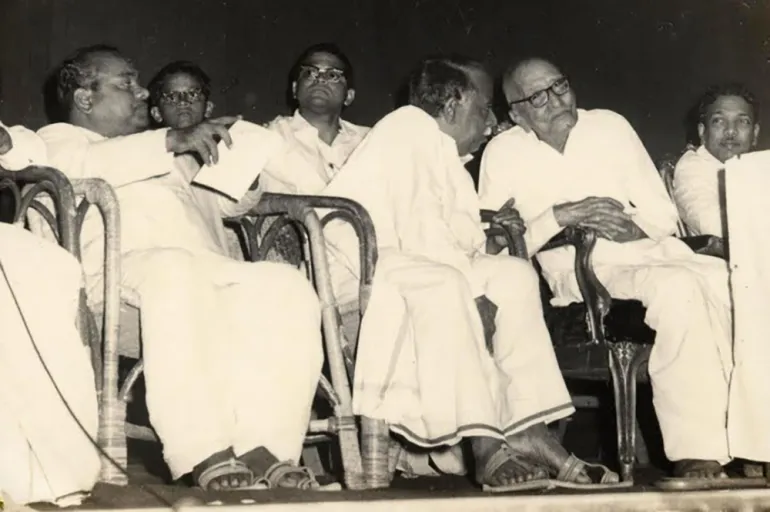
反对印地语的抗议活动(1965年)参与抗议活动的泰米尔领导人包括C·N·阿纳杜拉伊(中间)、C·拉贾戈帕拉查里(从右数第二位)以及M·卡鲁纳尼迪(最右侧)。[ 政府的官方语言,这一过渡期于1965年1月26日结束。印度南部,尤其是当时的马德拉斯邦(现泰米尔纳德邦)的泰米尔族民众担心,这一政策会使他们无法在政府职位、公务员考试以及与中央政府的交往中获得机会。
Anti-Hindi agitations (1965) Tamil leaders including CN Annadurai (middle), C Rajagopalachari (second from right) and M Karunanidhi (extreme right) [Courtesy of Creative Commons] India’s newly-formed constitution envisaged Hindi replacing English as the central government’s official language after a 15-year transition, ending on January 26, 1965. Many people in southern India, particularly Tamil speakers in the then Madras state (now Tamil Nadu), feared that this would sideline them in government employment, civil service examinations and dealings with the central administration. For the federal government of a vast and diverse country, the idea of one common official language of communication was attractive as a tool of unification.
对于这个幅员辽阔、文化多元的国家来说,统一使用一种官方语言确实具有促进国家团结的作用。但对于那些曾同意加入印度联邦的古老地区而言,他们担心这会导致印地语地区(北部)对当地文化的支配。
But for many of the ancient societies that had agreed to come together under the Indian Union, this led to fears of cultural domination by the Hindi-speaking north of the country. Demonstrations by several student organisations, opposing the imposition of Hindi, broke out, often leading to clashes with the police.
多个学生组织发起了反对强制推行印地语的抗议活动,这些抗议活动经常与警方发生冲突。
The Dravida Munnetra Kazhagam (DMK), a regional political party advocating Tamil nationalism, led by CN Annadurai and M Karunanidhi, spearheaded the protests.
由C·N·阿纳杜拉伊和M·卡鲁纳尼迪领导的地区性政党“德罗维达民族运动党”(DMK)是这些抗议活动的核心力量。1965年1月,在一次反对印地语的抗议活动前夕,阿纳杜拉伊被逮捕;两名年轻支持者甚至选择了自焚;许多印地语教材也被焚烧。
In January 1965, Annadurai was arrested on the eve of an anti-Hindi agitation. Two young supporters immolated themselves, and Hindi books were burned.
时任总理拉尔·巴哈杜尔·沙斯特里向抗议者保证,英语将继续与印地语并行使用。1967年,德罗维达民族运动党在泰米尔纳德邦的选举中获胜,终结了此前长期执政的国大党的统治。
Then-Prime Minister Lal Bahadur Shastri assured protesters that English would continue to be used alongside Hindi. The DMK won Tamil Nadu’s state election in 1967, ending the until-then dominant Congress party’s rule in the state.
这一事件成为印度联邦制发展历程中的重要转折点,也凸显了该地区强烈的民族认同感。至今,英语仍是印度的两种官方语言之一;而国大党也再未在泰米尔纳德邦单独执政过。
It was one of the defining moments of Indian federalism and regional identity in a young nation. English has remained one of India’s two official languages — and the Congress party has never returned to power in Tamil Nadu on its own.
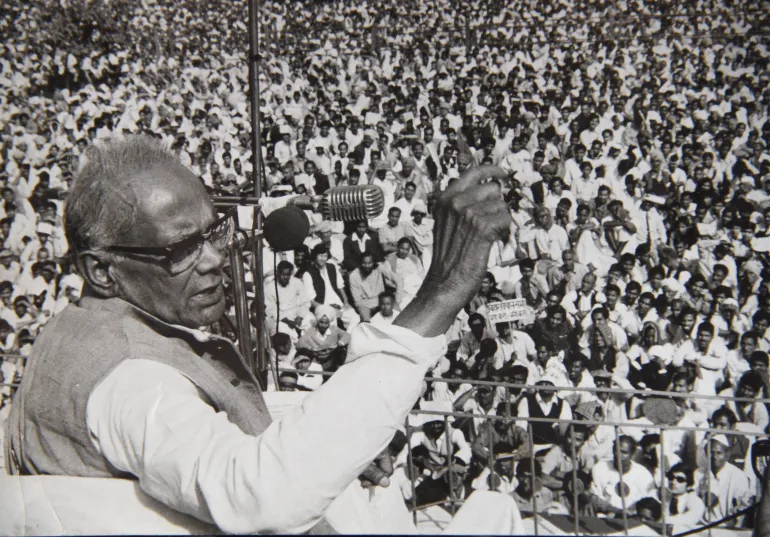
JP运动(1970年代中期) 72岁的甘地追随者贾亚·普拉卡什·纳拉扬在新德里率领一次集会,猛烈抨击时任总理英迪拉·甘地及国大党的政策,1975年3月6日JP运动——以其社会主义领袖贾亚·普拉卡什·纳拉扬命名——始于1973-74年在古吉拉特邦和比哈尔邦的学生抗议,抗议内容包括腐败、通胀和政府管理不善。
The JP Movement (mid-1970s) Jaya Prakash Narayan, 72-year-old follower of Mahatma Gandhi, leads a rally, marked by fierce attacks on the policies of then-Prime Minister Indira Gandhi and the Congress party in New Delhi, March 6, 1975 The JP Movement — named after its socialist leader, Jayaprakash Narayan — began amid student protests against corruption, inflation and government mismanagement in the states of Gujarat and Bihar in 1973-74.
随后,它演变为对时任总理英迪拉·甘地及其国大党在印度政治中主导地位的全国性挑战。学生、民间社会组织、工会和在野党随后加入了这场动员。
Soon, it evolved into a nationwide challenge to then-Prime Minister Indira Gandhi and her Congress government’s dominance over Indian politics. Students, civil society groups, trade unions and opposition parties subsequently joined the agitation.
纳拉扬曾著名呼吁“全盘革命”(Sampoorn Kranti),这一口号至今仍在印度回响。
Narayan famously called for “Sampoorn Kranti”, or “Total Revolution”, a slogan that still rings in India.
该运动为1975年6月25日甘地宣布的全国紧急状态奠定了基础,紧急状态暂停了公民自由并审查新闻。紧急状态结束后,在野党联合起来,在1977年大选中击败国大党,结束了甘地的连任统治,使印度出现了首个非国大党政府。
The movement set the stage for a national emergency, declared by Gandhi on June 25, 1975, suspending civil liberties and censoring the press. After the emergency ended, opposition parties united and defeated Congress in the 1977 general election, ending Gandhi’s uninterrupted reign and giving India its first non-Congress government.
全盘革命并未如纳拉扬设想的那样实现,但该运动从根本上改变了反对派政治——表明没有任何领袖可以逃脱群众不满的选举后果。许多从这场运动中崛起的领袖后来成为州首席部长和联邦部长。
The Total Revolution did not come to pass, as Narayan had envisioned, but the movement fundamentally altered opposition politics — showing no leader was beyond the electoral consequences of mass dissent. Many of the leaders who emerged from this movement went on to become state chief ministers and leading federal ministers.
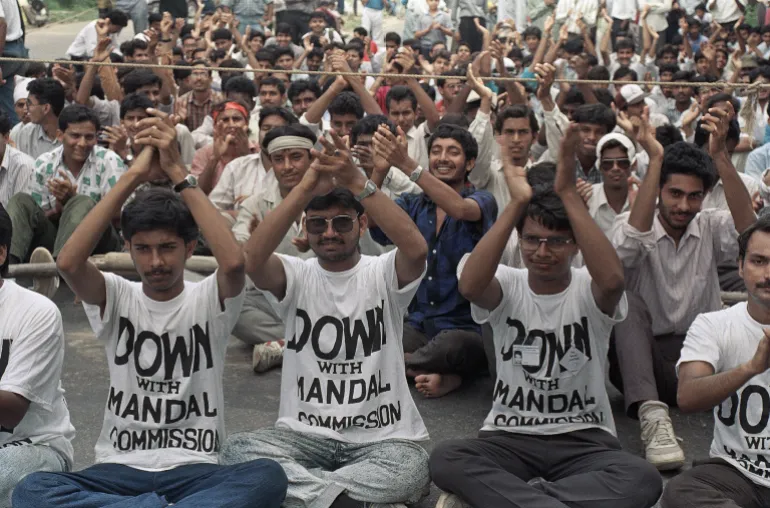
曼达尔委员会引发抗议(20世纪90年代初):学生们在德里大学附近封锁道路,高喊反政府口号,并穿着印有“打倒曼达尔委员会”字样的T恤衫,抗议政府将49%的政府职位保留给低种姓的印度教徒和部落社区。事件发生于1990年9月14日,新德里。[ 个十年前由国会议员宾德什瓦里·普拉萨德·曼达尔领导的委员会提出的建议。该委员会建议将中央政府职位的27%保留给“其他落后阶层”(OBC)——即那些在社会和教育方面处于弱势地位的群体。
Mandal Commission protests (early 1990s) Students blockade a road near Delhi University, shouting antigovernment slogans and wearing ‘Down with Mandal Commission’ T-shirts during a protest against plans to reserve 49 percent of government jobs for lower-caste Hindus and tribal communities, New Delhi, September 14, 1990 [Ajit Kumar/AP Photo] In August 1990, then-Prime Minister Vishwanath Pratap Singh announced that his government would implement recommendations of a panel that had been set up more than a decade earlier under a member of parliament, Bindeshwari Prasad Mandal. The Mandal Commission, as it was known, recommended that 27 percent of central government jobs be reserved for people from Other Backward Classes (OBCs), communities identified as socially and educationally disadvantaged. The decision triggered nationwide protests against reservation by students of privileged castes who feared that quotas would reduce their access to government jobs. Supporters of reservations argued that concrete actions were needed to address entrenched caste discrimination and unequal access to opportunities, while privileged caste students framed their opposition around merit.
这一决定引发了全国范围内的抗议活动,来自特权种姓的学生们担心这些配额制度会减少他们获得政府职位的机会。
More than 100 students tried to die by suicide by setting themselves alight, and more than 60 succeeded, during those protests.
支持保留政策的人认为,必须采取具体措施来消除根深蒂固的种姓歧视和不平等的就业机会;而特权种姓的学生则以“公平竞争”为理由反对这一政策。
In 1992, the Supreme Court upheld the 27 percent OBC reservation in central government employment, excluding the relatively financially better-off “creamy layer” within communities.
在这些抗议活动中,有超过100名学生试图通过自焚的方式自杀,其中60多人成功自杀。
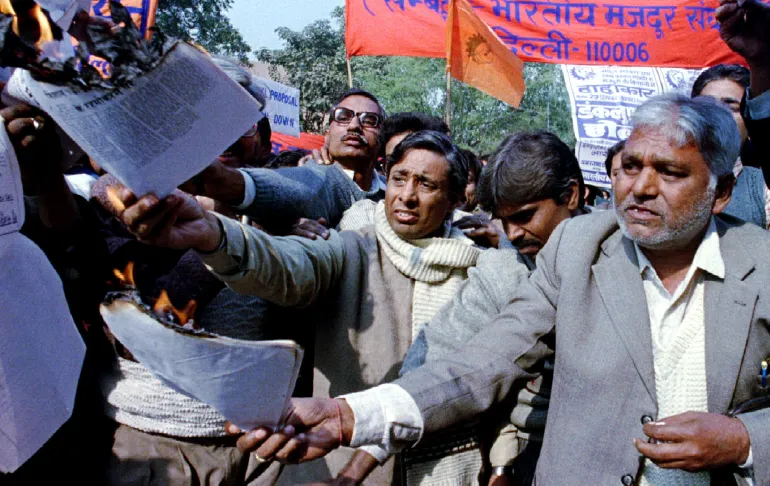
Protests against liberalisation, globalisation (early 1990s) Indian trade unionists burn copies of the new General Agreement on Tariffs and Trade (GATT) during a demonstration near Indian Parliament in New Delhi, December 29, 1993 [Reuters] Rather than a unified campaign, the protests arose from a series of labour protests and strikes against India’s economic reforms, launched in 1991 under then-Prime Minister PV Narasimha Rao and Finance Minister Manmohan Singh, who would go on to become prime minister in 2004.
1992年,印度最高法院维持了中央政府职位中27%的OBC配额制度,但将那些经济条件相对较好的群体排除在外。
The reforms reduced restrictions on private enterprise and opened more sectors to foreign investment.
反对自由化与全球化的抗议活动(20世纪90年代初) 1993年12月29日,在新德里的印度议会附近,印度工会成员在示威活动中焚烧了新的《关税与贸易总协定》(GATT)副本。[路透社] 这些抗议活动并非由一个统一的运动组织发起,而是源于1991年印度时任总理PV·纳拉辛哈·拉奥和财政部长曼莫汉·辛格推行的经济改革政策所引发的一系列劳工抗议和罢工行动。曼莫汉·辛格后来于2004年成为印度总理。
Trade unions feared that privatisation and easier business closures would cause job losses, weaken collective bargaining and erode workers’ protections. Left-aligned political parties supported many of these protests. But the protests could not prevent the reform programme from proceeding.
这些改革措施减少了了对私营企业的限制,并允许更多行业吸引外国投资。工会担心,私有化以及企业更便捷的关闭程序会导致大量失业,削弱工人的集体谈判权,并侵蚀他们的权益保护。
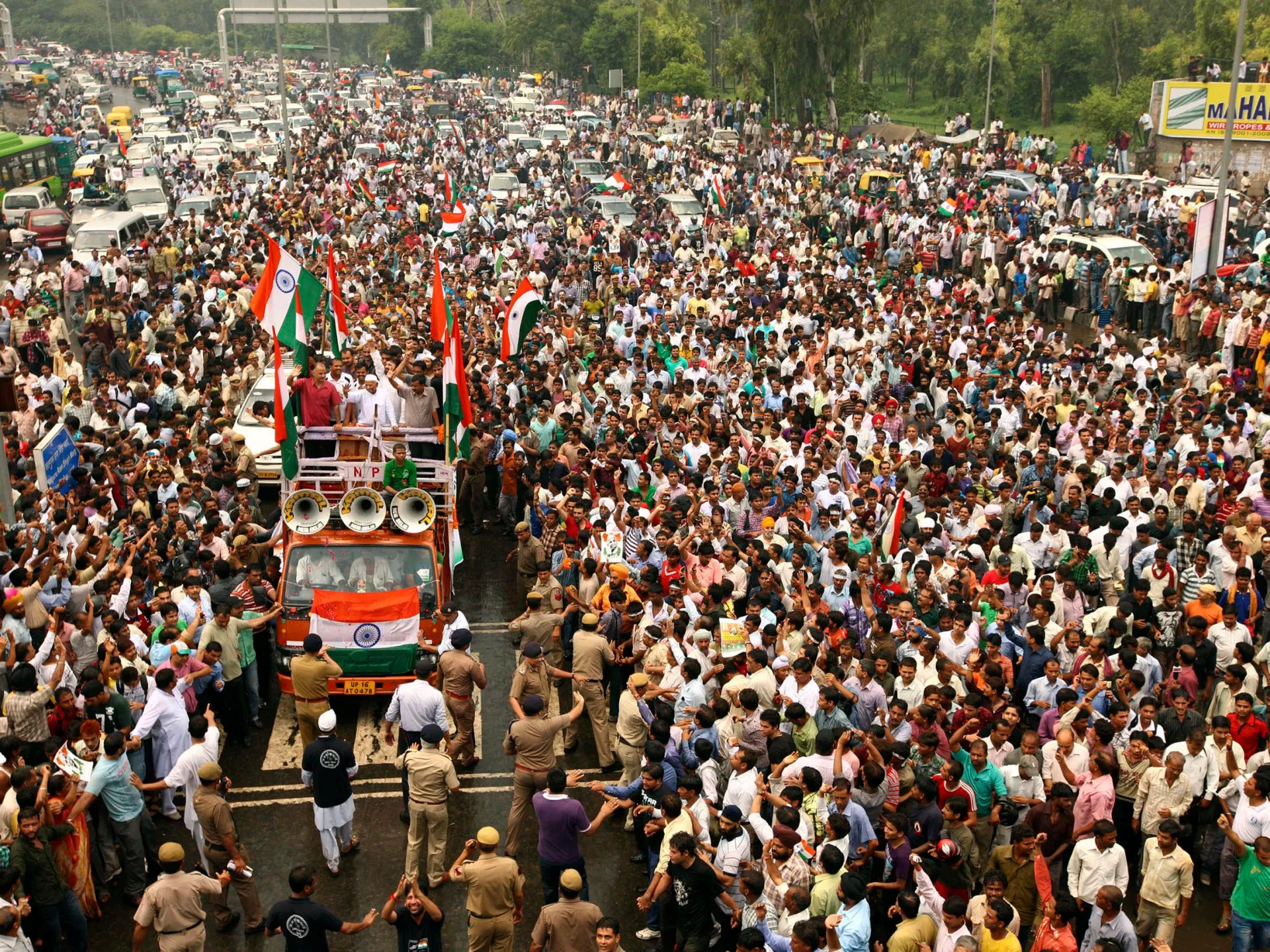
Successive governments have continued to expand private sector participation, pursue disinvestment in state-owned enterprises, and modify labour regulations. Anna Hazare’s anticorruption movement (2011) India’s most prominent anticorruption crusader Anna Hazare, wearing a white cap on a truck, waves to the crowd during a slow-moving procession to a protest venue, in New Delhi, August 19, 2011 [AP Photo] The movement erupted amid public anger over major corruption scandals involving the Congress-led coalition government, including a controversy around licensing of the country’s 2G spectrum and allegations surrounding preparations for the 2010 Commonwealth Games, held in New Delhi.
左翼政党大多支持这些抗议活动,但它们终究未能阻止改革进程的继续。
Activists demanded a strong law with an independent anticorruption ombudsman empowered to investigate and punish corruption involving public officials.
反腐败运动(2011年)印度最著名的反腐败斗士安娜·哈扎雷(Anna Hazare)于2011年8月19日在新德里参加抗议活动时,戴着白色帽子,向人群挥手致意。[美联社照片] 这场运动爆发于公众对国大党领导的联合政府所涉及的重大腐败丑闻的愤怒之中,其中包括2G频谱许可问题以及2010年新德里英联邦运动会筹备工作中的腐败指控。
Social activist Anna Hazare led the movement through hunger strikes, also featuring activists such as Arvind Kejriwal, Kiran Bedi and Prashant Bhushan. Its demonstrations attracted large crowds across the country.
活动人士要求制定强有力的反腐败法律,设立独立的反腐败监察机构,以调查和惩处公职人员的腐败行为。安娜·哈扎雷通过绝食抗议来领导这场运动,其他参与者还包括阿尔文德·凯杰里瓦尔(Arvind Kejriwal)、基兰·贝迪(Kiran Bedi)和普拉尚特·布尚(Prashant Bhushan)等人。他们的抗议活动在全国范围内吸引了大量民众的参与。
Parliament passed a law in December 2013, establishing a statutory framework for an anticorruption watchdog. But more than a decade later, its impact is minimal. The movement was divided over whether activists should enter electoral politics.
2013年12月,议会通过了一项法律,为反腐败监督机构建立了法律框架。然而,十多年过去了,这项法律的实际影响力依然微乎其微。
Kejriwal broke away to establish the Aam Aadmi Party (AAP) in 2012 and went on to become a two-time chief minister of Delhi state. The legacy of the movement remains largely in the shadow of Kejriwal today, who is now in opposition after Modi’s Bharatiya Janata Party (BJP) won the Delhi state election last year.
这场反腐败运动在“活动人士是否应该进入政坛”这个问题上存在分歧。2012年,凯杰里瓦尔(Kejriwal)脱离原有组织,创立了“人民党”(Aam Aadmi Party, AAP),并后来两次担任德里邦的首席部长。
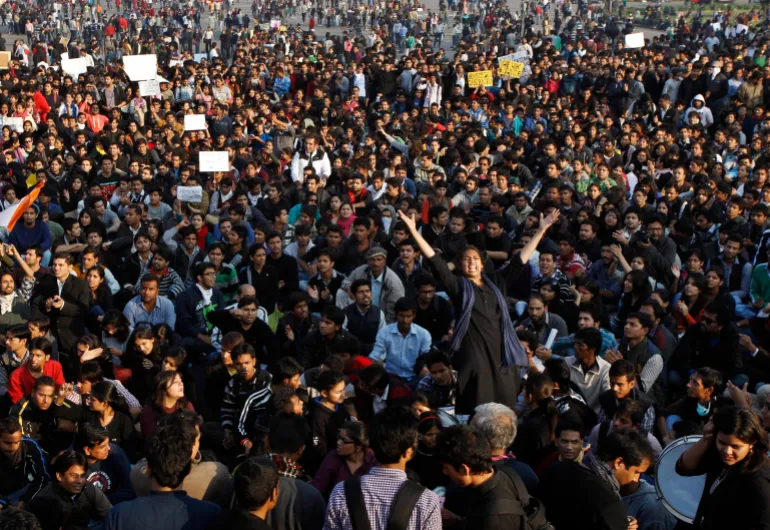
Protests following the ‘Nirbhaya’ gang rape (2012) People crowd outside the Rashtrapati Bhavan, the Indian president’s official residence, as they protest against a 23-year-old student’s gang rape in New Delhi, December 22, 2012 [Tsering Topgyal/AP Photo] On December 16, 2012, a 23-year-old paramedical student was gang-raped and brutally assaulted on a moving bus in New Delhi. She died on December 29 while receiving treatment.
如今,这场运动的成果在很大程度上仍被凯杰里瓦尔的个人声望所掩盖;去年莫迪领导的“印度人民党”(Bharatiya Janata Party, BJP)赢得了德里邦的选举,凯杰里瓦尔也因此转为反对派。
Victims of sexual assault cannot be named publicly under Indian law.
2012年“Nirbhaya”集体强奸案后的抗议活动:2012年12月22日,新德里发生了一起针对一名23岁女学生的集体强奸案,民众聚集在印度总统官邸“拉什特拉帕蒂·巴万”(Rashtrapati Bhavan)外抗议。2012年12月16日,这名女学生在行驶中的公交车上遭到集体强奸和暴力伤害,最终在2012年12月29日救治过程中不幸身亡。
So she was widely referred to as “Nirbhaya”, meaning fearless in Hindi. The crime triggered mass demonstrations against sexual violence, unsafe public spaces, inadequate policing and the treatment of women in the country.
根据印度法律,性侵犯案的受害者姓名不得公开披露,因此她被人们称为“Nirbhaya”——在印地语中意为“无畏的”。这起事件引发了大规模的抗议活动,人们要求政府惩治性暴力犯罪、改善公共安全环境、加强执法力度,并改善对女性的待遇。抗议者不仅出现在德里,还遍布印度各地(包括印度门等关键地点)。
Protesters demanded justice for the victim and fundamental changes to how authorities handled sexual assault cases. Students, young people, women’s rights activists, and common residents mobilised in Delhi, including around India Gate and other key locations. Four adult defendants were convicted and sentenced to death; their executions took place in 2020.
最终,四名成年被告被判有罪并被判处死刑,他们的死刑于2020年执行。
Parliament passed the Criminal Law (Amendment) Act, 2013, broadening the legal recognition of sexual offences, criminalising offences including stalking and voyeurism, and strengthening penalties for several crimes.
2013年,议会通过了《刑法修正案》,扩大了对性犯罪的法律认定范围,将跟踪骚扰和窥视等行为定为犯罪,并加重了对多项犯罪的处罚力度。
Activists continue to argue that stronger laws alone cannot address entrenched misogyny and inadequate policing.
活动人士持续认为,仅靠更严格的法律是无法解决根深蒂固的厌女现象以及执法不力的问题。在印度大部分地区(包括首都),针对女性的犯罪行为(包括性犯罪)依然猖獗。
And crimes against women, including sexual crimes, remain rampant across most parts of India, including the capital. Anti-CAA protests (2019-20) Protesters from Delhi’s Shaheen Bagh hold placards as they take part in a demonstration against India’s new citizenship law at Jantar Mantar, in New Delhi, January 29, 2020 India’s Citizenship Amendment Act (CAA), passed in December 2019, offers an expedited path to Indian citizenship for Hindu, Sikh, Buddhist, Jain, Parsi and Christian migrants from Afghanistan, Bangladesh and Pakistan who arrived before December 31, 2014.
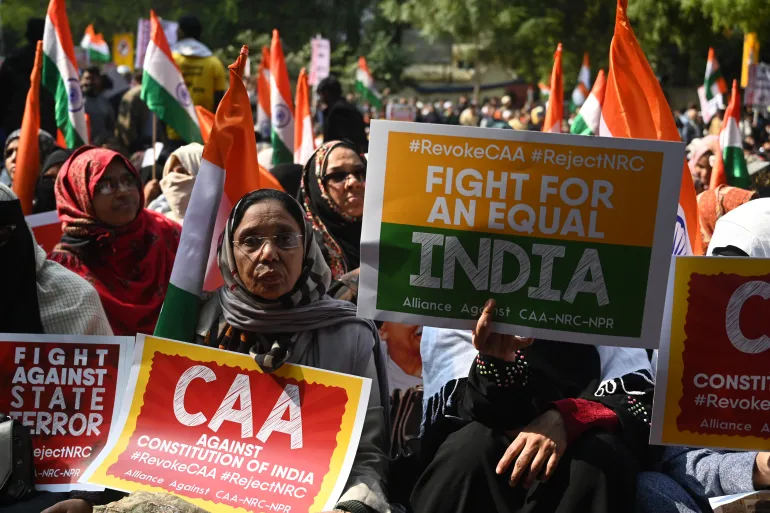
反对《公民身份修正案》(CAA)的抗议活动(2019-2020年) 2020年1月29日,德里的沙欣巴格(Shaheen Bagh)的抗议者们手持标语牌,参加在贾恩塔尔·曼塔尔(Jantar Mantar)举行的示威活动,反对印度新颁布的《公民身份修正案》。该法案于2019年12月通过,为来自阿富汗、孟加拉国和巴基斯坦的印度教徒、锡克教徒、佛教徒、耆那教徒及基督徒移民提供了加快获得印度公民身份的途径;不过穆斯林被排除在这一规定之外。
Muslims were excluded from this provision. Critics argued that making religious identity a basis for preferential citizenship undermined India’s secular constitutional principles.
批评者指出,将宗教身份作为授予公民身份的依据违背了印度的世俗宪法原则。数百万人担心,这项法律可能与正在酝酿中的《国家公民登记册》(National Citizen Registry, NRC)政策共同作用,使穆斯林面临更大的被排斥或驱逐出境的风险。
Millions feared the law could work alongside a proposed National of Citizens (NRC) to place Muslims at greater risk of exclusion and possible expulsion from India. The movement was decentralised.
这场抗议运动具有高度的草根性:贾米亚·米利亚·伊斯兰大学(Jamia Millia Islamia)和阿里格尔穆斯林大学(Aligarh Muslim University)的学生发起了大规模的示威活动;而由女性主导的静坐抗议活动(尤其是德里的沙欣巴格抗议)则成为了全国范围内反抗莫迪总理所推行的印度教主导政治的象征。
Students at Jamia Millia Islamia and Aligarh Muslim University led major demonstrations, while women-led sit-ins, especially at Shaheen Bagh in Delhi, became national symbols of resistance against Prime Minister Modi’s Hindu majoritarian politics.
2020年2月,德里东北部爆发了针对穆斯林的大规模暴力事件,导致50多人死亡(其中大部分为穆斯林)。
In February 2020, large-scale mob violence primarily targeting Muslims broke out in northeastern Delhi.
沙欣巴格的静坐抗议持续了101天,直到2020年3月24日警方在实施新冠封锁措施后才强行清场。数十名穆斯林活动人士被逮捕,并依据反恐法律被起诉。像乌马尔·哈立德(Umar Khalid)和沙尔杰尔·伊玛目(Sharjeel Imam)这样的学生领袖至今仍被关押在监狱中,至今已过去六年,但他们仍未受到审判。
More than 50 people, mostly Muslims, were killed. Meanwhile, the sit-in in Shaheen Bagh lasted 101 days before police cleared the site on March 24, 2020, soon after imposing the COVID-19 lockdown. Dozens of Muslim activists were arrested and charged under antiterrorism laws.
尽管这些抗议活动未能成功废除该法律,但确实延缓了其实施进程。政府最终宣布将于2024年3月开始执行该法案,从而使公民身份认证程序正式生效。
Student leaders such as Umar Khalid and Sharjeel Imam remain in jail, six years on, with no trial. The protests could not secure repeal of the law, but delayed its implementation.
农民抗议活动(2020-2021年) 2020年12月16日,在德里郊外的蒂克里边境,包括那些因债务问题而自杀的农民的遗孀及其亲属在内的妇女们参加了抗议活动,反对议会通过的农业法案。莫迪政府在2020年推出了三项农业改革措施,旨在放开农产品市场,促进农产品直接销售给私人买家。许多农民(尤其是印度北部的农民)担心这些改革会削弱政府监管下的批发市场,而这些市场是他们销售农产品的主要渠道;他们还担心改革会削弱政府对某些农产品的最低支持价格(MSP)。
The government notified its implementation in March 2024, bringing the citizenship process into operation. Farmers’ protests (2020-21) Women, including widows and relatives of farmers who were believed to have killed themselves over debt, attend a protest against farm bills passed by Parliament, at Tikri border on the outskirts of Delhi, December 16, 2020 In 2020, the Modi government introduced three agricultural laws intended to liberalise farm markets and facilitate direct sales to private buyers. Many farmers, particularly in northern India, feared that the changes would weaken the government-regulated wholesale markets through which much of their produce was sold.
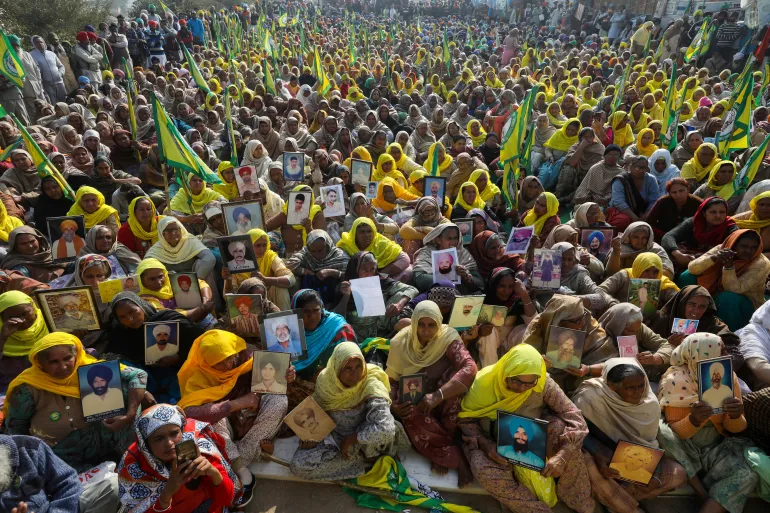
在“联合农民运动”(Samyukt Kisan Morcha)的协调下,众多农民联合起来封锁了通往德里的道路。数千名农民在德里郊区露营了数月之久。最终,超过700名农民因极端天气、交通事故、自杀事件以及与政府的冲突而丧生。2021年11月,莫迪宣布政府将废除这些农业法案。这是抗议者首次迫使莫迪做出重大让步——毕竟莫迪一直以“从不妥协”的领导人形象自居。
They also worried that the reforms would undermine the minimum support price (MSP), a government-set price for certain crops. Numerous farmer unions surrounded and shut down roads leading up to Delhi under the Samyukt Kisan Morcha, a coalition formed to coordinate the agitation. Thousands of farmers camped on Delhi’s outskirts for months. More than 700 farmers died amid extreme weather, road accidents, suicides and clashes. In November 2021, Modi announced that the government would repeal the laws.
“蟑螂”抗议活动(2026年) 2026年7月25日,在针对印度国家教育考试(NEET)舞弊指控的抗议活动中,CJP(一个政治组织)的支持者在新德里的“人民广场”(Jantar Mantar)庆祝印度教育部长达尔门德拉·普拉丹(Dharmendra Pradhan)的辞职。这一抗议行为是对印度最高法院院长苏里亚·坎特(Surya Kant)言论的回应;苏里亚·坎特曾将印度失业青年比作“蟑螂”和“寄生虫”,这一言论在印度民主指数持续下滑的背景下引发了公众的强烈愤怒。
It marked the first such moment when protesters had wrestled a significant concession from Modi, who built his political currency as a leader who does not compromise. ‘Cockroach’ protests (2026) CJP supporters celebrate the resignation of India’s Education Minister Dharmendra Pradhan at Jantar Mantar in New Delhi on July 25, 2026 amid the protests over alleged NEET exam irregularities It was a dig at India’s Chief Justice Surya Kant’s remarks, equating the country’s unemployed youth with “cockroaches” and “parasites”, sparking fury in the backdrop of a decade of sliding in multiple democratic indices.
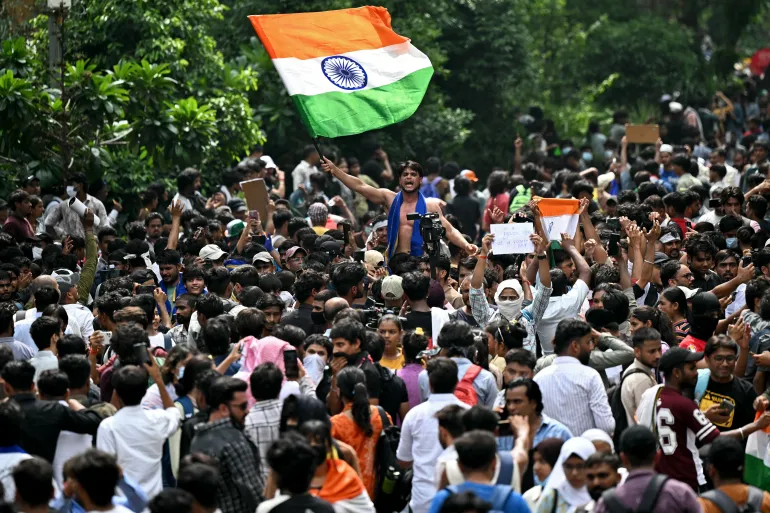
学生阿比吉特·迪普克进一步推动了这个病毒式笑话,成立了一个压力团体——蟑螂人民党(CJP),并领导抗议活动,反对全国医学院入学考试中的违规行为。CJP运动的新手抗议者们在左翼学生组织的凝聚下团结一致,堵塞了新德里的议会街和热门抗议地点——詹塔尔曼塔。
Student Abhijeet Dipke doubled down on the viral joke, creating a pressure group – the Cockroach Janta Party (CJP) – and led protests against irregularities in the national medical school entrance examination. The newbie protesters of the CJP movement were held together by left student organisations, choking Parliament Street and the popular protest site Jantar Mantar in New Delhi.
这些Z世代的抗议最终在2026年7月迫使教育部长达门德拉·普拉丹下台。
The Gen Z protests eventually forced out the education minister, Dharmendra Pradhan, in July 2026.
CJP的抗议者们再次聚集,这次还得到了反对党的支持,他们要求选举委员会主席库马尔辞职。
The CJP protesters have again come together, along with opposition parties, this time demanding CEC Kumar’s resignation.