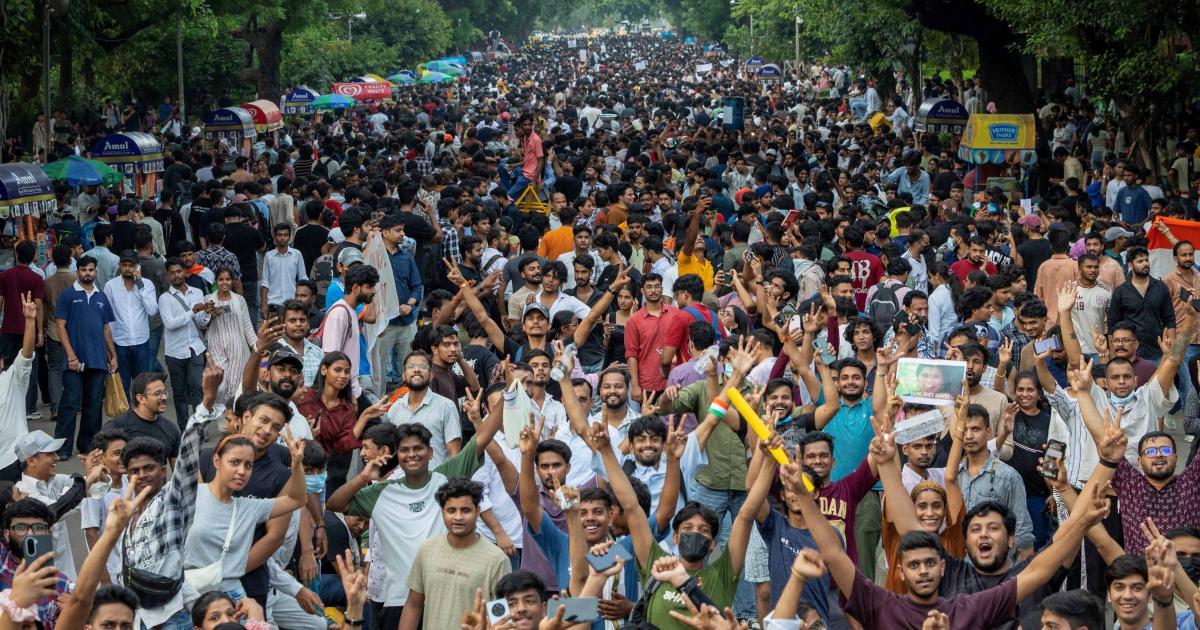
印度正在发生抗争。事关该国民主的未来及其革新的潜力。自7月份以来在德里展开、本月再次爆发的大规模抗议活动,无异于是一场关于印度国家基础及其是否兑现宪法承诺的较量。
India is in rebellion. At stake is the very future of the country’s democracy and the potential of its renewal. The mass protests that have unfolded in Delhi since July and flared again this month are nothing less than a contest over the foundations of the Indian state and whether it lives up to its constitutional commitments.
抗议活动于今年夏天开始,当时学生们谴责该国考试制度中存在的感知不公。在当局过去一年开始从初选选民名单中剔除超过1.3亿人之后,抗议活动现已扩大为一场关于印度选举完整性的斗争。许多被从选民名册中除名的人正在对他们的除名提出申诉——这是一个通常很费力的过程——但大规模剥夺选举权的可能是真实的。
Demonstrations began in the summer as students decried perceived unfairness in the country’s examination system. They have now widened to a struggle over the integrity of India’s elections, after authorities began to purge over 130 million people from draft voting lists over the last year. Many of those stripped from the electoral rolls are appealing their removal—an often laborious process—but the possibility of mass disenfranchisement is real.
过去一周,数以万计主要是年轻人的抗议者走上德里街头,抗议活动目前正蔓延至其他主要城市。示威者要求印度选举委员会总专员辞职,并对印度表面上独立的机构的可信度提出质疑。他们还将矛头直指印度总理纳伦德拉·莫迪,指责他“窃取民主”。通过拒绝该国的当前轨迹,这些抗议活动构成了自莫迪总理于2014年上台以来对其权威的最重大挑战。
Tens of thousands of mostly young people have taken to the streets in Delhi in the past week, with protests now spreading to other major cities. The demonstrators are demanding the resignation of India’s chief election commissioner and questioning the credibility of India’s ostensibly independent institutions. And they are holding Indian Prime Minister Narendra Modi directly responsible, accusing him of “stealing democracy.”In their rejection of the country’s current trajectory, the protests pose the most significant challenge to Modi’s authority since the prime minister came to power in 2014.
主要反对党在国大党领导人拉胡尔·甘地的带领下组成了统一战线,这些反对党在全国议会选举中从未接近过推翻莫迪,并在10月12日德里的一次集会上展现了令人印象深刻的力量。
The main opposition parties, which have never come close to dislodging Modi in national parliamentary elections, put up a united front under Rahul Gandhi, the leader of the Congress party, and an impressive show of force at a rally in Delhi on October 12.
但抗议活动的真正核心是Z世代学生所表现出的强烈政治活力和创造力。这些年轻人无视抗议禁令,突破了严厉的安全镇压,并经受住了拘留,不懈地对政府的权威提出质疑。
But the real heart of the protest is the intense political energy and inventiveness shown by Gen Z students. These young people have defied prohibitions on protest, breached draconian security clampdowns, and endured detentions to relentlessly question the government’s authority.
政府方面,也将这场对抗视为一场生死存亡之战。这一点从其遏制抗议活动的决心上显露无遗:政府部署了逾4万名安全人员,关闭了地铁和火车站,用路障封锁了德里市中心,暂停了移动互联网,并拘留了7万多人。它一直顽强地为选举委员会负责人辩护,并拒绝就反对派和年轻抗议者的诉求与他们对话。
The government, for its part, also sees this confrontation as an existential battle. This is evident in its determination to contain the protests, deploying over 40,000 security personnel, closing down metro and train stations, barricading central Delhi, suspending mobile Internet, and detaining over 7,000 people. It has doggedly defended the chief of the Election Commission and it has refused to talk to the opposition or the youthful protesters about their demands.
莫迪没有倒台的危险;这不会是邻国孟加拉国和尼泊尔近期成功推翻政府的“Z世代”抗议活动的重演。但印度政府面临着一种更微妙的危险:其政令不再具有不容置疑的绝对影响力。像莫迪这样的强人喜欢展现不容置疑的个人权威。自2014年以来,他所在的执政党印度人民党(BJP)以空前程度巩固和集聚了权力。对政府而言,年轻人公开抗议是一种空前的挑战,这些年轻人来自各个阶级、宗教和种姓背景,不能轻易被无视或污蔑为属于“反国家”群体。
Modi is in no danger of falling; this will not be a rerun of recent Gen Z protests in neighboring Bangladesh and Nepal that successfully toppled governments. But the Indian government faces a subtler danger: its writ no longer carries unequivocal sway. A strongman such as Modi likes to project unquestioned personal authority. Since 2014, his ruling Bharatiya Janata Party (BJP) has consolidated and centralized power to an unprecedented degree. For the government, the open defiance of young people—who come from all class, religious, and caste backgrounds and cannot easily be dismissed or stigmatized as belonging to an “antinational” group—is an unprecedented challenge.
这使得莫迪政府曾经坚如磐石的权力掌控显得更加脆弱。印度民主的未来取决于这场较量是会开拓出更多民主空间,还是会导致更大程度的镇压。
It makes the Modi government’s once adamantine grip on power seem more fragile. The future of Indian democracy hinges on whether this contest opens up more democratic space or leads to greater repression.
平等的承诺 现代印度建立在两个合法化机构之上:选举和考试。自1947年独立以来,印度一直保持着举行自由公正选举的声誉。印度选举委员会是一个独立的宪法机构,拥有广泛的权力,以确保投票无可挑剔。该委员会的公信力一直是印度民主公信力的核心。
THE PROMISE OF EQUALITY Modern India is founded on two legitimizing institutions: elections and exams. Since its independence in 1947, India has maintained a reputation for conducting free and fair elections. The Election Commission of India, an independent constitutional body, has sweeping powers to ensure that the polls remain beyond reproach. The credibility of the commission has been central to the credibility of Indian democracy.
印度还通过全国竞争性考试来为公共部门职位进行招聘,并决定公立以及部分私立大学的录取。对于数百万年轻人来说,这些考试的利害关系重大。成功可以使候选人在机会的阶梯上奋力向上攀登,而失败则可能注定他们永远无法涉足。因此,这些考试必须公平举行,并带有诚实和公正的印记,这一点至关重要。
India also conducts recruitment for public-sector jobs and admissions to public and several private colleges through competitive national exams. For millions of young people, the stakes in these exams are high. Success can send candidates scrambling up the ladder of opportunity, but failure can consign them to never climbing it at all. It is important, therefore, that these exams be conducted fairly and have the imprimatur of honesty and impartiality.
印度依然是一个顽固的不平等社会,金钱、亲缘关系和权力扭曲了几乎所有机构。在此背景下,选举和考试是使国家关于平等对待的承诺切实可感的仅有的两个进程。选举甚至让最贫困的印度人也看到了拥有尊严和自主权的希望,因此,投票率通常很高。考试则维持着一项平行的承诺:它们让学术勤奋和表现能够胜过其他形式社会资本的理念得以存续。诚然,选举和考试的组织工作从未完美无缺,但这些进程的整体廉洁性从未受到过质疑。
India remains a doggedly unequal society in which money, kinship, and power distort almost all institutions. In this context, elections and exams are the only two processes that make the state’s promise of equal treatment tangible. Elections give even the poorest Indians the prospect of dignity and agency, and as a result, voter turnout rates are routinely high. Exams sustain a parallel promise: they keep alive the idea that academic diligence and performance can trump other forms of social capital. To be sure, the staging of both elections and exams has never been perfect, but the overall integrity of the processes has never been in doubt.
然而,在过去的一年里,印度政府的行径却让人们对选举和考试产生了怀疑。2024年,全国主要的医学院全国入学考试因一系列违规行为而陷入争议,其中包括试题提前泄露。抗议随之爆发,学生们对考试系统的可靠性提出了严重质疑。这一事件还将国家考试局置于严厉的审视之下,这个在莫迪领导下负责举行许多重要考试的中央机构承受着压力。
Over the last year, however, the actions of the Indian government have cast doubt on elections and exams. In 2024, the main nationwide entrance examination for medical schools was engulfed in controversy over a slew of irregularities, including the advance leak of the exam’s questions. Protests ensued, and students raised serious questions about the reliability of the examination system. The episode also put the National Testing Agency, the central body that under Modi had become responsible for conducting many important exams, under intense scrutiny.
中央集权本意是为了确保更高的效率和规律性,但它却通过将责任集中在联邦政府层面,反而加深了危机。7月,由于对考试系统感到沮丧,反政府抗议迫使教育部长辞职。
Centralization was meant to ensure greater efficiency and regularity. Instead, it made the crisis deeper by concentrating responsibility at the level of the federal government.
同样,在大约过去的一年里,选举委员会决定开展一项被称为“特别集中核查”(简称SIR)的行动,对印度的选民名册进行评估以确保其准确性。这项工作完全在选举委员会的权力范围之内;上一次此类核查是在2002年至2004年之间进行的。但这一次该程序却引发了相当大的争议,原因在于:人们担心这给公民证明其投票资格带来了过重的负担;缺乏关于为何在名册中添加或删除名字的透明度;以及使用了新的软件,使得选举委员会能够以微不足道的理由剥夺公民的选民资格,往往凌驾于既定程序以及负责实际核查的地方官员的建议之上。
In July, antigovernment protests forced the resignation of the education minister over frustrations with the examination system. Similarly, over the last year or so, the Election Commission decided to undertake what is known as a Special Intensive Revision, or SIR, an assessment of India’s voter lists to ensure their accuracy. The exercise is well within the powers of the Election Commission; the last such revision was conducted between 2002 and 2004.
批评者认为,首席选举委员吉亚内什·库马尔(Gyanesh Kumar)在推进以违背正常程序的方式修订选民名册时,行事独断且鲁莽。自2025年6月以来,“特别集中核查”已标记了大约1.3亿个拟从选民名册中删除的名字。尽管许多被删除的名字属于重复登记、已故人员或已离开国家的人,但数百万印度人发现自己被剥夺了投票权,并陷入了向法庭提起上诉以证明其公民身份的艰难任务之中。
But the process has become quite controversial this time because of concerns that it places excessive burdens on citizens to prove their eligibility to vote; the lack of transparency about why names are being added or deleted from the lists; and the use of new software that has given the Election Commission the ability to strip citizens from the voter rolls on trivial grounds, often overriding established procedures and the recommendations of those local officials who do the actual verification. According to his critics, Gyanesh Kumar, the chief election commissioner, acted unilaterally and recklessly in pursuing the revision of voter rolls in ways that violated normal procedures. Since June 2025, the SIR has tagged roughly 130 million names for removal from the voter rolls.
有鉴于此,抗议活动已经产生了一个建设性的效果:选举委员会正试图通过为被排除在外的人简化上诉提交手续来安抚批评者。
Although many of the deletions were duplicates and the names of people who had died or left the country, millions of Indians have found themselves stripped of the right to vote and now burdened with the difficult task of appealing to a tribunal to prove their citizenship.
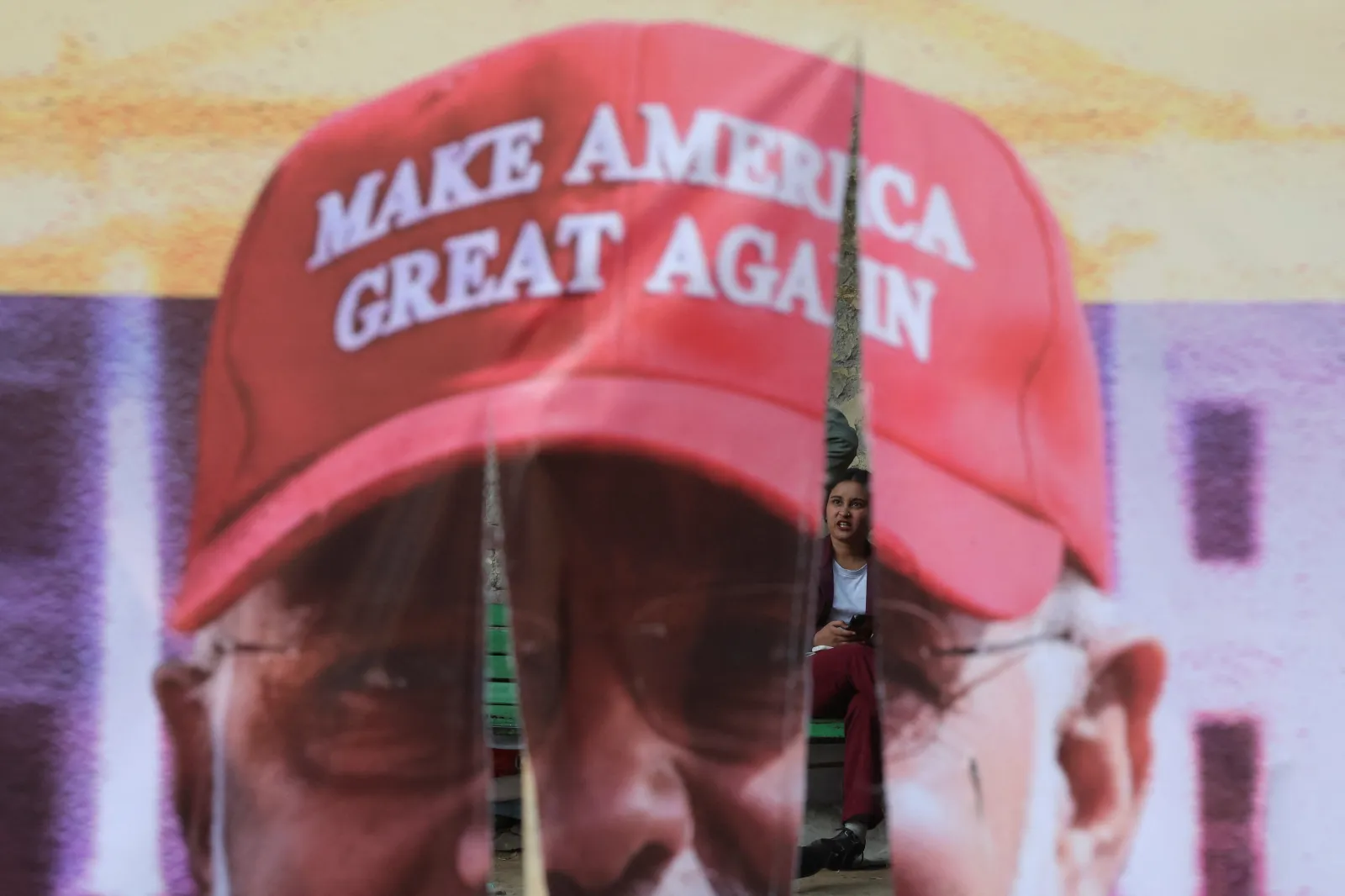
甘地指责SIR是操纵选举的工具。早在西孟加拉邦,九百万个名字被删除,数百万印度人发现自己无法在三月参加州选举,因为他们的上诉尚未被受理。此次选举使莫迪的印度人民党首次在该州上台执政。但即使选举委员会并未系统地基于身份或政治倾向针对选民,这一行为仍可能因纯粹的无能而使数百万人失去投票权。
In this light, the protests have already had one constructive effect: the election commission is trying to placate its critics by making it easier for those excluded to lodge appeals. Gandhi has alleged that the SIR is an instrument for manipulating elections. Already, in the state of West Bengal, where nine million names were taken off, millions of Indians found themselves unable to participate in state elections in March because their appeals were yet to be heard. The elections brought Modi’s BJP to power in the state for the first time.
更糟的是,印度最高法院作为另一个至关重要的民主机构,也在这一系列事件中扮演了不幸的角色。最高法院通过轻描淡写地声称,那些上诉尚未结案的人可以在上诉裁决后参加下一次选举投票,从而实际上协助了西孟加拉邦选民的剥夺选举权;无论他们是否错过了当前选举的投票,都无关紧要。
But even if the Election Commission is not systematically targeting voters based on their identity or their political preferences, the exercise still risks disenfranchising millions through sheer ineptitude. To make matters worse, India’s Supreme Court, another vital democratic institution, has also played an unfortunate role in this train of events.
最高法院这种冷漠的态度在五月份因首席大法官苏里亚·坎特将一群推动变革的年轻律师比作“蟑螂”而进一步加深。这一随意言论引发了一场社会运动,最初以玩笑形式出现,但后来变得认真起来——“蟑螂人民党”应运而生,这一群体既在社交媒体上也在街头动员了年轻印度人。它在七月份通过德里及全国范围内的大规模抗议,推动了教育部长达门德拉·普拉丹的辞职。如今,它正推动年轻印度人要求首席选举委员库马尔辞职。
The Supreme Court effectively collaborated in the disenfranchisement of voters in West Bengal by blithely claiming that those whose petitions were under appeal could just vote in the next election after their appeals had been adjudicated; it didn’t matter if they missed voting in the current election. The sense of the Supreme Court’s callousness was compounded in May after Surya Kant, the chief justice, compared a group of young lawyers pressing for change to “cockroaches.”That stray remark precipitated a social movement, with the creation—initially as a joke but then in earnest—of the “Cockroach Janata Party,” a group that has galvanized young Indians both on social media and in the streets. It played a key role in forcing the resignation of Dharmendra Pradhan, the education minister, in July, after mass protests in Delhi and across the country.
最为重要的是,它将这场信誉危机直接与莫迪联系在一起,从而在社交媒体和互联网上引发了针对这位总理的、堪称爆发式的公开嘲讽。这戳破了莫迪苦心经营的“无所不能、兑现每一项承诺的领袖”形象。他曾为自己对社交媒体的主导地位感到骄傲,但对政治叙事失去控制(尤其是在图片分享平台Instagram上)是显而易见的。
It is now driving young Indians to call for the resignation of Kumar, the chief election commissioner. Most significantly, it has linked the credibility crisis directly to Modi, encouraging a veritable explosion of public mockery of the prime minister on social media and the Internet. That has punctured Modi’s carefully cultivated image of an invincible leader who delivers on every promise.
这位总理曾无力地尝试制作自己的短视频作为回应,但未能遏制公众的不敬之潮。这种嘲弄之所以引人注目,不仅仅是因为它具有政治讽刺意味。它驱散了自莫迪担任总理以来一直笼罩着印度民主的恐惧阴霾,此前批评人士因遭到恐吓而噤声,反对派领导人则成为法律诉讼的目标。在嘲弄权力的过程中,年轻人找到了自己的声音。
He has prided himself on his dominance of social media, but the loss of control over the political narrative, especially on the image-sharing platform Instagram, was palpable. The prime minister has feebly tried to make his own reels in response, but that failed to stem the tide of public irreverence. The ridicule was noteworthy not simply as political satire. It lifted the pall of fear that had hung over Indian democracy since Modi became prime minister, as critics have been silenced through intimidation and opposition leaders targeted through legal proceedings.
他们对莫迪构成了重大的威胁。这些印度年轻人并没有背负与传统反对党联系的历史包袱。他们关注的议题——考试和选举——跨越了社会分歧甚至是党派政治归属。抗议者坚韧不拔的毅力、机智、创造力和无畏精神,对莫迪权威造成的打击是过去12年中任何其他事物都无法比拟的。他们自己的未来这场运动仍必须面对国家机器残酷现实的考验,过去一周德里街头的情况便是有力的证明。
In mocking power, young people found their voice. The threat they pose to Modi is significant. These young Indians are not saddled with the historical baggage of ties to conventional opposition parties. The issues they focus on—exams and elections—cut across social divides and even partisan political affiliations. And the protesters’ grit, wit, inventiveness, and fearlessness have dented Modi’s authority like nothing else has in the past 12 years.
当局试图通过发布禁令和阻止抗议者进入特定公共空间来从物理上压制和遏制异见。这反过来又给了印度年轻人走上街头的又一个理由,他们要为抗议的权利进行抗议,并夺回公共空间。政府在首都部署了数千名安全部队,仿佛面对的不是提出合理诉求的年轻人,而是某种入侵的外国军队,种种迹象表明莫迪将继续对这些抗议活动采取强硬路线。
THEIR OWN FUTURE The movement must still contend with the brute reality of state power, which has been evident in the streets of Delhi this past week. Authorities tried to physically suppress and contain dissent by prohibiting it and preventing protesters from entering certain public spaces. That in turn has given young Indians another reason to go to the streets, to protest the right to protest and reclaim public spaces.
对于政府而言,该运动的核心诉求——库马尔的辞职,不仅仅关乎一名官员的任期。莫迪在其所在的印度人民党内部通过一种心照不宣的保证确立了非同寻常的忠诚,即听命于政府行事的人将受到保护,免于承担其行为的后果。如果这种保证开始出现裂痕,部长们和党内官员可能会担心,当他们不再理所当然地得到领导层的庇护时,会发生什么情况。因此,莫迪对库马尔的辩护,与其说是为了特别调查报告(SIR),不如说是为了在党内维持对政府的忠诚。
The government has deployed thousands of security forces in the national capital, as if it were facing some invading foreign army, not young people making reasonable demands, and all signs are that Modi will continue to maintain a hard line on the protests. For the government, the movement’s principal demand, the resignation of Kumar, is not simply a question of one official’s tenure. Modi has secured extraordinary loyalty within his BJP through an implicit assurance that those who act at the government’s behest will be protected from the consequences of their actions. If that assurance begins to fray, ministers and party functionaries may worry about what might happen when they can no longer take for granted the protection of the leadership.
此外,莫迪的政治形象很大程度上建立在将外界感受到的冷落转化为实力展示的基础上。面对公开嘲弄而妥协将极其困难,也与其一贯作风不符。撤换库马尔可能会被解读为认罪。这样的退让随后可能会助长莫迪竞争对手的气焰,并激起进一步的抗议,同时还会带来一种前景,即受到鼓舞的反对派最终可能会在定于2029年举行的下届议会选举中赶下这位总理。印度政府面临的危险在于,它逐渐相信了自己的宣传。
Modi’s defense of Kumar, then, may be less about the SIR than about preserving loyalty to the government within the ranks of his party. Moreover, Modi has built much of his political persona around turning perceived slights into demonstrations of strength. To yield in the face of public mockery would be especially difficult and out of character. Kumar’s removal could be read as an admission of guilt. Such a retreat could then embolden Modi’s rivals and encourage further protests—and raise the prospect that a galvanized opposition might finally unseat the prime minister in the next parliamentary elections scheduled for 2029.
当然,抗议活动未来的选举后果仍然存在不确定性。公众的愤怒不会自动转化为选票。选举委员会仍可能通过接纳那些上诉尚待处理的选民,或是通过减少当前不满情绪的程序性让步来缓和这场争议。印度人民党仍可能受益于一个四分五裂的反对派,以及这样一个事实:像印度这样幅员辽阔的国家,选民在政治利害关系的动机和看法上很难保持一致。
The danger facing the Indian government is that it comes to believe its own propaganda. To be sure, the future electoral consequences of the protests remain uncertain. Public anger does not automatically translate into votes. The Election Commission may yet blunt the controversy by admitting voters whose appeals are pending or by making procedural concessions that reduce the immediate grievances.
下一个重大的选举考验在北方邦,还要几个月才会到来,即2027年3月。印度人民党若能在那里获胜,将使该党得以宣称其权威依然完好无损;若遭遇惨败,将使遏制当前争议带来的政治影响变得难得多。政府可能会在全国范围内加倍对异见人士进行镇压,坚信自己能够成功限制公众对愤怒的表达。
The BJP may still benefit from a fractious opposition and from the fact that voters in a country as large as India are rarely united in their motivations and perceptions of the political stakes. The next major electoral test, in the state of Uttar Pradesh, is still some months away, in March 2027. A victory there for the BJP would allow the party to claim that its authority remains intact; a defeat would make it much harder to contain the political implications of the present controversy.
印度人民党希望,德里的混乱越多,它就越能将当前的动荡描绘成煽动者和无政府主义者的行径,从而将印度人团结在总理身后。政府及其支持者已经在试图抹黑这场运动,将其污蔑为外部势力的黑手所为,并搬出阴谋论以及孟加拉国和尼泊尔青年示威活动中所谓恶性外国干预导致在任政府下台的例子。
The government is likely to double down on repression against dissenters nationwide, trusting that it can succeed in limiting public expressions of anger. The BJP is hoping that the more disruptions there are in Delhi, the more it can cast the current upheaval as the work of rabble-rousers and anarchists and rally Indians behind the prime minister.
然而,印度政府面临的更大危险在于它开始相信自己的政治宣传,从而忽视真正的不满。在孟加拉国和尼泊尔,民众不满的深度对于任何愿意正视的人来说都是显而易见的——在印度也是如此。
The government and its supporters are already seeking to discredit the movement as the work of foreign hands, invoking conspiracy theories and examples of alleged malign foreign intervention in the youth demonstrations in Bangladesh and Nepal that ousted sitting governments. Yet the greater danger facing the Indian government is that it comes to believe its own propaganda and ignores genuine discontent.
尽管印度的头条增长率令人瞩目,年轻人仍对自己的经济未来感到担忧。毕业生失业率高达23%,白领岗位增长率今年已放缓至仅1%的缓慢增长,且近四分之一的15至29岁印度人既不就业,也不接受教育或参加培训项目。那些本应保障他们未来的机构——选举、法院和独立机构——正在失去他们的信任。即便反对派努力激发信念和热情仍显乏力,强人政治也正在失效。
In both Bangladesh and Nepal, the depth of popular grievance was obvious for anyone willing to look—as it is in India. Despite India’s headline growth rates, young people worry about their economic future. Graduate unemployment is at 23 percent, white-collar job growth has slowed to a creeping one percent this year, and nearly a quarter of Indians between the ages of 15 and 29 are not in employment, education, or training programs. The very institutions that were meant to secure their future—elections, courts, and independent agencies—are losing their trust.
而这一时刻之所以有力,恰恰在于:尽管良好选择寥寥,年轻人仍选择以能量、抱负以及对自身能够共同塑造未来的信念,以公民在民主受威胁时所能采取的唯一方式——为他们的民主而战。无论这条路通向何方。
The strongman is failing, even as the opposition struggles to inspire a great deal of conviction and enthusiasm. What is powerful about this moment, then, is the spectacle of young people who, lacking many good options, are still choosing to fight for their democracy the only way citizens can when it is in peril: with energy, aspiration, and the belief that they can craft their own collective future, wherever that may lead.