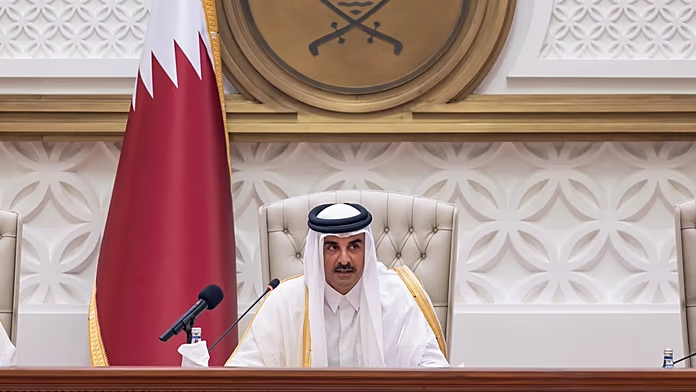
卡塔尔埃米尔谢赫·塔米姆·本·哈迈德·阿勒萨尼周二表示,该国“将从这场危机中走出来,变得更具韧性,也更有能力适应全球变化”,并阐述了该国的国家战略,该战略如今还聚焦于将经济多元化发展至“非碳氢化合物领域”,除了传统的液化天然气全球供应模式之外,卡塔尔希望将其提升。在多哈开幕的舒拉理事会年度会议上的全国性讲话中,谢赫·塔米姆明确表示:“卡塔尔在其领土上遭到伊朗的袭击,这是对其主权的公然侵犯,违反了国际法的规定,也违背了睦邻友好关系的原则。”
Qatar’s Emir Sheikh Tamim bin Hamad Al Thani said on Tuesday that his country "will emerge from this crisis more resilient and better equipped to adapt to global changes," outlining the country's national strategies which now also focus on diversifying the economy towards the "non-hydrocarbon sectors," in addition to the traditional model of liquefied natural gas global supply which Qatar wants to increase. In a speech to the nation at the opening of the Shura Council’s annual session in Doha, Sheikh Tamim made it clear that "Qatar was attacked on its territory by Iran, in a blatant violation of its sovereignty, the provisions of international law, and the principles of good-neighborly relations."“Qatar has always preferred to resolve disputes through negotiation and diplomatic and peaceful means," Sheikh Tamim added."
“卡塔尔一直倾向通过谈判和外交、和平手段解决争端,”谢赫·塔米姆补充道。“我们对对话和和平解决方案的承诺,并不意味着在捍卫国家方面会掉以轻心。”他说。
Our commitment to dialogue and peaceful solutions does not mean being complacent about defending our country," he said.
“我们捍卫主权的权利与防止战争进一步扩大之间的决心并不矛盾。”伊朗一直坚称,在那场战争中,其攻击的目标仅限于邻国中的美国利益相关设施。在地区冲突不断加剧的背景下,他强调了海湾合作委员会(GCC)成员国之间加强合作的必要性,并表示:“GCC成员国的安全以及它们的主权和稳定是绝对不可妥协的。”
"Our right to defend our sovereignty does not conflict with our determination to prevent a wider war." Iran has consistently maintained that it was only targeting US interests among its neighbours during the war. Against the backdrop of widening conflicts across the region, he stressed the need for the Gulf Cooperation Council (GCC) countries to cooperate, stating that "the security of the GCC states and the protection of their sovereignty and stability are non-negotiable."
塔米姆酋长呼吁:“我们必须加倍努力,确保海湾和霍尔木兹海峡的航行安全,保护能源设施、水利设施以及民用基础设施。”他还概述了卡塔尔在战争期间的应对措施以及未来的发展战略——这些战略都是基于危机发生前的长期规划以及卡塔尔为应对战争后果而采取的措施。塔米姆酋长提到了那些对卡塔尔和整个地区产生影响的“重大事件”,并指出:“这些事件证明了我们高效、负责任地应对危机的能力”;同时他也强调:“韧性并非在危机时刻突然产生的,而是源于危机发生前的长期规划。”
Sheikh Tamim urged "to redouble our efforts to secure navigation in the Gulf and the Strait of Hormuz, and to protect energy and water facilities, as well as civil infrastructure." Sheikh Tamim also outlined the country's response during the war and its strategies going forward, based on long-term planning before the crisis and the measures Qatar implemented to adapt to the war's consequences. He addressed "the extraordinary events" that impacted the country and the region, which "demonstrated (...) our ability to respond to crises efficiently and responsibly" and that "resilience isn't born in the moment of crisis; rather, it is the result of the planning that precedes it.""
塔米姆酋长表示:“在这场危机中,卡塔尔同时承担了三项重要责任:保护本国主权、履行其在能源安全和全球经济中的重要作用,以及保持外交渠道的畅通。”基于这些责任,卡塔尔埃米尔提出了该国应对危机的战略核心要素:“首先,坚决捍卫国家主权,同时避免卷入战争;其次,确保基本服务、供应链和经济活动的正常运转;第三,为促成停火和重新开放航道做出贡献;第四,推动谈判进程,寻求通过对话实现冲突的和平解决。”
In this crisis, Qatar has shouldered three responsibilities simultaneously: protecting its sovereignty, fulfilling its role in energy security and the global economy, and keeping the doors of diplomacy open," Sheikh Tamim said. Based on these responsibilities, Qatar's Emir outlined "four key elements" that formed the country's strategy in addressing the crisis: "first, defending the homeland firmly without being drawn into war; second, maintaining essential services, supply chains, and economic activity; third, contributing to efforts to secure a ceasefire and reopen waterways; and fourth, urging negotiations and seeking opportunities to return to talks to reach peaceful resolutions to the conflict."
塔米姆酋长还强调了卡塔尔在全球能源体系中的关键作用——该国供应了全球约五分之一的液化天然气(LNG)。
Sheikh Tamim acknowledged Qatar's key role in global energy systems, supplying about one-fifth of the world’s liquefied natural gas (LNG), and said that "any disruption affecting it is quickly reflected in markets and consumers everywhere.""
NG),并表示“任何影响它的中断都会迅速反映在全球市场和消费者身上。”卡塔尔埃米尔说:“霍尔木兹海峡的关闭,加上对拉斯拉法恩工业城部分能源设施的直接破坏,扰乱了该国相当一部分出口。”谢赫·塔米姆表示,卡塔尔通过聚焦“非碳氢化合物部门”来吸收冲击,该部门“持续增长,其贡献达到实际GDP的约80%。”
The closure of the Strait of Hormuz, together with the direct damage inflicted on some energy facilities in Ras Laffan Industrial City, disrupted a significant portion of the country’s exports," the Qatari emir said. Signalling a key development, Sheikh Tamim said Qatar absorbed the shock by focusing on the "non-hydrocarbon sectors", which "continued to grow with their contribution reaching approximately 80% of real GDP."
他解释说,“非碳氢化合物部门”这一替代方案“反映了国家经济的韧性及其在特殊复杂情况下维持增长的能力”,并指出“外国直接投资存量继续增长。”他透露,“今年上半年总收入下降了42%,而公共支出下降了14%,且未影响基本服务或发展优先事项”,因为“国家并未屈服于恐慌。”相反,谢赫·塔米姆说:“它继续以对国家经济的信心展望未来。”
He explained that the "non-hydrocarbon sectors" alternative "reflects the resilience of the national economy and its ability to sustain growth under exceptional and complex circumstances", and that "the stock of foreign direct investment continued to grow." He revealed that "the total revenues declined by 42% during the first half of the year, while public expenditure fell by 14%, without compromising essential services or development priorities," as "the state did not succumb to panic."" Instead, it continued to look to the future with confidence in the national economy," Sheikh Tamim said."
他表示:“我们决定不削减基本服务,并选择维持发展优先事项,以保持卡塔尔持续的经济动力。”他补充道:“危机前国家采取的政策——包括加强储备、减少公共债务、基于保守的油价假设编制预算以及发展非石油收入——使我们目前能够吸收此次危机的冲击。”展望未来,谢赫·塔米姆表示,这个海湾国家的“目标不是恢复到危机前的状况,而是利用复苏作为跳板,加速经济多元化并增强国家能力。”
We decided not to reduce essential services and opted to maintain our developmental priorities, in order to sustain Qatar’s ongoing economic momentum," Sheikh Tamim said." The policies adopted by the state prior to the crisis — including strengthening reserves, reducing public debt, budgeting based on conservative oil price assumptions, and developing non-oil revenues — have enabled us to absorb the repercussions of this crisis thus far." Moving forward, Sheikh Tamim said the Gulf country's "aim is not to return to the pre-crisis situation, but rather to use the recovery as a springboard to accelerate economic diversification and strengthen national capabilities.""
他告诉全国:“我们的职责是始终努力争取最佳结果,但也必须为最坏的情况做好准备,而每个人——机构和公民 alike——都必须承担责任。”他他概述了该国在能源领域的计划,其中包括扩大北部油田气项目以提高液化天然气产能,美国金色通道项目的进展以及卡塔尔能源公司增加投资和国际合作伙伴关系,“同时发展石化工业、太阳能项目以及加强水安全的努力。”
Our duty is to always strive for the best, but we must also be prepared for the worst-case scenarios, and everyone—institutions and citizens alike—must take responsibility," the emir told the nation. He outlined the country's plans for the energy sector, which include the expansion of the North Field Gas project to increase LNG production capacity, the progress of the Golden Pass project in the US and QatarEnergy's increased investments and international partnerships, "alongside the development of petrochemical industries, solar energy projects, and efforts to strengthen water security."
他还阐述了该国在粮食安全、农业、技术、制度效率方面的重点,以及对教育的投资“以应对当代挑战”和数字化转型。谢赫·塔米姆表示,巴勒斯坦问题仍是卡塔尔的首要任务,宣称“加沙地带发生的事情无疑是种族灭绝,责任人必须承担责任。”他警告以色列定居者对约旦河西岸巴勒斯坦人的袭击所带来的“危险”,”更不用说对阿克萨清真寺的反复袭击,以及对国际法、联合国宪章和国际人道法规定的无数违反。”
He also outlined the country's focus on food security, agriculture, technology, institutional efficiency, investment in education "to face the challenges of our time" and in digital transformation. Sheikh Tamim said the Palestinian cause remained a priority for Qatar, declaring that "what has happened in the Gaza Strip is undoubtedly a genocide, and those responsible must not escape accountability." He warned of "the dangers" resulting from Israeli settler attacks on Palestinians in the West Bank, "not to mention the repeated raids on the Al-Aqsa Mosque, and countless violations of the provisions of international law, the UN Charter, and international humanitarian law."
谢赫·塔米姆在全国性讲话中的批评凸显了卡塔尔对以色列在加沙和黎巴嫩行动的持续坚定立场。
Sheikh Tamim's criticism in his national speech underlined Qatar's ongoing firm position towards Israel's actions in Gaza and Lebanon.
以色列总理本雅明·内塔尼亚胡频频抨击卡塔尔,称其为“敌对国家”。除了加沙和海湾地区事务外,卡塔尔埃米尔还重申,卡塔尔将继续发挥调解作用,推动达成政治协议以解决苏丹、利比亚、也门和索马里的危机。
Israel's Prime Minister Benjamin Netanyahu has lashed out frequently at Qatar, calling it "a hostile state".Beyond Gaza and the Gulf, the emir reaffirmed Qatar's continuing role in mediating political agreements to resolve the crises in Sudan, Libya, Yemen and Somalia.