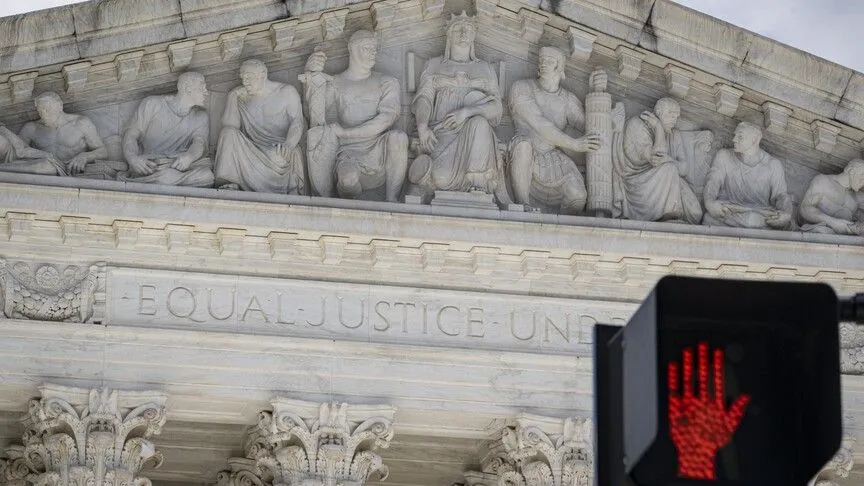
美国最高法院将于周三审理一起案件。该案件的裁决结果将决定这部制定于近40年前的联邦隐私法在多大程度上适用于现代网站、流媒体平台及其他数字服务的用户。
The US Supreme Court will hear arguments on Wednesday in a case that could determine how far a nearly 40-year-old federal privacy law extends to users of modern websites, streaming platforms and other digital services.
这起案件名为“萨拉扎尔诉派拉蒙环球公司案”,核心争议点在于1988年颁布的《视频隐私保护法》。该法最初旨在防止音像租赁店泄露顾客的观影记录。
The case, Salazar v. Paramount Global, centers on the Video Privacy Protection Act (VPPA), a 1988 law originally designed to prevent video rental stores from disclosing customers’ viewing histories.
目前争议的焦点是:那些仅使用公司非视频类服务(如电子邮件订阅服务)的用户,当公司共享其在线观影相关信息时,是否同样受到法律保护。
At issue is whether people who to a company’s non-video services, such as email newsletters, are protected when that company shares information about the videos they watch online.
此案的判决结果可能影响媒体与科技企业收集及共享用户观影数据的方式,甚至可能导致这些企业因采用常见的定向广告手段而面临诉讼。
The outcome could affect how media and technology companies collect and share viewing data, potentially exposing them to lawsuits over practices commonly used in targeted advertising.
这起纠纷始于2022年。当时迈克尔·萨拉扎尔向派拉蒙环球公司提起集体诉讼。派拉蒙环球旗下拥有247Sports网站,该网站专门报道美国大学体育赛事及球员招募信息。
The dispute began in 2022 when Michael Salazar filed a proposed class-action lawsuit against Paramount Global, the owner of 247Sports, a website covering US college sports and recruitment.
萨拉扎尔订阅了该网站的免费新闻通讯,并在登录脸书账号的状态下观看了视频。他指控称,派拉蒙环球使用了名为“脸书像素代码”的追踪工具,在未经他同意的情况下将他的观影信息传送至这家美国社交平台。
Salazard to a free newsletter from the website and watched videos while logged into his Facebook account. He alleged that Paramount used a tracking tool known as the Facebook Pixel to send information about his viewing activity to the US social media platform without his consent.
据称这些信息包括他所观看视频的标题与网址,以及能够用来识别其身份的脸书账号编号。
The information allegedly included the titles and web addresses of videos he watched, along with his Facebook identification number, which could be used to identify him.
“脸书像素代码”是一种小型计算机代码,网站可借助它收集访客的活动信息并传送给广告平台。此类工具被广泛用于评估广告效果、追踪用户行为以及实施定向广告投放。
Pixel is a small piece of computer code that websites can install to collect information about visitors’ activities and share it with advertising platforms. Such tools are widely used to measure advertising performance, track user behavior, and deliver targeted s.
萨拉扎尔主张,派拉蒙环球泄露其观影记录的行为违反了《视频隐私保护法》的相关规定。该法明确规定,视频服务提供商未经用户许可,不得泄露其个人身份信息。
Salazar argued that disclosing his viewing history violated the VPPA, which restricts video providers from sharing personally identifiable information about their customers without consent.
派拉蒙公司对他对法律的解读提出异议,认为 并不足以使他成为受法律保护的视听服务消费者。
Paramount disputed his interpretation of the law, arguing that subscribing to a sports newsletter did not make him a protected consumer of audiovisual services.
田纳西州的一家联邦地方法院驳回了他的诉讼,美国第六巡回上诉法院也于2025年4月维持了这一裁决。
A federal district court in Tennessee dismissed his lawsuit, and the US Court of Appeals for the Sixth Circuit upheld that ruling in April 2025.
该上诉法院判定,该法律旨在保护那些租赁或购买视听产品及服务的人群,而非任何仅仅订阅了某家同时提供视频服务的公司所推出的其他服务的人。
The appeals court concluded that the law protects people who rent, purchase or to audiovisual products or services, not everyone whos to an unrelated offering from a company that also provides videos.
此前,纽约和芝加哥的联邦上诉法院在各自审理的案件中均采用了更为宽泛的法律解释,由此引发了法律争议,促使最高法院介入裁决。
Federal appeals courts in New York and Chicago had previously adopted broader interpretations of the law in separate cases, creating a legal disagreement that prompted the Supreme Court to intervene.
1987年,最高法院大法官提名人罗伯特·博克的个人录像租赁记录被获取并公之于众,引发了巨大争议。这一事件引发了公众担忧:观看记录可能泄露人们的政治立场、宗教信仰及个人生活等敏感信息。为此,国会制定了《视频隐私保护法》。
Congress enacted the VPPA after the video rental history of Robert Bork, a Supreme Court nominee, was obtained and publicized during his controversial 1987 confirmation process. The episode raised concerns that viewing records could expose sensitive information about people’s political beliefs, religious interests and personal lives.
该法律规定,视频服务提供商不得故意泄露能够识别客户身份及其所点播或购买的视频内容的信息,当然也存在一些例外情形。
The resulting law prohibited video providers from knowingly disclosing information identifying customers and the specific videos they requested or obtained, subject to certain exceptions.
此外,该法还赋予个人因法律被违反而提起诉讼的权利,受害者可获得至少2500美元的赔偿,并有可能获得惩罚性赔偿及诉讼费用补偿。
It also allowed individuals to sue over violations and seek damages of at least $2,500, along with potential punitive damages and legal costs.
尽管国会在2013年对该法进行了修订,以更新电子服务领域的用户同意机制,但大部分原始条款至今仍保持不变。
Although Congress amended the law in 2013 to update consent requirements for electronic services, much of its original language remains unchanged.
即便如今人们获取视频的方式已从实体租赁店转向各类网站、流媒体平台及移动应用,该法依然沿用“录像带服务提供商”这一表述。
The statute still refers to “video tape service providers,” even as video consumption has shifted from physical rental stores to websites, streaming platforms and mobile applications.
这种时代的变迁引发了新的争议:如今的在线用户是否也能享有原本专为租赁或购买录像带的人群所设立的法律保护?
That shift has created disputes over whether modern online users qualify for protections originally written for people renting or purchasing videotapes.
萨拉扎尔主张,该法律对“消费者”的定义涵盖了所有从视频服务提供商处订阅商品或服务的人,无论其订阅内容是否包含视频。
Salazar argues that the law’s definition of a consumer includes anyone subscribing to goods or services from a video provider, regardless of whether the subscription itself involves videos.
他的律师团队指出,国会本可以明确将该定义限定为仅适用于视听服务领域,但并未这么做。
His lawyers maintain that Congress could have explicitly limited the definition to audiovisual services but did not do so.
派拉蒙则认为,必须结合法律出台时的原始背景来解读其含义,其初衷正是为了保护那些参与视频相关交易的消费者。
Paramount argues that the law must be read in its original context, which was to protect customers engaged in video-related transactions.
按照派拉蒙的理解,仅订阅与视频无关的服务的用户并不具备提起隐私侵权诉讼所需的消费者身份。此案已引起众多隐私权益倡导者以及大型科技与媒体机构的关注。
Under its interpretation, subscribing to an unrelated service does not establish the customer relationship necessary to bring a privacy claim. The case has attracted attention from privacy advocates and major technology and media organizations.
电子隐私信息中心及其他隐私领域的专家均支持萨拉扎尔提出的宽泛解释,他们警告称,若采用狭义定义,当用户订阅的视频内容与其他数字服务捆绑时,其观看记录便可能面临泄露风险。
The Electronic Privacy Information Center and other privacy experts support Salazar’s broader interpretation, warning that a narrower definition could leave users’ viewing histories vulnerable when companies bundle video content with newsletters and other digital services.
拥有脸书的Meta平台以及多家媒体与商业组织均已提交法律意见书,表示支持派拉蒙的立场。
Meta Platforms, which owns Facebook, and several media and business organizations have filed briefs supporting Paramount.
相关行业团体认为,扩大该法律的适用范围可能使众多网站承担巨额经济赔偿责任,进而破坏以广告收入为核心的商业模式。
Industry groups argue that expanding the law could expose websites to substantial financial liability and undermine advertising-supported business models.
多家新闻机构也发出警告称,宽泛的解释可能抑制用户使用免费视频内容的积极性,甚至迫使相关行业调整数字广告与数据分析的运作方式。
News organizations have also warned that a broader interpretation could discourage the use of free video content or force changes to digital advertising and analytics practices.
若法院作出有利于萨拉扎尔的裁决,更多网站用户都将有权就自身观看记录被泄露一事提起诉讼,即便他们的订阅服务并非专门针对视频内容。
A ruling favoring Salazar could allow more website users to bring lawsuits over disclosures of their viewing histories, even when their subscriptions are not specifically for video content.
反之,若裁决支持派拉蒙,则意味着狭义解释将得到确认,只有那些与视听商品或服务存在特定关联的消费者才能受到法律保护。
A ruling favoring Paramount would reinforce a narrower interpretation, limiting protection to consumers who have a qualifying relationship involving audiovisual goods or services.
不过,此案并未要求法官们判定追踪工具本身是否违法,也未要求判定派拉蒙是否最终违反了《视频隐私保护法》。
However, the case does not directly ask the justices to decide whether tracking tools themselves are unlawful or whether Paramount ultimately violated the VPPA.
这些问题涉及单独的法律要求,包括所披露的信息是否能识别观众及其视频观看活动。
Those questions involve separate legal requirements, including whether the information disclosed identifies viewers and their video activity.
不过,最高法院的裁决仍可能为在线环境中的隐私保护确立一条重要界限,在该环境中,文字内容、视频、广告和数据收集日益相互交织。预计将在最高法院当前任期于2027年结束前作出裁决。
The Supreme Court’s decision could nevertheless establish an important boundary for privacy protections in an online environment where written content, video, advertising and data collection are increasingly interconnected. A ruling is expected before the court’s current term concludes in 2027.