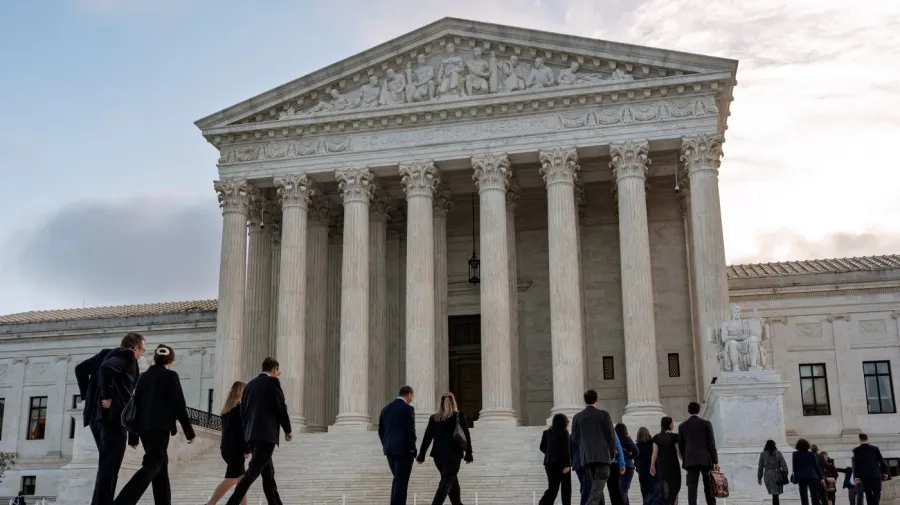
最高法院将于周三审议一部旨在保护录像带租赁记录的数十年历史的隐私法的适用范围。此案可能对当前及未来关于数字追踪工具的诉讼产生影响。大法官们正在权衡1988年《录像带隐私保护法》(VPPA)是否保护消费者——即任何购买公司产品的人,还是仅限于购买其视听产品的人。此案源于迈克尔·萨拉扎尔(Michael Salazar)于2022年对派拉蒙环球(Paramount Global)提起的集体诉讼。
The Supreme Court on Wednesday will examine the reach of a decades-old privacy law designed to protect video rental records in a case that could shape current and future lawsuits over digital tracking tools. The justices are weighing whether the 1988 Video Privacy Protection Act (VPPA) protects consumers who to any of a company’s products or only those who to its audiovisual ones. The case arises from a class-action lawsuit brought against Paramount Global in 2022 by Michael Salazar, ar to a 247Sports.com newsletter.
萨拉扎尔曾订阅247Sports.com的新闻通讯。该网站是大学体育和招聘新闻的中心,提供数十份每日新闻通讯给其订阅者。萨拉扎尔指控派拉蒙通过在该网站上安装Facebook追踪像素,违反了VPPA,该像素使其数据(包括视频观看历史)未经其同意被共享。随后这些信息被用于定向广告。VPPA规定,当“录像带服务提供者”明知故犯地在未获得书面同意的情况下披露消费者的个人可识别信息时,需承担损害赔偿责任。
The website is a hub for college sports and recruiting news that offers dozens of daily newsletters to itsrs. Salazar alleges that Paramount has violated the VPPA by installing a Facebook tracking pixel on the website that allowed his data, including video viewing history, to be shared without his consent. That information was then used for targeted advertising. The VPPA makes a “video tape service provider” liable for damages when it knowingly discloses a consumer’s personally identifiable information without written consent.
该法律的制定是为了回应失败的最高法院提名人罗伯特·博克(Robert Bork)的录像带租赁历史在其确认过程中被泄露给媒体的事件。争议焦点在于萨拉扎尔是否符合VPPA中“消费者”的定义——即“任何从录像带服务提供者处租赁、购买或获取商品或服务的人”。萨拉扎尔认为他符合这一定义,而派拉蒙则认为他不符。田纳西州的一名联邦法官认定,萨拉扎尔的订阅不符合法律中“消费者”的定义,因为该新闻通讯不是“视听材料”,因而驳回了诉讼。
It was enacted in response to the leak of failed Supreme Court nominee Robert Bork’s video rental history to the press during his confirmation process. At issue is whether Salazar fits into the VPPA’s definition of a “consumer,” which is classified as “any renter, purchaser, orr of goods or services from a video tape service provider.”Salazar argues he does, while Paramount claims he doesn’t. A federal judge in Tennessee found that Salazar’s subscription did not qualify him as a “consumer” under the law because the newsletter was not “audio visual materials” and dismissed the complaint.
第六美国巡回上诉法院的一个分歧小组后来维持了该裁决。萨拉扎尔向最高法院提出上诉,要求大法官们解决各巡回法院对如何解释该法律条文存在的分歧。
A divided panel for the 6th U.S. Circuit Court of Appeals later affirmed that ruling. Salazar appealed to the Supreme Court, asking the justices to resolve a circuit split over how to interpret the statutory language.
他的律师约书亚·哈马克在一份简报中写道:“根本没有依据将VPPA中‘消费者’的定义重新改写,以施加在文本中根本不存在的限制。”代表派拉蒙的律师在他们的简报中主张该术语应被狭义解释,警告说接受萨拉查尔的观点——即该定义适用于所有商品和服务——可能会打开诉讼的闸门。他们写道:“萨拉查尔的相反解读将把一部1988年的录像带租赁法转变为一个范围广泛却又支离破碎、且伴随严厉处罚的不可操作的互联网隐私制度。”
“There is simply no basis to rewrite the VPPA’s definition of ‘consumer’ to impose a limitation that appears nowhere in the text,” his lawyer Joshua Hammack wrote in a brief. Lawyers representing Paramount argued in their brief that the term should be read narrowly, warning that accepting Salazar’s view that it applies to all goods and services could open the floodgates of litigation. “Salazar’s contrary reading would transform a 1988 video-rental statute into an unworkable internet-privacy regime of broad yet incoherent scope backed by harsh penalties,” they wrote.
他们还指出:“免费视频内容观众的法定保护将取决于他们多年前购买鸡肉三明治或躺椅的偶然地点。”该案的裁决预计将在明年夏天作出。
“Statutory protection for viewers of free video content would turn on the happenstance of where they purchased a chicken sandwich or recliner years earlier.”A decision in the case is expected by next summer.