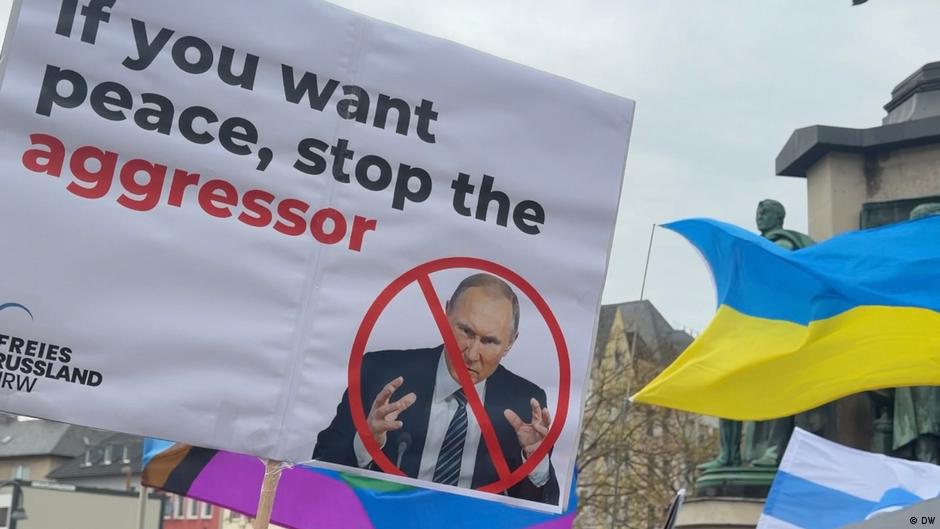
专家认为,到目前为止,德国在军事和思想上都未做好准备,无法应对俄罗斯的挑衅。他们还警告说,停止对乌克兰的支持不会让德国更安全。
Experts believe that, so far, Germany has been ill-prepared — both militarily and mentally — for Russian provocations. They also warn against the idea that ending support for Ukraine would make Germany safer.
德国人既有支持乌克兰对抗俄罗斯战争的抗议,也有反对支持乌克兰的抗议。关于俄罗斯对德国构成威胁的警告一直在增加。10月12日,德国国内情报局 BfV 局长西南·塞伦表示,俄罗斯对德国及其他欧洲国家的秘密攻击和破坏行动“并非临时发展,而是长期的混合攻击”。
Germans have been protesting both for and against supporting Ukraine in its war with Russia Warnings keep mounting about Russia's threat to Germany. On October 12, Sinan Selen, president of Germany's domestic intelligence agency, the BfV, said that Russia's covert attacks and destabilization efforts against Germany and other European countries are "not a temporary development but a long-term hybrid attack."
塞伦还说,即使乌克兰战争结束,俄罗斯的威胁也不会消失。“对俄罗斯而言,这关乎完全重绘欧洲版图,重新定义其在欧洲乃至全球政治中的角色。”他补充说,俄罗斯的侵略不仅会在乌克兰被感受到,还会在波罗的海国家、波兰和德国持续产生影响。
Even if the war in Ukraine were to end, said Selen, the Russian threat would not disappear. "For Russia, this is about completely redrawing the map of Europe and redefining its own role within Europe and in global politics." He added that Russia's aggression would continue to be felt not only in Ukraine, but also in the Baltic states, in Poland and in Germany.
俄罗斯目前陷入乌克兰泥潭 — — 德国内政部长亚历山大·多布林特将威胁形势描述为“我们的国家并未处于战争状态,但我们每天都是混合战争的目标”。他说,俄罗斯的目标不是在军事上击败德国,“而是在政治和社会上使我们屈服”。然而,安全专家并不确定俄罗斯仅仅是想施加政治和社会影响。去年,政治学家卡洛·马萨拉在政治谈话节目《迈希伯格》上表示,“俄罗斯正在为一场大规模战争做准备。”他并非仅指网络战争。联邦国防军最高军官、总监察官卡斯滕·布鲁尔也持此观点。
Russia is tied down in Ukraine — for now German Interior Minister Alexander Dobrindt has described the threat situation as one in which "our country is not at war, but we are the daily target of hybrid warfare " Russia's goal, he said, is not to defeat Germany militarily "but to subdue us politically and socially." Security experts, however, are not so sure that Russia is only interested in exercising political and social influence. Last year, political scientist Carlo Masala told the political talk show Maischberger that "Russia is preparing for a major war." And he didn't mean just a cyberwar. Inspector General Carsten Breuer, the Bundeswehr's highest-ranking officer, agreed.
目前,俄罗斯仍然陷入对乌克兰的战争之中。根据北约秘书长马克·吕特的说法,北约领土目前没有直接的军事威胁。但根据军事专家、欧洲情报机构和德国国防部的说法,到2029年,俄罗斯将具备发动针对北约的常规战争所需的人员和装备。俄罗斯国防工业正在全速运转,莫斯科计划将武装部队扩大至150万士兵。
For now, though, Russia remains tied up in its war against Ukraine. According to NATO Secretary General Mark Rutte, there is no immediate military threat to NATO territory. But according to military experts, European intelligence agencies, and the German Defense Ministry, Russia will have the personnel and equipment to wage a conventional war against NATO by 2029. The Russian defense industry is running at full speed, and Moscow plans to expand its armed forces to 1.5 million soldiers.
目前,俄罗斯有其他目标,德国对外关系委员会(DGAP)东欧问题专家斯特凡·迈斯特这样认为:“我认为俄罗斯目前对直接与北约发生军事冲突没有兴趣。它想要测试北约,也想展示自己的能力,”他对德国之声表示。如果俄罗斯发动对北约的进攻,德国会做好准备吗?要观看此视频,以及意外的军事冲突会怎样?
At the moment, Russia has other objectives, believes Stefan Meister, an expert on Eastern Europe at the German Council on Foreign Relations (DGAP): "I don't think Russia has any interest in a direct military conflict with NATO right now. It wants to test NATO and also display its capabilities," he tells DW. If Russia attacked NATO, would Germany be prepared? To view this video , and An accidental military confrontation?
俄罗斯混合战争的一个例子可能是2022年8月在莱比锡-哈雷机场,一架装载爆炸物的无人机对一架乌克兰运输机发动的失败袭击。事后不久,德国政府表示,可以确定俄罗斯是此次袭击的幕后黑手。
An example of Russia's hybrid war might be the failed attack with an explosive-laden drone against a Ukrainian transport aircraft at Leipzig-Halle Airport in August. Soon after, the German government stated that it was certain Russia was behind the attack.
当时,安全专家尼科·兰格对德国之声表示,德国非常幸运,爆炸物没有引爆:“老实说,这纯属巧合,不是德国防御措施的结果。”至于为何德国成为特定目标,兰格说:“我相信,德国一直是俄罗斯影响力和混合战争的主要目标。俄罗斯认为德国是欧洲决策的关键。如今,德国正在乌克兰问题上发挥带头作用,支持乌克兰。”莫斯科迅速以愤怒的否认回应了德国政府的指控。外交部长谢尔盖·拉夫罗夫称这是“真正战争的开始”,尽管此后没有立即出现进一步的升级。
Security expert Nico Lange told DW at the time that Germany was very lucky the explosives did not detonate: "Honestly, it was pure coincidence and not the result of German defensive measures." As for why Germany was targeted specifically, Lange said: "I believe that Germany has always been a primary target of Russian influence and hybrid warfare. Russia believes that Germany is the key to European decision-making. Germany is now leading the way in supporting Ukraine." Moscow swiftly responded to the German government's accusation with an angry denial. Foreign Minister Sergey Lavrov said it was "the beginning of a real war," though there was no immediate further escalation.
然而,斯蒂芬·迈斯特尔表示,俄罗斯的挑衅及随后的反应总是存在失控的风险:“意外击落他们试图恐吓的飞机将引发反击。但我不认为俄罗斯目前的目标是直接发动战争,而是挑衅、两极化以及在民众中制造不确定性。”德国选择党称,对乌克兰的援助减少意味着对德国的援助增加。并非所有人都认同俄罗斯对德国构成威胁 — — 有些人认为这种威胁可以被避免。
Nevertheless, there is always the risk that things could spiral out of control following a Russian provocation and subsequent response, according to Stefan Meister: "Accidentally shooting down an aircraft that they were trying to intimidate would trigger a counter-reaction. But I don't believe that Russia is currently aiming for a direct war but rather for provocations, polarization, and sowing uncertainty among the population." AfD says less money for Ukraine means more for Germany Not everyone shares the assessment that Russia poses a threat to Germany — some believe that the threat can be averted.
尽管乌克兰战争仍在进行,德国极右翼选择党(AfD)和民粹主义左翼社会正义与经济理性联盟(BSW)的政客们希望改善与俄罗斯的关系,恢复俄罗斯的能源供应,并终止对乌克兰的支持。
Despite the war in Ukraine, politicians from the far-right Alternative for Germany (AfD) and the populist left-wing Alliance for Social Justice and Economic Reason (BSW) want to improve relations with Russia, resume Russian energy supplies and end support for Ukraine.
AfD联合领导人蒂诺·楚帕拉在9月初表示:“人们对针对俄罗斯的升级感到厌倦,对在那里挥霍数十亿欧元的系统感到不满 — — 该系统实际上是由德国纳税人的钱资助的。”这一信息似乎在民众中产生了共鸣,尤其是在东德地区。AfD在9月的三场州议会选举中均取得了显著进展。在萨克森-安哈尔特州,该党成为绝对的第一大党,甚至可能很快在那里执政,这将是自二战结束以来,极右翼政党首次在德国掌权。
AfD co-leader Tino Chrupalla said in early September, "People are fed up with this escalation against Russia, with the billions being squandered there on a system that is actually funded by German taxpayers' money." The message appears to have resonated among the population, especially in eastern Germany. The AfD saw strong gains in all three state elections in September. In Saxony-Anhalt, it became the strongest party by far and may even run the government there soon, which would be the first time that a far-right party has held power in Germany since the end of WWII.
基民盟安全政策专家罗德里希·基塞维特反驳了德国选择党和萨拉·瓦根克内希特联盟关于“结束对乌克兰援助将带来更大安全和更多德国学校及基础设施资金”的说法:“只有在自由和民主中生活,尤其是在和平与安全中生活,才有可能投入教育、社会政策和基础设施支出。任何人如果认为停止支持乌克兰、任由俄罗斯为所欲为,就能为社会项目腾出更多资金,那要么是严重错误,要么就是把自己变成了俄罗斯宣传的工具。”
The CDU's security policy expert Roderich Kiesewetter disputed the claim made by the AfD and BSW that ending aid to Ukraine would mean greater security and more money for German schools and infrastructure: "Spending on education, social policy, and infrastructure is only possible if we live in freedom and democracy — and, above all, in peace and security. Anyone who believes that we'll have more money for social programs if we stop supporting Ukraine and let Russia have its way is either gravely mistaken or is making themselves a tool of Russian propaganda."
德国高中生举行罢课,抗议恢复兵役的计划 长期存在的和平主义心态 德国联邦国防军认为,被感知到的安全威胁促使其通过大量投资加快重大现代化进程,但在为计划中的扩编寻找足够新兵方面面临困难。许多德国年轻人走上街头,抗议恢复兵役的计划。国防部长鲍里斯·皮斯托里乌斯因表示德国必须具备“作战能力”,而遭到其所属的中左翼社会民主党内部批评。许多人认为该表态过于军事化。
German high school students have gone on strike to protest plans to reintroduce military conscription A decades-long pacifist mindset The perceived security threat has led the German military, the Bundeswehr, to fast-track significant modernization through substantial investment. But it is struggling to find enough recruits for its planned expansion. Many young Germans have taken to the streets to protest against plans to reintroduce conscription Defense Minister Boris Pistorius faced criticism from inside his own party, the center-left Social Democratic Party (SPD), for saying that Germany must become "capable of waging war." Many found the statement to be too militaristic.
德国准备好应对军事威胁了吗?“一点也不。德国在军事和民用领域都没有做好准备,而且民众在心理上也没有做好准备,”迈斯特说。“只要看看反对征兵和军队的示威活动,这些示威仍在继续进行,尽管德国需要征兵。几十年来,我们一直生活在这种和平主义文化中,处于舒适区。我认为社会韧性非常有限,但最重要的是,我们在心理上根本没有为战争做好准备。”
Is Germany prepared for a military threat? "Not at all. Germany is not well prepared militarily or in the civilian sector, and the population isn't mentally prepared for it either," said Meister. "Just look at the demonstrations against conscription and the military that continue to take place, even though Germany needs a draft. For decades, we've grown up in this culture of pacifism, in a comfort zone. I believe there is very limited societal resilience, but above all, we are not at all mentally prepared for war."
联邦总理弗里德里希·默茨及其保守派基督教民主联盟(CDU)正面临日益增加的政治压力 — — 尤其是来自极右翼的压力 — — 要求削减对乌克兰的支持。但默茨从不疲倦地强调,在他的总理任期内,乌克兰将继续获得支持,称这是德国安全的问题。他最近再次访问了基辅,并与乌克兰总统弗拉基米尔·泽连斯基一起,视察了俄罗斯造成的破坏。
Chancellor Friedrich Merz and his conservative Christian Democratic Union (CDU) are under increasing political pressure — especially from the far right — to scale back support for Ukraine. But Merz never tires of emphasizing that Ukraine will continue to receive support under his chancellorship, calling it a matter of Germany's security. He recently visited Kyiv once again and, together with Ukrainian President Volodymyr Zelenskyy, surveyed the destruction caused by Russia. But this also means that the threat from Russia will continue and even intensify, says Stefan Meister: "I believe we will see a massive increase in attacks such as the one in Leipzig, of provocations involving drones.
但这也意味着,来自俄罗斯的威胁将继续存在,甚至可能加剧,正如斯特凡·迈斯特所说:“我认为我们将看到类似莱比锡那样的袭击大幅增加,涉及无人机的挑衅行为也会增多。我们将看到对基础设施的袭击,甚至可能对军工复合体内的特定个人发动袭击。我认为这是德国在未来几个月面临的真实、具体的危险。”本文译自德语。
We will see attacks on infrastructures and possibly also on specific individuals within the military-industrial complex. I believe this is the real, concrete danger facing Germany in the coming months." This article was translated from German.