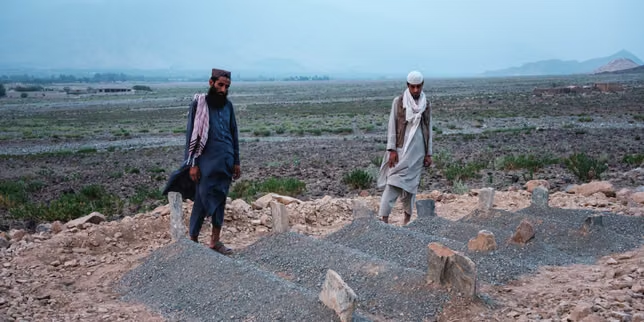
六座新挖的坟墓横卧在阿富汗东部山地帕沙德墓地的岩石地面上。坟墓被土壤和深色砾石覆盖,形成六座明显的土堆,没有铭文或墓碑。两块小直立石分别放置在墓地两端,标记着这些墓葬。
Six freshly dug graves lay on the rocky ground of the Pashad cemetery, set in the mountainous landscape of eastern Afghanistan. The graves were covered with earth and dark gravel, forming six distinct mounds, with no inscriptions or headstones. Two small upright stones, placed at each end of the burial sites, marked the graves.
最左侧的第一座坟墓最大,安葬着65岁的游牧牧羊人穆罕默德·优素福的遗体,他于10月1日在巴基斯坦对阿富汗领土的空袭中,在其住所被炸死,地点位于乔甘山谷。其他五座坟墓逐渐变小;他的四个孩子和一个侄子,均在同一次袭击中遇难,也被安葬在那里。
The first grave on the left was the largest and held the body of Mohammad Yusuf, a 65-year-old nomadic shepherd, killed in his home during a Pakistani airstrike on Afghan soil on October 1, in the Chogan Valley. The other five were gradually smaller; four of his children and his nephew, all killed in the same attack, were buried there.
袭击发生几小时后,巴基斯坦信息部宣称对这次“经过计划和精准”的袭击负责,称其基于“可靠情报”针对被描述为在阿富汗境内运作的恐怖组织的营地和藏匿点进行。巴基斯坦表示,其特别针对伊斯兰堡所称的“菲特纳·阿尔-哈瓦里吉”,即巴基斯坦塔利班运动(Tehreek-e-Taliban Pakistan,TTP)。根据伊斯兰堡的说法,此次空袭击毙22名武装分子,并摧毁了武器和弹药储备。
A few hours after the strike, Pakistan's Ministry of Information claimed responsibility for the "planned and calibrated" assault, stating it was carried out based on "credible intelligence" against camps and hideouts of groups described as terrorists operating in Afghanistan. Pakistan said it specifically targeted Fitna Al-Khawarij, Islamabad's term for Tehreek-e-Taliban Pakistan (TTP), the Pakistani Taliban. According to Islamabad, the strikes killed 22 fighters and destroyed weapons and ammunition stockpiles.
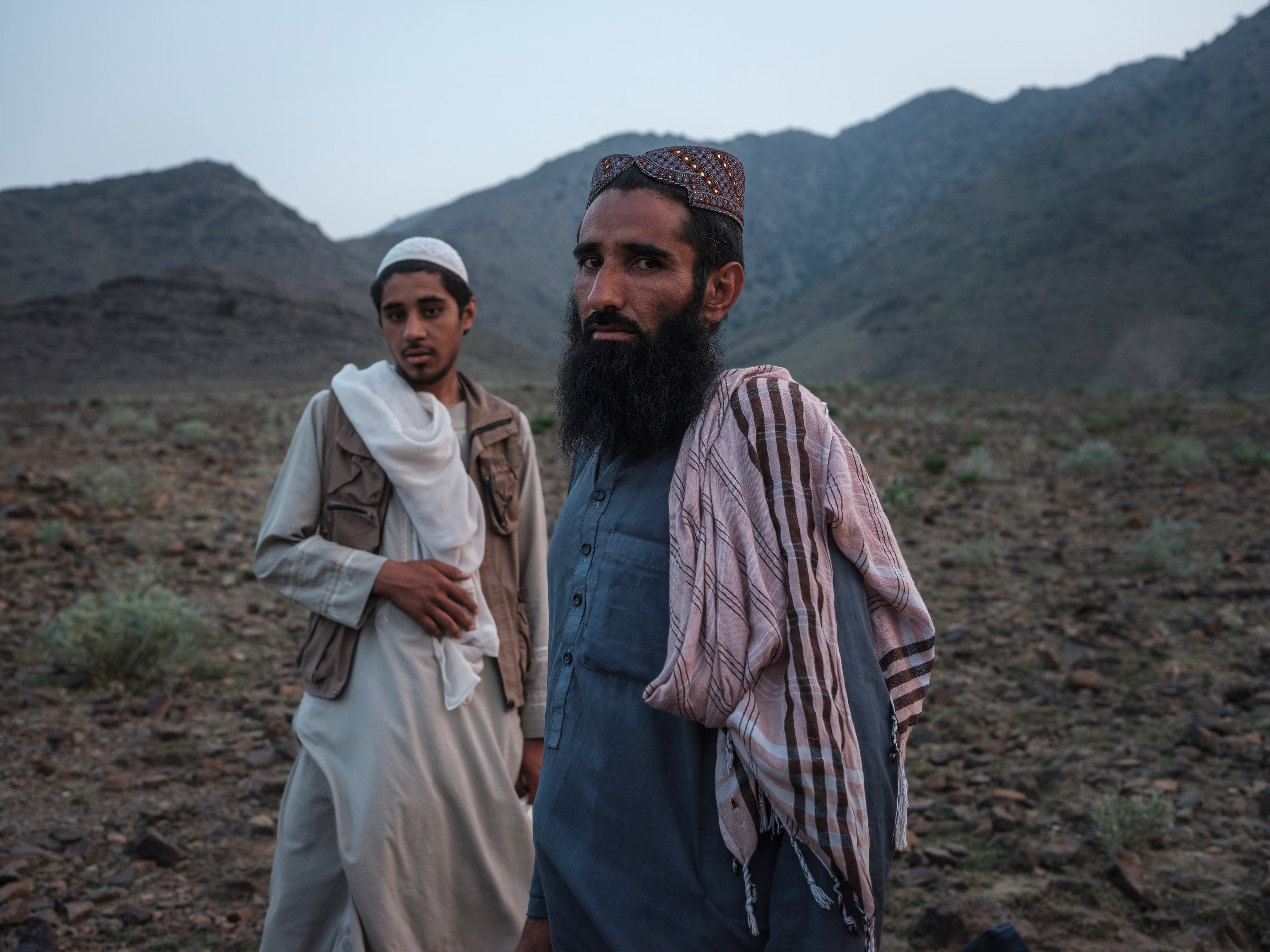
阿卜杜勒拉乌夫·沙赫德(前景)及其儿子,是2026年10月1日巴基斯坦对乔甘山谷空袭遇难者的亲属。照片拍摄于阿富汗昆杜兹省帕沙德墓地,时间为2026年10月5日。您已阅读本文的82.52%。
Abdulraouf Shahed (foreground) and his son, relatives of those killed in a Pakistani airstrike on October 1, 2026, in the Chogan Valley. At the Pashad cemetery, Kunar Province, Afghanistan, October 5, 2026.