
澳大利亚劳动力市场正显示出其软化速度快于央行预期的迹象,澳大利亚储备银行助理总裁克里斯托弗·肯特表示,这凸显了政策制定者在努力抑制通胀同时保持就业增长所面临的权衡。
Australia’s labor market is showing signs it is softening faster than the central bank expected, Reserve Bank Assistant Governor Christopher Kent said, underscoring the tradeoff policymakers face as they seek to slow inflation while preserving gains in employment.
“劳动力市场出现了一些指标,表明其紧张程度下降的速度比我们预测的要快一点,”肯特周一表示。一个重要的问题是,这是由于需求疲软还是劳动力成本上升所致,他补充道。
“There are indicators where the labor market has become less tight a bit faster than we might have forecast,” Kent said Monday. An important question is whether that is due to weakening demand or the rising costs of labor, he added.
上周公布的数据显示,澳大利亚9月份失业率高于预期。虽然这促使交易者减少了对澳大利亚储备银行进一步加息的押注,但肯特警告说,也必须关注下周即将公布的通胀数据。
Australian unemployment came in higher than expected in September, data last week showed. While that prompted traders to pare bets on the RBA further hiking interest rates, Kent cautioned that it was important to also watch inflation data due next week.
“让我们看看他们如何看待通胀数据,将这两个拼图碎片放在一起很重要。这就是我们在更新预测时将要做的事情,”他说,指的是将在11月份下次政策委员会会议上发布的经济展望。
“Let’s see how they view also the inflation data, and it’s important to put those two pieces of the puzzle together. That’s what we’ll be doing when we update our forecast,” he said, referring to the economic outlook which will be released at the next policy board meeting in November.
他的言论发表于澳大利亚储备银行上月下旬加息之后,当时将现金利率提升至15年来最高的4.6%,以遏制顽固居高不下的通胀。澳大利亚储备银行行长米歇尔·布洛克在该决策后的评论被解读为相对鸽派,而9月会议的政策声明和纪要则偏向鹰派。
His remarks come after the Reserve Bank hiked interest rates late last month, taking the cash rate to a 15-year high of 4.6% in an effort to contain stubbornly high inflation. Governor Michele Bullock’s comments after that decision were interpreted as somewhat dovish compared to the hawkish policy statement and minutes of the September meeting.
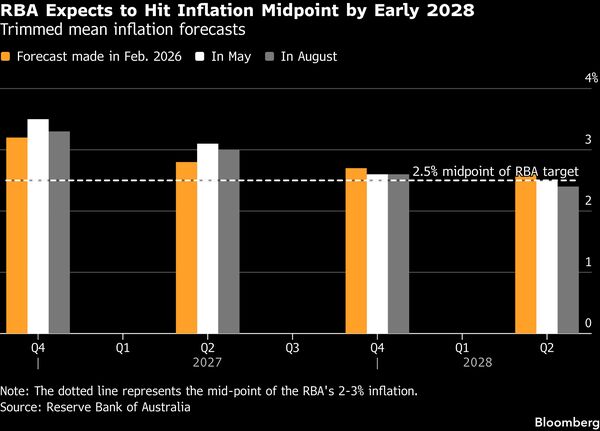
根据澳大利亚联邦银行首席经济学家卢克·耶曼的说法,这种差异“反映了渐进式方法以及澳大利亚储备银行对经济对第四次加息的反应程度存在不确定性;并非缺乏抗击通胀的承诺”。
That gap “reflects the incremental approach and the RBA’s uncertainty around how severely the economy will respond to a fourth rate hike; not a lack of commitment to fight inflation,” according to Luke Yeaman, chief economist at Commonwealth Bank of Australia.
副总裁安德鲁·豪瑟也将于本周发表讲话,其言论将被审查以寻找关于利率路径的线索。投资者和经济学家也在期待下周公布的季度通胀报告,以评估经济是否正逐步回归平衡,或者是否还需要进一步加息。
Deputy Governor Andrew Hauser is also due to speak this week, with his remarks to be scrutinized for clues on the interest-rate path. Investors and economists are also looking ahead to the quarterly inflation report due next week to assess whether the economy is gradually returning to balance or more hikes are needed.
根据彭博汇总的掉期数据,截至目前,交易员预计澳大利亚联储将在明年5月前再次加息一次。但市场普遍认为,在RBA 11月2日至3日的政策会议结束时加息的可能性只有约四分之一。
As it stands now, traders anticipate the Reserve Bank will hike once more by May next year, according to swaps data compiled by Bloomberg. Still, a move at the end of the RBA’s Nov. 2-3 policy meeting is seen at about a one-in-four chance.
在联邦银行(CBA)的活动上发言时,肯特表示,现金利率及其在未来18个月的预期路径处于澳大利亚联储对中性利率估计范围的上限。“这表明你可以对货币政策具有一定程度的限制性有一定信心。但问题在于,这种限制性是否足够?”他对悉尼的听众说道。
Speaking at a CBA event, Kent said the cash rate and its expected path over the next 18 months sit at the upper end of the RBA’s range of estimates for the neutral rate. “That tells you you can have some confidence that monetary policy is somewhat restrictive. But the question is, is it restrictive enough?” he said to the audience in Sydney.
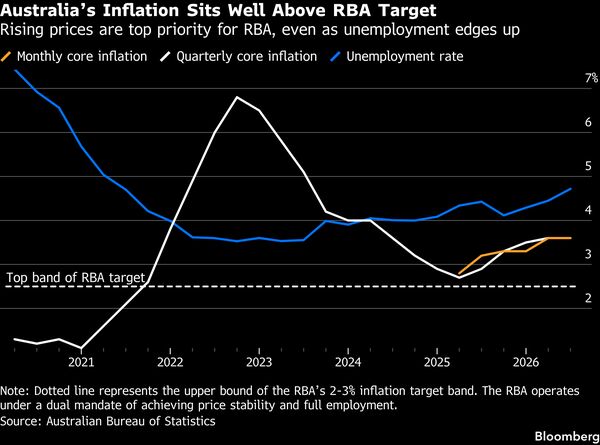
今年,澳大利亚正在经历发达经济体中最激进的紧缩周期之一,澳大利亚联储已将现金利率上调了1个百分点,并暗示可能还需要进一步加息。自2025年底以来,该国一直在应对反弹的价格压力,甚至在美以对伊朗的袭击引发全球能源冲击之前就已开始加息。
Australia is undertaking one of the most aggressive tightening cycles among developed economies this year, with the RBA raising the cash rate by 1 percentage point and signaling further increases may be required. The nation has been grappling with resurgent price pressures since late 2025 and began raising the cash rate even before the US-Israeli attack on Iran triggered a global energy shock.
肯特负责央行的金融市场业务,他表示,中东冲突是澳大利亚联储面临的最显著的不利供给冲击,“这使得通胀与经济活动及失业之间的权衡变得更加难以处理。”
Kent, who oversees financial markets at the central bank, said the Middle East conflict is the most notable adverse supply shock facing the RBA, “and that makes the trade-off between inflation and economic activity and unemployment that much harder to deal with.”